I had wanted the inheritance to make sense immediately.
It hadn't.
For days, I had tried to force everything into a simple explanation.
My father had left Sheila millions.
He had left me the fishing boat.
Therefore, she had mattered more.
That was the conclusion I had reached.
I had treated it as obvious.
Now I understood how little I had known.
The boat was still the same boat.
Built in 1987.
Old.
Familiar.
A possession my father had chosen to leave me.
None of that had changed.
What changed was my willingness to judge its meaning before I understood the circumstances.
I thought about Sheila.
I couldn't erase her laughter.
I couldn't make myself pretend it hadn't hurt.
But I no longer wanted to carry it as proof of anything beyond her reaction.
She had laughed.
That was true.
What she understood about Dad's financial affairs remained uncertain.
I couldn't claim she knew everything.
I couldn't claim she knew nothing.
And I couldn't responsibly invent what she might do once the truth became clear.
I wanted to see her embarrassed.
I had to admit that.
Part of me wanted the old boat to turn out to be worth far more than her inheritance.
I wanted to imagine her face when she discovered it.
I wanted my father's decision to look clever.
And I wanted the hurt I had felt to disappear.
But wishing for an outcome didn't make it real.
The information Hank had provided hadn't yet established a final financial result.
That was the truth I had to accept.
My father had inherited substantial money in 2019 from a former business partner.
Their business relationship involved commercial waterfront properties.
Dad had deliberately separated his business affairs from his private life.
Hank believed he had anticipated Sheila's unwillingness to give me much.
And there was a photograph bearing a personal message from my father.
Those were the pieces I had.
They were important.
But they weren't the complete picture.
I still didn't know the precise amount of the business inheritance.
I didn't know the current value of the waterfront investments.
I didn't know whether those investments were owned through the boat, through another arrangement, or independently.
And I didn't know whether they had been left to me.
The ten point six million dollars mentioned in the title remained unexplained by the account available to me.
I couldn't treat that amount as a verified asset transferred into my name.
I couldn't describe a settlement that hadn't been established.
I couldn't claim Sheila had lost money or property without evidence.
I had learned something about assumptions.
They were easy to make.
Especially when they promised to turn pain into satisfaction.
I had been hurt.
So I wanted a victory.
But I was beginning to understand that a truthful answer mattered more than an imagined one.
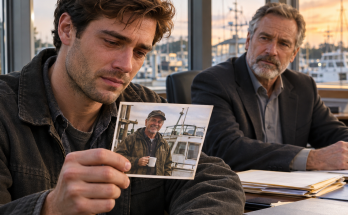
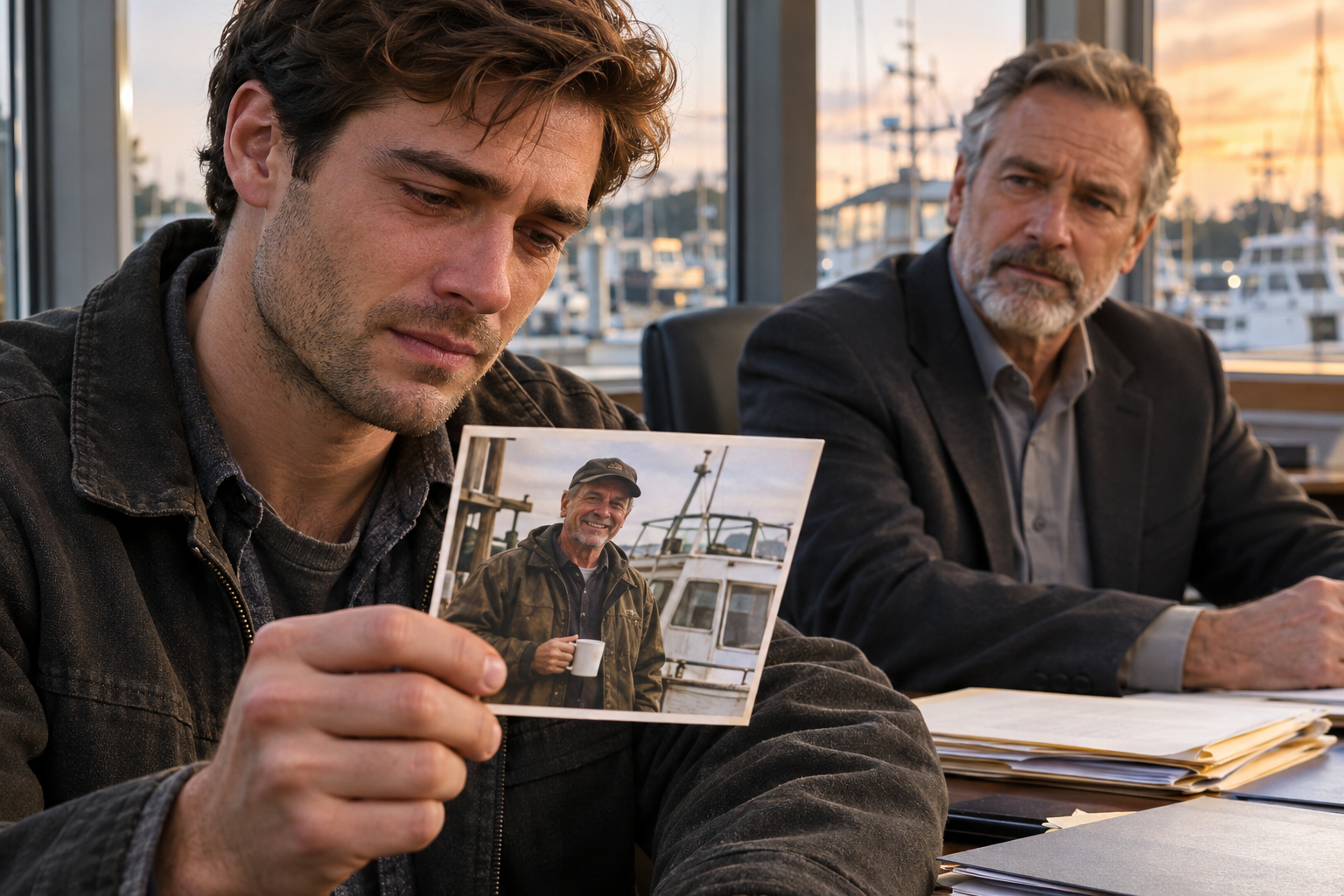
I thought about Dad again.
Not the money.
Not the inheritance.
Him.
Standing beside his boat.
Holding a coffee mug.
Wearing that old fishing jacket.
Smiling at whoever had taken the photograph.
That was the image I wanted to remember.
For a while, I had allowed the money to crowd out everything else.
Two point one million dollars.
The possibility of more.
The suggestion of hidden investments.
Numbers had filled my thoughts.
They had made me feel overlooked.
Then hopeful.
Then frustrated.
I had moved through those feelings without ever learning the complete outcome.
And I was tired of pretending certainty.
I still wanted answers.
I still wanted to know what Hank had meant when he talked about protecting something from being taken away.
I still wanted to understand why my father had chosen the boat.
Those questions hadn't disappeared.
But I no longer needed to answer them by guessing.
I thought about my father's desire to keep business and family separate.
At first, I had found that secrecy almost insulting.
I was his son.
Why shouldn't I know?
Then I considered what I had done with the limited information I received.
I had compared inheritances.
I had questioned his love.
I had allowed Sheila's reaction to shape my view of him.
That didn't prove he was right to keep his business private.
But it reminded me that money could change the way people treated one another.
It had changed me.
At least for a little while.
I hadn't liked the person I became when I started measuring my place in his life against Sheila's fortune.
I wanted to do better.
That didn't mean accepting everything without question.
I could still seek a proper explanation.
I could still examine documents.
I could still protect whatever rights I legally possessed.
But I didn't have to turn every unanswered question into an accusation.
I didn't have to make Sheila into somebody whose every thought I claimed to know.
And I didn't have to invent a financial victory for myself.
The photograph meant more to me than it had when Hank first placed it in front of me.
Not because it proved I was wealthy.
It didn't.
Not because it explained every detail of Dad's business affairs.
It didn't do that either.
It mattered because it came from him.
Because he had chosen a moment to be remembered.
Because he had addressed the message to me.
I found myself thinking about the word inheritance differently.
Before, I had treated it as a list of assets.
Money.
Property.
A boat.
Now I understood that an inheritance could also leave questions.
Some painful.
Some unexpected.
Some that changed how you remembered the person who had died.
My father had left me something I could recognize.
And he had left behind a financial history I had barely understood.
Both things were true.
I could honor the first while continuing to investigate the second.
I didn't need to pretend that the investigation had already reached its conclusion.
I thought about Hank.
He had been willing to show me information I didn't possess.
That mattered.
But I couldn't say that his papers had settled every question.
They hadn't.
The central mystery remained open.
The amount inherited in 2019.
The status of the waterfront properties.
The nature of whatever my father wanted protected.
The legal significance of the old boat.
Those answers would require more than the portion of the story I had been given.
For once, I was willing to admit that plainly.
I wasn't going to manufacture the missing details.
I wasn't going to assign my father's assets to myself without proof.
And I wasn't going to decide Sheila's fate simply because I wanted her laughter to have consequences.
I could acknowledge my anger without letting it write the ending.
That was something I hadn't been able to do when the inheritance was first announced.
Back then, I looked at the boat and saw disappointment.
Now I looked at it and saw a piece of my father's life that I needed to understand.
Its financial worth remained uncertain.
Its connection to the waterfront investments remained unexplained.
But its place in the inheritance was real.
He had chosen it for me.
I had almost let somebody else's laughter make that choice meaningless.
I wouldn't do that again.
I still wanted to know the whole story.
I wanted to hear every explanation the documents could support.
I wanted to understand what my father had protected, why he had protected it, and what he intended me to receive.
But until those facts were established, I would leave the unanswered questions where they belonged.
Unanswered.
The old fishing boat no longer felt like something I needed to apologize for receiving.
It was my father's boat.
Now it was mine.
And whatever else I eventually learned, I wasn't going to let the money be the only thing I remembered about him.
Click here to continue reading: PART 9: I Thought My Father’s Secret Would Finally Explain Everything, but the Old Photograph Made Me Face a Different Kind of Truth
I Thought My Father Had Left Me Almost Nothing, Until I Began Questioning Why He Chose That Old Fishing Boat
Part 8 of 10