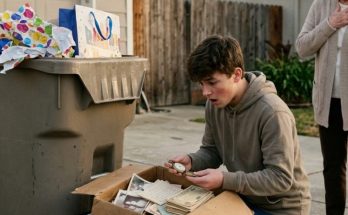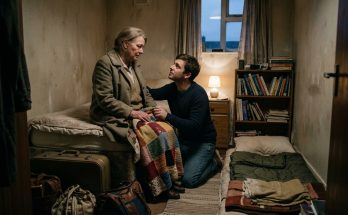
The file arrived without warning.
It was part of the final records release from the district.
Most of the documents were administrative.
Training schedules.
Policy revisions.
Meeting notes.
Nothing that seemed connected to our family.
Then Rachel found a name.
She called me into the study.
“Marcus.”
I walked over.
“What?”
She pointed to the page.
A student name appeared in an old incident log.
The date was fourteen years earlier.
The child had been eight.
The incident involved Harrison.
But the outcome was listed as “resolved internally.”
No police report.
No external review.
No parent appeal.
I read the entry again.
“What happened?”
“We don't know.”
There were no details.
Only a reference number.
Maya said the number belonged to an archived file.
We requested it.
The district initially claimed it could not locate the file.
That answer no longer surprised us.
We appealed.
Two months later, the file appeared.
It was thin.
Only eleven pages.
The first page was a parent complaint.
The parent reported that Harrison had repeatedly requested private meetings with her daughter.
The child had begun refusing school.
The parent wanted the school to investigate.
The second page was a handwritten note from an administrator.
The note recommended moving the child to another classroom.
Nothing about restricting Harrison.
Nothing about reporting.
Nothing about safeguarding.
The third page was a statement from Harrison.
He described the concern as a misunderstanding.
The fourth page was a note saying the matter had been resolved.
The fifth page was a transfer form.
The remaining pages were blank.
I sat back.
Rachel whispered, “That's it?”
“That appears to be it.”
Maya read the file.
“This is significant.”
“Because?”
“Because it establishes another documented complaint.”
“Fourteen years ago.”
“Yes.”
“And the child was transferred.”
“Exactly.”
We found the family.
It took weeks.
The daughter was now twenty-two.
Her mother agreed to speak.
They remembered everything.
The daughter told us she had never forgotten Harrison's office.
The silver bell.
The blue lamp.
The closed door.
She had told her mother she didn't want to go back.
Her mother had assumed Harrison was intimidating her.
She never understood why until years later.
The daughter had never been asked to give a formal statement.
She had never been interviewed by police.
She had simply been moved to another classroom.
Another child removed from the environment.
Another problem made smaller.
When we asked whether she wanted to speak publicly, she said no.
We respected that.
Not every survivor owes the world their story.
That became one of the most important lessons we learned.
Justice cannot require someone to reopen every wound for public consumption.
The records were enough to establish another failure.
The district had received concerns.
The district had responded internally.
The child had been moved.
Harrison had remained.
That was the pattern.
Not one dramatic conspiracy.
Something more ordinary.
A series of choices.
Each choice small enough to defend.
Together, they created a wall.
And behind that wall, children remained vulnerable.
The independent review was amended.
The new evidence was included.
The district issued another statement.
This time, it acknowledged that its earlier review had been incomplete.
That admission mattered.
Not because words could repair the past.
They couldn't.
But because institutions rarely change until they are willing to name what they did wrong.
Harrison's attorney tried to challenge portions of the investigation.
The challenge failed.
His conviction remained.
The old complaints became part of the permanent record.
The district created a public archive of safeguarding policies and historical findings.
Researchers began studying the case.
Other districts contacted ours.
They wanted to know how the reporting system had changed.
Some wanted copies of the new protocols.
We shared them.
Not because we were experts.
Because we had learned what happened when institutions assumed they were experts and stopped listening.
Lily was eleven by then.
She knew the broad truth.
She knew Harrison had hurt her.
She knew other children had been harmed.
She knew adults had failed to act.
But she didn't know every detail.
We protected what belonged to her.
One evening, she came into my office.
She was holding the old photograph of herself from the carnival.
Someone had taken it that afternoon.
She was smiling.
Powdered sugar on her cheek.
Orange lights behind her.
“You kept this?”
“Yes.”
“Why?”
I looked at the photograph.
“Because I want to remember you before everything changed.”
She studied it.
“I don't remember being scared.”
“You weren't yet.”
She looked at me.
“Actually, I think I was.”
I waited.
She touched the corner of the photograph.
“I just didn't know what the feeling was.”
That sentence broke my heart.
Children sometimes feel danger before they have language for it.
That is why adults have to pay attention to changes.
Not every quiet child is frightened.
Not every stomachache means abuse.
Not every uncomfortable moment signals danger.
But patterns deserve questions.
And questions deserve answers.
Lily put the photograph back on my desk.
“Do you still think about that night?”
“Yes.”
“Does it make you sad?”
“Sometimes.”
“Me too.”
She smiled faintly.
“But not all the time.”
“No.”
She turned toward the door.
Then she stopped.
“Dad?”
“Yeah?”
“I'm glad I told you.”
I stood.
“So am I.”
She walked over and hugged me.
I held her.
Not tightly.
Just enough.
When she pulled away, she said, “I'm going to bed.”
“Goodnight.”
“Goodnight.”
The door closed.
I remained in the office.
The old photograph lay on my desk.
The little girl in it had no idea what was coming.
Neither did I.
But she had done one thing that changed the direction of many lives.
She had spoken.
And someone had listened.
Years earlier, I had believed the important question was whether Harrison would be punished.
Later, I thought the important question was whether the district would change.
Eventually, I understood both questions were smaller than the one that mattered most.
What happens when a child is afraid to speak?
The answer should never be silence.
It should never be reputation.
It should never be paperwork buried in a cabinet.
It should never be an internal solution designed to keep an institution comfortable.
The answer should be a trusted adult who stops.
Who listens.
Who believes enough to investigate.
Who protects the child while the facts are established.
That is what should have happened fourteen years before Lily.
It should have happened three years before Lily.
It should have happened the first time anyone noticed a pattern.
Instead, it took a frightened seven-year-old girl in a parking lot to force the truth into the open.
I sometimes wondered whether we had been unlucky.
Then I realized luck had nothing to do with it.
Lily had been brave.
Dr. Chen had documented what she saw.
Mrs. Patterson had eventually spoken.
Parents had come forward.
Emily had found the courage to tell her story.
Investigators had followed the evidence.
And ordinary people had refused, one by one, to let the easiest explanation become the final one.
The consequences were enormous.
Harrison lost his freedom.
Administrators lost their positions.
A district lost the trust it had spent decades building.
Families carried wounds that could never be erased.
But there were consequences in the other direction too.
Children learned how to report concerns.
Parents learned where to turn.
Teachers learned that discomfort was a reason to ask questions, not a reason to look away.
And Lily learned something she had once doubted.
Her voice mattered.
Not because she was a victim.
Because she was a person.
The following spring, she entered a school art competition.
Her submission was a photograph of an open doorway.
Morning light spilled across the floor.
There was no person in the picture.
No dramatic symbolism.
Just a door.
Open.
When she won, she didn't want a speech.
She wanted ice cream.
Rachel laughed.
“That's your acceptance speech?”
“Definitely.”
We went.
The three of us sat outside the shop while evening settled around us.
Lily ate chocolate ice cream too quickly and got some on her sleeve.
Rachel handed her a napkin.
I watched them.
For a few minutes, nothing happened.
No phone call.
No new document.
No investigation.
No question.
Just an ordinary family eating ice cream.
That was the ending I had wanted all along.
Not revenge.
Not headlines.
Ordinary.
Safe.
Unremarkable.
The kind of evening a child should be allowed to have without fear.
Lily looked at me.
“What?”
I shook my head.
“Nothing.”
She smiled.
“You're staring.”
“I know.”
“Why?”
“Because I'm proud of you.”
She rolled her eyes.
“Dad.”
I laughed.
She laughed too.
And for the first time, the memory of the parking lot didn't feel like the beginning of something terrible.
It felt like the beginning of the moment my daughter discovered that her voice could change what happened next.
That was the truth we carried forward.
The past could not be undone.
Harrison's actions could not be erased.
The failures of the adults who had protected him could not be excused.
But Lily was no longer standing alone beneath the orange lights, wondering whether anyone would believe her.
She had spoken.
We had listened.
Others had followed.
And because they did, the silence that had protected one man for years could no longer protect him.
Click Here to continue read next: PART9: The Quiet Changes in Lily Were Easy to Miss Until One Small Decision Showed Us She Was Finally Taking Back Control
The Question My Daughter Asked in the Parking Lot Turned an Ordinary School Carnival Into a Night We Could Never Forget
Part 8 of 16