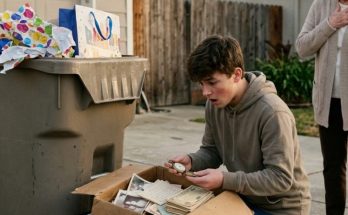
Years later, Lily still remembered the carnival.
Not every detail.
Some memories had faded.
The smell of food had become vague.
She could no longer remember the exact song playing near the playground.
She had forgotten what color most of the booths were.
But she remembered the important things.
Her father's face.
The private conversation.
The fear.
The decision to speak.
And the relief that came when Marcus believed her.
She was older now.
Old enough to understand that adults were complicated.
Old enough to understand that institutions were complicated.
Old enough to know that people could do good things and still make mistakes.
She no longer believed that justice was a single moment.
It was a process.
Sometimes it was a police investigation.
Sometimes it was a courtroom.
Sometimes it was a teacher asking a child one more question.
Sometimes it was a parent deciding not to dismiss a strange change in behavior.
Sometimes it was a school putting a reporting form where students could actually find it.
Sometimes it was an administrator accepting that a respected employee could still need investigation.
Sometimes it was simply an adult saying, “I believe you enough to listen.”
Lily thought about that often.
The system had not saved her.
The system had eventually responded.
That mattered.
But it was not the same thing.
She had saved herself by speaking.
Marcus and Rachel had protected her by believing.
Dr. Chen had recognized the injuries.
Dr. Thompson had helped her understand the fear.
Mrs. Patterson had finally told the truth.
Officer Martinez had reopened the investigation when more families came forward.
Maya Singh had taught them how to demand accountability without turning the truth into spectacle.
Other parents had stepped forward.
Other children had found courage.
No single person had done everything.
That was the lesson Lily trusted most.
Protection was collective.
Years after the trial, the district still maintained the reforms that followed Harrison's case.
Independent investigations remained mandatory for serious allegations.
Staff-student contact policies were audited.
Reporting channels were clearly posted.
Training was required.
Administrators could not simply dismiss complaints because an employee had a good reputation.
The changes were not perfect.
Lily never called them perfect.
But they were real.
And people watched them.
That was perhaps the biggest difference.
There was no longer an assumption that a respected person's reputation should end the conversation.
The question became:
What happened?
What does the child say?
What evidence exists?
Who is investigating?
How is the child being protected while the facts are established?
Those questions did not guarantee justice.
But they made silence harder.
One afternoon, Lily received a letter.
It was from a family she had never met.
The parents had heard her story through the community program.
Their daughter had recently disclosed something frightening about an adult she trusted.
The parents said they were terrified.
They also said they remembered Lily's story.
They had listened.
They had reported.
They had asked for help.
Their daughter was now receiving support.
The letter ended with a sentence Lily read several times.
“We believed her because someone had once believed you.”
Lily put the letter down.
She cried.
Not because she felt responsible.
Because she understood the chain.
One child speaks.
One adult listens.
Another family learns.
Another child finds courage.
The chain continues.
That was how change happened.
Not in speeches.
Not in headlines.
Not in perfect systems.
Through people.
Lily showed the letter to Marcus.
He read it silently.
Then he handed it back.
“You okay?”
She nodded.
“Yeah.”
He smiled.
“I think this is what you were talking about years ago.”
“What?”
“Your story isn't really about Harrison anymore.”
Lily looked at the letter.
“No.”
“What is it about?”
She smiled.
“People listening.”
Rachel joined them.
“What are you two talking about?”
Marcus handed her the letter.
Rachel read it.
Her eyes filled with tears.
She hugged Lily.
For a few seconds, none of them spoke.
Then Rachel said, “I wish you hadn't had to learn all of this.”
Lily nodded.
“So do I.”
“But I'm proud of you.”
“I know.”
Rachel laughed softly.
“Good.”
That evening, Lily went through her old photographs.
She found the carnival picture.
Then she found the first photograph she had taken for the “Nothing Happened Today” project.
Then the photograph of the open classroom door.
Then the two doors with sunlight between them.
She placed them in a row.
They looked like four different lives.
A frightened child.
A child beginning to heal.
A teenager searching for meaning.
A young woman choosing what came next.
Lily understood that she did not need to erase any of them.
They all belonged to her.
The next morning, she went for a walk.
The weather was clear.
Children were playing outside a nearby school.
A teacher stood at the edge of the playground.
Parents waited near the gate.
Someone laughed.
Someone dropped a lunchbox.
A child complained loudly about losing a game.
Nothing remarkable happened.
Lily smiled.
She raised her camera.
Then lowered it.
She decided not to take a picture.
She simply watched.
For once, she did not need to turn the moment into evidence.
It could just be a normal afternoon.
That was something she had spent years learning to trust.
Later that week, she visited Dr. Thompson.
Their sessions were less frequent now.
Sometimes months passed between appointments.
They no longer spent most of the time discussing nightmares or fear responses.
They talked about college.
Photography.
Relationships.
Work.
Family.
The future.
Near the end of the appointment, Dr. Thompson asked, “Do you still think about the carnival?”
“Sometimes.”
“And what do you feel when you do?”
Lily thought.
“Sadness.”
“Anything else?”
“Gratitude.”
Dr. Thompson smiled.
“That's a complicated combination.”
“So is life.”
“Yes.”
Lily looked around the office.
The room had changed slightly over the years.
The same calm atmosphere remained.
But Lily was different.
“I used to think being healed meant the memory wouldn't hurt anymore.”
“And now?”
“Now I think it means the memory can hurt without deciding what I do next.”
Dr. Thompson nodded.
“That sounds like healing.”
Lily smiled.
When she left the office, she called Marcus.
“Are you busy?”
“Not particularly.”
“Can we talk?”
There was a pause.
Then Marcus laughed.
“Of course.”
They met at a small café.
Lily sat across from him.
“I've been thinking.”
“That can be dangerous.”
She rolled her eyes.
“Dad.”
“Sorry.”
“I was thinking about the first thing I said to you.”
Marcus knew immediately.
“Can we talk?”
“Yeah.”
“I didn't understand what those words would become.”
“Neither did I.”
“I thought I was just telling you something.”
“You were.”
“But it changed everything.”
Marcus looked at her.
“You changed everything.”
Lily shook her head.
“We changed everything.”
He smiled.
“Fair enough.”
They sat quietly.
Then Lily said, “Do you ever wish you'd done something differently?”
Marcus did not answer quickly.
“There are things I wish I had known sooner.”
“Like what?”
“That children don't always tell you in clear sentences.”
Lily nodded.
“What else?”
“That being respected doesn't make someone safe.”
“Yes.”
“That investigations need independence.”
“Yes.”
“That parents need to know where to go.”
“Yes.”
Marcus smiled.
“But if you're asking whether I wish I had listened to you?”
He shook his head.
“Never.”
Lily looked down.
“Good.”
They finished their coffee.
Outside, people hurried past.
Cars moved through the intersection.
A bus stopped.
Someone held a door open for a stranger.
Nothing about the scene looked historic.
That was exactly how Lily wanted it.
The most important moments in her life had not looked important when they began.
A whisper.
A hospital visit.
A photograph.
A teacher's confession.
A board meeting.
A phone call.
A courtroom.
A therapy session.
A letter.
A child deciding to speak.
The pieces had accumulated.
Together, they had changed more than one life.
Before she left the café, Lily turned to Marcus.
“Dad?”
“Yeah?”
“Speaking up is scary.”
“I know.”
“But staying quiet is scarier.”
Marcus's eyes softened.
Lily smiled.
“I'm still scared sometimes.”
“You're allowed to be.”
“I know.”
She stood.
“Being brave doesn't mean you're not scared.”
Marcus smiled.
“It means you don't let fear make every decision for you.”
Lily nodded.
They walked outside together.
The old carnival was years behind them.
Jason Harrison's name no longer appeared in their daily conversations.
The school had changed.
The families had changed.
Lily had changed.
But the lesson remained.
Children deserved adults who listened.
Families deserved systems that protected rather than concealed.
Teachers deserved clear responsibilities instead of impossible loyalties.
Communities needed accountability more than reputation.
And when a child finally found the courage to say something was wrong, the most important question was never whether the child had said it perfectly.
The most important question was whether the adult was willing to hear it.
Lily had once been that child.
She still carried that seven-year-old girl inside her.
But she no longer carried her as a burden.
She carried her as a reminder.
The girl in the carnival photograph had been afraid.
She had whispered.
Someone had listened.
That was where the story truly began.
And perhaps that was also where it could keep beginning, every time another child spoke and another adult chose to believe that child's safety mattered more than anyone's reputation.
Lily walked home beside her father.
The evening light stretched across the sidewalk.
She thought about the future.
She did not know exactly what she would become.
Maybe a photographer.
Maybe an advocate.
Maybe a social worker.
Maybe something none of them had imagined.
For the first time, she did not feel pressure to decide.
Her future belonged to her.
That was the final gift of being believed.
Not a perfect childhood.
Not a painless memory.
Not a life untouched by fear.
Something better.
A life in which fear no longer owned the ending.
Lily looked at Marcus.
“Thank you.”
He smiled.
“For what?”
“For listening.”
He squeezed her shoulder.
“Always.”
And they kept walking.
The End
Read more original stories on Feel Every Story.
The Question My Daughter Asked in the Parking Lot Turned an Ordinary School Carnival Into a Night We Could Never Forget
Part 16 of 16