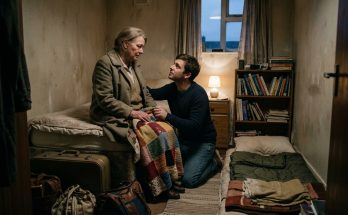
Six days after my daughter was born, my husband stood in the doorway of our bedroom holding my car keys and told me I was not going to dinner with his family.
He said it gently, almost kindly, which somehow made it worse.
“You need to stay here with Wren tonight,” Roland said. “It’ll be easier for everyone.”
I was sitting against a mountain of pillows with our daughter asleep against my chest. My incision ached whenever I shifted. My hair had not been brushed since breakfast, and there was a damp crescent of milk on the shoulder of the old T-shirt I had been wearing for two days.
I looked at him, waiting for the rest of the sentence.
Instead, he slipped my keys into his pocket.
“What do you mean, easier for everyone?”
“Mom planned dinner weeks ago.”
“I know. You told me yesterday.”
“She thinks you should rest.”
I glanced toward the bassinet beside the bed. “I can rest there just as easily as I can rest here.”
Roland gave me the patient expression he had started using whenever he wanted a conversation to end without admitting that he was ending it.
“Simone, you just had a baby.”
“I remember.”
“You’re exhausted.”
“Yes.”
“So stay home.”
The words landed with a dull finality. There was no invitation hidden behind them, no suggestion that I could decide for myself. He had already made the decision and was presenting it as concern.
I adjusted Wren against my chest. Her tiny mouth moved in her sleep, searching instinctively, and I felt that familiar mixture of tenderness and fear that had followed me since the delivery room.
“What about the car?”
“I’m taking it.”
“You're taking my car?”
“I need the infant seat.”
I looked toward the carrier near the door. “Then take the seat out.”
He shook his head.
“We’ll be late if I start rearranging everything.”
There it was.
The sentence was ordinary. Almost harmless. Yet I suddenly heard what he wasn't saying.
His evening mattered more than my ability to leave the house.
I stared at him for several seconds.
“You’re leaving me here without a car?”
“You have everything you need.”
“Except transportation.”
“You aren't supposed to be driving yet anyway.”
“I’m not asking to drive. I’m asking why you're taking the only car with Wren’s seat installed.”
Roland sighed.
“Because I’m already running late.”
He walked away before I could answer.
I heard the front door open downstairs.
Then close.
The sound of his footsteps disappeared across the porch.
I stayed perfectly still, listening to the engine start.
For a moment, I thought he might come back.
He didn't.
Wren stirred against me.
“Apparently it’s just you and me tonight,” I whispered.
She opened her eyes for half a second and closed them again.
I smiled despite myself.
Then my phone vibrated.
It was a message from Roland.
Mom says not to worry about dinner. She knows you need your rest.
I read it twice.
I hadn't been invited.
Nobody had called me.
Nobody had asked whether I wanted to go.
They had simply decided that my absence was convenient.
I set the phone facedown and looked around the room.
The nursery was beautiful. My mother had chosen the pale yellow blanket folded over the rocking chair. The little wooden moon hanging above the crib had been carved by hand. A framed photograph of my parents stood on the dresser, my mother smiling into the camera while my father looked as though someone had caught him in the middle of an argument.
Wren had inherited my mother's nose.
Everyone kept saying so.
Everyone except Roland.
He had barely looked at the photograph since we brought her home.
A sharp cry came from the bassinet.
I carefully stood.
Pain pulled low across my abdomen, forcing me to pause with one hand braced against the mattress.
“I’m coming.”
I lifted Wren and carried her downstairs.
By the time I reached the kitchen, she was crying hard enough to turn red.
I checked her diaper.
Clean.
I warmed a bottle, then remembered I had pumped earlier and decided to feed her myself.
While I settled into the chair, my phone rang.
Roland.
I answered.
“Hi.”
“Everything okay?”
“She was crying.”
“She’s fine?”
“She is now.”
“Good.”
I waited.
“Are you eating?” he asked.
“I was about to.”
“Make sure you do.”
I looked at the empty chair across from me.
“Are you already at your mother's?”
“Almost.”
“Did everyone know I wasn't coming?”
A pause.
“What?”
“Did your family know?”
“Know what?”
“That I wasn't invited.”
“Simone, this isn't a good time.”
“You're the one who called.”
“I called to check on you.”
“No. You called because you wanted to know whether the baby was settled.”
“That isn't fair.”
“Neither was what you did.”
His voice hardened.
“I told you you're exhausted.”
“You didn't tell me. You decided.”
“Mom didn't want you feeling obligated to socialize.”
“Did she tell you that?”
“Yes.”
“Did she tell me?”
“She didn't want to bother you.”
I laughed once.
There was no humor in it.
“Then why didn't you ask me?”
Silence.
“Roland?”
“I have to go.”
“Of course.”
He ended the call.
Wren had fallen asleep.
I stared at the blank phone screen until it went dark.
That evening, the house became unnaturally quiet.
I fed Wren twice.
I changed her diaper.
I walked the length of the living room with her against my shoulder until she finally settled.
At 9:47, a message appeared.
We're heading home soon.
At 10:16:
Mom made too much dessert.
At 10:43:
Don't wait up.
I looked at the last message for a long time.
Then another appeared.
Actually, I'll be home late. Go to sleep.
I didn't answer.
Around midnight, I heard the garage door.
Roland came upstairs quietly.
I was awake.
He changed clothes without turning on the bedroom light.
“How was dinner?”
“Fine.”
“Your mother said anything about me?”
He stopped.
“She asked how you were.”
“What did you say?”
“That you're tired.”
“That’s all?”
“What do you want me to say?”
I turned toward him.
“The truth.”
He stood there in the dark.
“What truth?”
“That I wanted to come.”
“You needed to stay with the baby.”
“I know what you told me.”
“You're making this bigger than it is.”
“I was excluded from a family dinner six days after giving birth.”
“You weren't excluded.”
“Then what would you call it?”
He didn't answer.
I pulled the blanket higher.
“Never mind.”
He climbed into bed.
For several minutes, neither of us spoke.
Then he said, “Mom thinks you’ve been overwhelmed.”
My eyes opened.
“By what?”
“Everything.”
“That’s helpful.”
“She’s worried.”
“About me?”
“Yes.”
“Or about the way I parent?”
He sighed.
“She thinks you need more support.”
“I need my husband to stop making decisions for me.”
“I'm trying to protect you.”
“No. You're trying to keep everyone comfortable.”
He rolled onto his back.
“We're not doing this tonight.”
I looked at the ceiling.
That sentence had become familiar.
Whenever I raised something uncomfortable, there was always a reason to postpone it.
Not tonight.
Not in front of Mom.
Not while we're with friends.
Not before the baby sleeps.
Not when you're upset.
Not when I'm tired.
The conversation was always waiting for a better time.
The better time never came.
Three years earlier, when I married Roland, I had believed his family was simply close.
His mother, Judith, called every day.
His younger sister, Faye, appeared without warning with coffee and opinions.
His father had died before I met him, so Judith had become the center of Roland's world.
At first, I admired their loyalty.
Then I noticed that loyalty always seemed to point in one direction.
Toward Judith.
If she disliked a restaurant, we stopped going.
If she thought our apartment was too small, Roland started searching for another one.
If she believed I worked too much, he repeated it.
If she thought I was spending too much time with my own father, Roland suddenly had questions about my priorities.
I adapted.
I thought that was what marriage required.
I stopped correcting small things.
I stopped mentioning how often Judith arrived without calling.
I stopped attending some of the charity events my father hosted because Roland's mother once joked that I enjoyed showing off my family's wealth.
My father had never asked me to explain any of it.
He simply watched.
After my mother died, he watched more closely.
I had promised him I was happy.
He had looked at me for a long time before answering.
“I hope you are,” he said.
I hated that sentence.
Not because it was cruel.
Because it sounded like he didn't believe me.
I wanted him to be wrong.
So I tried harder.
When Wren was born, I thought everything would change.
Instead, the first thing Roland said when the nurse placed our daughter against my chest was, “My mom is going to be thrilled.”
I had smiled.
I had been too tired to understand why the sentence bothered me.
Now I understood.
It wasn't that Judith loved Wren.
It was that everyone seemed to believe Wren belonged to the family before she belonged to herself.
The next morning, Roland left for work.
Before he went, he stood beside the crib and watched Wren sleep.
“She looks peaceful.”
“She was awake most of the night.”
“I didn't hear her.”
“You were asleep.”
He touched the blanket.
“Mom wants to come by later.”
I felt my stomach tighten.
“I don't want visitors today.”
“She only wants to help.”
“I said no.”
He looked at me.
“You've been saying no to everyone.”
“Because I just gave birth.”
“She worries about you.”
“I don't need to be supervised.”
“No one is supervising you.”
“Then tell her not to come.”
He stared at me.
Finally, he said, “Fine.”
But the way he said it told me he didn't mean fine.
At 10:15, Judith arrived.
She let herself in with the spare key.
I was standing in the kitchen holding Wren.
“You didn't tell me she was coming,” I said.
“She said she had the key.”
Judith smiled.
“I brought soup.”
“Thank you.”
“And vitamins.”
She placed a pharmacy bag on the counter.
I looked at it.
“I already have what the hospital prescribed.”
“These are better.”
“My doctor gave me instructions.”
Judith's smile remained.
“Doctors don't know everything.”
Roland was silent.
I looked at him.
He looked away.
Judith reached for Wren.
“Come to Grandma.”
I instinctively held my daughter closer.
Judith noticed.
Her expression changed for less than a second.
Then it softened again.
“I'm only trying to help.”
“I know.”
She touched Wren's cheek.
“She needs to get used to other people.”
“She’s six days old.”
“She won't always be.”
I said nothing.
Judith looked toward the hallway.
“Have you spoken to your father?”
“Not today.”
“You should.”
“Why?”
“He has been asking questions.”
“What questions?”
“About the baby.”
“That seems normal.”
She smiled again.
“Of course.”
After she left, I stood at the counter staring at the pharmacy bag.
Roland picked it up.
“Mom brought those for you.”
“I noticed.”
“You should take them.”
“What are they?”
“Vitamins.”
“You didn't look.”
“She said they're vitamins.”
I took the bag.
The bottle inside was white.
No familiar hospital label.
No instructions from my doctor.
Just a pharmacy sticker with my name.
I frowned.
“Where did she get these?”
Roland shrugged.
“She knows someone at the hospital.”
I put the bottle back in the bag.
“I'll ask my doctor.”
His expression tightened.
“You don't trust my mother?”
“This isn't about trust.”
“It sounds like it is.”
“It’s about knowing what I’m putting into my body while I’m breastfeeding.”
He walked away.
That afternoon, my father called.
I almost didn't answer.
“Dad.”
“How are you?”
“Tired.”
“That wasn't my question.”
I smiled faintly.
“I'm okay.”
“Is Wren sleeping?”
“Sometimes.”
“Are you eating?”
“Yes.”
“Does Roland need anything?”
I looked toward the hallway.
“No.”
There was a pause.
Then Dad said, “If you need me, call.”
“I know.”
“I mean it.”
“I know.”
After we hung up, I cried.
Not because I was unhappy.
Because someone had asked what I needed without deciding the answer first.
That evening, Roland came home with the same tired expression he had worn all week.
He kissed my forehead.
“How are my girls?”
I looked at him.
“We need to talk.”
He loosened his tie.
“Can it wait?”
“No.”
He stopped.
“What happened?”
“Your mother came over.”
“I know.”
“She brought medication.”
“She brought vitamins.”
“Do you know what they are?”
“Simone.”
“Do you?”
He stared at me.
“No.”
“Then why did you tell me to take them?”
His jaw tightened.
“I trusted her.”
I picked up the bottle.
“I don't.”
He looked at it.
Then at me.
For a few seconds, something passed across his face.
Not anger.
Not concern.
Something closer to calculation.
It disappeared so quickly I almost convinced myself I hadn't seen it.
“Fine,” he said. “Don't take them.”
He turned away.
I watched him walk upstairs.
The bottle remained in my hand.
For the first time since Wren was born, I wondered whether the problem in my house was not that everyone thought I was too fragile.
Maybe someone needed me to look fragile.
I put the bottle in the kitchen cabinet.
Then I locked the door.
I didn't know why.
I only knew I didn't want anyone touching it again.
Click Here to continue read next: PART2: The House I Returned to Had a Gate My Husband Could Not Cross, and Inside Was a Key My Father Had Been Waiting Years to Give Me
Six Days After Wren Was Born, One Casual Dinner Invitation Exposed the Quiet Distance That Had Been Growing Inside My Marriage
Part 1 of 16