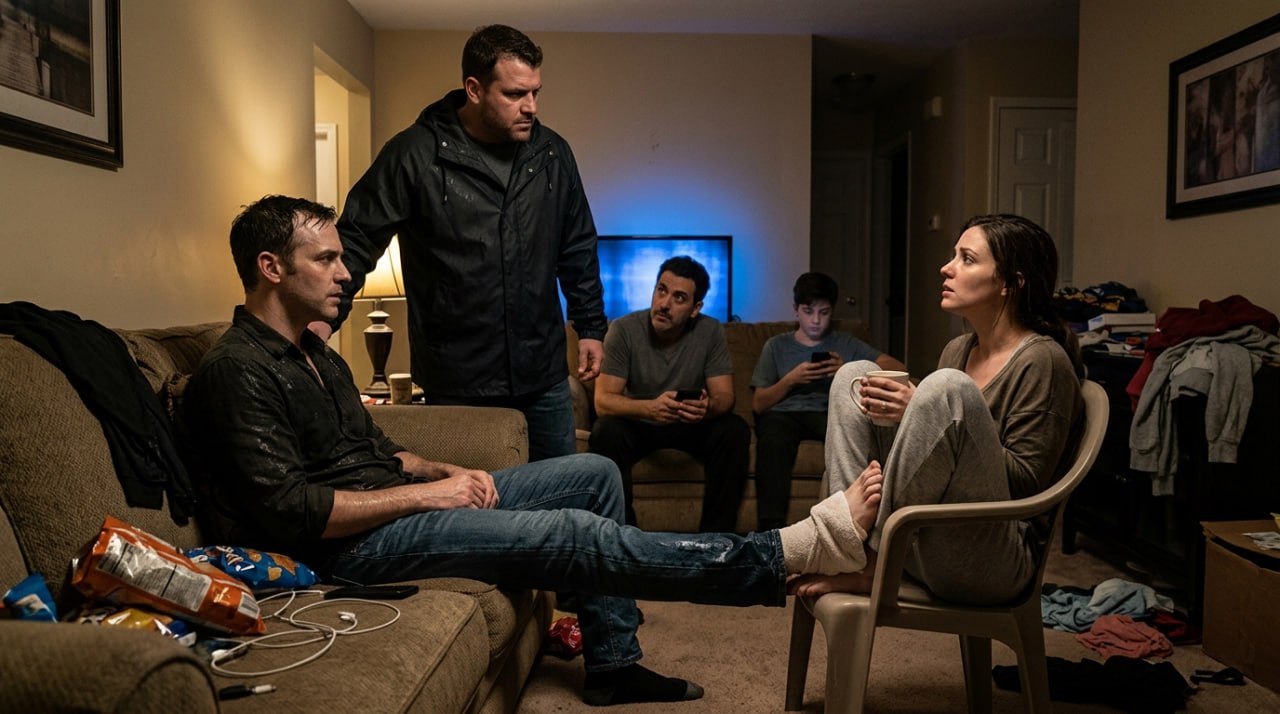
Raymond admitted carrying the envelope.
He admitted placing it on my back step.
He admitted knowing my name was written across the front.
He denied writing a single sentence inside.
At first, the distinction sounded ridiculous.
Then Detective Shah reminded us who we were dealing with.
A network built on people carrying documents they did not create.
Signing names that were not theirs.
Opening accounts for owners who never appeared.
Nothing about physical possession proved authorship.
“Where did he get it?” Melissa asked.
“He isn’t answering substantive questions until counsel is present.”
“Convenient.”
“Yes.”
Shah did not pretend otherwise.
Raymond’s surrender also changed the investigation.
The man who had spent days operating from the shadows now had rights, representation, and a reason to stop talking.
That frustrated me.
It was also how the system was supposed to work.
The same rules protecting Raymond protected innocent people accused through manufactured evidence.
After everything done in my name, I understood the importance of that better than I wanted to.
Forensic examination of the Final Accounting began.
Paper.
Ink.
Printer characteristics.
Fingerprints.
Handwriting.
Metadata from a small printed code on one sheet.
The letter was mostly typed.
Only several notes were handwritten.
Those notes became important.
One beside Dario’s name read:
He always chooses family last.
Another beside Maya:
Will run when she realizes R cannot protect her.
R.
Not I.
That detail had been invisible when we assumed Raymond wrote the document.
A person writing about himself would not normally label himself R in an internal note.
“Could be deliberate,” I said.
“Absolutely,” Shah replied.
“Could Raymond have written it to look like someone else?”
“Yes.”
“So nothing is simple.”
“No.”
I was getting tired of being right about that.
The printer evidence produced a lead.
The pages had likely been printed on a model matching equipment recovered at Unit 317.
That narrowed nothing.
Half the operation’s documents came through Unit 317.
Fingerprints were partial and mixed.
Raymond’s appeared on the envelope.
Not surprising.
Another belonged to Maya.
Another to Dario.
The letter could have passed through several hands.
Then handwriting analysis returned a preliminary observation.
The handwritten notes resembled samples recovered from the motel.
Dario’s.
Melissa stared.
“No.”
“Preliminary,” Shah emphasized.
“Could Dario have written the letter?”
“Possibly.”
“But it blames him.”
“It also portrays him as manipulated by Raymond.”
That was true.
The letter acknowledged Dario’s crimes but placed strategic control above him.
A clever confession can also be a defense.
“What does Dario say?”
“He denies writing it.”
Of course.
“Does he recognize it?”
“He says Victor showed him something similar two years ago.”
Every road returned to Victor.
Detective Shah interviewed him again.
This time Victor admitted creating an earlier document.
Not the Final Accounting.
A reconstruction.
He had spent years mapping Raymond’s operation from records he stole, victims he contacted, and transactions he traced.
He called it the accounting.
“Why?” I asked when Shah returned.
“To understand who owed what to whom.”
“Money?”
“Money, responsibility, leverage.”
“And Dario saw it?”
“Yes.”
“When?”
“Two years ago.”
The same meeting when Victor gave him the flash drive.
“What did Victor want him to do?”
“Take the records to authorities.”
“And Dario refused because he was implicated.”
“Yes.”
“So Victor’s accounting may have become the letter.”
“Possibly altered.”
“By whom?”
“Unknown.”
Melissa rubbed her temples.
“This is insane.”
No one corrected her.
Shah continued.
Victor’s original document did contain language about me becoming the apparent authorizer of the scheme.
“How would Victor know?”
“He had recordings.”
“Of Raymond?”
“Yes.”
“Then the central claim is real?”
“Supported by other evidence.”
That mattered.
Even if the letter’s authorship was false, some of its contents could be true.
Again, source and accuracy were separate questions.
“Did Victor write the note about Dario choosing family last?”
“No.”
“Did Maya?”
“She denies it.”
“Evelyn?”
“We haven’t located her.”
There it was.
The one major participant still outside custody or protected cooperation.
Evelyn.
She had called.
Confessed pieces.
Warned us.
Then moved behind an attorney.
But her location remained uncertain.
“Could the handwriting be hers?”
“Samples are being compared.”
Mom looked up.
“What about the unknown messages?”
Shah nodded.
“Investigators are examining whether any devices tied to Evelyn could be connected.”
The messages had done something specific.
They revealed Raymond.
Then Maya.
Then Victor.
Then Dario.
Each time, attention moved.
Who benefited?
Someone trying to expose everyone.
Someone trying to keep investigators away from herself.
Maybe both.
Melissa asked, “What was Evelyn’s real role?”
The question was overdue.
We had treated her as a secondary participant because she appeared less often.
She had notarized documents.
Handled identities.
Knew Tampa.
Knew Raymond.
Knew Victor.
Knew the old operation.
She had been present at the barbecue seven years ago.
She had known my family long before I knew her.
“She wasn’t just helping Dario,” I said.
“No,” Shah replied.
“What did Victor say about her?”
“That she specialized in documents.”
“Meaning?”
“Identity packages.”
Fake IDs.
Supporting paperwork.
Corporate records.
Notary seals.
Application materials.
The connective tissue between stolen information and institutions.
“Did she create the fake license?”
“Victor believes so.”
“Passport materials?”
“Likely involved.”
“Melissa’s face attached to my identity?”
“Maya says Evelyn provided the profile.”
Melissa went pale.
Evelyn had helped turn her into my secondary face.
“What did Raymond do?”
“Coordination, financing, leverage, selection.”
“And Evelyn made the identities believable.”
“Yes.”
That was not secondary.
That was essential.
“What happened in Tampa between Evelyn and Victor?”
Shah looked through her notes.
“They were partners for a period.”
“Romantically?”
“Apparently.”
Melissa blinked.
Nobody had known.
“That explains why Victor sent her evidence after disappearing.”
“Yes.”
“He wanted her out.”
“Yes.”
“And she stayed.”
“Yes.”
“For money.”
“That’s what she said.”
The emotional geometry of the operation became clearer.
Victor betrayed people, then tried to save them.
Dario loved people, then exploited them.
Evelyn knew the danger, then stayed for profit.
Maya committed fraud, then preserved evidence.
Raymond found every contradiction and converted it into leverage.
Nobody needed to be entirely corrupt.
They only needed one weakness he could keep reopening.
“What weakness did he have on Evelyn?”
Shah hesitated.
“Her daughter.”
Melissa looked startled.
“She has a daughter?”
“Yes.”
“Where?”
“Adult now. Different state.”
“Was she involved?”
“No evidence of that.”
“Then how was she leverage?”
“Evelyn used money from the operation to pay for her daughter’s medical education and housing.”
Not necessarily illegal by the daughter.
But if the funds were traced, Evelyn feared destroying the life she had financed.
Again.
Family.
Always family.
“What about Raymond’s weakness?”
I asked it almost casually.
Everyone stopped.
We had spent weeks learning what Raymond knew about other people.
What did he fear losing?
Victor might know.
Shah asked him.
His answer arrived an hour later.
“Control.”
“That’s not a person.”
“No.”
“What does he care about?”
“According to Victor, being smarter than everybody else.”
That was not enough.
People hide money because they care about freedom.
They keep leverage because they fear exposure.
Raymond had surrendered instead of fleeing.
Why?
“Maybe he thinks arrest protects him.”
Rachel, who had returned after court filings, looked at me.
“From whom?”
“Evelyn?”
“Victor?”
“Maya?”
“Dario?”
Or whoever had turned his own methods against him.
The Final Accounting may have been delivered to Raymond with instructions to bring it to me.
Why would he obey?
Threat.
Leverage.
A bargain.
“What was Raymond carrying when arrested?” I asked.
“Phone. wallet. keys.”
“What keys?”
Shah checked.
“Vehicle. storage. two unidentified.”
“Any house?”
“Possibly.”
“White house?”
“No.”
“Unit 317?”
“One key appears consistent.”
“And the other?”
“Unknown.”
Mom suddenly looked at the old album.
“Judith had a safe-deposit box.”
Everyone turned.
“What?”
“She used to complain about the key.”
“What kind of key?”
“Small. brass.”
Shah contacted the evidence team.
The unidentified key was small.
Brass.
A number stamped on it.
Not proof.
But enough to investigate.
Bank mergers over forty years complicated the trail.
Eventually they found it.
Judith Cole had rented a safe-deposit box.
After her death, access records became unclear.
The box had been transferred during a bank acquisition.
It remained active.
Paid automatically.
By whom?
A trust.
Controlled through a company connected to Raymond.
“Can investigators access it?”
“With proper legal process.”
More waiting.
By then, waiting had become its own kind of pressure.
Nico sat with me that evening.
“Dad’s going to prison?”
“I don’t know the outcome.”
“He admitted hurting you.”
“Yes.”
“Would you want him to?”
I looked at him.
“That decision isn’t mine alone.”
“But do you?”
He deserved something more human than legal language.
“I want what he did taken seriously.”
Nico nodded.
“And if that means prison?”
“I won’t lie to protect him.”
He absorbed that.
“I don’t want to either.”
“You shouldn’t be asked to.”
The next morning, investigators legally accessed the safe-deposit box.
Inside were old photographs.
Microcassettes.
Documents.
Cash.
Several original tenant applications from Judith’s business.
Mom’s employment paperwork.
Isabel Alvarez’s records.
Alejandro’s juvenile documents.
Raymond had preserved the beginning.
“Why keep all that?” Melissa asked.
“Leverage,” I said.
But Shah shook her head.
“Some of it predates anything useful as leverage today.”
“Then why?”
History.
Proof.
Trophies perhaps.
Or an archive.
One cassette had a handwritten date from forty years ago.
Investigators digitized it.
Judith’s voice.
Then teenage Raymond.
They were arguing.
Judith accused him of opening an account using Margaret Ellis’s employment information.
Mom gripped my hand.
Raymond denied stealing money.
Judith said that was not the point.
“You made a person on paper who isn’t her.”
The room went still.
Forty years ago.
The concept already existed.
Raymond answered:
“It worked.”
Three words.
That was the beginning.
Not houses.
Not Dario.
Not Victor.
A teenager discovering that institutions would accept a paper version of a real person if enough details matched.
Judith threatened to call police.
Raymond laughed.
“You’d have to tell them where the payroll money went first.”
There it was.
His first leverage.
Judith herself had been stealing.
Maybe deposits.
Maybe payroll.
Raymond knew.
She could expose him only by exposing herself.
The architecture was born.
Mutual guilt.
Control through secrets.
Mom whispered, “She never called.”
No.
And Raymond learned the lesson.
People with something to lose are easier to silence than innocent people.
Then another voice entered the recording.
A young woman.
Isabel Alvarez.
Dario’s grandmother.
She told Raymond to give back the papers.
He refused.
She threatened him.
He said:
“Then Margaret finds out you used her signature too.”
Mom recoiled.
“Isabel?”
The first identity theft had not been Raymond alone.
Dario’s family was involved from the beginning.
The tape ended.
Detective Shah received a forensic message minutes later.
The handwriting in the Final Accounting notes had been compared against Evelyn, Dario, Victor, Maya, and Raymond.
Strongest similarity:
Evelyn.
Melissa whispered, “She wrote it.”
“Possibly.”
Then Shah’s phone rang.
She answered.
Listened.
Her face changed.
“What?”
She looked at me.
“Evelyn just surrendered.”
“Where?”
“At the federal building.”
“Why now?”
“She brought records.”
“What records?”
“A full copy of the current ledger.”
Another ledger.
Then Shah added:
“And she says she sent the anonymous messages.”
The room went silent.
“All of them?”
“No.”
Of course not.
“Which ones?”
“She says she sent the first warning about Melissa’s face.”
That was the message Raymond denied.
“She also sent the warning that Dario had the wrong ledger.”
“And Mom’s file?”
“Raymond.”
“Victor chose Stephen?”
“Raymond.”
The anonymous sender had never been one person.
Two people had used the same channel.
Maybe more.
“What does Evelyn want?”
“To cooperate.”
“In exchange for?”
“Her attorney will negotiate that.”
There was always a bargain.
Then Shah looked at me.
“She also says the Final Accounting was hers.”
“Why give it to Raymond?”
“To force him to surrender.”
“How?”
Evelyn had included a message with it.
A message not placed in my envelope.
She had told Raymond that copies of his oldest records had been distributed and would be released if he ran.
Raymond surrendered because he believed flight would trigger evidence he could no longer control.
For the first time, somebody had used leverage against him.
“What did Evelyn threaten to release?”
Shah’s expression tightened.
“Proof about Judith Mercer.”
The woman who died on the stairs in Tampa.
Caroline’s aunt.
“What proof?”
“A recording.”
“Of Raymond?”
“Yes.”
“And Dario?”
A pause.
“Yes.”
Melissa closed her eyes.
The oldest unresolved violence in the story was about to become evidence.
Click here to continue reading: PART 27: Evelyn’s Recording Exposed What Happened Before Judith Mercer Fell, and Dario’s Own Words Made My Accident Impossible to Call an Isolated Mistake
The Night I Fell Outside My Own Home and Learned Exactly How Much My Family Thought I Would Endure
Part 26 of 32