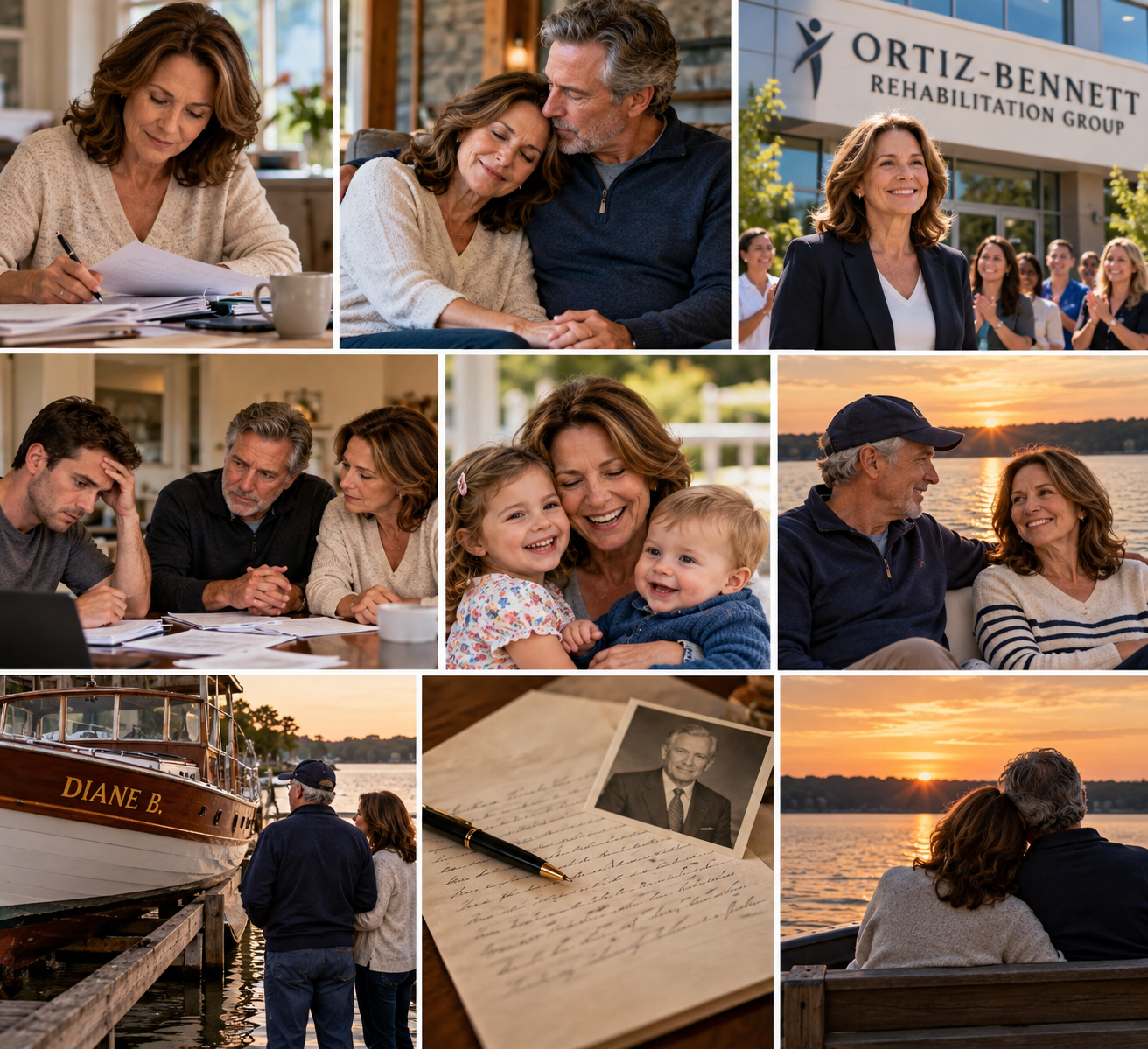
The full trust document was one hundred eighty-six pages.
This time, I read every one.
Not the summary.
Not Samuel’s explanation.
Not Dad’s letter.
The document itself.
Rebecca sat beside me with a legal pad, translating only when I asked.
Dad had built protections everywhere.
Against creditors.
Against remarriage complications.
Against impulsive gifts.
Against anyone using my inheritance as collateral.
But within those protections, he had left me more authority than I knew.
I could replace Samuel with another qualified independent trustee.
I could appoint a corporate co-trustee.
I could direct investments within broad fiduciary limits.
I could request substantial distributions for personal projects.
I could fund businesses I owned.
I could buy property in my own name through protected structures.
I could establish gifts for Natalie and Eric.
And after five years, several restrictions loosened automatically.
Dad had not created a financial prison.
He had created distance between my money and anyone who could pressure me quickly.
Including Mark.
Including family.
Possibly even including my own instinct to avoid conflict by giving in.
Still, one phrase bothered me.
Independent trustee approval.
I looked at Samuel.
“If I want to make a large gift, someone still gets to say no.”
“Yes.”
“Dad still didn't fully trust my choices.”
Samuel nodded.
“No.”
The honesty helped.
“Why?”
“Because he believed the first years after inheritance would be the most dangerous.”
“For Mark?”
“For anyone.”
Samuel looked tired.
“Walter spent decades watching money change relationships.”
“He also spent decades using money to control relationships.”
“Yes.”
That answer surprised me.
Samuel continued.
“I think he knew that at the end.”
Dad's final amendments supported it.
He inserted removal rights.
Required written reasons for denied distributions.
Created an appeal process through a second fiduciary.
He even included a clause allowing me, after three years of clean financial administration, to assume broader investment authority.
Dad had been trying to protect me without repeating his old mistake.
He hadn’t solved the contradiction perfectly.
Nobody could.
But he tried.
I closed the binder.
“I want you to remain trustee for now.”
Samuel looked surprised.
“Are you sure?”
“Yes.”
“Why?”
“Because I don’t want my first act of independence to be automatically rejecting everything Dad built.”
He nodded slowly.
“But.”
He waited.
“Every time there is information I’m entitled to know, I get it immediately.”
“Agreed.”
“No protective timing.”
“Agreed.”
“No deciding I’m too emotional.”
“Agreed.”
“If you think I’m making a terrible decision, tell me. Then let me decide unless the trust legally prevents it.”
Samuel almost smiled.
“That sounds like Walter’s final version of the arrangement.”
“Good.”
Then I made my first request.
I wanted a complete audit of every financial relationship between Dad and Mark going back twenty-two years.
Every loan.
Investment.
Buyout.
Gift.
Side agreement.
Everything.
Not because I expected another betrayal.
Because I was done living inside edited histories.
The audit took three weeks.
For the first time since the funeral, days began passing without explosions.
Mark returned to work.
He stayed with Diane.
He attended therapy twice a week.
He sold his Northstar interest to Lauren at an independently appraised value.
After taxes and transaction costs, the proceeds were just under $190,000.
Most went toward the unauthorized debt.
His personal investment account added another $88,000.
A bonus payment from work would cover more.
Melissa sold a portion of her business assets and began repayment.
Diane agreed to restore funds she had improperly loaned from the education trust through a structured plan.
The numbers did not repair trust.
But they stopped growing.
That mattered.
Natalie stopped speaking to Mark for nearly two weeks.
Then she agreed to coffee.
I did not ask what they discussed.
That was their relationship.
Eric remained angrier.
He told Mark he didn’t want contact for a while.
Mark respected it.
At least so far.
That mattered too.
I moved back into the house alone.
The first night was terrible.
Every room held two versions of my life.
The version I remembered.
The version I now understood.
In the kitchen, I found a scratch on the cabinet from when Eric crashed a toy truck at six.
In the living room, a stain beneath the rug from Natalie’s graduation party.
In the bedroom, the dent Mark’s body had made in the mattress.
Twenty-two years could not be sorted cleanly into true and false.
We had laughed.
Loved.
Raised children.
Buried parents.
Fought.
Traveled.
Made dinner.
Watched stupid television.
Some of it had been real.
Some of it had contained lies.
The existence of lies did not automatically erase every good memory.
That was almost inconvenient.
Anger preferred simple ruins.
Reality left structures standing.
The audit arrived on a Monday.
Rebecca and I reviewed it.
Dad and Mark had conducted more business together than either ever told me.
Some deals were profitable.
Some failed.
Dad loaned Mark money three times.
Mark repaid two.
The third was converted into an equity transaction.
Nothing criminal.
Nothing hidden for an affair except the Ridgeway timing.
The biggest surprise was that Mark had also helped Dad.
Seven years earlier, when one of Dad’s private investments nearly collapsed, Mark connected him with a buyer who saved Dad roughly $600,000.
Dad paid Mark no commission.
Mark never asked.
I stared at that section.
“Why didn't anyone mention this?”
Rebecca shrugged.
“Because families are bad accountants of favors.”
Dad’s records included a handwritten thank-you note.
You saved my hide. I will deny saying that if asked.
I laughed.
Then cried.
Dad and Mark had not simply been enemies.
That was too easy.
They had respected each other.
Resented each other.
Helped each other.
Competed.
Kept secrets.
Forgave some things.
Never forgave others.
Almost like family.
The final audit conclusion found no additional undisclosed debt in my name.
No hidden properties.
No unknown women.
No missing accounts.
For the first time, “everything” might actually mean everything.
I called Mark.
“The audit is done.”
He sounded nervous.
“And?”
“No new fraud.”
He exhaled.
“I told you.”
“I know.”
Silence.
Then I said, “I want to meet.”
We chose a park instead of the café.
No lawyers.
No family.
No paperwork.
A cold wind moved through the bare trees.
Mark sat on a bench wearing the old brown jacket he had owned for fifteen years.
I sat beside him.
Not close.
Not far.
“How’s therapy?”
“Awful.”
I almost smiled.
“Good.”
He laughed quietly.
“Apparently I don't enjoy discovering things about myself.”
“I could have told you.”
“I know.”
We watched a man throw a tennis ball for an enormous black dog.
After a while, Mark said, “Eric still won't talk to me.”
“Give him time.”
“I am.”
“Natalie?”
“She asked me why I stopped her from going to Boston.”
My stomach tightened.
“What did you say?”
“The truth.”
“What truth?”
“That I was scared.”
“Of what?”
“Her leaving.”
I looked at him.
He stared at the ground.
“I told myself it was about money and independence. But she was already pulling away. College. Friends. Plans. Boston felt like losing her.”
“So you took away the choice.”
“Yes.”
“Just like you did with me.”
“Yes.”
He did not defend it.
That mattered.
“Did she forgive you?”
“No.”
“Good.”
He looked at me, startled.
“She shouldn’t have to decide that quickly.”
He nodded.
“I know.”
Another minute passed.
Then I asked, “Do you still believe Dad owed you twenty percent?”
Mark thought.
“Contractually? Maybe.”
“That isn't what I asked.”
“No.”
“Why not?”
“Because the promise had conditions.”
“You fulfilled most of them.”
“I broke one.”
“You also gave up a major promotion because Mom was sick.”
“Yes.”
“Dad recognized that.”
“I know.”
“So why waive the claim?”
He looked at me.
“Because I realized I was using the contract the same way I used everything else.”
“How?”
“As proof that I was owed control.”
I waited.
“I kept score,” he said.
“I made more money, so I thought I got more say. I helped Mom, so I thought she should trust me. I saved Melissa’s business, so I thought she should go along with whatever came next. I gave up Texas, so I thought Walter owed me. I supported the family, so somewhere along the way I started believing you owed me.”
He swallowed.
“I don't know when partnership became accounting.”
That was the clearest thing he had said yet.
“Neither do I.”
“I’m sorry.”
“I know.”
“I don't expect that to fix anything.”
“Good.”
He smiled faintly.
Progress.
“I made a decision about the trust,” I said.
His body stiffened slightly.
Then he caught himself.
“What decision?”
“I’m funding Natalie and Eric’s education accounts properly.”
“That makes sense.”
“I’m also reimbursing myself for the losses caused by the fraudulent debt once restitution is complete.”
He nodded.
“And I’m opening a second clinic.”
He looked at me.
“What?”
“A larger practice.”
For years I had considered expanding again.
Then dismissed it.
Too risky.
Too much work.
Wrong timing.
Maybe some of that caution was mine.
Maybe some belonged to the woman sitting in a car eleven years earlier after a loan denial she never understood.
“I found a building.”
“Where?”
“About ten minutes from the current office.”
“How much?”
“Just over eight hundred thousand.”
His eyebrows rose.
“That’s—”
He stopped.
I waited.
He smiled ruefully.
“That is none of my business unless you ask.”
Something inside me softened.
Only slightly.
But enough to notice.
“I want to buy it through the trust.”
“Sounds smart.”
“You don’t have to say that either.”
“Right.”
We both laughed.
It felt strange.
Good.
Dangerous.
Human.
Then I said, “I’m not filing for divorce today.”
He became completely still.
“That does not mean I’m staying.”
“I understand.”
“I want a legal separation.”
Pain crossed his face.
But he nodded.
“For how long?”
“I don't know.”
“Okay.”
“I want separate finances.”
“Okay.”
“You repay every dollar connected to the fraud.”
“Yes.”
“The education trust gets restored.”
“Yes.”
“No financial decisions involving Natalie, Eric, Diane, Melissa, or me without the person affected knowing exactly what is happening.”
“Yes.”
“If you hide one account—”
“I know.”
“No. Say it.”
He met my eyes.
“If I hide one account, one debt, one business, one financial obligation, or one material fact that affects you, I lose the chance.”
The word chance hung between us.
He heard it.
So did I.
“What about the affair?” he asked.
“What about it?”
“Can you ever forgive that?”
I looked toward the dog racing through brown leaves.
“I don't know.”
He nodded.
“That seems fair.”
“It isn't about fair.”
“I know.”
“Stop saying that.”
He almost smiled.
“Working on it.”
I stood.
Mark stood too.
He did not reach for me.
“Clare?”
“Yes?”
“Congratulations on the clinic.”
This time, I let myself smile.
“Thank you.”
Three weeks later, the trust purchased the building.
Not for Mark.
Not for Diane.
Not for Melissa.
Not because Dad would have approved.
For me.
The first morning I walked through it after closing, the rooms were empty.
Sunlight came through tall front windows.
The floors needed refinishing.
One wall had water damage.
The old reception desk was ugly enough to be insulting.
I loved it.
Natalie and Eric met me there.
Natalie immediately started planning the waiting room.
Eric said the electrical system looked ancient.
I told him not to ruin my mood.
We laughed.
Then Natalie handed me a small box.
“What is this?”
“Grandpa left it with me two years ago.”
I stared.
“What?”
“He said not to give it to you unless you ever bought something big for yourself.”
My throat tightened.
“Why didn’t you tell me?”
She immediately looked horrified.
Then we both started laughing.
“Oh my God,” she said. “That sounded terrible.”
“It really did.”
“He said it was supposed to be a surprise, not a life-altering secret.”
“That distinction has become important.”
I opened the box.
Inside was Dad’s old brass tape measure.
The one he carried when Hail Mechanical was still in the original warehouse.
Under it was a note.
Clare,
Buildings lie to you when they are empty. They all look bigger before you move the furniture in.
Measure twice.
Also, do not let anyone tell you what you need.
You are old enough to be wrong for yourself.
Dad.
I laughed so hard I cried.
Natalie hugged me.
Eric wrapped both arms around us.
For once, Dad’s message contained no hidden condition.
No trust language.
No protection.
Just permission.
Be wrong for yourself.
I carried the tape measure through the clinic all afternoon.
Then, before leaving, I stood in the future treatment room and looked through the windows.
My phone buzzed.
A message from Mark.
Therapy homework today: make one decision without asking what outcome I want from someone else.
I replied:
How did it go?
His answer arrived a minute later.
Terribly. I may need a hobby.
I smiled.
Then I put the phone away.
We were not healed.
We were not reunited.
There were still debts.
Anger.
Legal papers.
Children learning how to trust their father differently.
A marriage that might survive or might not.
But for the first time, nobody was secretly building my future around me.
The next choice was mine.
And I intended to keep it that way.
Click here to continue reading: PART 13: The New Clinic Was Supposed to Be Mine Alone Until a Contractor Found Something My Father Had Quietly Left Behind
Three Days After My Father Died, My Husband Made One Decision That Turned Grief Into Something Far More Dangerous
Part 12 of 35