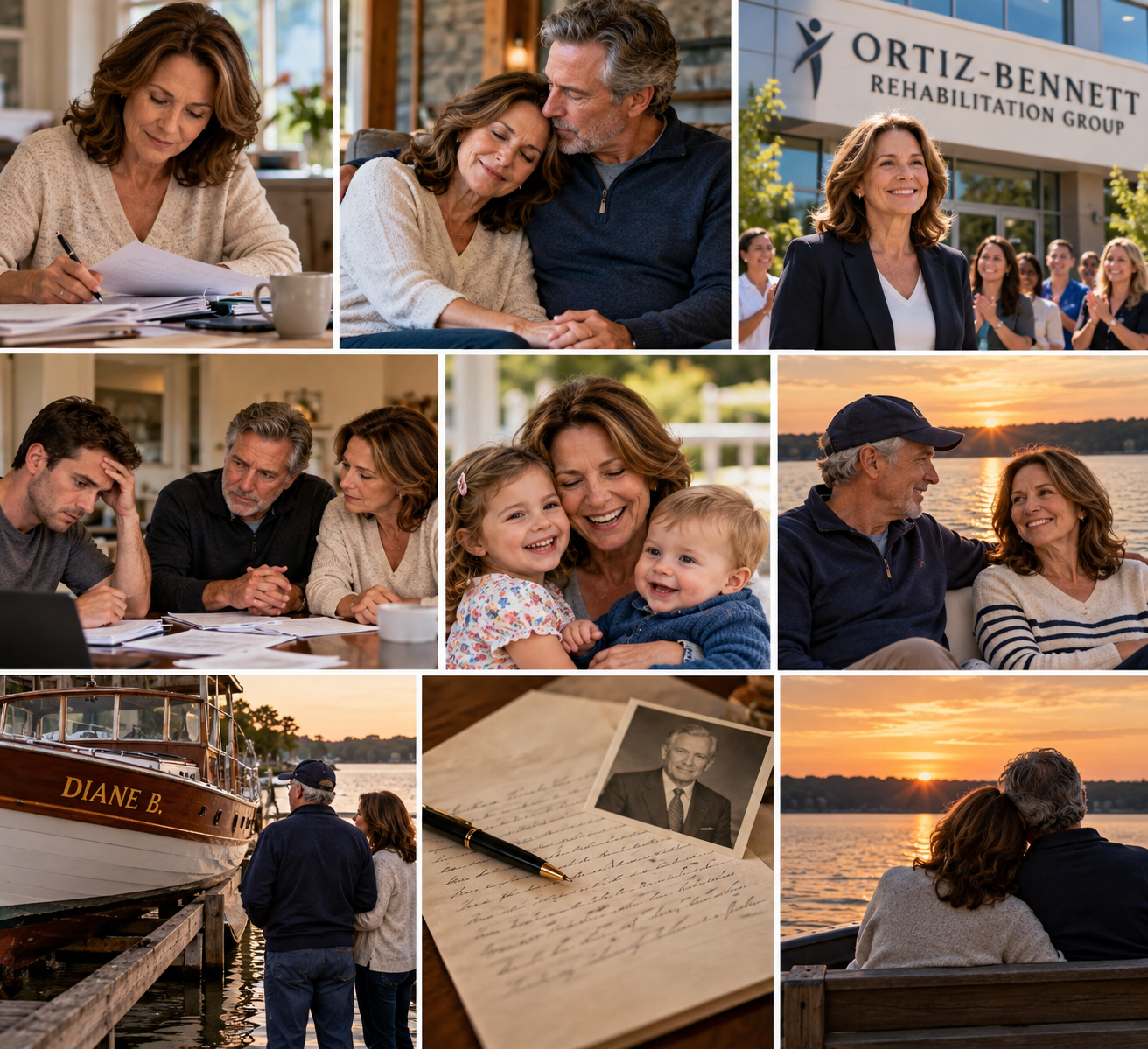
Diane turned eighty in March.
She hated the number.
“I’m seventy-nine plus shipping.”
Mark laughed harder than anyone.
Her independent-living community held a small birthday dinner.
Melissa ordered cake.
Eric and Maya came.
Natalie and David drove down for the weekend.
No one bought anything extravagant.
That alone proved our family had changed.
Mark gave Diane a framed photograph of Thomas.
Melissa gave her a heated blanket.
Eric brought a ridiculous mug that said EIGHTY IS THE NEW SIXTY IF YOU’RE BAD AT MATH.
Diane loved it.
I gave her a collection of letters and photographs we had digitized from the Bennett family boxes.
Copies.
Not originals.
We had learned something about irreplaceable objects.
After dinner, Diane asked Mark and me to stay.
Her expression changed.
Serious.
“I need to ask you something.”
Mark glanced at me.
“What?”
“I updated my will.”
Good.
No surprise postmortem plan.
“I want you both to know.”
Also good.
Diane’s assets were modest.
Her remaining savings.
Personal belongings.
A small life-insurance policy.
The loan balance she still owed me.
She wanted her estate divided equally between Mark and Melissa.
Simple.
Then came the problem.
“I want the loan forgiven when I die.”
She looked at me.
The remaining balance was around twenty-one thousand dollars.
“That’s your loan,” Mark said.
Diane nodded.
“I know.”
He did not speak for me.
Also progress.
I asked, “Why?”
“Because if my estate has to repay you first, there will be almost nothing left for Melissa.”
There it was.
A practical concern.
Not manipulation.
Still complicated.
“How much would remain after repayment?”
“Maybe thirty thousand total.”
“So about fifteen each.”
“Yes.”
“And if the loan is forgiven?”
“Closer to twenty-five each.”
Mark said, “Mom, I don't need your money.”
She looked at him sharply.
“That is not the point.”
He stopped.
Good.
She wanted to leave something.
Not because he needed it.
Because she wanted the choice.
I asked, “Are you asking me to forgive it now?”
“No.”
“Then what?”
“Promise you won’t collect from the estate.”
The old version of me would have said yes immediately.
Twenty-one thousand meant little relative to my finances.
Diane was eighty.
Melissa had less.
Easy.
Kind.
Peaceful.
I felt the yes forming.
Then stopped.
“Why does this need to be a promise?”
Diane looked confused.
“So I know.”
“Know what?”
“That Melissa will get something.”
“Then change your will.”
“How?”
“Leave her a larger percentage.”
Diane stared.
Mark smiled faintly.
She looked at him.
“What?”
“Nothing.”
“Say it.”
“She’s right.”
Diane frowned.
“But then it isn't equal.”
“Equal isn't required,” I said.
That made her uncomfortable.
Families loved equal because equal looked fair without requiring explanation.
But circumstances differed.
Mark had more.
Melissa had less.
Diane wanted Melissa protected.
She could say that openly.
“You want to leave Melissa more.”
Diane sighed.
“Yes.”
“Then do it.”
“What if Mark is hurt?”
Mark answered before I could.
“I might be.”
Diane stared.
He continued.
“But you’re allowed to make a decision that hurts my feelings.”
I looked at him.
Be wrong for yourself.
Expanded.
Diane’s eyes filled.
“I don't want you to think I love her more.”
“I won't.”
“You say that now.”
“I might have feelings later.”
He smiled.
“That’s my problem.”
She cried.
Then laughed.
Then called her lawyer the next day.
Her new will left seventy percent of the net estate to Melissa.
Thirty percent to Mark.
The loan remained a valid estate obligation.
Everything clear.
Everything spoken.
When she signed, she sent both children copies of the relevant summary.
No surprises.
Diane called me afterward.
“Thank you.”
“For what?”
“Not saying yes.”
That surprised me.
“You were hoping I would.”
“Yes.”
“Then why thank me?”
“Because I would have used your generosity to avoid telling Mark what I actually wanted.”
I smiled.
There it was.
The family pattern caught before it hardened.
Months later, Diane’s health changed.
She began forgetting appointments.
Then names.
Small things.
At first, everyone blamed age.
Then she left the stove on in her apartment.
Twice.
Medical evaluation followed.
Mild cognitive impairment.
Not dementia.
Not yet.
But enough to make planning necessary.
This time, we planned early.
Diane participated.
She selected her healthcare proxy.
Melissa.
Not Mark.
He flinched.
I saw it.
Diane saw it too.
“Are you hurt?”
“Yes.”
She nodded.
“Do you want to know why?”
“Yes.”
“Because you’ll try to save me.”
Mark closed his eyes.
Melissa laughed softly.
Diane continued.
“You’ll hear ‘comfort care’ and start researching experimental hospitals in Switzerland.”
“That seems unfair.”
“You looked up German hip surgery after I fell.”
“That was different.”
“Was it?”
Mark smiled reluctantly.
“No.”
Diane took his hand.
“Melissa can sit with things you want to fix.”
Mark looked at his sister.
She shrugged.
“I’m excellent at helplessness.”
Everyone laughed.
Diane chose Mark as financial power of attorney.
That surprised him.
“Why me for money?”
“Because now you’re terrified of touching anyone else’s.”
He laughed.
“Fair.”
But Diane imposed safeguards.
Annual accounting to Melissa.
No gifts to Mark while acting as agent.
No changes to beneficiary designations without independent counsel.
Mark approved every restriction.
No offense.
No argument.
The documents were signed while Diane had full capacity.
No future guessing.
No secret intentions.
I wished every family did this.
I wished ours had twenty years earlier.
Life continued.
Diane remained independent with added support.
Mark visited twice a week.
Not every day.
He had learned that loving someone did not require making their entire life his job.
One afternoon, she called me.
“Can you come?”
Her voice sounded strange.
I drove over.
She sat by the window holding the old photograph of Thomas and Walter.
“What happened?”
“I remembered something.”
My stomach tightened.
Even after all these years.
“What?”
“The lake.”
“What lake?”
“Tom and Walter.”
She looked confused.
Then frustrated.
“Something about money.”
I sat beside her.
“Diane, you don't have to remember.”
“Yes, I do.”
“No.”
“It matters.”
“Why?”
“Because Walter asked me not to tell you.”
There it was.
My pulse changed.
“When?”
“Years ago.”
“Tell me what you remember.”
She pressed her fingers to her forehead.
“A property.”
“What property?”
“Lake Erie.”
Mark’s old fantasy of a lake house flashed through my mind, irrationally.
“Dad owned something there?”
“No.”
“Thomas?”
“I don't know.”
She became upset.
I stopped.
“Diane.”
“I’m sorry.”
“You don't need to solve it.”
“But Walter—”
“Dad is dead.”
The sentence sounded harsh.
It was also merciful.
“He cannot assign you another secret.”
Diane stared at me.
Then started crying.
“I promised him.”
“You are allowed to break the promise.”
“What if it hurts you?”
“Then it hurts me.”
She squeezed my hand.
“I’m tired of carrying dead men’s choices.”
“So am I.”
That evening, I told Mark.
Not because the information was useful.
Because I refused to recreate secrecy.
He listened.
“Do you want to investigate?”
“No.”
“Really?”
“Yes.”
“What if it’s money?”
“Then someone can send a bill.”
He laughed.
“What if it's property?”
“Someone can send a deed.”
“What if it explains Walter?”
“I’m done requiring explanation.”
Mark looked at me for a long time.
“Okay.”
We did nothing.
That was perhaps the biggest change of all.
A clue existed.
We did not chase it.
No forensic accountant.
No Samuel.
No records search.
Diane remembered fragments occasionally.
A dock.
Thomas angry.
Walter writing a check.
Then she forgot again.
Whatever happened at Lake Erie had happened decades earlier.
No current claim appeared.
No creditor.
No estate issue.
No legal obligation.
We let the past remain incomplete.
That was harder than solving it.
And healthier.
Then one afternoon, a certified letter arrived at Hail Mechanical.
Not to me.
To Mark.
The sender was a law firm in Sandusky.
He called me immediately.
“I haven't opened it.”
“Why not?”
“Because Diane mentioned Lake Erie.”
My stomach tightened.
“What does the envelope say?”
“Estate of Calvin Rusk.”
Calvin.
The old partner.
The man who wrote about Thomas and Dad.
He had died.
“What do you want to do?”
Mark asked.
That question itself showed how far we had come.
I thought.
“It’s addressed to you.”
“Yes.”
“Open it.”
He did.
I heard paper.
Silence.
“What?”
“Calvin left me something.”
My stomach tightened.
“What?”
“A key.”
“To what?”
“There’s a note.”
He read.
Thomas asked me to hold this until Walter was gone and the Bennett family stopped fighting over money.
I laughed once.
“That is an impossible condition.”
Mark continued.
The key belongs to a storage locker near Marblehead.
There is no money inside.
That sentence helped.
Mark read the final line.
Only something Tom wanted his son to have when he was old enough to understand why Walter kept saying no.
Mark became silent.
“Do you want to go?”
I asked.
“Yes.”
This time, I did too.
Not because of money.
Because Thomas Bennett had left something for his son.
And after everything Mark had lost, hidden, distorted, and rebuilt, I wanted to stand beside him when he found out what it was.
Click here to continue reading: PART 28: The Key Thomas Bennett Left Behind Opened a Door to the Past, but What Mark Found Inside Was Never About Money
Three Days After My Father Died, My Husband Made One Decision That Turned Grief Into Something Far More Dangerous
Part 27 of 35