Dad had been gone eleven years when I stood in front of the first clinic and watched workers replace the sign.
Not remove my name.
Change the ownership line beneath it.
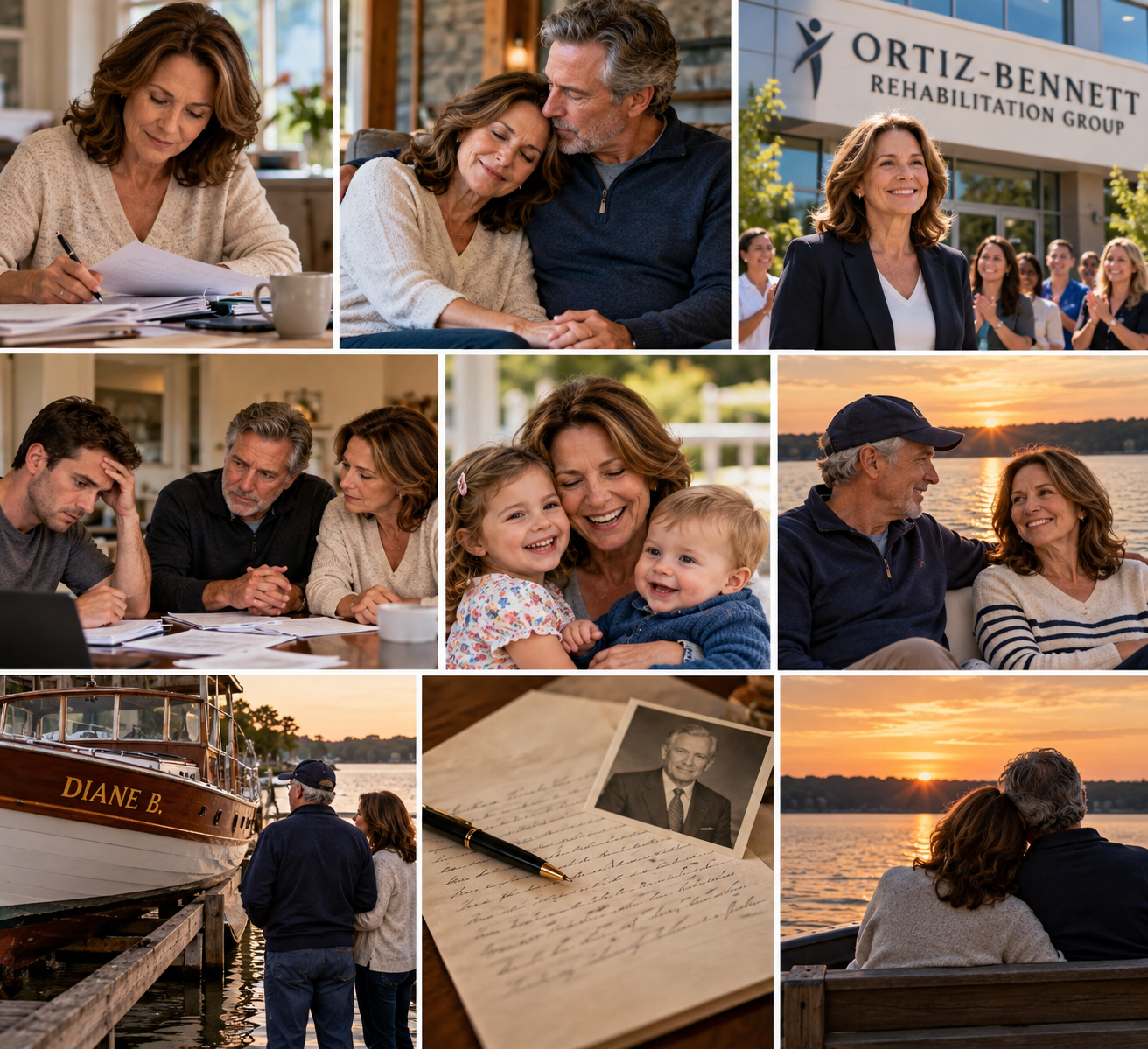
ORTIZ-BENNETT REHABILITATION GROUP.
Lena had become majority operating partner.
I retained a smaller share.
Enough to remain connected.
Not enough to run everything.
At sixty-eight, I was ready.
Mostly.
“You’re staring.”
Mark stood beside me holding two coffees.
“I built this.”
“Yes.”
“I know.”
“I’m allowed to be dramatic.”
“Absolutely.”
The new sign lifted into place.
Lena came outside.
“Nervous?”
“Yes.”
“You can still change your mind.”
“No.”
She smiled.
“Good.”
I laughed.
She had learned from me.
Or maybe I had learned from everyone.
We went inside.
Staff had organized a small lunch.
No retirement speech because I refused.
Naturally, there were speeches.
Lena thanked me.
Patients sent notes.
Natalie brought Clara and Walter.
Eric came with Maya.
Melissa drove down.
Mark stood near the back.
Not center.
I noticed.
Years earlier, he would have made himself useful.
Carrying chairs.
Organizing food.
Solving something.
Now he knew how to attend.
That was harder for him.
After lunch, I gave Lena my office keys.
The room still contained Dad’s initials behind glass.
W.H. 1984.
I had debated taking that piece of wall.
Ridiculous thought.
Then laughed at myself.
Objects.
Again.
The initials belonged to the building now.
Part of its story.
Not mine to carry.
I touched the glass once.
Then left it.
Outside, Mark handed me my coat.
“You okay?”
“Yes.”
“Really?”
“No.”
He smiled.
“Better.”
We drove home separately because I had errands.
Some habits never became symbolic.
At home, I found an envelope on the kitchen table.
Not mysterious.
Not posthumous.
From Samuel.
Retirement had not cured him of paper.
Inside was the annual trust review.
The assets were still substantial despite years of distributions, charitable giving, market cycles, and my own life.
Dad’s fortune had grown.
Money does that when managed well.
It multiplies long after the person who earned it stops needing it.
I read the summary.
Then the charitable reports.
Healthcare access.
Caregiver training.
Trade education.
Rehabilitation support.
Thousands of people helped over the years.
Most never knew Walter Hail.
None knew me.
Good.
Natalie and Eric’s future shares remained meaningful.
Not obscene.
Protected.
Flexible.
Their children had education provisions.
Not golden cages.
The plan felt right.
Not perfect.
Mine.
Mark came home from the marina.
“How’s the boat?”
“Older than both of us.”
“So doomed.”
“Rude.”
He saw the trust report.
“Everything okay?”
“Yes.”
“Good.”
No curiosity about the balance.
Even after eleven years, I noticed.
Maybe because I remembered so clearly the first question he asked after my meeting with Samuel.
How much?
Back then, numbers had been destiny.
Now, numbers were information.
That evening, we sat outside.
The porch had been rebuilt twice.
The neighborhood trees were taller.
Dad’s house belonged to someone else.
The warehouse belonged to another company.
Hail Mechanical still existed as a regional brand under national ownership.
The brass sign hung in a corporate history display.
Dad would probably hate that.
Maybe love it.
No vote.
Thomas’s boat was still afloat.
Barely.
Mark refused to replace it because he enjoyed keeping the original alive.
I accused him of sentimentality.
He pleaded guilty.
Diane had been gone years.
Melissa retired near her grandchildren.
Natalie and David were still married.
Eric and Maya too.
Rachel had become a name that no longer tightened my chest.
That surprised me most.
Some pain does not need resolution.
Time simply removes its authority.
Mark leaned back.
“I’ve been thinking.”
“That remains dangerous.”
“Yes.”
“What?”
“When I die—”
“No.”
He laughed.
“We have healthcare documents. Wills. Everything.”
“I know.”
“I’m not discussing death before dessert.”
“This is not about paperwork.”
“Then?”
“I want the boat burned.”
I stared.
“What?”
“Not now.”
“Good clarification.”
“When I’m dead.”
“No.”
“Why?”
“Because that is exactly the kind of ridiculous posthumous instruction our families spent decades recovering from.”
He laughed so hard he started coughing.
“I’m serious.”
“So am I.”
“I don't want the kids fighting over it.”
“Then give it away before you die.”
He stopped.
“Oh.”
“Yes.”
“That is better.”
“Excellent growth at sixty-nine.”
He smiled.
We eventually gave the boat to a small maritime museum near the lake.
Not because it was historically important.
It wasn’t.
But the museum maintained working wooden boats and offered restoration workshops.
Mark liked the idea that people might learn on it.
No Bennett family plaque.
No Walter story.
The name DIANE B. remained painted on the side.
Enough.
The day we handed over the keys, Mark touched the hull.
“Hard?”
I asked.
“Yes.”
“Want to change your mind?”
“No.”
“You sure?”
“Yes.”
Then he smiled.
“My dad said not to keep a thing because a dead man wanted you to.”
We walked away.
No one died from letting go.
That lesson had taken our family decades.
Months later, Mark and I returned to Lake Erie without the boat.
We rented one.
A newer boat.
Reliable motor.
Comfortable seats.
Mark complained it had no character.
I reminded him that character often meant repair bills.
We went out in calm water.
Not far.
We rarely needed far anymore.
Mark shut off the engine.
The lake became quiet.
The same way it had years earlier when Thomas’s boat first returned to water.
He looked older.
So did I.
Good.
Age meant we had survived long enough to become different people.
“Do you regret staying?” he asked.
The question surprised me.
“No.”
“Never?”
“I didn't say that.”
He smiled.
“There were days.”
“Many?”
“Yes.”
He looked toward the water.
“I regret making you have to choose.”
I understood.
He meant the affair.
The fraud.
The secrecy.
Everything.
“I know.”
“I used to think forgiveness meant you stopped regretting what happened.”
“No.”
“What do you think now?”
“That forgiveness means what happened no longer gets to make every new decision.”
He nodded.
“That sounds right.”
Then he asked, “Do you forgive Walter?”
I looked across the lake.
Dad had been dead long enough that anger no longer needed daily maintenance.
“Yes.”
“All of it?”
“No.”
Mark smiled.
“That sounds familiar.”
I forgave Dad without declaring every choice acceptable.
I loved him without making him wise.
I missed him without wishing he could return and take control again.
That was enough.
“What about me?” Mark asked.
I turned.
“You’re asking?”
“Yes.”
I thought.
“I forgave you years ago.”
His face changed.
“You never said that.”
“I didn’t know I needed to.”
He laughed softly.
“You didn't.”
“But?”
He waited.
“I never forgot.”
“I know.”
“Sometimes people think forgiveness means returning someone to the position they had before.”
“Yes.”
“You never got that position back.”
“No.”
“You got a different one.”
He looked at me.
“What one?”
“The one you earned after.”
His eyes filled.
For once, I did not tease him.
Mark had been my husband before the truth.
Then the man who betrayed me.
Then someone separated from me by lawyers, debt, and consequence.
Then a person learning.
Then a man I dated while still married.
Then my husband again.
Not restored.
Rebuilt.
That mattered.
We turned the rented boat back toward shore.
At the marina, Mark tied the line badly.
I fixed it.
He objected.
I ignored him.
Some things remained.
That night, back at home, I opened Dad’s final letter.
The original paper had softened at the folds.
His handwriting remained sharp.
I reread the lines I knew nearly by memory.
I kept trying to leave you protection.
What I should have left you sooner was information.
And later:
Do not build a shrine to my mistakes.
Build your own life.
I smiled.
We had.
Not perfectly.
Not cleanly.
But ours.
The inheritance remained part of that life.
I did not pretend money was irrelevant.
It gave me security.
It funded expansion.
Helped patients.
Protected retirement.
Created opportunities for my children and grandchildren.
Wealth mattered.
But it never did the thing Mark expected three days after Dad died.
It did not make hard decisions disappear.
It made some choices larger.
That was all.
Three days after my father died, my husband had quit working because he believed my inheritance had made effort unnecessary.
He promised money that was not his.
Planned houses.
Businesses.
Retirement.
He believed marriage gave him access.
He believed providing for everyone gave him authority.
He believed problems should be fixed before the people affected had to feel them.
Then the trust stopped him.
Not permanently.
Not magically.
Just long enough for truth to catch up.
The forged signatures surfaced.
The hidden debts.
The affair.
The companies.
The old decisions.
My delayed practice.
Natalie’s Boston opportunity.
Dad’s role in hiding things.
Thomas.
Diane.
Melissa.
All of it.
For a long time, I thought Dad’s true gift was the money.
Then I thought it was the trust.
Then the recordings.
Then the letters.
I was wrong every time.
The real gift was choice returned.
Painful choice.
Late choice.
Imperfect choice.
But mine.
Dad had spent years making decisions around me because he believed protection justified it.
Mark did the same.
So did Diane in smaller ways.
Melissa too.
Even I had participated by saying yes when I meant no and calling silence peace.
The inheritance forced every one of those habits into daylight.
After that, none of us could honestly say we did not know.
Knowledge did not guarantee better behavior.
It only removed the excuse.
The rest required practice.
Ask before helping.
Tell before deciding.
Say no before resentment.
Accept that people you love can make choices you dislike.
Let money solve financial problems without allowing it to decide emotional ones.
Let consequences remain consequences.
Let adults fail.
Let them recover.
Let yourself be wrong.
Years later, Clara asked me about Walter Hail.
She was old enough to notice his name in family papers.
“Was Grandpa Walter rich?”
I smiled.
“Yes.”
“How rich?”
“Very.”
“Did he give you all his money?”
“Most of it, eventually.”
Her eyes widened.
“Were you happy?”
Children ask better questions than lawyers.
I thought.
“Sometimes.”
She frowned.
“Because of the money?”
“Not exactly.”
“Then what happened?”
I looked toward Mark.
He was in the garage teaching little Walter how to sand wood.
Poorly supervised, in my opinion.
I smiled.
“Your great-grandfather left us a complicated mess.”
Clara’s eyes lit with delight.
“What kind?”
“Family kind.”
“Did you fix it?”
I almost said yes.
Then stopped.
“No.”
She looked disappointed.
“What did you do?”
“We learned how not to keep making the same mess.”
She considered that.
“That's less exciting.”
“Much.”
Then she ran outside.
I watched her go.
No trust clause told her what kind of life to build.
No dead man’s expectation sat on her shoulders.
Whatever money reached her someday would come with documents.
Not emotional invoices.
That was the outcome I wanted.
Mark came inside later.
He put sawdust all over the floor.
I complained.
He swept it.
No argument.
Then he poured two glasses of water and sat beside me.
“What are you smiling about?”
“Nothing.”
He raised an eyebrow.
“Privacy?”
“Yes.”
He smiled.
“Allowed.”
I rested my head against his shoulder.
Outside, our grandchildren argued about whose turn it was to use the sanding block.
Inside, Dad’s final letter sat in a drawer.
Not hidden.
Not displayed.
Just kept.
That was where the past belonged.
Available.
Honored.
No longer in charge.
Mark took my hand.
No question needed this time.
Some permissions had become established through years of trust.
Not assumed.
Earned.
I squeezed his fingers.
Dad’s fortune had not destroyed my marriage.
It had not saved it either.
Truth nearly destroyed it.
Choice saved what was worth saving.
And after everything, that was the only inheritance I wanted to pass on.
The End
Read more original stories on Feel Every Story.
Three Days After My Father Died, My Husband Made One Decision That Turned Grief Into Something Far More Dangerous
Part 35 of 35