Daniel took a moment before answering.
I had learned to recognize that pause.
Sometimes it meant he was choosing his words carefully.
Sometimes it meant he didn't have an answer that would satisfy me.
I waited to find out which it was.
He explained that my husband had wanted the meeting to take place in person because he believed the information needed to be discussed directly.
I listened, then asked the question I had been holding back.
"Did he think I wouldn't believe him if he told me himself?"
Daniel said he could not be certain.
I looked down at the table.
That possibility hurt in a way I hadn't expected.
I had spent years believing that, whatever our disagreements, my husband knew he could talk to me.
We had shared difficult news.
We had made decisions about our children.
We had faced problems we didn't know how to solve.
There had been times when I was angry with him, and times when he was angry with me.
But I had believed we could still sit down and speak honestly.
If he had believed otherwise, I wanted to know why.
Had I made it difficult for him to tell me the truth?
Had I dismissed his concerns without realizing it?
Had I been so certain that I understood him that I had stopped asking the questions that mattered?
I couldn't answer those questions, either.
I was tempted to blame myself.
That was an old habit.
When something went wrong in our family, I often searched for the part I could have handled differently.
It gave me the illusion that I could prevent the same thing from happening again.
But I couldn't take responsibility for a conversation my husband had chosen not to have.
I could examine my own behavior without pretending that his decisions belonged to me.
I looked at Daniel.
"I wish he had trusted me enough to tell me."
The words came out quietly.
Daniel didn't offer a quick reassurance.
I was grateful for that.
I didn't need him to tell me that my husband had trusted me.
He might have.
He might not have.
I needed to understand what had happened, not be comforted by a stranger's guess.
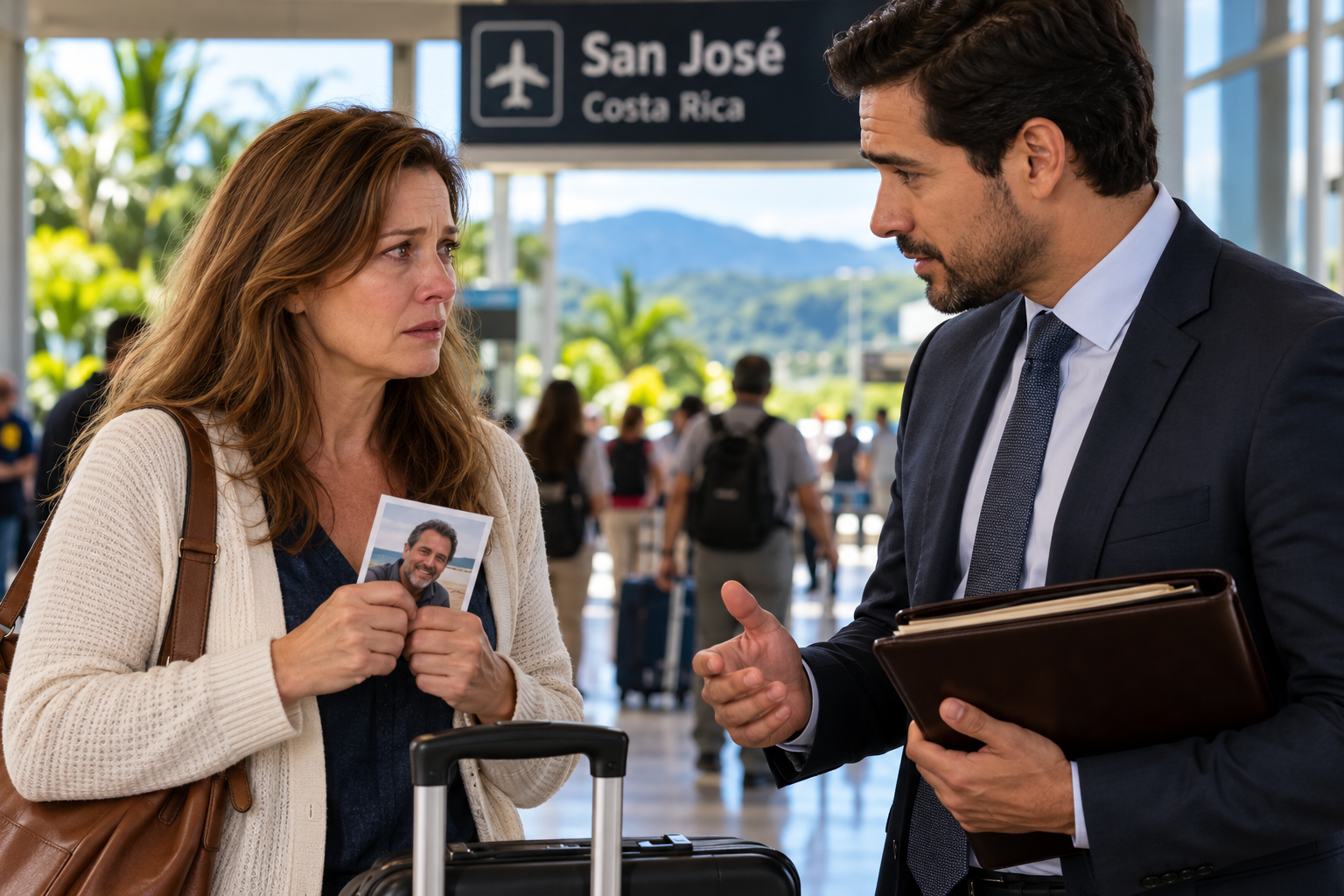
I looked at the photograph beside my bag.
I had carried it across the world because it seemed connected to the reason for the journey.
I had touched it whenever I felt uncertain, as if it could remind me of something I had forgotten.
Now I wondered whether I had been looking at it the wrong way.
Perhaps it was not an answer.
Perhaps it was simply a reminder that my husband had left me with something I needed to examine more carefully.
I didn't know what that something was.
I refused to invent an explanation.
I picked up the photograph and put it away.
Then I turned back to Daniel.
I asked him whether my husband had given him instructions about what to do if I refused to continue.
Daniel explained that he had been prepared to meet me and discuss the matter, but he could not force me to participate.
I nodded.
That was important.
My husband had arranged the journey, but he had not taken away my ability to choose what happened next.
I could still decide to stop.
I could still ask for time.
I could still refuse to accept an explanation that didn't make sense.
I didn't want to leave.
Not yet.
I had spent too much time wondering why I had been sent here to walk away before hearing everything Daniel had to tell me.
But I wanted to remain because I had chosen to, not because I believed my husband's wishes mattered more than my own.
I told Daniel that I wanted to continue.
He acknowledged my decision and returned to the information he had prepared.
I listened.
I tried not to interrupt.
When something was unclear, I asked him to explain it again.
I had once thought that asking the same question twice made a person seem difficult.
Now I understood that pretending to understand was far worse.
I needed to know what I was hearing.
I needed to distinguish what Daniel knew from what he had been told.
And I needed to recognize the difference between an explanation and an assumption.
The meeting continued, and I found myself thinking less about the airport and more about the life I had left behind.
I pictured our children.
I pictured the home where we had raised them.
I pictured my husband in the ordinary moments that had once seemed too unimportant to remember.
A familiar voice from another room.
A question asked while one of us was busy with something else.
A conversation interrupted because dinner needed to be made or someone had to leave for an appointment.
Those moments had formed the life we shared.
I had never expected every conversation to be complete.
I had simply believed that we would have more time.
That belief was gone.
I could not go back and ask the questions I had failed to ask.
I could only ask them now, through Daniel, and accept that some answers might remain beyond my reach.
I felt grief rise again.
This time, I didn't try to push it away.
I let myself sit quietly until I could speak.
Daniel waited without rushing me.
When I was ready, I asked whether my husband had considered what this journey would cost me emotionally.
Daniel did not claim to know exactly what my husband had considered.
He acknowledged that the circumstances were difficult.
I looked away.
I wanted to be angry with my husband for making me travel so far while I was grieving.
I was angry.
But I also knew that I didn't yet understand the purpose of the arrangements.
I could criticize the way he had handled things without deciding that everything about his intentions had been wrong.
I had to leave room for facts I hadn't heard.
That was the hardest part.
I wanted to reach a conclusion because uncertainty was exhausting.
I wanted to decide whether my husband had acted out of love, fear, guilt, or something else.
But I couldn't choose a motive simply because I needed the story to end.
I looked at Daniel again.
"Did he say anything about what he hoped I would do after this meeting?"
Daniel explained that his instructions concerned the information he had been asked to share and the arrangements that followed from it.
I listened closely.
I didn't turn his words into a promise they weren't.
I didn't assume that my husband had planned every part of my future.
I let the answer remain what it was.
It wasn't everything I wanted.
But it was something I could understand.
I sat back and looked at my hands.
For the first time that day, I was not waiting for Daniel to rescue me from uncertainty.
I was learning to sit with it long enough to decide what questions mattered.
I wanted to know why my husband had chosen Costa Rica.
I wanted to understand the photograph.
I wanted to know how the arrangements related to the inheritance and to our children.
Those questions remained.
I wasn't going to pretend otherwise.
But I had also begun to ask something more personal.
What did I believe about my husband now?
And how much of that belief depended on the fact that I could no longer ask him to explain himself?
I had loved him.
I still loved him.
That did not mean I had to accept every decision he had made.
It meant I needed to understand the decisions as honestly as I could.
I looked at Daniel and told him I was ready to hear the rest.
He gathered the papers into a neat stack.
I watched him, feeling both afraid and relieved.
I had come to Costa Rica expecting an explanation.
I was beginning to understand that no explanation could give me back the life I had before the journey.
But perhaps it could help me decide what to do with the life I had now.
I was ready to find out.
Click here to continue reading: PART 13: I Had Spent Hours Waiting for My Husband’s Secret to Make Sense, but Daniel’s Next Explanation Forced Me to Admit How Little I Knew
My Husband Was Gone, Our Children Had Inherited Millions, and Somehow I Had Ended Up Alone in a Country I Barely Knew
Part 12 of 20