The longer I sat beside Daniel, the harder it became to hold on to the version of my husband I had always known.
I didn't want to lose that version of him.
He had been my husband for years.
We had built a family together, and we had faced ordinary hardships that seemed enormous when we were living through them.
I remembered the times he had stayed awake worrying about our children.
I remembered how he had tried to make difficult days easier without asking for praise.
I remembered the small things he did that nobody else noticed.
Those memories were real.
So was the fact that I had arrived in Costa Rica without knowing why.
I couldn't erase one truth to make the other easier.
I looked down at my hands.
I had been gripping my bag again.
My fingers relaxed slowly.
I was tired of being tense.
I was tired of trying to predict what Daniel might say.
Mostly, I was tired of feeling as though I had to defend my right to ask questions about my own life.
I turned toward him.
"Can I ask you something without getting another answer about waiting until later?"
He looked at me.
"I'll answer if I can."
It wasn't a promise to tell me everything.
At least he was honest about that.
I asked him whether my husband had seemed worried when they last discussed the arrangements.
Daniel considered his answer.
He told me that my husband had taken the matter seriously.
I waited.
That was all he offered.
I looked away, disappointed.
I had asked about worry, not seriousness.
There was a difference.
A person could take a matter seriously because it was important, or because it was frightening, or because it involved someone they cared about.
I wanted to know which kind of seriousness Daniel had seen.
But I couldn't make him give me an answer he wasn't willing or able to provide.
I sat back.
My husband had always been difficult to read when something bothered him.
He could go quiet for an entire evening and then insist that nothing was wrong.
Sometimes he was telling the truth.
Sometimes he simply wasn't ready to talk.
I had learned to recognize the difference, or thought I had.
There had been nights when I asked him what he was thinking and he answered that he was tired.
I would let him rest.
I never considered that one day I might look back at those moments and wonder whether he had been protecting me from something.
That was how doubt worked.
It took an ordinary memory and made it feel unfamiliar.
I didn't like the person I was becoming.
I had begun to search the past for evidence against a man who could no longer explain himself.
I didn't want to do that unfairly.
But I also couldn't pretend the past was untouched by what I was learning now.
I turned to Daniel again.
"Did he say anything about me being upset?"
Daniel said my husband had anticipated that I might have questions.
I gave a short, humorless laugh.
"That part he understood."
Daniel didn't react defensively.
He told me that he wasn't trying to make the situation harder for me.
I believed that he meant it.
I also believed that he had a responsibility to follow the instructions he had been given.
Those two things could be true at the same time.
I was beginning to understand that Daniel might not be the person I needed to be angry with.
He was simply the person standing between me and the information I wanted.
That didn't make the distance any easier to bear.
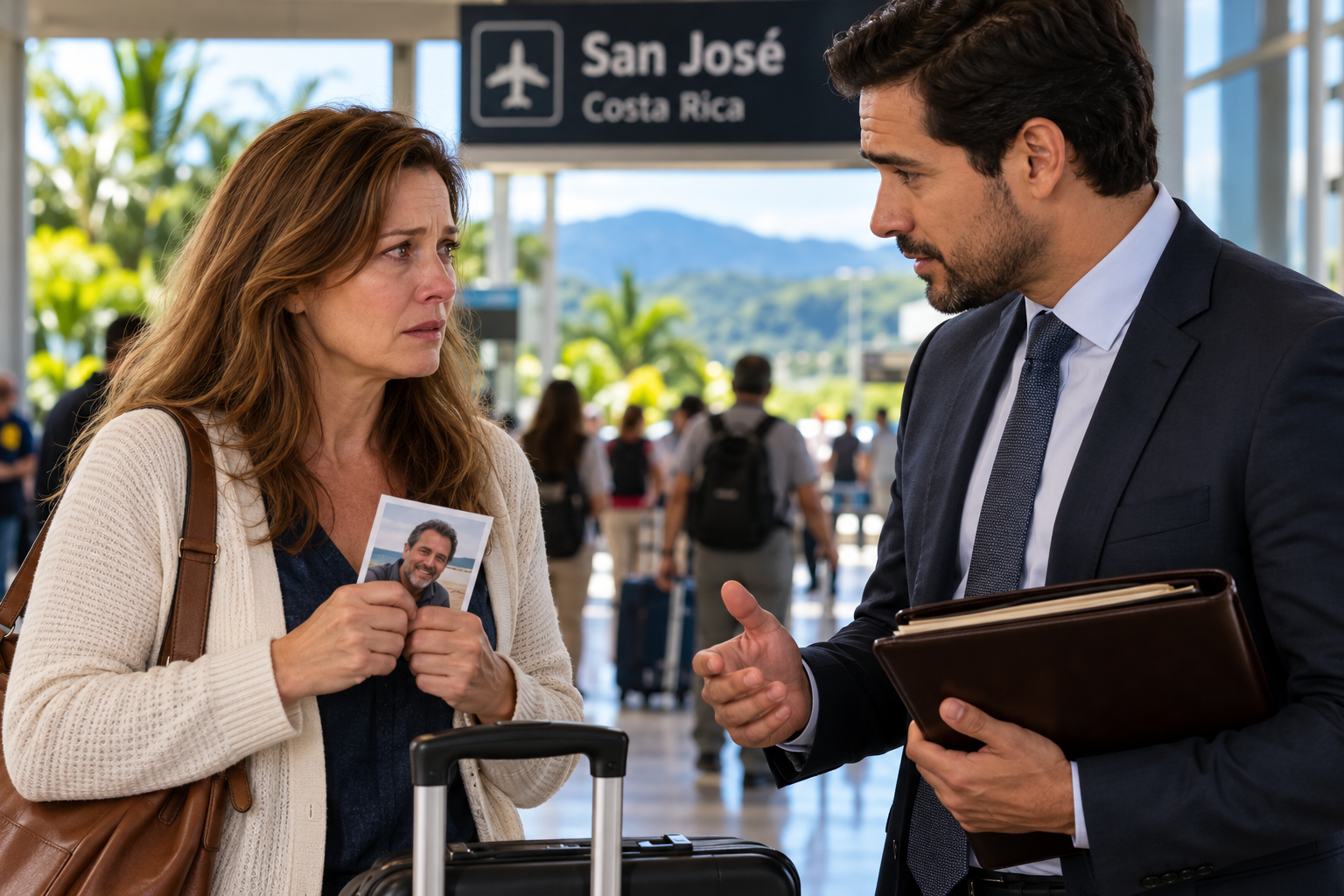
I looked at the photograph again.
This time, I took it out and held it in my lap.
I examined the edges, the surface, and the image itself, trying to remember what had made me keep it so close.
It was familiar in a way I couldn't quite explain.
I had carried it because it mattered to the journey, but I still couldn't put into words why.
I ran my thumb along one edge.
The paper had softened slightly from being handled.
I wondered whether my husband had known I would keep it with me.
The thought was almost absurd.
He had made arrangements before his death, but that didn't mean he could predict every small thing I would do.
Still, I had spent so much of our marriage responding to his decisions that I had begun to imagine he could foresee my reactions, too.
Perhaps I had given him too much power in my mind.
He had been my husband, not someone who could control every outcome.
He could make a plan.
He could leave instructions.
He could ask another person to carry out his wishes.
But he could not make me understand those wishes simply by deciding that I should.
I folded the photograph carefully and returned it to my bag.
I felt a little foolish for studying it again.
Nothing had changed.
The image was the same.
My questions were the same.
The only thing that had changed was my willingness to admit how little I knew.
Daniel shifted the folder beneath his arm.
I wondered what it contained.
I wanted to ask, but I stopped myself.
If he had documents he could show me, he would have to decide when to do so.
If he didn't, asking would only create another frustrating exchange.
I had already decided to hear him out.
I needed to give that decision a chance to mean something.
So I looked out the window and let the silence remain.
After a while, I began thinking about our children again.
I imagined them trying to understand their father's final arrangements.
I wondered whether they had questioned the inheritance or simply accepted it as something he had planned for them.
I couldn't blame them if they had accepted it.
They had lost their father.
They had their own grief to manage.
And the money would have seemed like a practical matter in the middle of an emotional disaster.
I didn't want them to feel guilty for what they had been left.
Their inheritance was not something they had asked for.
It was their father's decision.
But I wondered whether he had explained his intentions to them more clearly than he had explained them to me.
That possibility hurt.
I had never expected my husband to tell me every thought that passed through his mind.
Nobody could live that way.
But I had believed that the decisions that affected our family belonged in conversations we shared.
I had believed that marriage meant we could disagree, ask questions, and change our minds together.
Now I was faced with the possibility that he had made an important decision alone and expected me to accept it after he was gone.
I couldn't decide whether that was selfish.
Perhaps he had believed there was no other way.
Perhaps he had been trying to prevent a problem.
Perhaps he had made a mistake.
I couldn't know yet.
I had to stop treating uncertainty as proof of the worst possibility.
I looked toward Daniel.
"How well did you know him?"
The question seemed to catch his attention.
He answered that he had known my husband through the work they had discussed.
It was a careful answer, but I understood the distinction.
Daniel wasn't claiming to have been a close friend.
He was an attorney who had been entrusted with a particular responsibility.
I asked whether my husband had talked about our family.
Daniel indicated that he knew the arrangements concerned me personally.
That still didn't tell me what my husband had said about our marriage or our children.
I decided not to push him further.
I had learned something, even if it wasn't the answer I wanted.
Daniel was not going to fill the silence with speculation.
He was going to wait until he could explain the matter properly.
I would have to decide what to do with that.
I put my bag beside me and rested my hands on my knees.
For a little while, I stopped asking questions.
I thought about my husband as a real person rather than a mystery I needed to solve.
He had been kind.
He had been stubborn.
He had made mistakes.
He had loved our children.
He had loved me, or at least I had believed that he did.
I didn't need to deny those things to acknowledge that he had left me with something difficult.
Maybe the truth would make me angry.
Maybe it would make me understand him better.
Maybe it would do both.
I was beginning to accept that I could not choose the answer before I heard it.
All I could choose was whether I was willing to listen.
I had come this far.
I would keep going.
Click here to continue reading: PART 8: When Daniel Finally Prepared to Explain the Reason for My Journey, I Realized I Was More Afraid of the Answer Than I Had Been of Coming Here
My Husband Was Gone, Our Children Had Inherited Millions, and Somehow I Had Ended Up Alone in a Country I Barely Knew
Part 7 of 20