By the time Daniel reached the next part of his explanation, I had stopped expecting certainty from every answer.
That didn't mean I had become patient.
I was still impatient.
I still wanted to know why my husband had sent me here, what he had expected me to understand, and whether the arrangements were connected to the money left to our children.
But I had begun to recognize that repeating a question did not make the answer arrive any sooner.
I needed to listen to what was being said.
Daniel explained the next part of the arrangements carefully.
I followed as best I could, stopping him whenever I needed clarification.
He answered without making me feel foolish for asking.
That mattered.
I had spent much of the day feeling as though I had somehow failed to understand a plan everyone else knew about.
I was beginning to see that I was not responsible for knowing information that had never been given to me.
That should have been obvious.
It wasn't.
When someone dies, the people left behind often search for something they could have done differently.
A question they could have asked.
A warning they could have noticed.
A conversation they could have insisted on having.
We do it because the alternative is accepting that some things happened beyond our control.
I had been doing exactly that.
I had wondered whether I should have questioned my husband more often.
I had wondered whether I should have noticed a change in his behavior.
I had wondered whether he had tried to tell me something without saying it directly.
But I could not know that I had missed a warning simply because I now knew there were things I hadn't understood.
I had to be fair to the woman I had been before his death.
She had trusted her husband.
She had lived her life.
She had taken care of her family.
She had not known that a trip to Costa Rica would become part of her future.
I couldn't blame her for failing to prepare for something nobody had explained.
I looked at Daniel.
"Did he tell you he was worried about what would happen to me after he died?"
Daniel considered the question.
He did not claim to know everything my husband had worried about.
He explained what he could about the arrangements, but he did not turn those details into a personal judgment about my husband's feelings.
I nodded.
I had expected that answer.
Still, I felt disappointed.
I wanted someone to tell me that my husband had thought about me.
I wanted to hear that he had worried about my future and tried to make sure I would be all right.
I wanted to believe that sending me here had been part of an effort to protect me.
But I couldn't ask Daniel to provide comfort by pretending he knew something he didn't.
If I wanted the truth, I had to accept that it might not arrive in the form I wanted.
I rested my hands on the table.
For a moment, I thought about our children receiving their inheritance.
I imagined the paperwork being explained to them.
I imagined the conversations they might have had about their father's wishes.
I wondered whether they had asked why their mother was traveling to Costa Rica.
I hoped they understood that I had not chosen to leave them behind.
I had come because I wanted to understand their father's decisions.
I wanted to know what he had intended for our family.
And I wanted to know whether there was something important I needed to do now that he was gone.
I didn't want to return home with nothing but resentment.
I wanted to return with an explanation I could live with.
It didn't have to make me happy.
It had to be honest.
Daniel continued speaking.
I noticed that I was no longer watching every movement of his hands.
I was listening to his words.
That was a small change, but it made the conversation easier.
I asked him to explain one point again.
He did.
I asked another question.
He answered that one, too.
There were still limits to what he could tell me, but I was beginning to understand those limits more clearly.
He could explain the arrangements.
He could share the information he had been asked to discuss.
He could help me understand the practical steps that followed.
He could not give me a perfect account of my husband's mind.
That part would always remain incomplete.
I had to learn to live with it.
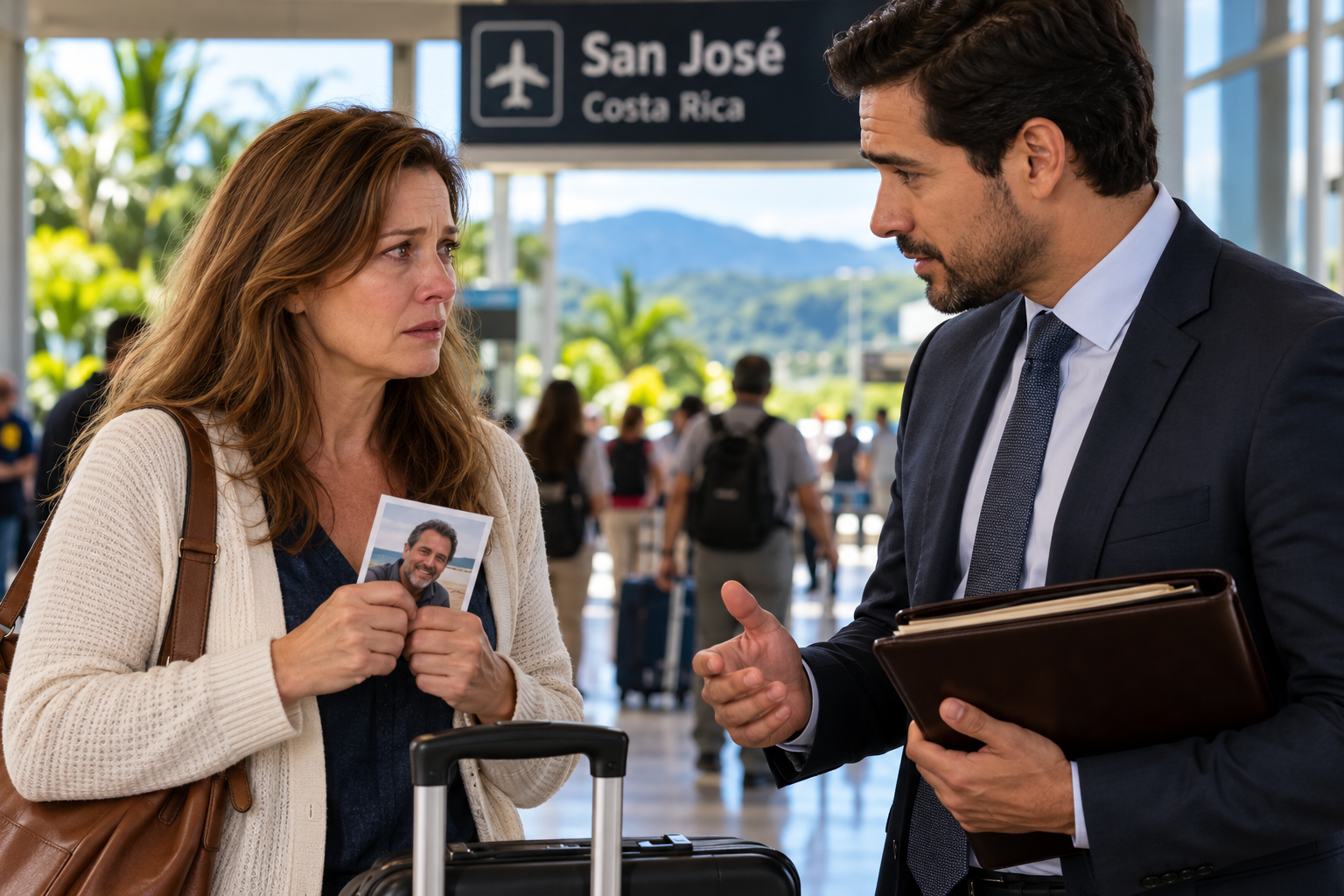
I thought about the photograph again.
I had carried it through the airport, held it during the journey, and kept touching it whenever I felt uncertain.
It had become a reminder of the unanswered questions.
But perhaps I had been expecting too much from it.
A photograph could preserve an image.
It could remind someone of a moment.
It could make the past feel close enough to touch.
It could not, by itself, explain a person's decisions.
I had wanted it to do something it could not do.
I put my hand on my bag, feeling the photograph through the fabric.
Then I let go.
I didn't need to keep checking that it was there.
It would remain where I had placed it.
That simple thought made me realize how much of the journey had been spent trying to hold on to things I was afraid of losing.
I had held on to the photograph.
I had held on to my assumptions about my husband.
I had held on to the belief that, if I asked the right question, I would receive an answer that made everything fit together.
Some of those things were worth keeping.
Others were making it harder for me to listen.
I could remember my husband without insisting that I understood every part of him.
I could keep the photograph without pretending it explained the trip.
I could ask Daniel questions without expecting him to repair the absence of the man who had died.
Those were small distinctions.
They were helping me think more clearly.
Daniel paused and asked whether I wanted to take a break.
I considered it.
I was tired, but I didn't want to stop before I had heard the rest of what he could explain.
I told him I wanted to continue.
He accepted my answer.
I looked at the papers between us.
I had come here expecting a secret to be revealed in a single moment.
Instead, I was discovering that understanding often came slowly.
A fact here.
An explanation there.
A question that had to be asked twice.
A memory that looked different when considered from another angle.
I didn't know how the whole picture would look when I had heard everything.
I only knew that I was no longer willing to decide what it meant before I had the information.
I looked at Daniel.
"Please go on."
He continued.
And I listened, trying to make room for the truth without demanding that it erase the pain of finding it.
Click here to continue reading: PART 16: I Finally Stopped Trying to Guess What My Husband Had Wanted and Began Asking What His Decisions Meant for Me Now That He Was Gone
My Husband Was Gone, Our Children Had Inherited Millions, and Somehow I Had Ended Up Alone in a Country I Barely Knew
Part 15 of 20