A few more days passed.
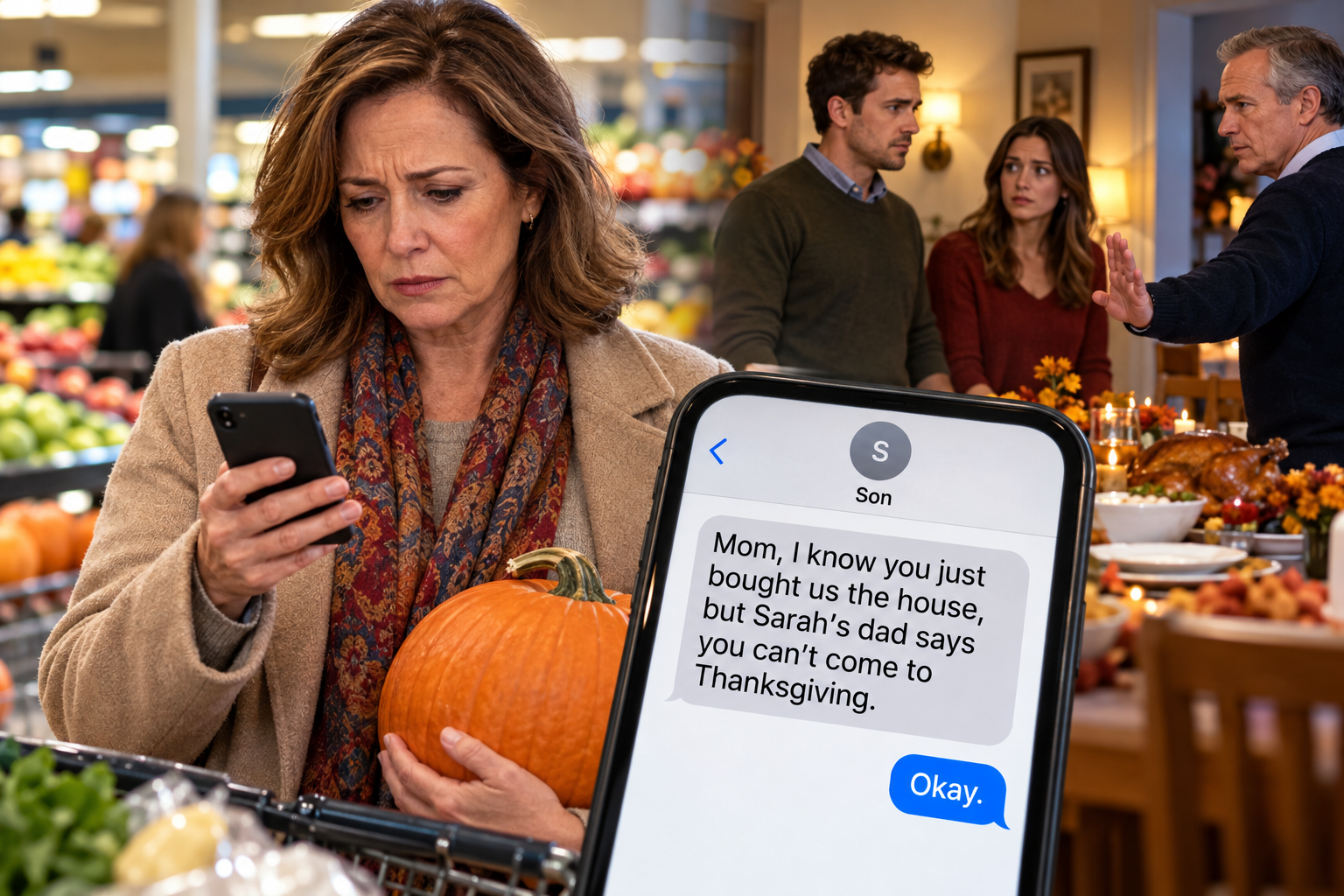
My son did not call.
I did not send another message.
At first, I found the silence almost impossible to accept.
I kept imagining that there must be a reason he had not contacted me.
Perhaps he was busy.
Perhaps he thought I needed time.
Perhaps he believed my brief reply meant that I had accepted the arrangement without being hurt.
I could invent explanations all day.
None of them gave me a reliable answer.
I finally admitted that I did not know what he was thinking.
I could leave room for a misunderstanding without assuming one had occurred.
That was a new kind of patience for me.
In the past, patience meant waiting for another person to come around while I quietly made things easier for them.
Now I was learning that patience could mean waiting without making additional sacrifices.
I could give my son time.
I did not have to spend that time offering more money, sending gifts, or explaining why I deserved consideration.
The difference was important.
One afternoon, I sat down with my notebook and looked at the questions I had written about the house.
I still needed to make sure I understood the financial and legal arrangement fully.
I had not forgotten that responsibility.
But I had stopped treating the paperwork as a way to regain control over my son's behavior.
The documents could help me understand my position.
They could not tell me whether my son loved me.
They could not make him apologize.
They could not guarantee that he would treat me differently in the future.
I had been hoping for one clear action that would solve every part of the problem.
There was no such action.
I needed to deal with the financial questions carefully and the relationship honestly.
Those were separate tasks.
I wrote that down in my notebook.
Then I closed it.
The next morning, I decided to make something I had not cooked in a while.
I went through the pantry and found the ingredients I needed.
As I worked, I thought about how much of my life had been organized around being ready for someone else.
I had always kept extra food in the house.
I had bought gifts early because I wanted to avoid forgetting a birthday.
I had set aside money because I wanted to be able to help if my son ran into trouble.
Some of those habits were sensible.
Others had become ways of keeping myself prepared for problems that had not even happened.
I did not want to become careless with my money.
I wanted to become deliberate.
There was a difference between saving because I valued my future and saving because I feared someone else might need me.
I could keep an emergency fund without treating it as an invitation for other people to depend on it.
I could buy a thoughtful gift without feeling that I needed to add something expensive.
I could help my son when I genuinely wanted to help.
And I could decide that a request was beyond what I was comfortable giving.
I finished cooking and sat down to eat.
The meal was simple.
I enjoyed it.
Afterward, I washed the dishes and put the remaining food away.
Then I took a walk.
I needed fresh air more than I needed another hour of thinking.
The neighborhood looked much as it always had.
People were coming home from work.
Someone was watering a row of plants near a front step.
A car door shut somewhere down the street.
I walked slowly and let myself notice those things.
I had spent so much time thinking about what might happen between my son and me that I had nearly forgotten how much life continued outside that question.
I could not determine the future of our relationship by worrying about it.
I could only decide what kind of person I wanted to be while it remained uncertain.
I wanted to be loving.
I wanted to be fair.
I wanted to be honest about my own mistakes.
And I wanted to stop confusing those qualities with an obligation to accept every disappointment quietly.
When I returned home, I found a piece of mail on the counter that I had not opened earlier.
I sorted it with the other papers.
Then I placed the house folder back in the drawer.
I had no new information to add.
There was no point in pretending that another review of the documents would produce an answer that was not there.
I would follow up on the questions that required clarification.
Until then, I could let the matter rest.
That evening, I thought about what I would do if my son never apologized.
The thought frightened me more than I wanted to admit.
I had always imagined that difficult moments between us would eventually end with a conversation.
One of us would explain.
The other would listen.
We would find some way to move forward.
I had relied on that picture for years.
Now I had to accept that reconciliation required two people.
I could offer a conversation.
I could listen to his explanation.
I could acknowledge where I had been unclear about my expectations.
But I could not have the conversation for him.
If he chose not to reach out, I would have to decide how to live with that.
I did not need to make that decision immediately.
I only needed to stop pretending that waiting indefinitely was the same as resolving the problem.
I took out my notebook again and wrote a few sentences.
I would not make another financial commitment out of fear.
I would not use money to demand affection.
I would not assume that silence meant everything was fine.
And I would not assume that silence meant the relationship was beyond repair.
I read the words slowly.
They gave me a way to hold two possibilities without forcing myself to choose between them.
My son might eventually reach out.
We might have an honest conversation.
We might find a better way to relate to each other.
Or he might continue to keep his distance.
If that happened, I would still have to take care of myself.
I folded the page and placed it in the notebook.
Then I turned off the kitchen light.
The house was quiet again.
This time, I did not treat the quiet as a warning.
I had things to do the next morning.
I had a life that deserved my attention.
And I had finally begun to understand that hope was something I could carry without letting it make every decision for me.
Click here to continue reading: PART 15: I Had Been Waiting for My Son to Tell Me I Still Mattered, Until I Realized I Could No Longer Put My Future on Hold
The Message That Made Me Rethink Every Dollar I Had Spent Trying to Make My Son Happy
Part 14 of 20