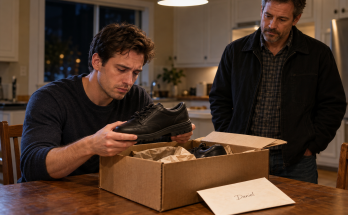
My mother and I agreed not to discuss the envelope in front of Ethan unless there was something he needed to know.
We did not make a formal rule of it.
We simply stopped letting every conversation return to the same subject.
For the first time in several days, the house began to follow a routine again.
Ethan went to school.
My mother made breakfast.
I answered messages and returned a few calls I had been ignoring.
The envelope remained in the front hall, untouched.
Every time I passed the ceramic bowl, I noticed it.
I could be carrying laundry or looking for my keys, and my eyes would move toward the narrow table before I could stop them.
The envelope did not change.
It did not open by itself or reveal anything about the person who had left it.
It was paper with my name written on it.
Everything else was a question.
On the second evening after my mother returned, she found me standing in the hallway with my phone in my hand.
“Are you waiting for someone to call?”
“No.”
She looked at the phone.
“Then what are you doing?”
I lowered it.
“I was thinking about calling the barber again.”
“Why?”
“Because I still don't understand why he seemed so worried.”
My mother leaned against the wall.
“You spoke to him. He told you what he knew.”
“He told me what he was willing to tell me.”
“That isn't necessarily the same as knowing more.”
I looked at the envelope.
“Neither is it proof that he doesn't.”
My mother did not argue.
She came to stand beside me, and we looked at the narrow table together.
“Have the police said you can open it?” she asked.
“Not yet.”
“Then wait until they tell you what to do.”
“I know.”
“You keep saying that.”
I let out a breath.
“Because I do know. I just don't like it.”
“That makes two of us.”
Her honesty helped more than another explanation would have.
We went into the kitchen and made tea.
While the kettle heated, my mother told me about a mistake she had made at my sister's house. She had put a container of soup in the freezer without checking whether the lid was secure, and the whole thing had spilled inside the drawer.
She described the mess in such detail that I began laughing before she reached the end.
For a few minutes, I forgot about the envelope.
Then my phone rang.
The number belonged to the officer.
I answered immediately.
He told me that he wanted to confirm the envelope remained undisturbed.
I said it did.
He asked whether anyone had contacted me about it.
“No.”
“Has your son said anything else about the room he mentioned?”
I glanced at my mother.
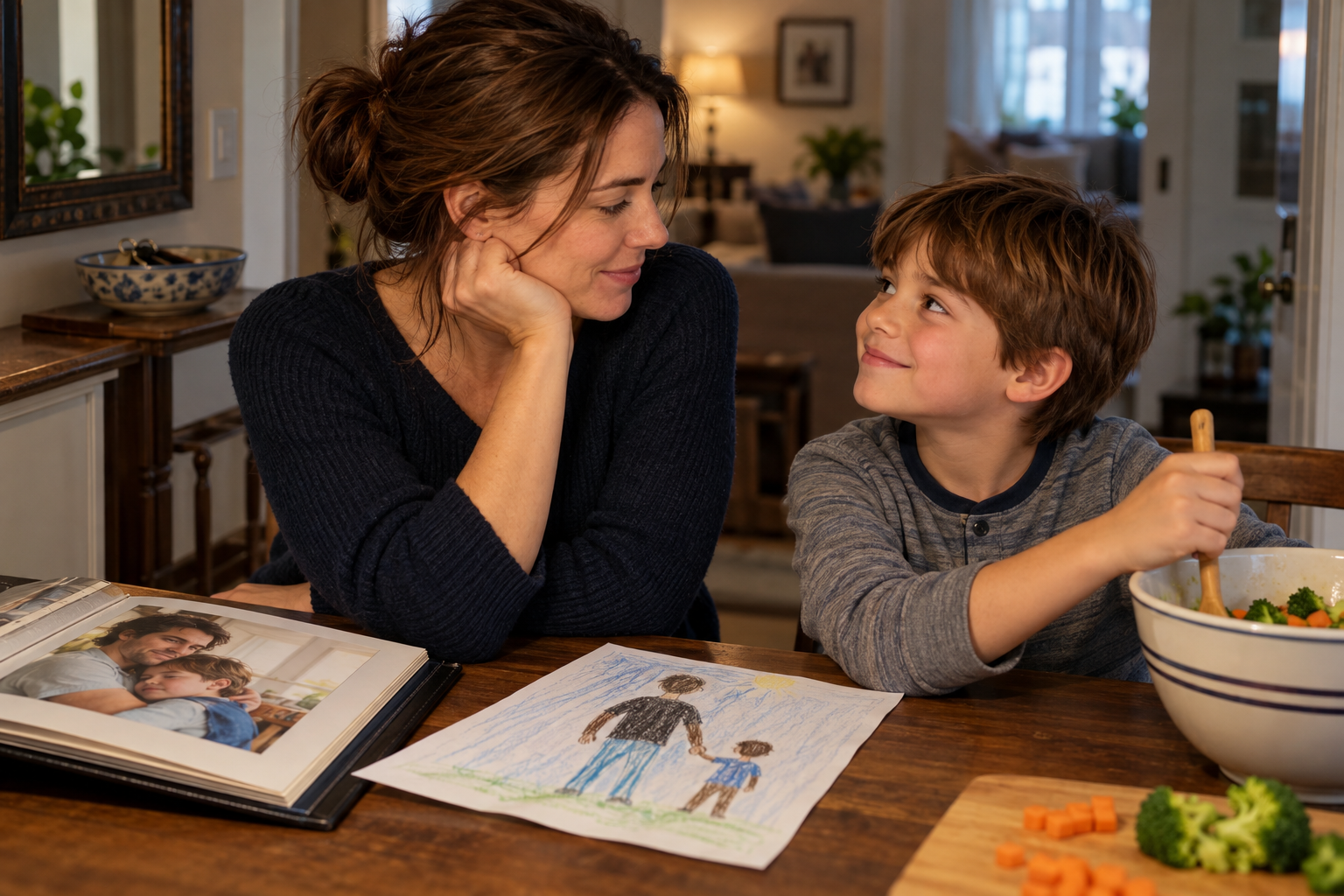
“He asked to look at photographs of his father. We looked through an album, but he didn't identify anything. He asked whether his father had taken pictures indoors, and I told him I couldn't remember every place we'd been.”
The officer listened.
“Did you ask him whether the room was connected to the envelope?”
“No.”
“Good. Keep the events separate for now.”
I leaned against the counter.
“Can you tell me whether the envelope was left by someone who entered the house?”
“I can't confirm that.”
“Did you find signs that someone had been inside?”
“We documented what we could observe. I don't want to give you a conclusion that the evidence doesn't support.”
His answer frustrated me, but I understood it.
He was not refusing to help.
He was refusing to tell me something he did not know.
“What should I do next?” I asked.
“Continue to leave the envelope alone until we tell you otherwise. If someone contacts you about it, or if you notice anything else unusual, let us know. And don't feel you have to investigate this yourself.”
I thanked him and ended the call.
My mother waited until I put the phone down.
“Anything new?”
“No. The same instructions.”
She nodded.
“Then we'll follow them.”
I wanted to object that following instructions did not make me feel safe.
But that was not the point.
The officer had given me something I could do without guessing.
Leave the envelope where it was.
Pay attention to what actually happened.
Report new information rather than building a story around the old information.
I could do those things.
That night, Ethan asked whether he could sleep with the hallway light on.
He had not asked for that since he was younger.
I told him he could.
He also asked whether my mother could sit with him while he read before bed.
She agreed immediately.
I stayed downstairs and cleaned the kitchen while they settled in.
I heard my mother's voice through the open bedroom door, reading the same page twice because Ethan had asked her to start over.
It was an ordinary sound.
I held on to it.
Later, when she came downstairs, she told me Ethan had fallen asleep with the photograph of his father beside his pillow.
“He didn't say anything else about the room,” she added.
“Did you ask?”
“No.”
I thanked her.
She looked at me for a moment.
“Claire, can I say something without you thinking I'm criticizing you?”
“I'll try.”
“You're frightened, and that's understandable. But you keep looking at Ethan as though he might be carrying the answer to all of this.”
I stared at her.
“I don't mean to.”
“I know. You love him, and you want to protect him. But he doesn't have to solve this for you.”
The words landed harder than I expected.
I thought about the way I had watched him draw the room, the way I had studied his face when he spoke about his father, and the way I had searched the photograph album for anything that might match his description.
I had not meant to pressure him.
But intention was not the only thing that mattered.
“I'll be more careful,” I said.
My mother touched my shoulder.
“I know you will.”
Before going to bed, I stood in the living room and looked at the photograph on the table.
Ethan's father was holding him in the picture.
Both of them looked peaceful.
I had seen that photograph hundreds of times, but I had never looked at it as if it might contain a clue.
I did not want to start now.
The picture was a memory of something that had happened, not proof of something I feared.
I left it where Ethan had placed it.
Then I checked the front door once and went upstairs.
The next morning, the envelope was still closed.
My mother was at the stove when I came into the kitchen.
She had made eggs and toast.
Ethan sat at the table with his schoolbag beside him, eating slowly.
He looked tired, but he was talking about a class project.
I listened.
I asked him what materials he needed and whether he had finished the part he was responsible for.
He answered both questions.
Neither of us mentioned the room.
Neither of us mentioned the envelope.
It was not because we were pretending nothing had happened.
It was because breakfast did not need to become another conversation about fear.
After Ethan left for school, I returned to the front hall.
I stood several feet from the ceramic bowl.
My name was still visible through the envelope's plain white surface only because it had been written on the outside.
I could not see what was inside.
I could not know who had left it.
And I could not decide what it meant by staring at it longer.
I went to work.
For the first time since the police arrived, I left the house without checking the envelope before I walked out the door.
That small choice did not make me brave.
It simply meant I was beginning to understand the difference between paying attention and being controlled by uncertainty.
Click here to continue reading: PART 12: When Ethan Finally Spoke About His Father Again, I Let Him Choose Where the Conversation Went
The Barber Said Something About My Nine-Year-Old Son That I Could Not Explain, and Then a Familiar Name Changed Everything
Part 11 of 20