My friend arrived on Monday morning carrying two cups of coffee.
She set one on the table and took off her coat.
“Before we start,” she said, “tell me what you want.”
I looked at her.
“I thought we were going to look at my budget.”
“We are. But numbers are easier to work with when you know what you're trying to make possible.”
I smiled.
“You always did have a way of making things sound simple.”
“They aren't simple. That's why we're writing them down.”
I brought my notebook to the table.
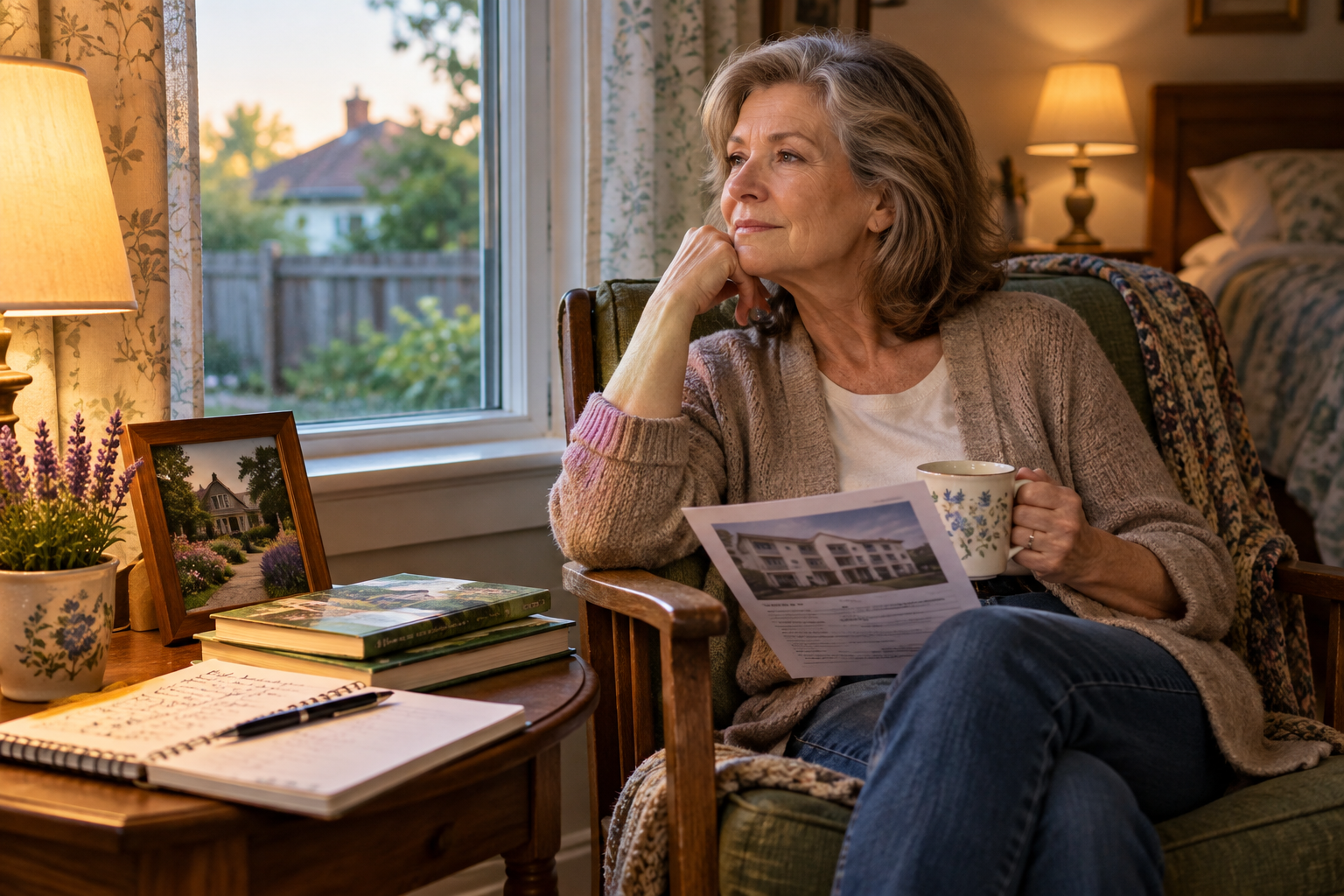
Inside were the apartment details, the rent, the deposit, and a list of questions I still needed to answer.
My friend opened her own notebook.
“All right. What money do you have coming in each month?”
I told her.
She wrote down the amounts and asked about the bills I still paid.
We listed my phone, insurance, medical expenses, transportation, groceries, and the other costs that came with ordinary life.
Then we added the estimated rent and utilities.
The numbers were not as frightening as I had expected.
They were not comfortable enough to ignore, either.
I could afford the apartment, but I would need to watch my spending.
There would be less room for unexpected expenses.
I would need to keep an emergency reserve.
I might have to postpone some things I had hoped to do.
My friend tapped the page with her pen.
“You can make this work, but you need to be careful.”
“I don't want to spend every month worrying about money.”
“Then don't decide based only on the rent. Think about everything that comes with living there.”
We added the cost of moving.
We considered whether I needed new furniture or whether the things I already owned would fit.
I told her about the blue bowl, the photographs, and the small table I had kept in storage.
I had not yet decided what I would do with all my belongings.
Some things had gone to family members when I sold my house.
Others were packed away.
My friend suggested that I make a list of what I actually needed rather than trying to recreate the old house.
“You don't need to buy everything again,” she said.
“I know.”
“And you don't need to make the new place look like the old one.”
I looked down at the notebook.
“No,” I said. “I suppose I don't.”
We spent another hour going through the numbers.
By the time we finished, I had a clearer picture of what living alone would require.
I also had a better understanding of what staying with Michael would save me financially.
If I remained in his house, I would not have to pay rent.
I would have more room in my budget for unexpected costs.
I would also have help nearby if I needed it.
Those things mattered.
I did not want to dismiss them simply because I had been hurt.
But money was not the only part of the decision.
My friend seemed to know what I was thinking.
“You can make a sensible financial choice and still ask whether it will make you happy.”
I looked at her.
“I don't want to make a foolish decision because I'm upset.”
“Then don't make one while you're upset. But don't assume the safest-looking option is automatically the right one.”
She closed her notebook.
“You have time to think.”
I looked at the figures again.
For years, I had believed that being sensible meant choosing the option that caused the least trouble for everyone.
Now I was learning that a sensible decision also had to account for my own needs.
I thanked my friend for helping me.
Before she left, she asked whether I wanted to see another apartment.
“I think I should,” I said. “One place isn't enough to compare.”
She smiled.
“That's the answer I was hoping for.”
That afternoon, I made a list of questions to ask about any place I considered.
Was the rent affordable?
Could I get around without depending on Michael?
Would I feel comfortable there?
Could I have friends over?
Would there be enough room for the things I valued?
Could I still see the children regularly?
The last question mattered more than the others.
I did not want my search for independence to become an excuse for withdrawing from the people I loved.
I wanted a life that included them without being organized entirely around them.
When Michael came home that evening, I was sitting at the kitchen table with my notebook open.
He glanced at the pages.
“Still looking?”
“Still thinking.”
He took a glass from the cupboard.
“Did you find something you liked?”
“Yes.”
He nodded.
“Have you decided?”
“No.”
He filled the glass and sat across from me.
“I've been thinking about what you said.”
I closed the notebook.
“What part?”
“About being asked instead of assumed.”
I waited.
“I guess I got used to knowing you were here.”
He looked uncomfortable admitting it.
“When the boys were little, we had to arrange everything around work. When you moved in, things got easier.”
“I was glad I could help.”
“I know.”
He rubbed his thumb along the rim of the glass.
“I didn't stop to think about how much of your day it took.”
I listened.
“I thought you would tell us if it was too much.”
“I thought I would too.”
He gave a small, unhappy smile.
“So we both got used to the arrangement.”
“Yes.”
He looked toward the family room, where the boys were playing.
“I don't want you to feel like you have to leave to get us to listen.”
I felt a small ache in my chest.
“I don't want that either.”
“Would it help if we made a more regular schedule? Something that gives you time off without having to ask for it every week?”
I considered the question.
“It might.”
“Then we should do that.”
I nodded.
It was a useful suggestion.
It would also be useful to see whether the arrangement worked once we put it into practice.
“I'd like to try it,” I said.
He seemed relieved.
“Okay.”
“But I still want to keep looking at places.”
His relief faded slightly.
“All right.”
I touched the notebook with my fingertips.
“Looking doesn't mean I've decided to go.”
“I know.”
“And staying doesn't mean I have to stop thinking about what I want.”
He nodded.
“I know that too.”
I hoped he meant it.
The following week, we began the new schedule.
The boys went to the after-school program on Tuesdays and Thursdays.
Michael arranged to come home earlier on Fridays whenever his work allowed it.
Jessica put the children's activities on a shared calendar so we could all see what was happening.
I had Wednesday mornings and Saturday afternoons marked as my own time.
The first Wednesday, I went to the library.
The second, I walked through a nearby park and bought myself a sandwich.
The third, I stayed in my room and read for most of the morning.
Nobody needed me to justify those choices.
The schedule did not solve everything.
There were still last-minute requests.
There were still mornings when Michael asked whether I could help before I had finished my tea.
Sometimes I said yes.
Sometimes I said no.
The difference was that I was beginning to make the choice consciously.
One Friday, Jessica asked whether I could stay with the boys that evening because she and Michael had been invited to dinner.
I checked my calendar.
“I have plans.”
She looked disappointed.
“Oh. I thought you might be free.”
“I understand. But I'm meeting my friend.”
Jessica nodded.
“Okay. We'll see if we can arrange something else.”
She did not argue.
She did not remind me that I lived in the house.
I felt a quiet satisfaction as I went upstairs to get ready.
It was not because I had refused to help.
It was because I had answered honestly and the family had managed to continue without treating my answer as a crisis.
That evening, I met my friend at a small restaurant.
We talked about ordinary things.
We discussed the weather, a book she had read, and a neighbor who had planted flowers along the sidewalk.
At one point, she asked whether I was leaning toward moving.
“I don't know,” I said.
She smiled.
“That's allowed.”
I laughed.
“I seem to need to hear that quite often.”
“Then I'll keep saying it until you believe it.”
When I returned to Michael's house, the living room lights were on.
The boys were asleep upstairs.
Michael and Jessica had arranged for a sitter, and the house was quiet.
I put my coat away and went to my room.
The photograph of my old house was on the shelf.
I looked at it and thought about how much had changed since I first moved in with my son.
I had come believing that being useful would make me feel close to everyone.
Instead, I had slowly lost track of the difference between being loved and being needed.
Now I was trying to recover that difference.
I opened my notebook.
Beside the budget, I wrote:
A place of my own must be affordable.
It must also be a place where I can live the way I want to live.
I underlined neither sentence.
They were not competing ideas.
They belonged together.
I closed the notebook and placed it beside my husband's watch.
I still had decisions to make.
But I was no longer making them from the belief that I had no other choice.
Click here to continue reading: PART 16: The New Schedule Gave Me Room to Breathe, but I Needed to See Whether My Family Could Respect My Choices When Doing So Was Inconvenient
I Had Spent Three Months Making Myself Useful in My Son’s House, Until One Ordinary Sunday Dinner Changed What I Could Bear
Part 15 of 20