
The first real test came on a Thursday afternoon.
I had planned to go to the library after lunch and return a book that was overdue by two days.
The new schedule said the boys would attend their after-school program that day. Michael had written it on the shared calendar, and Jessica had confirmed it over breakfast.
I was looking forward to the afternoon.
I had a list of books I wanted to find, and I wanted to sit in the quiet reading room for a while.
At half past one, Michael called.
I answered because I was home and not doing anything that required silence.
“Mom, I have a problem.”
I sat down on the edge of my bed.
“What happened?”
“The after-school program called. They have a staffing issue, so they can't take the boys today.”
I looked at the clock.
“What are you going to do?”
There was a pause.
“I was hoping you could pick them up.”
The old answer rose to my lips before I had even considered it.
Of course I could.
They were my grandsons. They needed somewhere to go, and I was home.
I could collect them, make them a snack, help with homework, and have dinner ready before Michael returned.
It would be easier than asking someone else.
It would be familiar.
Then I looked at the library book on my dresser.
“I have plans this afternoon,” I said.
Michael was quiet.
“Plans?”
“Yes. I was going to the library.”
“I know, but this is a little unexpected.”
“I understand.”
He sighed.
“Mom, I'm not trying to take advantage of you. We just need help today.”
I felt the familiar pressure to prove that I understood his situation.
I wanted to explain that I knew he was busy, that I wasn't angry, and that I loved the boys.
I also wanted to say that a plan did not become less important simply because someone else had a problem.
“I know you need help,” I said. “But I can't pick them up today.”
The silence lasted long enough that I could hear a car passing outside.
“All right,” he said at last. “I'll see what I can arrange.”
“Thank you.”
We ended the call.
I sat on the bed with the phone in my hand.
My heart was beating faster than it should have been after such a simple conversation.
I had not shouted.
I had not accused him of anything.
I had simply said no.
Still, I felt guilty.
I went downstairs and found Jessica in the kitchen, sorting a pile of mail.
“Michael called,” she said.
“He told me the program was closed today.”
“Yes. He called me too.”
“Have you found someone to help?”
“We're working on it.”
I stood by the counter.
“I know this is inconvenient.”
Jessica looked up.
“It is inconvenient. But that doesn't mean you have to fix it.”
I let out a breath I hadn't realized I was holding.
She continued sorting the mail.
“Michael is calling another parent. I'm checking whether the neighbor can help for an hour.”
“I hope it works out.”
“So do I.”
There was no resentment in her voice.
I returned to my room, picked up my handbag, and drove to the library.
For the first few minutes, I couldn't settle.
I kept thinking about the boys leaving school, about whether they would be confused, and about whether Michael would manage to arrange everything in time.
I checked my phone once.
There was no message.
I placed it face down on the table.
Then I opened my book.
The first page held a photograph of a small garden with a stone path. I read the caption, turned the page, and found a chapter about growing herbs in containers.
I began to relax.
The library was quiet except for the faint sound of pages turning and a chair moving across the floor.
I spent nearly an hour there.
When I finally checked my phone, I had a message from Jessica.
Everything is sorted. Another parent is bringing the boys home, and Michael will collect them there. Enjoy your afternoon.*
I read it twice.
Then I wrote back, *I'm glad you found a solution. Thank you for letting me know.*
I didn't rush home.
I returned my overdue book, borrowed another one, and stopped at the grocery store for milk.
By the time I reached the house, the boys were home and doing their homework at the dining table.
Owen looked up when I came in.
“Grandma, where were you?”
“At the library.”
“Did you get books?”
“I did.”
He looked at the book in my hand.
“Is it a funny one?”
“Not particularly.”
“Then why did you get it?”
“Because I wanted to read it.”
He considered that answer.
Then he returned to his worksheet.
I put the milk in the refrigerator and went upstairs to change my shoes.
Michael came home about twenty minutes later.
I heard him speaking to the boys, asking how school had gone and whether they had finished their homework.
He did not come to my room immediately.
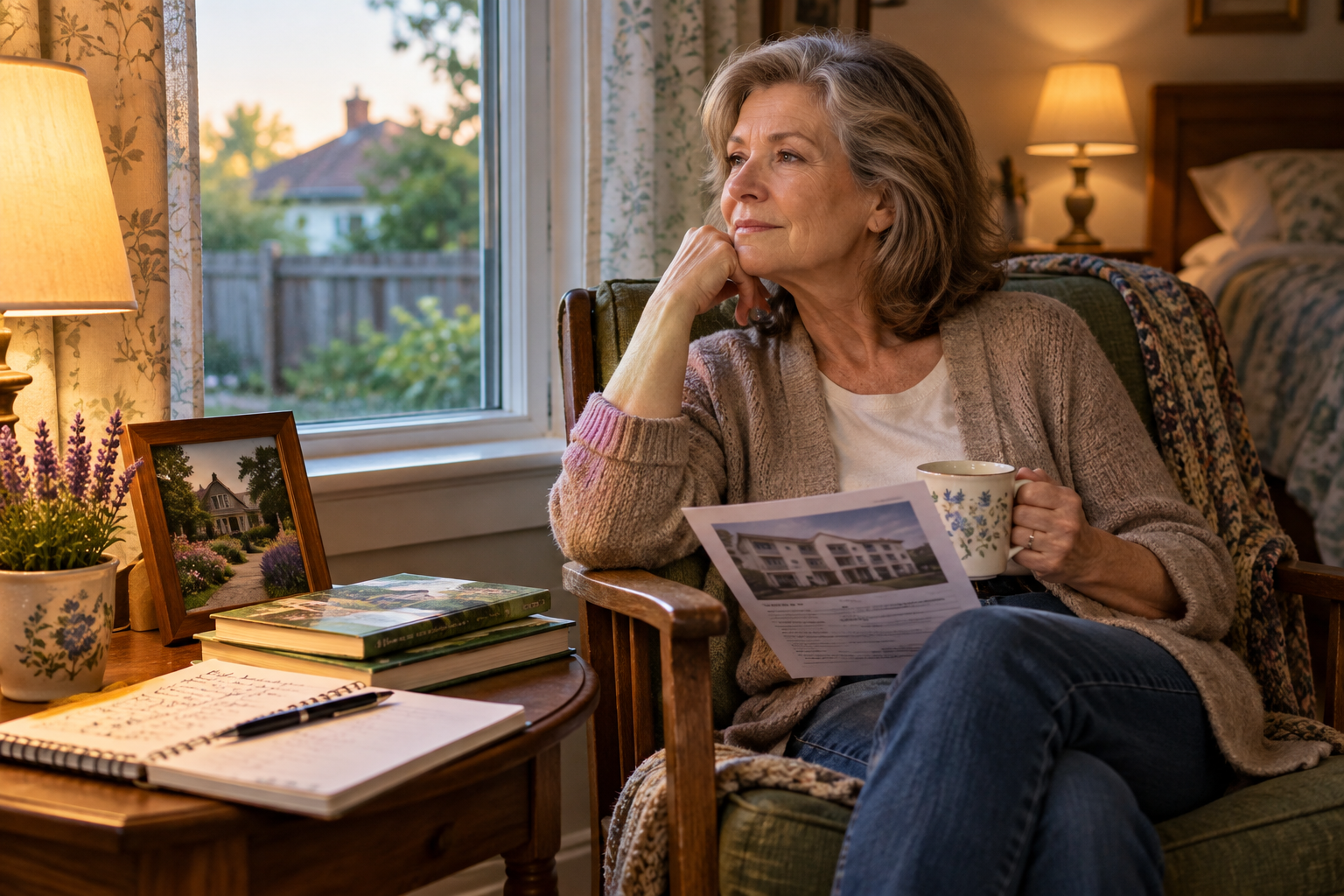
I was sitting in the chair by the window when he knocked.
“Can I come in?”
“Of course.”
He stood in the doorway for a moment.
“I wanted to apologize for the call.”
I closed my book.
“Why?”
“I made it sound as though you were supposed to drop everything because our plan fell apart.”
I didn't answer right away.
He rubbed his forehead.
“I was stressed. I had a meeting I couldn't leave, and Jessica was dealing with something at work. I thought of you because you've always been there.”
“I know.”
“But I should have remembered that you had your own plans.”
I looked at him.
“That is what I need you to remember.”
He nodded.
“I know. I'm trying.”
I believed that he was trying.
I also knew that trying once did not mean the habit had disappeared.
“I want you to understand something, Michael. If there's a real emergency, I will do what I can. If the boys are sick or someone is hurt, I won't stand at the door and tell you that my afternoon is mine.”
He listened without interrupting.
“But a program closing unexpectedly isn't always an emergency. Sometimes it means the adults have to make another arrangement.”
He lowered his eyes.
“You're right.”
“And sometimes I may choose to help. I want that to be my choice.”
“I understand.”
I hoped he did.
I wanted to believe that the conversation was changing something between us, not just making him more careful about what he said in the moment.
He looked around the room.
“The chair looks good there.”
I smiled faintly.
“Thank you.”
“Have you decided about the apartment?”
“No.”
He nodded slowly.
“I keep thinking that if I can make things better here, maybe you won't feel that you have to leave.”
I felt tenderness toward him then, but also a little sadness.
“I don't want to leave because I feel pushed out,” I said. “And I don't want to stay because everyone is afraid of what it would mean if I left.”
“What do you want, then?”
I considered the question.
“I want to know that I can stay and still have a life of my own. I want to know that I can leave without being accused of abandoning anyone. I need to make the decision without feeling that one choice makes me a good mother and the other makes me a bad one.”
He sat down on the edge of the spare chair.
“I never thought of it that way.”
“I know.”
He looked at his hands.
“When you moved in, I thought we were helping each other. You wouldn't be alone, and we'd have help with the kids.”
“That was what I thought too.”
“I didn't realize how much I had started relying on you.”
I could have told him that I had realized it long before he did.
I could have reminded him of the Sunday dinner when he had told me the door was right there.
But I didn't need to repeat every hurt for it to be real.
“I want us to keep talking honestly,” I said.
“We will.”
He stood and moved toward the door.
Then he turned back.
“I'm glad you went to the library.”
I smiled.
“So am I.”
After he left, I sat quietly for a while.
The old habit had returned that afternoon. I had felt the pull to say yes before I had even considered what I wanted.
But I had stopped myself.
Michael had found another arrangement.
The boys had been safe, dinner would still happen, and the world had not fallen apart because I spent an hour reading.
I wrote that in my notebook.
I can care about a problem without automatically becoming responsible for solving it.*
Then I added another line.
When someone is disappointed, I do not have to change my answer simply to make the disappointment disappear.*
I set the notebook on the table.
The house was noisy downstairs. Caleb was laughing at something on television, and Owen was calling for his brother to move away from the screen.
I could hear Jessica telling them to lower their voices.
It was the sound of family life continuing without needing me to manage every part of it.
I picked up my book again.
This time, I read until dinner was ready.
Click here to continue reading: PART 20: The Question I Could Finally Answer
I Had Spent Three Months Making Myself Useful in My Son’s House, Until One Ordinary Sunday Dinner Changed What I Could Bear
Part 19 of 20

One Comment on “PART 19 – When the Old Habit Returned”