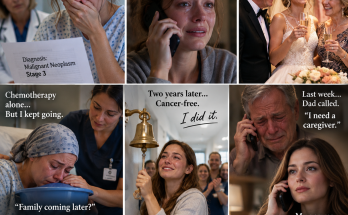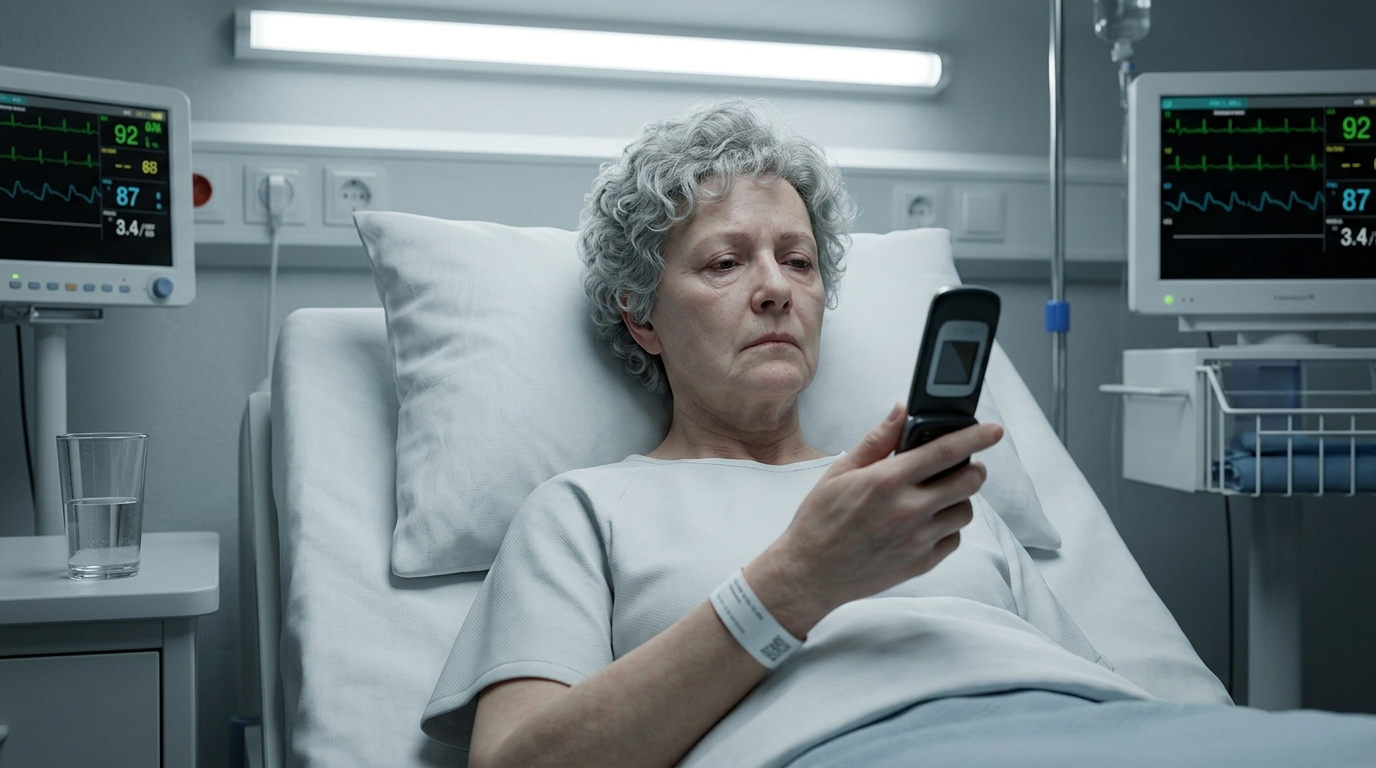
The pain started beneath my breastbone at 7:12 on a Tuesday morning, sharp enough to make the coffee cup slip from my fingers but not sharp enough, at first, to frighten me. I was seventy-two years old, and I had learned that bodies sometimes complained without asking permission. Knees stiffened. Hands cramped. Hearts skipped. I put one palm against the kitchen counter and waited for the pressure to pass. Instead, the room seemed to lean sideways.
My name is Margaret Hale, though everyone who had ever loved me called me Maggie. Richard had called me that for forty-eight years. Even when he was annoyed, even when I had backed the Buick into the garage door, even when we were young and broke and arguing over a six-dollar electric bill, I was Maggie. Richard had been gone thirteen years by then, and on that Tuesday morning I thought of him because the pressure in my chest reminded me of the morning he died.
I reached for my phone.
Not 911. Not immediately.
Jennifer.
My oldest daughter answered on the fifth ring. There was noise behind her—silverware, voices, somebody laughing.
“Mom?”
“Jenny, something’s wrong.”
A pause.
“What do you mean?”
“My chest hurts. I’m dizzy.”
The background noise disappeared, not because the room around her had become quiet, but because she had moved the phone. “Did you call your doctor?”
“I thought you could come over.”
Another pause, longer this time.
“Mom, I’m not even close to you.”
She lived forty-three minutes away.
“I know.”
“Paul and I already have plans.”
I looked at the coffee spreading across the tile. “I’m frightened.”
“You always jump to the worst possibility. Call the nurse line. If they think it’s serious, they’ll tell you what to do.”
Then she said she would check on me later.
She did not.
I called Michael next. My son answered while driving. I could hear the turn signal clicking.
“Mom, I can’t talk long.”
“I may need to go to the hospital.”
“What happened?”
I explained.
“Then call an ambulance.”
“Could you meet me there?”
He exhaled in a way that made me ashamed of asking.
“I’ve got a client presentation at nine.”
“Michael—”
“Mom, this is exactly what emergency services are for.”
He was right, technically. That was what hurt most. Cruelty is easier to recognize when it arrives shouting. Indifference often sounds reasonable.
My youngest, Lisa, did not answer.
I called twice.
On the third attempt she sent a message.
Can’t talk. Everything okay?
I typed with one thumb because my other hand was trembling.
Chest pain. Going to hospital. Can you come?
Three dots appeared.
They vanished.
Then returned.
Mom, I have the flu. I can’t expose you or anyone at hospital. Keep me posted.
I called 911.
By the time the paramedics arrived, I was sitting on the kitchen floor with my back against a cabinet. One of them, a young woman named Claire, knelt beside me and asked whether there was anyone she should contact.
“My children know.”
“Is someone meeting you?”
I looked at my phone.
“No.”
At St. Joseph’s, they kept me for most of the day. Electrodes covered my chest. Nurses drew blood. A cardiologist ordered tests because my blood pressure was low and my heartbeat irregular. I answered the same questions for three different people. Medications. Allergies. Previous hospitalizations. Emergency contacts.
Each time someone asked whether family was coming, I said, “They’re busy.”
By late afternoon the worst of the symptoms had eased. The cardiologist could not identify a heart attack. He mentioned stress, dehydration, an unusual medication reaction. He wanted me observed overnight.
I refused.
Not because I felt well.
Because I had spent nine hours watching the elevator doors open.
Every time they did, I expected one of my children.
No one came.
Jennifer finally texted at 6:18.
How are you?
Michael sent one at 7:03.
Everything okay?
Lisa did not contact me until after eight.
Sorry. Slept all day. What did doctor say?
I stared at those three messages until the words blurred.
Then I ordered a car home.
The driver was named Luis. He could not have been more than thirty. When he saw the hospital bracelet around my wrist, he got out and opened the rear door for me. At my house he waited until I unlocked the front door before driving away.
A stranger had shown me more consideration in eleven minutes than my children had shown me all day.
Inside, the house felt enormous.
Richard and I had bought it when Michael was nine. Back then every room had been used. Jennifer practiced piano badly in the living room. Michael bounced basketballs where he had been told not to. Lisa built blanket forts beneath the dining table. Richard complained about the noise and then became suspicious whenever the house was quiet.
Now I could hear the refrigerator motor from the foyer.
I made tea I did not drink and sat at the kitchen table.
At 9:37, Lisa posted photographs online from a restaurant.
She was smiling beside her husband.
There were six people at the table.
A half-empty wineglass sat in front of her.
I enlarged the photograph even though I already understood what I was seeing.
She did not have the flu.
Something inside me became very still.
The next morning Jennifer called.
She did not ask about my chest first.
She asked why I had not answered her message.
“I was tired.”
“You could have told me you were home.”
“You knew I was in the hospital.”
“And I checked on you.”
“You sent three words.”
“Mama, please don’t start.”
I had heard that sentence in different forms for years. Don’t start. Don’t make this difficult. Don’t be dramatic. Don’t guilt us. The words were different, but the request beneath them was always the same: have your feelings somewhere they cannot inconvenience us.
“I asked you to come.”
“I told you I had plans.”
“I thought I might be having a heart attack.”
“And you weren’t.”
The casual certainty of that answer struck harder than anger would have.
“You know that now.”
Silence.
Then Jennifer’s voice cooled. “What exactly do you want me to say?”
I looked through the window at the maple tree Richard had planted twenty-six years earlier.
“I don’t know anymore.”
She sighed. “Mom, all three of us have our own lives.”
There it was.
Not a mistake. Not a bad day.
A declaration.
That evening Michael called because Jennifer had apparently told him I was “upset.”
He tried to make it practical.
“You can’t expect us to drop everything every time something happens.”
“Every time?”
“You know what I mean.”
“No, Michael. Tell me.”
He became irritated. “You live alone in a huge house. You refuse to consider downsizing. You won’t hire full-time help. Then something happens and suddenly we’re responsible.”
“I didn’t ask you to be responsible for me. I asked you to sit beside me.”
“You’re making this emotional.”
“It was emotional.”
“That’s the problem.”
I almost laughed.
“My being frightened is the problem?”
“No. But you make us feel guilty for having boundaries.”
That word again. A sensible word doing ugly work.
“What boundary did I cross?”
“You call constantly.”
I thought about it.
Sunday evenings, usually. Birthdays. Sometimes Wednesday if I had seen something the grandchildren might like. Occasionally when I had cooked too much and wanted to know whether anyone wanted leftovers.
“Constantly?”
“You know what I mean.”
“No. Apparently I don’t.”
His voice hardened.
“Then maybe stop calling for a while.”
I said nothing.
Michael continued, perhaps encouraged by my silence.
“Seriously, Mom. Stop calling us. Let us call you. We have our own lives.”
After we hung up, I sat at the kitchen table for almost an hour.
Then Lisa called.
For one foolish second, I thought she was calling to apologize about the restaurant photograph.
Instead she said, “Jennifer says you’re upset with everybody.”
“You told me you had the flu.”
“I felt sick earlier.”
“You were drinking wine at a restaurant.”
“Are you monitoring my social media now?”
“No. Your photograph appeared on my screen.”
“That’s creepy, Mom.”
I closed my eyes.
“I thought I might die yesterday.”
“You didn’t.”
All three of them had said some version of it.
The danger had passed, therefore my fear no longer counted.
“Michael says I should stop calling.”
Lisa was quiet.
Then she said, “Maybe that would be healthy for everybody.”
“For everybody.”
“You need more of your own life.”
I looked around the kitchen where I had fed her for eighteen years.
“Perhaps I do.”
She must have heard something different in my voice, because she softened.
“We love you, Mom. We just can’t be everything for you.”
“I never asked you to be everything.”
No answer.
“I asked you to come to the hospital.”
Still nothing.
Finally Lisa said, “I have to go.”
When the call ended, I opened the recent-calls screen.
Jennifer.
Michael.
Lisa.
My thumb hovered over their names.
For thirty years, I had been the person who called first.
When Jennifer’s first marriage collapsed, I called every morning until she could get out of bed without crying. She and Ava lived with me for eight months.
When Michael’s business failed, he called me at 2:00 a.m. I wrote him a check for forty-two thousand dollars two days later and never asked for repayment.
When Lisa returned to college, I collected her children every afternoon because daycare cost too much. I paid part of her tuition too.
I had never once told any of them that I had my own life.
Maybe that was where I had gone wrong.
Not in loving them.
In teaching them that my love had no closing hours.
The following Sunday arrived.
At seven, the time I usually called Jennifer, I made tea instead.
At seven-thirty, I nearly called Lisa.
I did not.
At eight, I wondered whether Michael had noticed.
He had not.
Monday passed.
Then Tuesday.
A week.
No one called.
I told myself they were waiting to see whether I would respect the boundary they had requested.
Two weeks became three.
My phone remained quiet except for pharmacy reminders, an appointment confirmation, and a woman from the grief-support group named Evelyn Parker.
Evelyn had known me for several years. We were not especially close before my hospital visit, but she heard about it from another woman in the group and telephoned.
“How are you really?” she asked.
The word really undid me.
I told her more than I intended.
She listened.
The next afternoon she arrived with soup.
When I apologized for crying, she frowned.
“Why are you apologizing?”
“I’m making you uncomfortable.”
“You aren’t.”
“My children say I’ve become too dependent.”
“Do you believe them?”
I started to answer.
Then stopped.
That question followed me for days.
Did I believe them?
I had.
That was the embarrassing part.
I began examining my life as if it belonged to somebody else.
I drove.
I managed my investments.
I paid every bill.
I gardened.
I volunteered twice a month.
I climbed the stairs without assistance.
My cardiologist had found no evidence that I needed daily care.
Yet after three conversations with my children, I had begun viewing myself as a burden.
One afternoon I opened the desk in Richard’s study and found our old household ledgers.
Richard had kept meticulous records.
Mortgage payments. Insurance. Repairs. College tuition. Loans to the children.
I smiled at his handwriting.
Then I found a note clipped to an old property-tax statement.
If anything happens to me, Maggie decides what happens to the house.
Fourteen words.
Nothing legal about them.
Nothing dramatic.
Just Richard being Richard.
I sat there until dusk.
The next morning I called Thomas Brennan.
Thomas had handled parts of our estate for years. He was sixty now, silver-haired and careful with his words. When I told him I wanted to review everything, he did not ask whether my children approved.
He asked when I wanted to meet.
That alone felt revolutionary.
At his office I told him about the hospital, the calls, and the silence afterward.
He listened without interruption.
Then he asked, “What are you afraid will happen?”
“I don’t know.”
“That usually means you do know but don’t want to say it.”
I looked down at my hands.
“I think they’re waiting.”
“For what?”
“For me to become easier to manage.”
Thomas leaned back.
“Has anyone discussed your house?”
“Michael has mentioned downsizing.”
“Finances?”
“Jennifer asked whether I still manage the brokerage account myself.”
“Medical decisions?”
“Lisa thinks one of them should attend my appointments.”
His expression changed almost imperceptibly.
“What do you want?”
“To stay in my house.”
“Then we begin there.”
He explained trusts, fiduciaries, healthcare directives, powers of attorney, title protections. Much of it was familiar in outline and unfamiliar in consequence.
Then he asked whom I trusted to make medical decisions if I genuinely became unable to speak for myself.
I opened my mouth.
No name came.
That frightened me more than the paperwork.
Three children.
Not one answer.
Over the next month, Thomas helped me reorganize my affairs. I underwent medical and cognitive evaluations, partly for my own reassurance and partly because he believed documentation might matter later. The results were reassuring. My memory was normal for my age. My judgment was intact. My heart needed monitoring but not guardianship.
I transferred the house and my primary investments into the Richard and Margaret Hale Living Trust.
I remained in control while competent.
If that changed, an independent fiduciary would step in only after evaluations by two unrelated physicians.
The grandchildren received protected education accounts.
Most of whatever remained after my death would eventually support older widows facing housing insecurity or financial exploitation.
Thomas asked whether I understood that my children might be furious.
“Yes.”
“Are you doing this because you’re angry?”
I thought carefully.
“No.”
“Why, then?”
“Because anger passes. Paperwork remains.”
For my healthcare proxy, I chose Evelyn.
She had driven me to two follow-up appointments.
She had answered every call.
She had sat beside me while I signed the trust papers and told me I was brave.
When I worried that naming her might offend my children, she squeezed my hand.
“You cannot build your protection around the feelings of people who refused to protect you.”
At the time, I thought it was the kindest thing anyone had said to me in years.
By the third month, I had stopped checking my phone every few minutes.
I joined a gardening club.
I hired someone to repair the loose railing on the back steps.
I changed the locks after discovering Michael still had an old key.
At Thomas’s suggestion, I upgraded the security system and hired Daniel Ruiz, a former police officer who ran a small residential-security company, to review the property.
Daniel installed cameras at the entrances and motion sensors around the house.
“You expecting trouble?” he asked.
“I’m expecting clarity.”
He smiled slightly. “Usually more useful.”
My children still had not called.
Not once.
Then, on December nineteenth, Jennifer sent a message.
We’re all coming for Christmas. Kids are excited.
I stared at it.
No greeting.
No question about my health.
No acknowledgment of three months of silence.
Just an announcement.
I replied:
I have other plans. Please do not come.
She answered almost immediately.
Don’t be ridiculous.
Michael called five minutes later.
I let it ring.
Then Lisa.
I did not answer her either.
For the first time, silence belonged to me.
On December twenty-third, shortly after two in the afternoon, Daniel called from the gatehouse.
“Mrs. Hale?”
“Yes?”
“You have visitors.”
The security monitor illuminated.
Three vehicles stood outside my gate.
Jennifer’s SUV.
Michael’s sedan.
Lisa’s minivan.
Children filled the back seats.
Spouses stood beside the cars.
Michael carried a thick blue binder.
Jennifer was already pressing the intercom button.
Daniel’s voice came quietly through my phone.
“Would you like me to open the gate?”
For thirteen years after Richard died, that gate had opened for my children without question.
I looked at their faces on the monitor.
They had told me to stop calling.
So I had.
They had told me they had their own lives.
So I had begun building mine.
Now all three had arrived together without permission, carrying paperwork.
“No,” I said.
Outside, Michael walked toward the bars.
Jennifer pressed the intercom again.
Lisa raised her phone as if she were preparing to record something.
And for the first time, I understood that my children had not come home because they missed me.
They had come because during those three silent months, something had changed that frightened them.
Me.
Click here to continue reading: PART 2: They Brought My Grandchildren to the Gate, but the Blue Binder Told Me Why They Had Really Come
The Night I Called All Three of My Children and Finally Heard What Their Silence Meant
Part 1 of 24