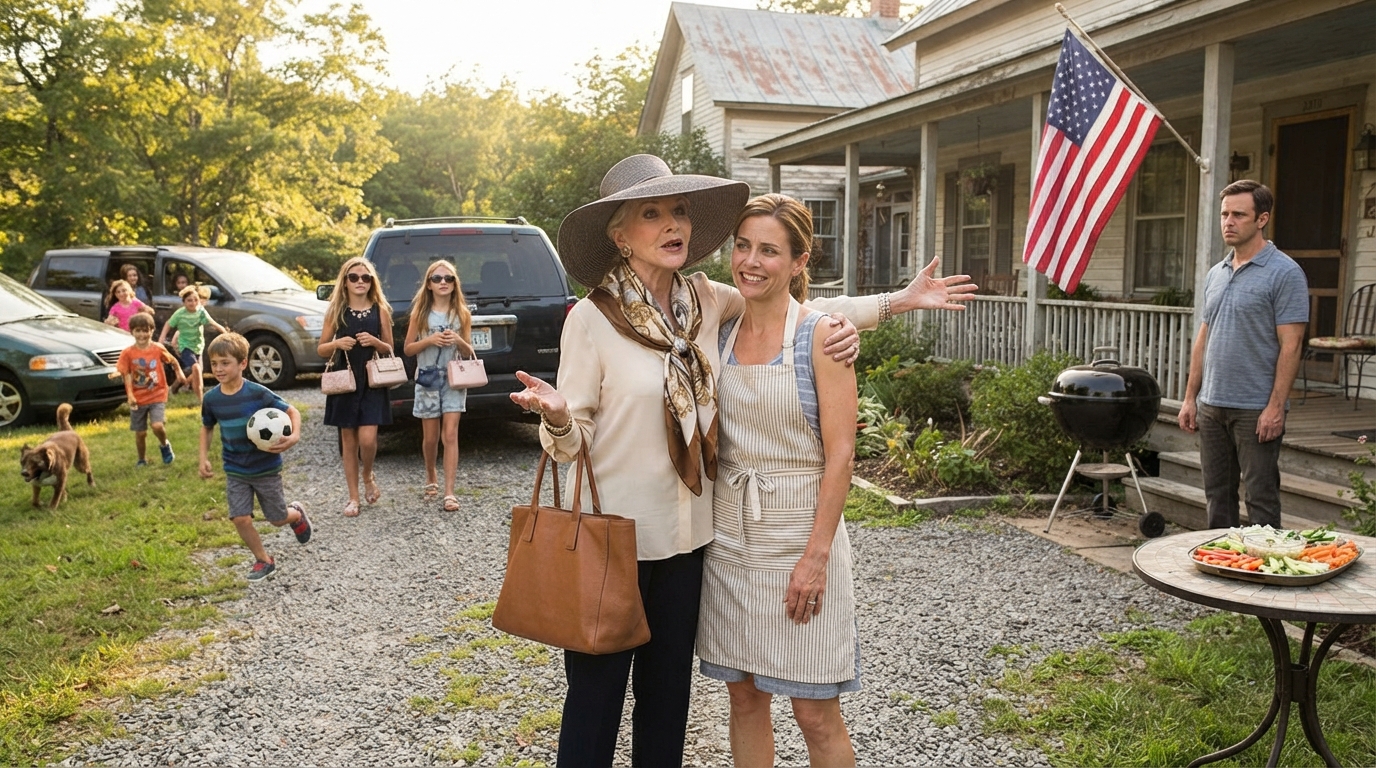
The reunion weekend arrived beneath a sky the color of polished steel.
Rain was forecast for Saturday.
The family had planned outdoor games, a picnic, and a long evening around the fire pit.
Juliette called me at seven that morning.
“The weather is going to ruin everything.”
“Then we'll move things inside.”
“We can't fit everyone.”
“We don't have to fit everyone at once.”
She sighed.
“You always have an answer.”
“I've had practice.”
She laughed reluctantly.
Then she said, “There's another problem.”
I knew there would be.
“What now?”
“The caterer canceled.”
I sat upright.
“What?”
“He called me last night.”
“Why didn't you tell me?”
“I thought I could find someone else.”
“Did you?”
“No.”
“How many meals does that affect?”
“All of Saturday.”
I looked at Ethan.
He had heard enough to understand.
“Okay,” I said. “Let's look at the plan.”
“What plan?”
“The food assignments.”
She paused.
“Some people haven't brought their things.”
“Who?”
“I don't know.”
“Then call them.”
“I can't call everyone.”
“Why not?”
“Because they'll blame me.”
I stared at the phone.
“That isn't my problem.”
She became quiet.
Then she said, “I thought you would help.”
“I will help.”
Her voice softened.
“You will?”
“I'll help you follow the plan.”
“That isn't what I meant.”
“I know.”
I ended the call.
Ethan looked at me.
“She's trying to pull you back in.”
“I know.”
“Are you going to let her?”
“No.”
We spent the next two hours making calls.
Monica handled breakfast.
Claire organized the children.
Harold drove to the grocery store.
Ethan arranged the tables.
I coordinated the kitchen.
By noon, the crisis had mostly disappeared.
Nobody starved.
Nobody went home.
The reunion continued.
But something was wrong.
People were whispering.
I noticed it during lunch.
Two cousins stood near the hallway talking quietly.
When they saw me, they stopped.
I didn't ask.
Later, Monica approached me.
“Annie.”
“What?”
“I think you should know something.”
She glanced toward the backyard.
“Mom's been using the reunion account.”
“For what?”
“I don't know.”
“How do you know?”
“She asked me to transfer money.”
“How much?”
“Six hundred dollars.”
My stomach tightened.
“For what?”
“She said decorations.”
“Did you see the receipt?”
“No.”
“Did you ask?”
“I did.”
“What did she say?”
“That she lost it.”
I looked at Monica.
“That's not good.”
“No.”
We found Juliette near the garage.
She was arranging folding chairs.
“Mom,” Monica said.
Juliette turned.
“What?”
“Where's the receipt for the decorations?”
Juliette frowned.
“What decorations?”
“The ones you bought with the reunion money.”
“Oh, those.”
She waved a hand.
“I'll find it.”
“Mom.”
“What?”
“I need to see it.”
Juliette looked irritated.
“Why?”
“Because the account is short.”
“That isn't your business.”
Monica stared at her.
“Yes, it is.”
Juliette's expression changed.
“You're questioning me?”
“I'm asking where the money went.”
I stepped closer.
“How much is missing?”
Juliette looked at me.
“I told you there were unexpected expenses.”
“How much?”
She hesitated.
“About twelve hundred.”
Monica's face went pale.
“Twelve hundred?”
Juliette crossed her arms.
“It isn't gone.”
“Then where is it?”
She didn't answer.
Ethan joined us.
“What happened?”
Monica explained.
Ethan looked at his mother.
“Mom?”
Juliette shook her head.
“This is exactly why I hate money discussions.”
I said quietly, “Money discussions are uncomfortable. Missing money is different.”
Her face flushed.
“I was going to replace it.”
“With what?”
“I had a plan.”
“What plan?”
She looked at the ground.
“I was going to sell some jewelry.”
Monica blinked.
“Why didn't you just tell us?”
“Because I knew everyone would panic.”
Claire had come outside by then.
She heard the last sentence.
“What did you think we'd do?”
Juliette's voice cracked.
“Judge me.”
Nobody answered.
Finally, Ethan said, “Mom, we aren't judging you.”
“You are.”
“No.”
He stepped closer.
“We're asking you to tell the truth.”
Juliette looked at her son.
“You sound just like Annie.”
“I hope so.”
That sentence silenced everyone.
Juliette sat down on one of the folding chairs.
“I borrowed it.”
“From the account?” Monica asked.
“Yes.”
“For what?”
Juliette stared at her hands.
“I paid one of my bills.”
The words came out barely above a whisper.
The backyard seemed to disappear.
“What bill?” Claire asked.
“It doesn't matter.”
“It matters if you used money everyone contributed.”
Juliette looked at me.
“I was going to put it back.”
“How much?”
She named a number.
It was larger than twelve hundred.
Much larger.
I felt Ethan's hand close around mine.
Juliette had not stolen money in some secret criminal scheme.
She had been overwhelmed.
She had made a choice.
Then she had hidden it because she was ashamed.
That distinction mattered.
But it did not erase what she had done.
“Why didn't you ask?” Monica whispered.
Juliette started crying.
“I didn't want to be the mother who needed help.”
Claire sat beside her.
“You could have told us.”
“I didn't know how.”
I crouched in front of Juliette.
“I understand being embarrassed.”
She looked at me.
“But embarrassment can't become everyone else's responsibility.”
She nodded.
“I know.”
We sat in silence.
Then I stood.
“We're going to fix the reunion.”
Juliette looked surprised.
“Why?”
“Because the people who came here shouldn't have to carry the consequences of a problem they didn't create.”
Ethan nodded.
“Agreed.”
Monica opened her phone.
“I'll make a new list.”
Claire said, “I'll tell everyone exactly what happened.”
Juliette looked alarmed.
“You don't have to.”
“Yes,” Claire said gently. “We do.”
Juliette lowered her eyes.
“No more hiding.”
“No more hiding,” Monica agreed.
By dinner, everyone knew.
There was no dramatic confrontation.
No shouting.
No public humiliation.
Instead, people quietly adjusted their contributions.
One cousin added money.
Another covered breakfast.
Someone offered to pay for the extra tables.
Harold took over transportation.
The missing amount was replaced.
But nobody pretended the problem had vanished.
That evening, Juliette sat beside me near the fire pit.
“I thought you would hate me.”
“I don't.”
“I used to think you had everything figured out.”
I laughed.
“That's funny.”
“You always looked so organized.”
“I was organized.”
She smiled faintly.
“But I was also exhausted.”
“I know.”
She watched the fire.
“I think I confused being in charge with being needed.”
I turned toward her.
“That sounds familiar.”
She looked at me.
“What do you mean?”
“I used to think if everyone needed me, they couldn't overlook me.”
Juliette's eyes filled again.
“Did you?”
“Sometimes.”
We sat quietly.
Then she said, “I'm sorry.”
“I know.”
“No. I mean for all of it.”
“I know.”
She looked at me.
“Do you forgive me?”
I thought before answering.
“Yes.”
“But?”
“But forgiveness doesn't mean we stop having rules.”
She smiled.
“I suppose not.”
The rain began shortly afterward.
People moved inside.
Children crowded the living room.
Someone started a board game.
The adults gathered around the kitchen island.
For a moment, the house was loud again.
But this time, I wasn't running from room to room trying to keep everyone satisfied.
I sat down.
I listened.
I laughed.
And I realized something.
The rules had never been about money.
They were about making it possible for everyone to belong without one person becoming responsible for everyone's comfort.
That night, after the house finally quieted, Juliette knocked on our bedroom door.
“Can I talk to you?”
“Of course.”
She came inside carrying a small envelope.
“What is that?”
She handed it to me.
“I owe you something.”
I opened it.
Inside was a check.
I stared at the amount.
It was not reimbursement for the reunion.
It was payment for seven years.
Every expense she believed she could identify.
Not all of it.
Not even close.
But enough to show she had been thinking.
“I can't take this,” I said.
“You can.”
“Juliette.”
“I don't want you to keep a record against yourself anymore.”
I looked at her.
“What does that mean?”
“You kept every receipt because nobody else remembered.”
She swallowed.
“I want you to stop needing the receipts.”
I closed the envelope.
“I'll accept this if we agree on something.”
“What?”
“We don't use money to settle old wounds.”
She nodded.
“Then what do we use?”
I smiled.
“Better behavior.”
She laughed through her tears.
“That may be more expensive.”
“Probably.”
For the first time that weekend, she hugged me.
Not because she wanted something.
Not because guests were arriving.
Not because she needed me to fix a problem.
Just because she wanted to.
And somehow, that made the apology feel real.
Click here to continue reading: PART 7: The Envelope in My Hand Contained More Than Money, and Its Final Page Forced Me to Question Why Juliette Had Been Afraid
She Announced Another Holiday at My House Without Asking, and This Time I Realized the Real Cost Was Far More Than Groceries
Part 6 of 20