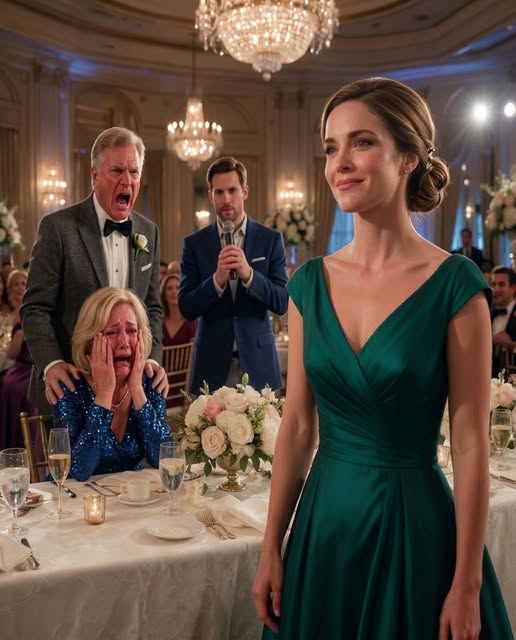
I did not show anyone the message immediately.
Not because I wanted to protect Grandma.
Because I wanted to understand her face.
She had looked away.
Grandma rarely did that.
Her strength had never been loud, but it was consistent. She could tell unpleasant truths without lowering her eyes. When Grandpa died, she had met every relative individually and explained the estate in plain language while everyone else avoided mentioning money.
Now she stared at the carpet.
That frightened me.
“Grandma.”
She did not look up.
I walked toward her.
“Who changed the trust after Grandpa died?”
Mom frowned.
“What?”
Grandma slowly lifted her eyes.
“Why are you asking that?”
I held up my phone.
Julian moved closer.
“Clara?”
I handed him the messages.
His expression tightened.
“Unknown number.”
Dad stood.
“Let me see.”
Julian did not hand him the phone.
“What does it say?”
I read it aloud.
Grandma closed her eyes.
Maya whispered, “Is it true?”
Grandma took a long breath.
“Partly.”
Mom stared.
“Mother.”
Grandma raised one hand.
“Do not start.”
She looked at me.
“Your grandfather created the controlling provisions before he died.”
“So what did you do after?”
“I delayed disclosure.”
My stomach tightened.
“How long?”
“Longer than I should have.”
“Why?”
She looked at my father.
Dad’s face hardened.
“What does this have to do with me?”
Grandma answered.
“Everything.”
The word silenced him.
She folded her hands.
“Your grandfather was dying. He knew it, although he refused to say so directly. In his last months, he became concerned about how Richard was managing money.”
Dad scoffed.
“He hated every investment he didn’t understand.”
“No. He hated debt.”
Grandma looked toward me.
“He believed Richard had begun taking risks to maintain appearances.”
Dad stepped forward.
“That is revisionist nonsense.”
Grandma ignored him.
“He changed the trust because Clara had challenged him about a commercial property sale when she was twenty-one.”
I stared.
“That stupid warehouse?”
“It was not stupid to him.”
The memory surfaced.
Grandpa had planned to sell an old warehouse near downtown.
I had been home from college and heard him discussing the deal with Dad.
The offered price seemed wrong.
I said so.
Dad told me to stop pretending I understood real estate.
Grandpa asked why.
I showed him three nearby sales and a zoning change I had found online.
The deal collapsed two weeks later.
Months afterward, the property sold for almost twice as much.
I had forgotten.
Grandpa apparently had not.
Grandma continued.
“He said you asked the right question when everyone else wanted the convenient answer.”
Dad laughed bitterly.
“So he handed a twenty-one-year-old control over family assets because she used Google?”
“No.”
Grandma looked at him.
“He did it because she was willing to disagree with him.”
That hurt Dad.
I could see it.
Grandpa had valued in me the exact trait Dad spent years punishing.
Grandma continued.
“But when he died, Clara was twenty-three. Grieving. Starting her career. And the family was already divided.”
“Because you divided it,” Mom said.
Grandma turned sharply.
“No. Favoritism divided it.”
Mom went still.
“I delayed telling Clara about the full control provisions because I was afraid Richard would pressure her.”
Dad stared.
“You thought I would manipulate my own daughter?”
Grandma did not answer.
That was answer enough.
“You had no right.”
“No.”
The admission surprised him.
Grandma looked at me.
“I was wrong.”
I remained silent.
“I told myself I was protecting you until you were older.”
“How old?”
“Thirty.”
“I’m thirty-three.”
Her eyes filled with regret.
“I know.”
“So what happened?”
“Thomas persuaded me disclosure could wait.”
There it was.
Julian leaned forward.
“Thomas Reed advised you not to disclose?”
“Yes.”
“On what basis?”
“He said the trust language was ambiguous.”
“Was it?”
“I don’t know.”
“You had independent counsel?”
Grandma looked ashamed.
“No.”
Julian’s expression tightened.
“You relied on the administrator whose conduct was affected by the provision.”
“Yes.”
Dad cursed softly.
Grandma ignored him.
“Thomas said telling Clara would create family conflict. He said Richard’s financial position was improving and the control provision would never need to be used.”
I laughed without humor.
“So everyone decided I didn’t need to know the thing designed to protect me.”
Grandma nodded.
“Yes.”
I walked away.
My chest felt tight.
I had expected betrayal from my parents.
Not her.
That difference mattered.
Grandma stood with difficulty.
“Clara.”
“I need a minute.”
“I know.”
“No. You don’t.”
The words came sharper than I intended.
She flinched.
I hated that.
But I did not take them back.
“You let me spend years thinking Grandpa left us equal interests.”
“He loved you equally.”
“That isn’t what I said.”
“No.”
“You knew Dad might pressure me, so you solved the problem by making sure I didn’t know I had power.”
Her eyes lowered.
“Yes.”
“That is not protection.”
“I know that now.”
“You should have known then.”
“I should have.”
No defense.
No excuse.
It made being angry harder.
Maybe that was why it hurt more.
Julian’s phone buzzed again.
He checked it.
“Thomas Reed’s bar status.”
Dad frowned.
“He’s a lawyer?”
“Was.”
“What do you mean was?”
Julian read.
“He resigned from active practice six months ago.”
“Why?”
“No public disciplinary order attached.”
Grandma stared.
“He never told me.”
Julian’s eyes narrowed.
“Was he still administering the trust?”
“Yes.”
“That may violate the engagement structure.”
Maya rubbed both hands over her face.
“So Thomas forged Clara’s signature, redirected her mail, helped Dad borrow millions, convinced Grandma not to tell Clara about the trust, and then quietly stopped practicing law?”
Julian answered carefully.
“That is one possible interpretation. We do not yet know enough to state it as fact.”
Maya laughed bitterly.
“You really do talk like that all the time.”
“I’m afraid so.”
For the first time since she slapped him, their eyes met without anger.
The moment lasted only seconds.
Then Maya looked away.
I noticed.
So did Mom.
Mom’s expression hardened.
“Are you two seriously flirting right now?”
Maya snapped her head around.
“What is wrong with you?”
“I’m asking.”
“No, you’re doing what you always do.”
Mom stared.
“What is that supposed to mean?”
“Turning everything into something ugly.”
The room froze.
Mom’s face changed.
Maya stood.
“You did it with Clara. You did it with me. You did it with Dad whenever Grandma complimented him. Everything has to be competition.”
“That is ridiculous.”
“Is it?”
Maya’s voice shook.
“I knew the toast would hurt her.”
Mom went still.
Julian looked at Maya.
So did I.
Maya turned toward me.
“I knew.”
I said nothing.
“She showed it to me this afternoon.”
“I know.”
Her face crumpled slightly.
“I told myself you deserved it.”
The honesty hurt worse than excuses would have.
“Why?”
She struggled.
“Because you never seemed to need us.”
I stared at her.
“What?”
“You left. You stopped calling. You built some entire life none of us knew about. Every time Mom said you thought you were better than us, I believed her because it made more sense than believing you just didn’t want me.”
I swallowed.
“I didn’t stop wanting you.”
“You stopped trying.”
“So did you.”
“Yes.”
Silence.
She nodded.
“I know.”
Mom stepped forward.
“Maya, you do not need to apologize because Clara manipulated you into feeling guilty.”
Maya turned.
“No.”
Mom stopped.
“No what?”
“No more telling me what I feel.”
“I am your mother.”
“That doesn’t make you the narrator.”
Grandma almost smiled.
Mom’s face went white.
Dad sat back down.
The family had begun shifting under pressures unrelated to money.
That might have been the more dangerous collapse.
My phone vibrated.
Another message from the unknown number.
ASK MARGARET ABOUT THE ORIGINAL LETTER.
I showed Julian.
Grandma saw the screen.
Her eyes closed again.
“What original letter?”
She sat down slowly.
“Your grandfather wrote you something.”
My throat tightened.
“Me?”
“Yes.”
“When?”
“Before he died.”
“Where is it?”
“I don’t know.”
I stared.
“What do you mean you don’t know?”
“It disappeared.”
Dad frowned.
“I never heard about a letter.”
Grandma looked at him.
“You weren’t supposed to.”
I crouched in front of her.
“What did it say?”
“I never read the whole thing.”
“You opened it?”
“No. He dictated part of it to me before sealing it.”
“What part?”
She hesitated.
“Grandma.”
“He said he was giving you authority because money frightened people into becoming versions of themselves they did not recognize.”
The room became very still.
“He said he wanted you to know that saying no to family did not make you disloyal.”
My eyes burned.
Grandma continued.
“He believed one day you might have to choose between preserving the assets and preserving everyone’s approval.”
I looked away.
The timing felt cruel.
“Where was the letter?”
“In the trust file.”
“Thomas had access.”
“Yes.”
“Who else?”
“Richard.”
Dad looked shocked.
“I did not take any letter.”
Grandma studied him.
“I never said you did.”
Julian asked when she last saw it.
“About five years ago.”
The number hit me.
Five years.
The same year I left Dallas.
The same year Northstar began.
The same year my relationship with my parents collapsed completely.
“What happened five years ago?” Julian asked.
Dad and Mom exchanged a glance.
I saw it.
So did Maya.
Maya pointed.
“That.”
Mom frowned.
“What?”
“You both just looked at each other.”
“We did not.”
“You did.”
Dad sighed.
“This is absurd.”
Julian remained silent.
I looked at them.
“What happened five years ago?”
Dad rubbed his jaw.
“Nothing.”
Mom answered too quickly.
“Your company happened.”
I stared.
“What about it?”
“You asked us for money.”
I went cold.
“No.”
“Yes, you did.”
“I asked Dad whether he would introduce me to an investor.”
“That is asking for money.”
“No, it isn’t.”
Dad interrupted.
“You were desperate.”
“I was raising seed capital.”
“You had no customers.”
“We had three pilot customers.”
“You had four people in a rented office.”
“Yes.”
He looked around as though expecting everyone to understand how ridiculous that sounded.
No one did.
Mom continued.
“You got angry when your father refused.”
“I got angry because he called me delusional.”
Dad’s mouth tightened.
“I told you startups fail.”
“You told me I would fail.”
“Same principle.”
“No.”
Grandma stared at him.
“What did Thomas have to do with this?”
Dad looked away.
Nothing.
Too quickly.
Julian saw it.
“Richard.”
Dad rubbed his forehead.
“Thomas was considering investments.”
My heart stopped.
“What?”
“He had access to private capital.”
“You introduced my pitch to Thomas?”
“For review.”
“You told me no one was interested.”
“He wasn’t.”
I felt something shift.
“Did he see my business plan?”
Dad did not answer.
“Did Thomas Reed see my business plan?”
“Yes.”
“When?”
“Five years ago.”
I stood.
Northstar’s original plan contained details that had later become valuable.
Not trade secrets by current standards.
But enough to identify the security architecture we intended to build.
Enough to understand the problem.
Enough to recognize future value before anyone else did.
Julian looked at me.
“Clara?”
I was already searching my email.
Five years.
Thomas Reed.
Nothing.
Then another name surfaced in memory.
A small investment firm that had approached us six months after launch.
Ridgeway Strategic Partners.
They had wanted twenty-five percent of Northstar for an insulting valuation.
I refused.
They disappeared.
Two years later, Ridgeway dissolved.
I searched the corporate archive from my phone.
The old diligence packet loaded.
There.
Ridgeway’s registered agent.
Thomas Reed.
My stomach turned.
“Julian.”
He came beside me.
I showed him.
His face changed.
Dad stood.
“What?”
I looked at him.
“The man you gave my business plan to tried to buy a quarter of my company six months later.”
Dad stared.
“I didn’t know.”
“Of course you didn’t.”
“I didn’t.”
This time I believed him.
That did not absolve him.
It merely expanded the problem.
Julian scrolled.
“Ridgeway had three principals.”
I read the names.
Thomas Reed.
Martin Cole.
And a third.
I stopped.
Maya leaned closer.
“What?”
I looked toward my mother.
She stared back.
The third principal was her brother.
My uncle.
Daniel Hayes.
Mom shook her head before I said anything.
“No.”
I turned the phone toward her.
Her brother’s name sat plainly on the screen.
And suddenly the anonymous messages no longer felt random.
Someone knew the family.
Someone knew the trust.
Someone knew Grandpa’s letter.
Someone knew Northstar.
Then another text arrived.
This one contained only an address.
And beneath it:
IF YOU WANT THE LETTER, COME BEFORE MIDNIGHT.
Click here to continue reading: PART 8: The Address Led to My Uncle’s Empty Office, Where Grandpa’s Missing Letter Was Waiting Beside Evidence Someone Expected Me to Find
I Came to Maya’s Wedding Expecting an Uncomfortable Evening, but My Mother Had Prepared Something Crueler Than Silence
Part 7 of 28