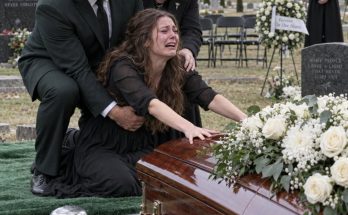
Frank died eighteen years later.
For real.
I checked.
That sounds like a joke.
It was partly one.
After everything, we had rules.
No closed casket unless medically necessary.
Independent identification.
Two family witnesses.
No private transport.
No surprise paperwork.
Frank added another himself:
If I appear alive after this funeral, Eileen has permission to kill me.
Aaron refused to put that in the will.
We wrote it on a kitchen magnet instead.
For eighteen years, Frank and I lived an ordinary life.
Not perfectly.
That would be another lie.
We argued.
Sometimes badly.
He occasionally withheld small things because the old instinct returned.
I occasionally interpreted harmless mistakes through the lens of the great betrayal.
When that happened, we said so.
Sometimes immediately.
Sometimes the next day.
Once three weeks later.
Change did not erase pattern.
It gave us a way to interrupt it.
Frank never staged another death.
That helped.
He survived cancer recurrence twice.
The third time, at eighty-one, treatment stopped working.
He chose hospice.
At home.
In the same bedroom where he had once pretended to die.
I asked whether that felt strange.
He said, “Everything about dying in this family feels strange.”
Fair.
Diane and Ross visited often.
Sarah too.
Michael drove up from Oregon.
Mom had died six years earlier.
Actually died.
At ninety-three.
We saw her body.
She insisted.
“None of you are spending another funeral wondering.”
Even in death, she was funny.
Howard died two years after her.
They never remarried.
But for the final eight years they lived across the hall from each other in the same apartment building.
Mom called it marriage with improved architecture.
Sarah and I buried them side by side.
No fake names.
No secret identities.
Eleanor attended Mom’s funeral.
She and I had become something between aunt and friend.
Not close enough to erase history.
Close enough to share breakfast twice a year.
She died the following winter.
Helena died in prison at ninety-one.
Frank was with her.
She had served most of her sentence by then.
Compassionate release paperwork was pending.
She never saw it approved.
Frank said she died annoyed by bureaucracy.
Appropriate.
Margaret lived longer than anyone expected.
She entered a federal witness program after prison.
Then abandoned the alias because, in her words, she had spent enough life pretending.
She died under her own name.
Diane attended.
That surprised everyone except me.
Families remain complicated after explanations.
Pastor Dave never returned to ministry.
He became a paralegal.
A good one, apparently.
He helped Helen House victims with probate claims until retirement.
When he died, his obituary described neither scandal nor heroism.
Just service.
That seemed right.
Gregory died in federal prison.
Claire was released after eleven years.
Joanna picked her up.
They never became close again.
But Claire met Joanna’s children.
That was enough.
Jonathan left prison quieter.
He sold the funeral business and became a groundskeeper at a veterans cemetery.
When Frank heard, he said, “Still around dead people.”
Jonathan replied by letter:
They are less complicated.
Frank kept that one.
Rebecca rebuilt her career slowly after prison.
Not as an estate attorney.
Legal aid.
Michael said it suited her.
He and Frank remained brothers until Michael died at seventy-eight.
Their weekly calls continued.
Frank never stopped grieving the father Daniel might have been.
But grief became curiosity more than wound.
He visited Daniel’s grave once a year.
Sometimes I went.
Sometimes I did not.
Frank learned not every meaningful experience had to include me to be safe.
I learned the same.
Helen House became what Mom had intended.
Not an empire.
A foundation with boring audits.
Boring meetings.
Boring annual reports.
I loved those reports.
Every boring page meant nobody had hidden power in a bird, clock, grave, or marriage.
Over the years, restitution reached thousands of people.
Not perfectly.
Some claims failed.
Records were missing.
Some assets could not be traced.
Some victims died before seeing anything returned.
But properties changed hands.
Money moved back.
Public apologies were issued by banks, counties, firms, and agencies that once insisted nothing improper occurred.
The orchard family planted new trees.
Ruth sent me photographs every spring until she died.
Then her daughter continued.
The old Crescent companies disappeared.
Not through one dramatic collapse.
Through liquidation, lawsuits, prosecution, restitution, and time.
Real endings are administrative more often than cinematic.
Frank’s final illness lasted four months.
He became thinner.
Sleepier.
Still argumentative about cinnamon.
One afternoon, Diane brought apple pie.
He took a bite.
“Too much cinnamon.”
She stared.
“You always liked it.”
“I lied.”
Everyone froze.
Then Frank smiled.
“Kidding.”
Diane threw a napkin at him.
I nearly divorced him on principle.
His final week was quiet.
No hidden operation.
No visitor carrying a secret envelope.
No attorney arriving at two.
He asked me one evening to bring the walnut clock into the bedroom.
I set it on the dresser.
He listened.
Tick.
Pause.
Tick.
“Remember when that thing nearly ruined everyone’s life?”
“It was innocent.”
“Debatable.”
I sat beside him.
He took my hand.
“Are you afraid?”
He thought.
“Yes.”
Good.
No heroic answer.
“So am I.”
He looked at me.
“Of being alone?”
“Of missing you.”
He squeezed my hand.
“I’ll be dead. I’ll be fine.”
“Frank.”
“What?”
“That is not comforting.”
“Sorry.”
He smiled.
Then became serious.
“I don’t want you making my death the center of whatever comes next.”
“You sound like Mom.”
“Smart woman.”
“You were terrified of her.”
“Smart terrifying woman.”
I laughed.
He closed his eyes.
Then said, “There’s something I need to tell you.”
My entire body tensed automatically.
Even after eighteen years.
Frank opened one eye.
“That reaction is fair.”
“What?”
“I broke your blue coffee cup.”
I stared.
“What?”
“Two weeks ago.”
“The chipped one?”
“Yes.”
“My mother’s cup?”
“Yes.”
“You told me Sarah borrowed it.”
“I panicked.”
I stared at him.
Then started laughing.
He did too.
His chest hurt when he laughed, so he stopped.
“I’m sorry.”
“That is your final secret?”
“I hope.”
“You hid a broken cup from me.”
“Yes.”
“Frank, you faked your death better than you handle crockery.”
“I had professional help with the death.”
I laughed until I cried.
Then crying became crying for another reason.
He knew.
He pulled my hand toward his chest.
“I chose truth eventually.”
“Yes.”
“Not fast enough.”
“Sometimes.”
“Did I earn ordinary life back?”
The question broke me.
I leaned over him.
“Yes.”
Not because he deserved reward.
Because it was true.
We had built ordinary life again.
Not restored.
Built.
New.
He closed his eyes.
“Good.”
Frank died the next morning while sunlight crossed the bedroom floor.
No performance.
No last-minute revelation.
His breathing slowed.
Then stopped.
I held his hand.
Warm.
Then less warm.
I stayed until the nurse arrived.
She checked.
Documented.
Confirmed.
I called Diane.
Ross.
Sarah.
Michael’s daughter.
Aaron, somehow still practicing law despite being older than civilization.
Then I sat beside Frank.
No panic.
No suspicion.
Only grief.
Real grief.
Clean grief, if such a thing exists.
Pain without conspiracy beneath it.
I kissed his forehead.
This time I knew whose forehead it was.
At the funeral home, the director was a woman named Maria.
No relation to anyone.
I asked three times.
She understood after Lena—retired by then—called and explained our history.
Frank wore a navy suit.
His own face.
No prosthetics.
His wedding ring.
No hidden keys.
I checked the cuff links.
Diane laughed through tears.
“You had to.”
“Yes.”
The funeral was held at the small church where Dave once preached.
A new minister officiated.
She had never heard of S.M. Legacy.
I loved her instantly.
The church filled.
Family.
Friends.
Helen House staff.
People Frank had worked with.
Some restitution families.
Ross’s grandchildren.
Diane’s daughters.
Sarah’s family.
My mother’s photograph sat near the entrance.
So did Howard’s.
Daniel’s too, at Frank’s request.
Not Samuel.
That was also Frank’s request.
“We have enough ghosts.”
The service was simple.
Diane spoke.
She told the story of the recliner.
Not the inheritance fight.
The night she failed to come.
How regret turned the chair into a symbol.
Then how Frank eventually taught her to visit people instead of possessions.
Ross spoke about the television.
Everyone laughed.
He admitted he had actually measured it.
His grandchildren looked horrified.
“Grandpa.”
“Yes.”
“During the funeral?”
“Yes.”
“Why?”
“I was an idiot.”
Useful family history.
Sarah spoke about Frank calling her his daughter without paperwork.
She said he taught her family could be chosen badly, inherited accidentally, repaired slowly, and still matter.
Then it was my turn.
I stood at the lectern.
Looked at Frank’s coffin.
For one second, nineteen years collapsed and I was back at the first funeral.
Flowers.
Cold hand.
Wrong body.
Pink labels.
Tape measure.
Then the image passed.
I told the congregation that Frank once believed love meant preventing pain.
So did many of us.
We learned differently.
Love sometimes means telling someone the thing that may make them angry.
Letting them leave.
Letting them choose.
Standing nearby without arranging the answer.
I did not tell every secret.
Truth does not require public exposure of everything.
That was another lesson.
Privacy and secrecy are not the same.
I ended simply.
“Frank learned how to stay.”
Then I sat.
At the cemetery, the grave was beside the one that had once held Thomas Vale under Frank’s name.
That grave had been corrected years earlier.
Thomas was reburied elsewhere beneath his real name.
The space beside it remained unused until Frank chose it.
When he told me, I objected.
“Why there?”
“Symmetry.”
“Morbid symmetry.”
“Still symmetry.”
So Frank was buried near the place of his false funeral.
This time the coffin descended once.
Stayed down.
I watched.
No hidden car.
No Aaron arriving with a briefcase.
No investigator waiting.
Just dirt.
Flowers.
Cold air.
Diane stood beside me.
Afterward, we returned to the house.
The recliner waited in the living room.
She looked at it.
Then at me.
Neither spoke.
I knew the old agreement.
The chair was hers.
I touched the worn arm.
“You still want it?”
Diane cried.
“Yes.”
“When?”
She looked surprised.
“I don’t know.”
“Take it when you’re ready.”
“No rush?”
“No.”
She laughed.
“Imagine that.”
Ross stood near the television.
I pointed at him.
“Don’t.”
He raised both hands.
“I have my own television.”
Dinner filled the house.
Children moved through rooms that once held investigators.
Grandchildren sat on the basement stairs without knowing I had once been afraid to walk them.
Someone bumped the walnut clock.
It kept ticking.
I watched all of it.
Then Mom’s old phrase returned.
A path home.
For years, I thought home meant a place nobody could take from me.
That made sense after people tried to claim my furniture, forge my deed, control my inheritance, and turn my marriage into a legal mechanism.
But Mom had meant something larger.
A path home was what she built into Helen House for stolen property.
A way for things taken under pressure to return to the people they belonged to.
What I understood only later was that people need paths home too.
Not back to who they were.
That is impossible.
Home after betrayal is not restoration.
It is a new place built from truth, boundaries, consequence, and choice.
Frank found his way home.
Howard did.
Mom did.
Diane.
Ross.
Sarah.
Even parts of Helena, Margaret, Dave, Claire, Jonathan, and Rebecca did in different ways.
Not everyone received forgiveness.
Not everyone escaped punishment.
Home was not acquittal.
It was simply the place where lies stopped deciding who you had to be next.
That evening, after everyone left, I sat in Frank’s recliner.
Diane had deliberately left it.
“For tonight,” she said.
The seat still held his shape in my body’s memory.
I rested my hand on the arm.
No pink note.
No ownership dispute.
Just a chair.
The walnut clock chimed nine.
I opened the small lower compartment.
Frank’s old apology letter was still there.
I had kept it all those years.
Not hidden.
Preserved.
I read the last lines again.
If I come home and you still want me, make me earn ordinary life back.
If you don’t want me, I will leave you with the truth and no argument.
I smiled.
“You earned it,” I said aloud.
The house did not answer.
Good.
I had had enough talking houses.
Outside, headlights moved along the street.
Mrs. Hendricks’s house had new owners now.
Children’s bicycles leaned against the garage.
Somewhere down the block, a dog barked.
Ordinary.
I folded Frank’s letter and put it back.
Then I noticed the photograph beside it.
The one from Lake Crescent.
Seventeen-year-old Frank covered in soot.
Four-year-old Diane.
My mother.
Six-year-old me.
Children and strangers who had no idea what decades would do to them.
On the back, Mom’s handwriting:
Eileen asked the Mercer boy his name.
He said Frank.
She told him she would remember.
I laughed softly.
“I did.”
Not immediately.
Not consciously.
But I remembered him in the life we built.
In mornings.
Arguments.
Hospital rooms.
Coffee.
Bad jokes.
Cinnamon.
Truth learned late.
Love corrected slowly.
The next morning, Diane came for the chair.
She brought Ross.
He brought a moving dolly.
I stared.
“What?”
“It’s appropriate equipment.”
“Better than a tape measure.”
“Much.”
They carried Frank’s recliner toward the door.
Diane stopped.
“You sure?”
“Yes.”
She looked around the living room.
“It feels strange.”
“That’s because you asked this time.”
She cried.
So did I.
Then they took the chair.
The empty space surprised me.
For about five minutes.
Then sunlight fell across the floor where it had been.
I moved my mother’s small reading chair into the spot.
No ceremony.
It fit.
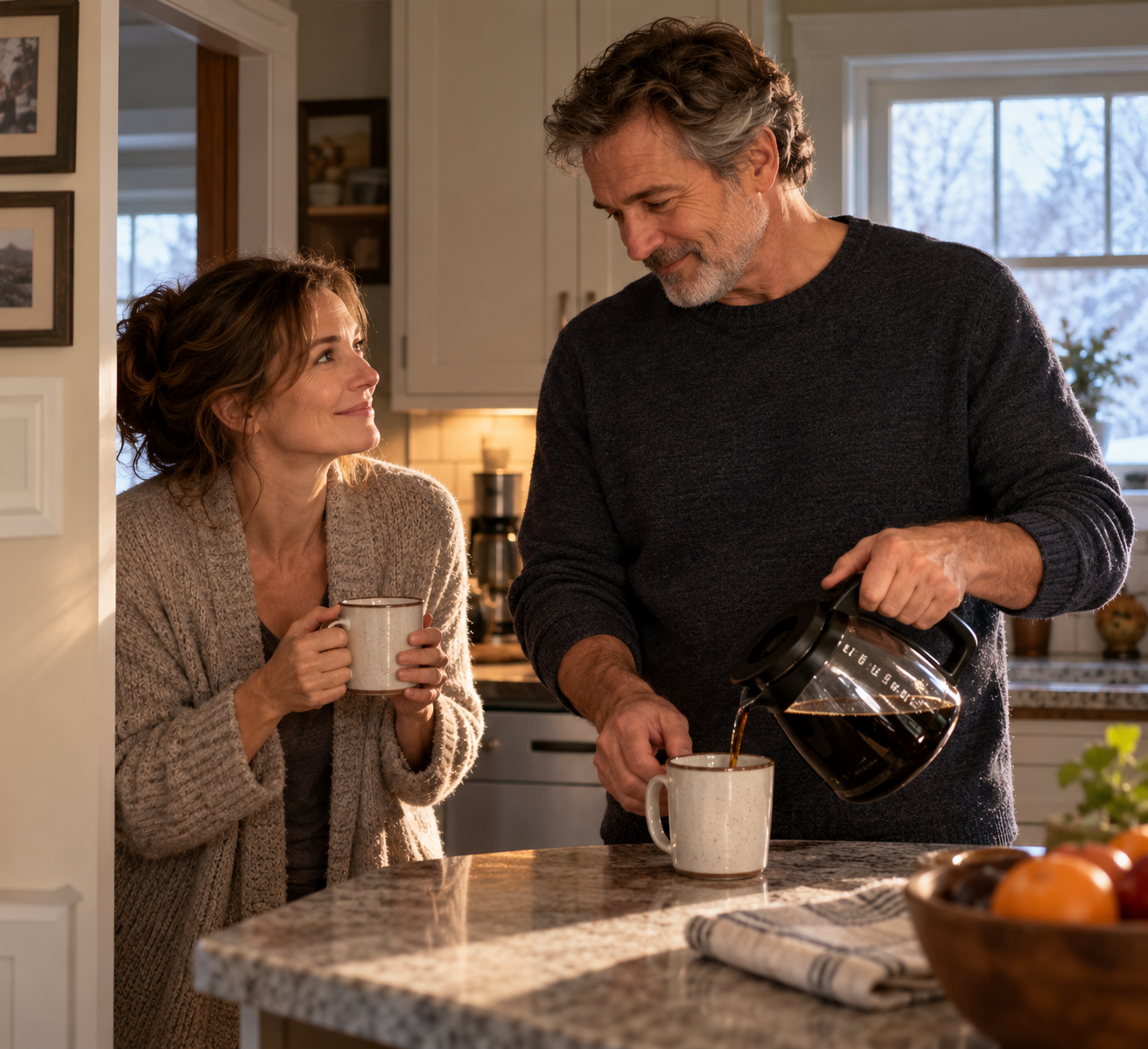
That afternoon, I made tea.
Sat down.
Opened a book.
The walnut clock ticked.
Nothing happened.
No revelation.
No reversal.
No urgent decision.
The story had finally reached the thing everyone had been fighting for without understanding.
Not money.
Not property.
Not inheritance.
Not even forgiveness.
Choice.
And this time, nobody had made mine for me.
The End
Read more original stories on Feel Every Story.
Before the Funeral Flowers Had Wilted, Frank’s Children Began Dividing My Home as Though I Had Already Disappeared
Part 35 of 35