I fell in the kitchen on a Tuesday.
There was nothing dramatic about it.
No storm.
No intruder.
No hidden document.
I reached for a cup.
My knee gave way.
Then I was on the floor.
Nadia found me before I had decided whether I was embarrassed or angry.
Mostly angry.
The ambulance ride was worse.
I disliked the straps.
The questions.
The cheerful paramedic who called me young lady.
“I am ninety-seven.”
He smiled.
“You look great.”
“That is irrelevant.”
He stopped smiling.
Good.
At the hospital, scans showed no fracture.
That was the good news.
The less pleasant news involved weakness, circulation, and balance.
My doctor used the phrase increased care needs.
I immediately disliked him.
Not personally.
Professionally.
Emily sat beside the bed.
Greg stood near the window.
Neither spoke.
I watched them.
“What?”
Emily said, “Nothing.”
“You both look guilty.”
“We’re not.”
“Then stop.”
They tried.
Failed.
The doctor recommended twenty-four-hour support for at least several weeks.
Possibly longer.
My first answer was no.
Immediate.
Sharp.
Automatic.
Nobody argued.
That irritated me more.
I expected resistance.
Instead Emily said, “Okay.”
I stared.
“That’s all?”
“You said no.”
“You agree?”
“No.”
“Then argue.”
She smiled slightly.
“You taught me not to.”
I hated being defeated by my own principles.
Greg looked down to hide a smile.
“Do not enjoy this.”
“I’m not.”
“You are.”
“A little.”
The doctor returned later.
Explained risks.
Another fall could be serious.
Living alone overnight carried more danger now.
I heard him.
I did not like what he said.
Both things could be true.
That evening, Emily brought a notebook.
“Options.”
I groaned.
“Not a presentation?”
“No charts.”
“Good.”
She listed three possibilities.
Live-in caregiver at the house.
Rotating overnight aides.
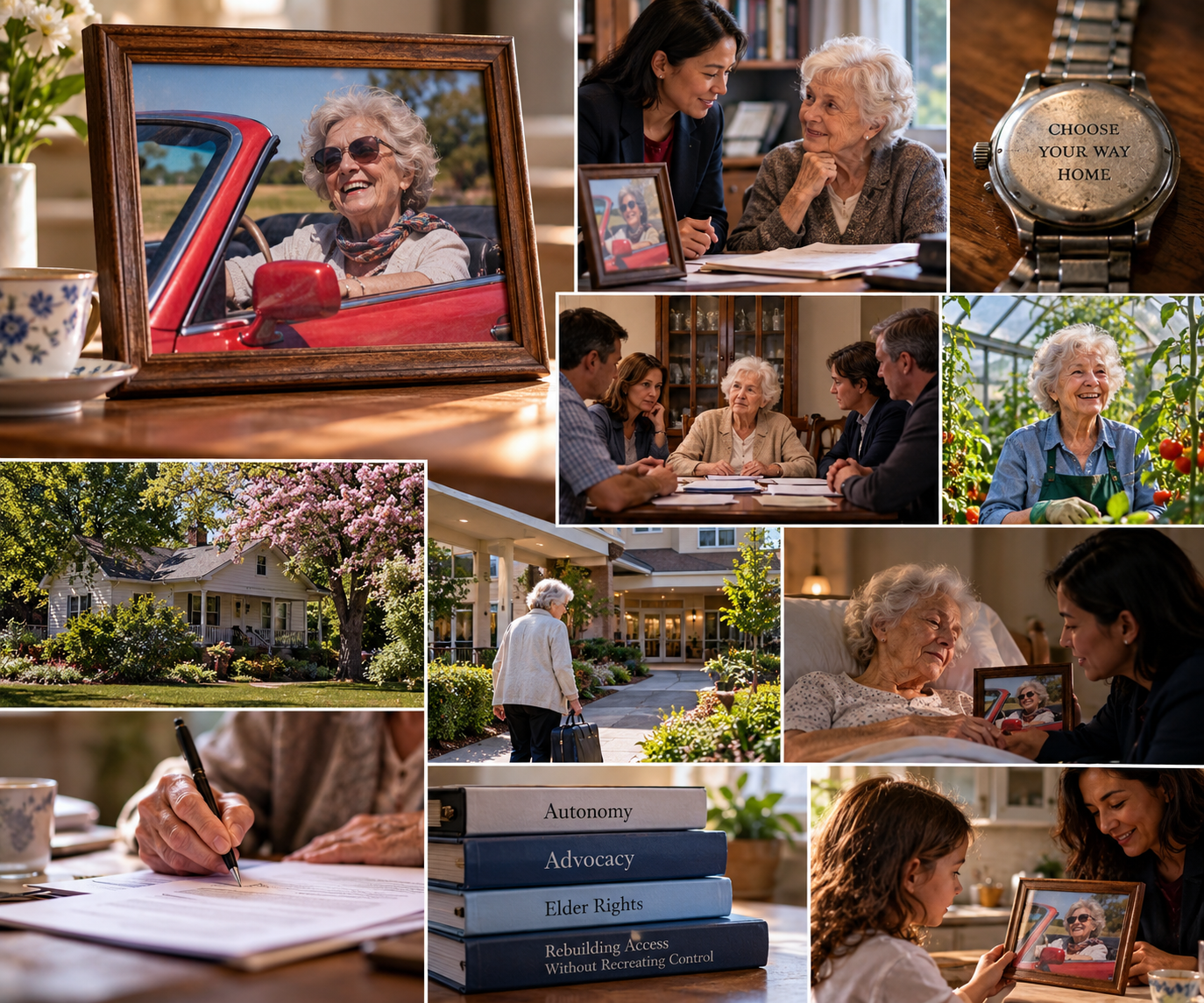
Or a small residential care community nearby that allowed private rooms, unrestricted visitors, and personal furnishings.
I looked at her.
“No Briar Glen.”
“No.”
“Locked doors?”
“Only exterior security.”
“Memory unit?”
“No.”
“Who chooses?”
“You.”
Greg remained quiet.
I noticed.
“What do you think?”
He looked surprised.
“You’re asking?”
“Yes.”
“I think home care.”
“Why?”
“Because you love the house.”
“Bad reason.”
He nodded.
“Yes.”
Then thought again.
“Because you already have Nadia. Because the downstairs room works. Because you know the space. Because Emily can visit without driving far.”
Better.
“And the care community?”
“Probably safer.”
“What would you choose?”
“For you?”
“No.”
He stopped.
That question mattered.
“What would you choose for yourself?”
Greg thought.
“Community.”
“Why?”
“I’d hate strangers rotating through my home.”
Fair.
Emily said, “I’d choose home.”
“Why?”
“I like strangers less than Dad does.”
Greg laughed.
Nobody tried to turn preference into instruction.
The next morning, I visited the care community.
My choice.
The irony was not lost on me.
A senior residence.
Nearly sixteen years after Greg tried to place me in one.
This one did not look sinister.
That annoyed me.
I wanted symbolism to cooperate.
Instead, it smelled like coffee.
Residents played cards.
A man practiced piano badly in a common room.
A woman in bright red sneakers argued with a nurse about salt.
I liked her.
The director showed me a private room.
Large window.
Small kitchenette.
Space for my maple table.
Bathroom with rails.
Emergency call system.
No one took financial control.
Residents kept their doctors.
Visitors came freely.
“You can stay short-term,” the director said.
“Trial?”
“Yes.”
“And leave?”
“Anytime.”
I looked at Emily.
She said nothing.
I looked at Greg.
Same.
“Annoying.”
The director blinked.
“What?”
“My family has learned manners.”
Emily laughed.
I chose a thirty-day stay.
Trial.
Not permanent.
I packed my own suitcase.
A newer one.
The old luggage tag hung beside the front door in its frame.
Emily watched me packing.
“You want help?”
“No.”
“Okay.”
Ten minutes later, I asked.
She helped.
Two dresses.
Sweaters.
Books.
Medication.
Walter’s photograph.
The cracked mug stayed home.
Too fragile.
Then I stopped.
The scene repeated itself.
Suitcase on the bed.
Senior residence waiting.
Son nearby.
Granddaughter.
Age.
Weakness.
But everything essential had changed.
Nobody packed for me.
Nobody lied about why I was leaving.
Nobody asked me to transfer property.
Nobody had hidden paperwork.
Nobody needed me confused.
Choice transformed the entire meaning.
Greg carried the suitcase to the car.
At the front door, he paused beside the framed old luggage tag.
“I’m sorry.”
“You have said that.”
“I know.”
“Then carry the bag.”
He smiled.
“Yes, ma’am.”
The care community was called Hawthorne House.
My room overlooked a courtyard.
The red-shoed woman introduced herself on the first afternoon.
Martha.
Ninety-one.
Widow.
Former chemistry teacher.
She inspected my books.
“You read mysteries?”
“Sometimes.”
“They cheat.”
“Books?”
“Authors.”
“How?”
“They hide information.”
I laughed.
“Then you would hate my family.”
Within a week, Hawthorne felt less foreign.
Not home.
Different.
I ate breakfast with Martha.
Attended one exercise class.
Refused a second.
Joined a discussion group accidentally because I sat in the wrong room and was too stubborn to admit it.
Emily visited every other day.
Greg once a week.
Neither asked when I was coming home.
They waited.
At day twenty-five, the director asked whether I wanted another month.
I did.
That surprised everyone.
Including me.
“Why?” Emily asked.
“I sleep better.”
“At Hawthorne?”
“Yes.”
“Why?”
“No stairs.”
“You already had the downstairs room.”
“People nearby.”
She studied me.
“You like it.”
“Do not make this sentimental.”
“You like it.”
“Martha plays cards well.”
Emily grinned.
I extended another month.
Then another.
Eventually, I made the decision permanent.
Not because I could not go home.
Because I no longer wanted the house to require my body to prove something.
That was new.
I had spent years defending my right to remain.
Now I discovered the right to leave voluntarily mattered just as much.
Emily asked what to do with the house.
“Live in it.”
She blinked.
“What?”
“It’s yours.”
“I know.”
“Then stop behaving like a caretaker for my museum.”
“I wasn’t.”
“You were.”
She looked guilty.
“I thought changing things would upset you.”
“Change everything.”
“Grandma.”
“Not the kitchen table.”
She laughed.
“Of course.”
“And the workshop.”
“Obviously.”
“Everything else is negotiable.”
Emily moved into the house six months later.
Not immediately.
Carefully.
She painted the living room.
Moved Walter’s chair.
That took courage.
She called before doing it.
“Why are you asking?”
“It was Grandpa’s.”
“He is not using it.”
She sighed.
“You make grief sound very practical.”
“Someone should.”
The chair went to Greg.
He hesitated before accepting.
“Are you sure?”
“No.”
He smiled.
“I’ll take it.”
At Hawthorne, I built a smaller life.
Not lesser.
Smaller.
One room.
A courtyard.
Meals I did not cook.
People who understood why opening medication bottles could become warfare.
I gave away clothes.
Kept photographs.
Sold nothing important because nothing important required selling.
The maple table sat beside my bed.
Walter’s photograph on top.
One afternoon, Martha noticed it.
“Handsome.”
“Sometimes.”
“Dead?”
“For decades.”
“You still talk to him?”
“Occasionally.”
“Me too.”
“Your husband?”
“No. My chemistry professor.”
I stared.
She smiled.
“Long story.”
Hawthorne had excellent residents.
Greg became comfortable visiting.
At first he sat stiffly.
Perhaps senior facilities still carried shame.
One day I asked.
“Does this bother you?”
“Yes.”
“Why?”
“You know.”
“Say it.”
He looked around my room.
“Because I tried to put you somewhere like this.”
“No.”
“It feels like it.”
“You tried to remove me so you could take my property.”
He looked down.
“I came here because I chose more support.”
“Yes.”
“These are not the same story.”
“No.”
“You don’t get to make my current choice about your past.”
He looked at me.
Then nodded.
“I’m sorry.”
“That was dangerously close to another apology.”
He smiled.
“I’ll control myself.”
After that, he relaxed.
We played cards.
Badly.
Martha accused him of counting.
He was not.
She distrusted anyone who had worked with money.
Reasonable.
Emily brought me the old luggage tag one afternoon.
Still framed.
“I thought you might want this.”
I considered it.
“No.”
“Really?”
“Put it by your front door.”
“Why?”
“The house needs it more than I do.”
“What does that mean?”
“I don’t know yet.”
She took it home.
Weeks later, she sent a photograph.
The frame hung beside the door.
Under it she had added another card.
ALL DESTINATIONS MUST BE VOLUNTARY.
I laughed so hard Martha complained from the hallway.
“That girl has a sense of drama.”
“She inherited it.”
“From you?”
“Unfortunately.”
My health continued to decline slowly.
No single catastrophe.
Just accumulation.
More fatigue.
Shorter walks.
A cane became a walker.
The walker became a wheelchair for long distances.
I hated each transition for approximately three days.
Then appreciated the convenience.
That might have been age’s final joke.
Adaptation becomes easier once vanity becomes tiring.
At ninety-eight, I stopped visiting the cemetery.
The uneven ground was too much.
Greg went instead.
Sometimes he brought back photographs of Walter’s grave.
I did not ask him to.
He did.
One evening, he visited with daisies still wrapped in paper.
“These were extra.”
“There are no extra flowers.”
“Fine. I bought two bunches.”
“One for him?”
“Yes.”
“One for me?”
“Yes.”
I accepted them.
“Thank you.”
Greg sat.
For a while we watched snow begin outside.
Then he said, “You’re happier here than I expected.”
“So am I.”
“Does that make what I did less terrible?”
“No.”
He nodded.
“I knew that.”
“Then why ask?”
“I don’t know.”
“Yes, you do.”
He smiled faintly.
“I wanted a loophole.”
“There isn’t one.”
“I figured.”
“But you can be glad I am happy now.”
He looked at me.
“That’s enough?”
“Yes.”
Perhaps that was the final separation Greg needed.
My life no longer existed as evidence for or against his guilt.
I could be happy somewhere he once tried to force me without absolving him.
Context mattered.
Choice mattered.
Truth could hold both.
The snow thickened outside.
Hawthorne staff salted the walk.
Martha complained about dinner.
Someone played piano badly.
Greg arranged the daisies in a plastic pitcher because I had no vase.
I watched him.
My son.
Not forgiven once.
Not condemned forever.
Known.
That had become more meaningful than either extreme.
Click here to continue reading: PART 23: Emily Asked What I Wanted After I Was Gone, and My Answer Finally Ended the Inheritance That Had Hurt Us Most
The Morning My Son Packed My Suitcase, He Still Believed the House Waiting Behind Me Was His
Part 22 of 35