We left the stone building with the box between us.
Thomas insisted that we take the documents somewhere safe before examining them further. Daniel wrapped the papers in a clean cloth and placed them inside a locked case in his car. I carried the letters, holding them against my chest as though the paper itself might disappear if I loosened my grip.
The receipt bearing my mother's name had changed the entire investigation.
Until that moment, I had thought of Helen as a frightened witness who had spent years protecting a secret she barely understood. Now I had evidence that a payment connected to the disputed property transfer had been made under her name shortly before Evelyn disappeared.
I couldn't decide whether I felt angry or sick.
Thomas drove behind us to a quiet café outside town. We chose a table near the back, away from the windows, and ordered coffee that none of us touched.
I placed the receipt in front of him.
“Do you think my mother knew what was happening?”
Thomas studied the document.
“I don't know. But someone used her name to receive the payment.”
“Could the account have been opened without her knowledge?”
“Yes. The documents we've seen contain several false identities. It wouldn't surprise me if someone had used hers.”
Daniel leaned forward.
“But why choose Helen? Why not use a company account?”
“Because a family connection can make a transaction look legitimate,” Thomas replied. “If the payment was meant to appear as compensation or a private loan, a relative's name might have been useful.”
I looked at the date.
The payment had been made just before Evelyn disappeared. If my mother had knowingly accepted it, she might have been involved in the events that followed. If someone had used her identity without permission, she might have spent years hiding the evidence because she feared no one would believe her.
Either possibility was terrible.
“We need to ask her,” I said.
Thomas shook his head.
“Not until we understand the document.”
“Why?”
“Because if someone has been watching us, they may be waiting for you to confront her. They could use the conversation to make her say something that can be taken out of context.”
Daniel frowned.
“You think the threats are coming from someone who knows the family?”
“I think whoever is doing this has access to records that were supposed to be private. That person has used Mara's name, knows about the ledger, and knew we would look for the school files. They may also know about the payment.”
I felt a chill.
“Then how do we find out whether my mother was involved?”
Thomas opened the bundle of letters again.
“We look for the original agreement.”
The property transfer document was only a copy. The handwritten note about the disputed ownership had been attached later, and the receipt was a separate record. Somewhere, there might be an original agreement showing who had authorized the payment and why.
Daniel examined the letters one by one. Most were addressed to Arthur Bell, Samuel Price, or my father. Several referred to a person called the trustee, but none identified that person by name.
Then he found a letter written by Evelyn to my mother.
Helen,
I know you did not create this problem, and I know you have tried to help. But please understand that the people offering money are not trying to settle the dispute. They are buying silence. If you accept their offer, they will use your signature to make it appear that you agreed with everything they did.
I read the words aloud.
Thomas leaned forward.
“That's important.”
The letter continued, explaining that Evelyn had discovered a discrepancy in the property records and believed someone had altered the documents after the original owners died. She had asked my mother to keep a copy of the original papers until she could meet with a lawyer.
At the bottom was a handwritten postscript.
If Robert refuses to help, I will have to go to the authorities myself.
I sat back.
“My mother was supposed to keep the original papers.”
“And the payment may have been an attempt to stop her,” Daniel said.
Thomas looked at the receipt.
“Or someone wanted to make it appear that she had accepted money in exchange for silence.”
I thought of my mother's fear when she saw the brass key, her refusal to discuss the storage locker, and the letter she had burned after my father's death. Perhaps she had been protecting herself. Perhaps she had been protecting us. Or perhaps she had been protecting someone else.
We agreed to return home and speak with her carefully.
Before we left the café, Thomas asked whether he could keep a copy of the letter from Evelyn. I made a photocopy with my phone and sent it to him.
He stared at the image for a long time.
“I used to imagine what she would say if I ever found her,” he said. “I thought she might explain why she left. I never considered that she might have been trying to return.”
I didn't know what to say.
There was no comforting explanation for the years he had lost. Even if Evelyn had survived, she might never have been able to contact him. Even if my father had acted with the best intentions, his secrecy had left a child believing he had been abandoned.
I wanted to tell Thomas that we would find out what happened.
Instead, I promised him that we would preserve every document and follow the evidence wherever it led.
When we reached home, my mother was waiting in the kitchen.
She took one look at the folder in my hands and knew that we had found something important.
“What is it?” she asked.
I placed the receipt on the table.
“Your name appears on a payment connected to the property transfer.”
My mother stared at the document.
Then she sat down so abruptly that the chair scraped against the floor.
“Where did you find this?”
“In a box at the old Bell property.”
She picked up the receipt with trembling fingers.
“I never received this money.”
“Then why is your name on it?”
“I don't know.”
“Did Evelyn ask you to keep documents for her?”
My mother looked up.
“Yes.”
“Did you?”
She nodded.
“Where are they now?”
Her face crumpled.
“I thought Robert had destroyed them.”
I pulled out the letter Evelyn had written to her.
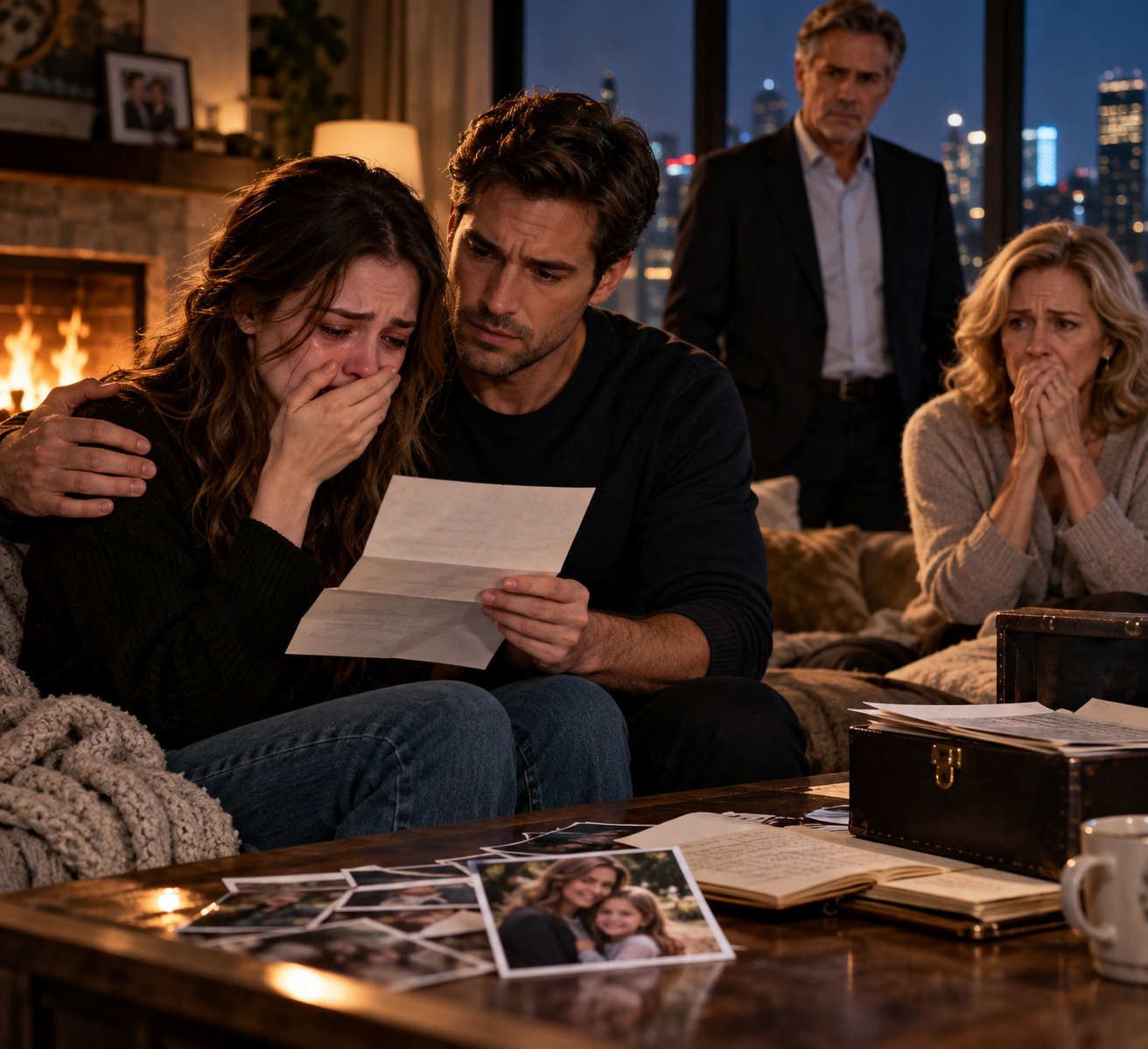
My mother read the first few lines, then covered her mouth.
“She wrote this before she disappeared,” she whispered.
“You kept it?”
“No. I never saw this letter. But I remember her asking me to protect the original property papers. I put them in a locked drawer in our old house.”
“What happened to them?”
“Robert took them. He said he needed to make copies for a lawyer.”
“Did he return them?”
My mother shook her head.
I felt my anger rising again, but this time it was mixed with something more painful: the realization that my mother might have been telling the truth about her own ignorance.
“Why didn't you tell us about the papers?”
“Because I didn't know what had happened to them. When Evelyn vanished, I asked Robert whether the documents were safe. He told me the matter had been settled.”
“Settled how?”
“He wouldn't explain.”
Daniel placed the remaining letters on the table.
“Mom, we found evidence that the property transfer was never completed. Evelyn signed a statement disputing the transaction. Someone continued paying for Thomas's place at Northfield after he left. And someone has been accessing records under Mara's name.”
My mother listened without interrupting.
When Daniel finished, she stood and walked to the cupboard beside the refrigerator. She opened the bottom drawer and removed a small tin box I had never seen before.
“I kept one thing,” she said.
Inside was a folded sheet of paper and a tiny envelope sealed with yellowed tape.
The paper was a handwritten inventory of the documents Evelyn had entrusted to her thirty years earlier. It listed the property deed, two account statements, and a letter from Arthur Bell.
The final item was circled.
Original ledger receipt. Signed by trustee.
My mother turned the page over.
On the back, in my father's handwriting, was a short note.
If the ledger is found, the trustee must be identified before any copies are released.
I stared at the words.
“Who was the trustee?”
My mother shook her head.
“I never knew.”
I opened the tiny envelope.
Inside was a narrow strip of paper containing a name and an address. The ink had faded, but the name remained legible.
Samuel Price.
Beneath it was a second line, written in a different hand.
Ask who appointed him.
I looked at Daniel.
“The lawyer wasn't just handling the transfer. He was the trustee.”
Thomas, who had arrived shortly after us, studied the note.
“Then he may have known who altered the records.”
My mother pressed her hands against the table.
“Samuel Price died twelve years ago. If he kept the original documents, they may have been transferred to his estate.”
Daniel opened his laptop.
“Then we need to find out who inherited his files.”
He searched through the public records and found a notice confirming that Price's legal papers had been transferred to a private archive managed by a former associate. The associate's name was listed beneath the notice.
I read it once.
Then again.
Arthur Bell.
My father had trusted him. Evelyn had warned us about him. Thomas believed he had helped conceal the ledger. And now we had evidence that Arthur had taken possession of the very records that might have exposed the property scheme.
I turned toward Thomas.
“If Arthur had the documents, why did he let everyone believe they were missing?”
Thomas looked at the letters spread across the table.
“Because the ledger may not have been the only thing he was hiding.”
He pointed to the final letter from Evelyn.
At the bottom, beneath her signature, she had added one sentence.
The person who appointed the trustee is the person we should fear most.
For the first time, the mystery seemed to have a clear direction.
We no longer needed to search blindly for the ledger.
We needed to discover who had appointed Samuel Price—and why that person had spent thirty years ensuring that no one learned the truth.
Click here to continue reading: PART 17: The Name Behind the Trustee Appointment Led Us to a Family Agreement That My Father Had Spent His Life Trying to Undo
The Moment My Daughter Began Crying, I Realized There Was Something She Had Been Afraid to Tell Me
Part 16 of 35