
The investigator met us at the county archive that afternoon, carrying a secure case for the envelope Denton had surrendered. Her name was Inspector Laura Bennett, and she had been assigned to review the suspected document fraud after Rebecca’s lawyer submitted the hospital records and the blue ledger. She explained that the evidence would need to be authenticated before any formal conclusions could be drawn, but Edward’s letter gave investigators a direct reason to examine the authorization.
We watched as she recorded the envelope’s condition, photographed its seal, and placed it in a protective sleeve. She would not open it in front of us. Instead, she explained that the examination would include the paper, ink, signature, and any marks showing whether the document had been replaced or altered. She also requested known samples of Evelyn’s handwriting, along with letters from Martin Hale and Gerald Voss, so the comparison could be conducted properly.
Michael supplied copies of Evelyn’s letters from the storage unit. Thomas gave the investigator the unsent letter he had found in the archive, allowing it to be photographed before he took it back. Rebecca provided the correspondence recovered from her father’s papers. Every item was logged, dated, and assigned a reference number. The process was slow, but it was the first time the evidence had been handled as something that could establish facts rather than as a secret controlled by one family member.
Inspector Bennett told us the preliminary results might take several days. She could not promise that the signature would identify the person who forged it, especially if the writer had deliberately altered their handwriting. But she believed the original envelope might contain more than the consent form. A faint impression on the inner fold suggested another sheet had once been placed beneath it, possibly a note or cover letter.
While we waited, Rebecca’s lawyer filed a request to freeze any remaining transfer of the disputed property. The original trust appointment named Evelyn as the protected beneficiary, while the later documents relied on a false authorization and a questionable replacement trustee. The lawyer believed there were sufficient grounds to challenge the company’s claim, though the court would need to determine the legal consequences after reviewing the complete record.
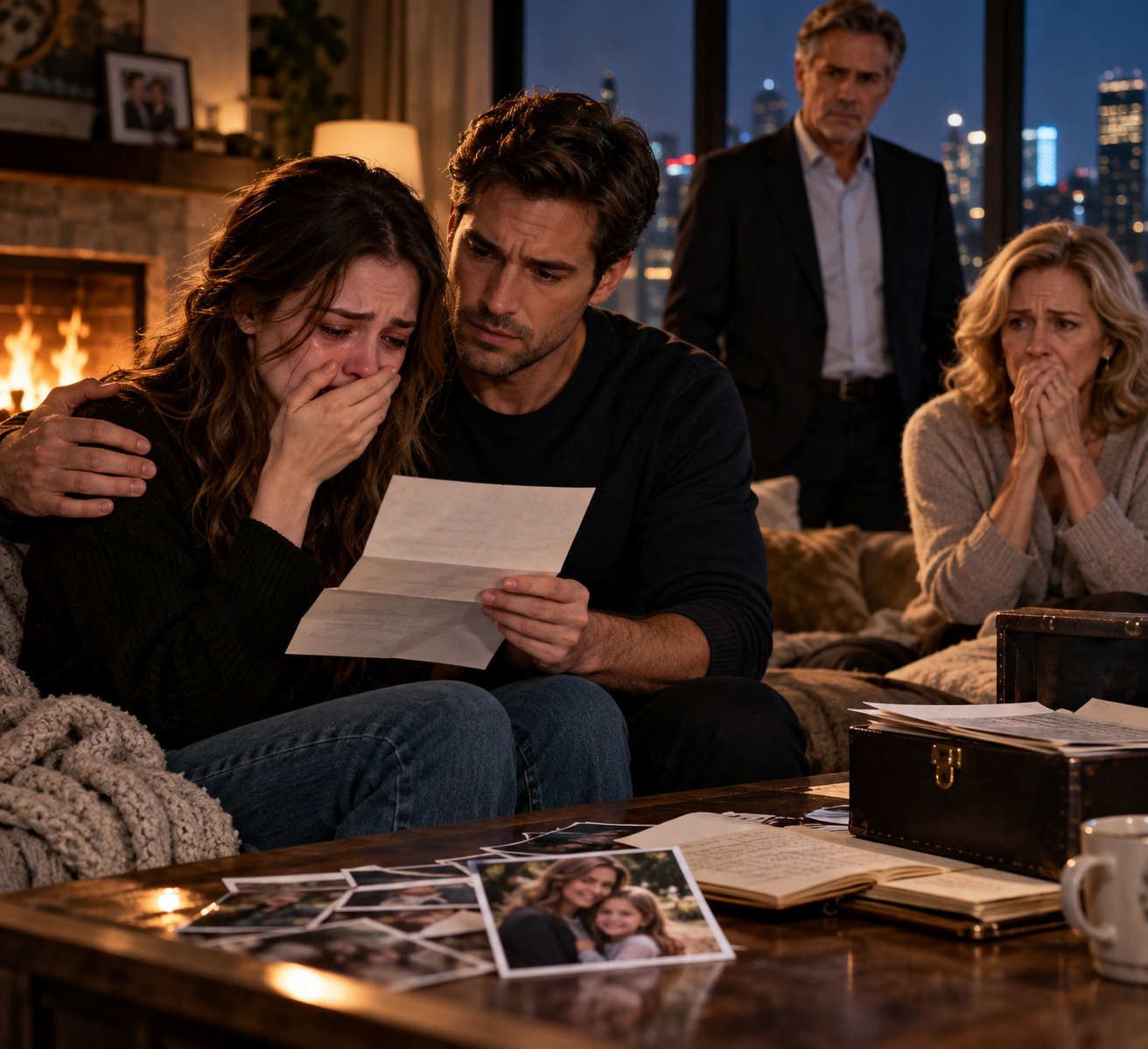
Thomas and I returned to the Ellis house with Helen. She had been waiting in the kitchen, unable to concentrate on anything else. When we told her that the envelope had been recovered, she pressed both hands to her mouth. She had spent decades believing that the missing consent page might have been destroyed. Knowing it had survived brought relief, but it also meant that the full extent of the deception could no longer be avoided.
“I always thought Robert would come home one day and tell me he had fixed it,” she said. “He kept promising that the right document would make everything safe. He never understood that every year he waited made the silence harder to undo.”
I asked whether she regretted raising me. Helen looked shocked by the question. She said she had never regretted loving me, not for one moment. What she regretted was accepting Robert’s assurances without demanding to know why the records had changed, why Evelyn could not visit, and why Thomas had to be moved without explanation.
“You were never a mistake,” she told me. “You were a child who needed a home. I wanted to give you that home. But I let fear convince me that loving you meant keeping you from the truth.”
I held her hand. I was not ready to forgive every decision she had made, but I believed her when she said she had loved me. The truth had changed my understanding of our family, yet it did not erase the years she had spent caring for me. We would have to learn how to live with both realities.
The next morning, Inspector Bennett called. The forensic examination was still underway, but the initial comparison showed that the signature on the consent form did not match Evelyn’s known handwriting. The signature had been produced with a different writing rhythm, and the pressure marks suggested that the writer had copied a name from a separate document rather than signing naturally. The expert could not yet identify the writer, but the signature was inconsistent with the genuine samples.
A second finding was more important. Beneath the consent form, the examiner had found a carbon impression of a short instruction. The words were incomplete, but enough remained to read: “Use the original appointment. Do not attach the mother’s letter.” The note appeared to have been written on a separate sheet that had once rested beneath the authorization.
Inspector Bennett said the instruction might have been written by someone handling the paperwork, but it would need to be compared with the other documents. The reference to the original appointment suggested that the forged consent was intended to support a larger alteration to the trust, not simply to change the hospital record. Whoever had prepared the documents understood that the two changes had to reinforce one another.
The handwriting specialist compared the impression with known samples from Martin Hale, Gerald Voss, Samuel Price, and Edward Morgan. The first comparison was inconclusive. Martin’s writing showed some similarities, but not enough to establish that he had written the instruction. Voss’s letters contained several matching features, yet the sample size was too small for a firm conclusion. Edward’s handwriting differed in several obvious ways.
Then the specialist examined a letter from Voss to Martin recovered from the abandoned office. A distinctive way of forming the capital letter and a repeated downward stroke matched the impression beneath the consent form. The expert concluded that Voss was a likely writer of the instruction, though further analysis would be needed before the finding could be treated as definitive.
The evidence now pointed to a chain of responsibility. Edward had ordered the false consent to be used. Voss had handled the paperwork and likely written the instruction to keep Evelyn’s letter separate. Martin had submitted the document to the hospital despite concerns about its authenticity. Samuel Price had tried to correct the record but had been threatened and deprived of the evidence he needed.
Thomas listened to the explanation without speaking. When the call ended, he said that he wanted to believe the truth would be enough to repair what had happened. I told him it might not restore the lost years, but it could prevent the lie from controlling what happened next.
Inspector Bennett also confirmed that investigators had located a second packet of correspondence in the storage warehouse associated with Edward’s estate. The packet included shipping records and a handwritten note from Voss stating that he had delivered the false consent and the original trust appointment to Edward. The note did not say where the documents went afterward, but it confirmed that Voss had been directly involved in transferring them.
That afternoon, Rebecca’s lawyer received notice that the property company had agreed not to sell or transfer the disputed land while the trust challenge was reviewed. It was not a final victory, but it prevented the company from using the property to strengthen its position while the evidence was examined. The lawyer also requested that the original trust be restored provisionally, with the question of ownership left for the court.
For the first time, the family’s case no longer depended solely on our memories. We had the original hospital entry, the altered authorization, Edward’s instruction, Martin’s correspondence, Voss’s transfer note, and Robert’s letters explaining the deception. The documents supported one another, forming a record that could be tested independently.
Yet the personal question remained. Evelyn had written that she could not return while the wrong person controlled the record. Now the false consent had been exposed, the trust was under review, and the property company could no longer move the land without scrutiny. If Evelyn was still alive, she might finally have a reason to come forward.
That evening, Michael called with news from Margaret, the clockmaker. Margaret had received a letter from Evelyn several years earlier and had kept the envelope because it contained an address she had been told not to share until the trust was corrected. She had not known whether the condition would ever be met. After hearing that the original record had been recovered, she was willing to give us the address.
Thomas sat down when Michael read it aloud. It was a small town several hours away, far from the coastal house and the places where Evelyn had previously stayed. The letter had been sent under another name, but the handwriting matched the samples the investigator had examined.
We did not know whether Evelyn still lived at that address. We did not know whether she would welcome us or whether years of hiding had made the idea of returning unbearable. But for the first time, we had a lead that did not depend on anonymous messages or guesses about where she might have gone.
Before we left, Inspector Bennett warned us not to confront anyone connected to the investigation without notifying her. The evidence suggested that Voss had helped carry out the forgery, but the investigation was not complete, and other people might still possess documents or information relevant to the case. We agreed to let the authorities handle the legal process while we pursued the personal question that had brought us this far.
Thomas placed Evelyn’s letter in his coat pocket. “I don’t want to arrive with accusations,” he said. “I want her to know that I finally understand why she left.”
I looked at him and thought of the boy who had once waited for letters that never came. He had spent his life believing his mother had chosen to abandon him. Now he knew that she had tried to protect him, and that people with power had used the family’s fear to keep them separated. Finding her would not erase what had happened, but it might give them a chance to speak without another person controlling the story.
The next morning, we would travel to the address Margaret had preserved. The forged signature had been exposed, the trust challenge had begun, and the evidence was finally moving beyond our family’s hands. The last mystery was no longer only who had changed the record. It was whether Evelyn Morgan had survived long enough to see the truth restored—and whether she would choose to open the door when her children came looking.
Click here to continue reading: PART 35: The Light Was Still On When Evelyn Finally Came Home
The Moment My Daughter Began Crying, I Realized There Was Something She Had Been Afraid to Tell Me
Part 34 of 35

