The following evening, Dererick came home carrying groceries.
He set the bags on the kitchen counter and began unloading them without asking for help.
Bread.
Milk.
The crackers I liked.
A small jar of honey.
I watched him arrange everything in its usual place.
He had remembered the honey.
I hated that I noticed.
“You're quiet tonight,” he said.
“Just tired.”
He glanced at me.
“You should get some rest.”
“I will.”
He returned to the groceries.
I stood near the counter with my arms folded, trying to decide whether I wanted him to ask another question.
If he pressed me, I could tell myself he was watching me too closely.
If he ignored me, I could tell myself he was hiding something.
I had created a situation in which every possible response seemed suspicious.
I knew that was not fair.
I also knew I could not force myself to feel safe simply because fairness demanded it.
After dinner, he offered to make tea.
I declined.
He shrugged and made himself something to drink instead.
We sat in the living room for a while.
The television played a program neither of us seemed interested in. Dererick checked his phone twice, then put it facedown on the table.
I watched his hands.
At some point, he reached for the remote and changed the channel.
The movement was ordinary.
I wondered when I had started treating ordinary movements as evidence.
That question made me angry with myself.
I had spent years believing marriage meant being able to relax around another person. You did not need to examine every word or memorize every gesture.
You trusted.
You assumed the best.
You allowed yourself to be imperfect because you believed the other person was not looking for a reason to use it against you.
I had done all of those things.
Now I sat beside my husband and wondered whether trust had made me careless.
I excused myself and went upstairs.
I told him I wanted to get ready for bed.
He called after me to ask whether I needed anything.
“No, I'm fine.”
The answer came out too quickly.
I stopped halfway up the stairs, waiting for him to say something else.
He did not.
I went into the bedroom and closed the door.
For a long time, I stood beside the dresser.
The black bag had not appeared again.
I looked at the space where I remembered seeing him stand that night. I looked at the floor beside the dresser, the closet door, and the narrow gap between the furniture and the wall.
I had no reason to believe anything had been left there.
Still, I checked.
I found nothing unusual.
No bag.
No gloves.
No object I could connect to what I had seen.
The absence did not reassure me.
It made me wonder where he had put everything.
I hated that thought as soon as it formed.
I was turning uncertainty into a story, filling the gaps with whatever frightened me most.
I sat on the edge of the bed and pressed my palms together.
I needed to stop.
I needed to find a way to ask him what I had seen without making an accusation I could not support.
But I could not picture the conversation ending well.
If I asked about the gloves, he might tell me he had been cleaning something.
If I asked about the bag, he might explain that it belonged to work.
If I asked why he had been moving around the bedroom in the middle of the night, he might say he had been looking for something.
Every answer could be reasonable.
And if he asked why I had been watching him, I would have to admit that I had been pretending to sleep because I no longer trusted the tea he made for me.
I did not know how to say that without changing our marriage forever.
Perhaps it had already changed.
Perhaps I was simply the last person to admit it.
A few days later, I woke before my alarm.
Dererick was already out of bed.
His side of the mattress felt cool when I reached across it.
I lay there for a moment, listening.
The house was quiet.
Then I heard a cupboard close downstairs.
I got up and went to the bathroom.
When I came back, I found my husband in the kitchen, preparing breakfast.
He looked up as I entered.
“Morning.”
“Morning.”
He pointed toward the counter.
“I made extra coffee.”
“Thanks.”
I poured myself a cup.
The kitchen smelled of coffee and toast. Sunlight fell across the table, touching the edge of the mug I had used the previous night.
For a few seconds, I felt almost normal.
Then Dererick asked whether I had slept well.
I looked at him.
“Why?”
He seemed surprised.
“Just asking.”
“I slept fine.”
He nodded and returned to his breakfast.
That was all.
But I kept hearing the question.
He had asked it before, more than once.
At first, I had taken it as a sign of concern. Now I wondered why my sleep mattered so much to him.
I knew I was reaching.
I knew there was no proof in a simple question.
Still, I found myself measuring my answers.
I stopped telling him when I had trouble sleeping.
I stopped mentioning the nights when I woke unexpectedly.
When he asked how I felt, I said I was fine.
It was easier than watching his expression while I tried to decide what it meant.
The strange part was that he seemed satisfied with those answers.
He did not challenge them.
He did not insist that I explain.
He simply accepted them and carried on.
That left me with nothing solid to hold on to.
I began thinking about the first time he had made me tea.
I could not remember the exact date.
It had started gradually, after a period when both of us had been busy. He had made a cup one evening, then another a few nights later. Eventually, it became something he did whenever he was home and noticed I was working late.
I had thanked him.
I had told him how thoughtful he was.
I had probably kissed his cheek.
The memory made my stomach tighten.
Not because there was anything wrong with making tea.
Because I could no longer remember when the gesture had begun to feel different.
Was it the first time I had noticed him watching me drink?
Was it the evening he joked about poisoning me?
Or had I felt uneasy before that and simply pushed the feeling aside?
I could not answer.
That uncertainty became its own burden.
I began avoiding the kitchen when he prepared drinks.
If I was working at my laptop, I waited until he had left before going downstairs.
If he offered me something, I thanked him and said I would get it later.
I tried to make the changes seem natural.
Sometimes I succeeded.
Sometimes he looked at me for a second too long, and I wondered whether he had noticed.
One evening, he brought a cup of tea into the living room.
He placed it on the table beside me.
“I thought you might want this.”
I stared at the mug.
The chipped handle faced outward.
It was the same one I had used before.
For a moment, I could not hear the television.
I could not think about anything except the cup.
Dererick sat down beside me.
“Everything all right?”
I looked at him.
“I'm not really in the mood for tea.”
He reached for the mug.
“No worries.”
He picked it up and carried it back to the kitchen.
I listened to his footsteps until they disappeared.
Then I sat very still.
I had refused the tea before.
I had declined it in the kitchen and watched him put the kettle away.
This time, he had brought it to me.
It might have meant nothing.
He might simply have forgotten that I had stopped drinking it.
But the gesture reminded me how easily he could place something in front of me without making it seem unusual.
A cup.
A kind word.
A familiar smile.
I could not tell whether I was protecting myself from a real danger or becoming frightened of the person I loved.
That was the question I could not escape.
I wanted certainty.
I wanted one piece of evidence that would tell me whether to trust my husband or fear him.
Instead, I had only a handful of details.
A black bag.
A pair of gloves.
A cup of tea.
And a man who seemed to know exactly how to behave like himself.
That night, I decided I would stop pretending the question did not exist.
I would not confront him without knowing more.
I would not make accusations simply to relieve my own anxiety.
But I would pay attention.
If something happened again, I would not immediately explain it away.
It was not a brave decision.
It was the only one I could make.
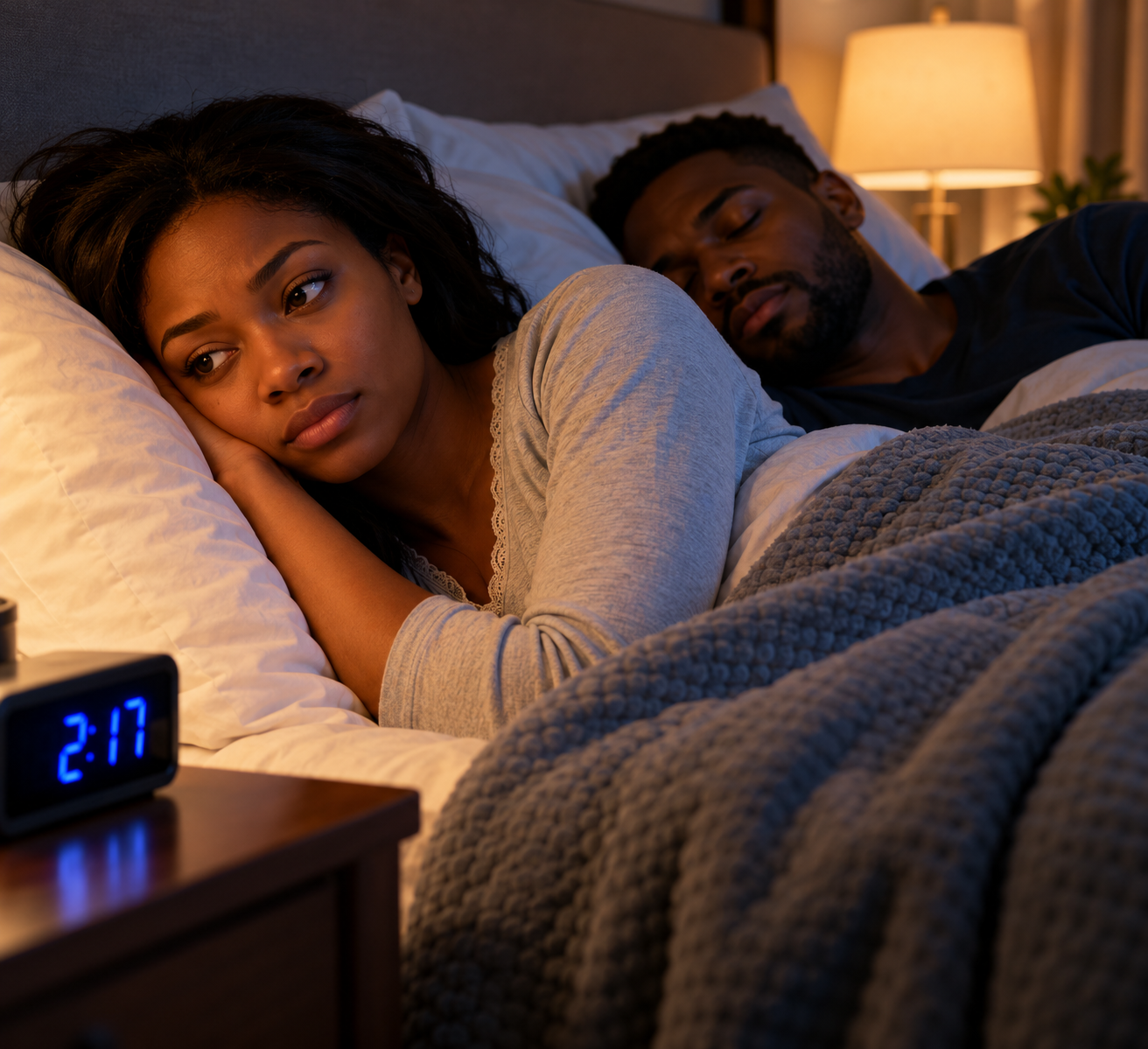
I went to bed earlier than usual and left my book on the nightstand.
Before turning off the lamp, I looked at the clock.
The numbers glowed blue against the wall.
I remembered the time I had seen that night.
2:17.
I wondered whether I would ever look at a clock again without thinking about it.
Then I switched off the light.
For the first time since my suspicions began, I stopped trying to convince myself that everything was fine.
I admitted that I was afraid.
And I admitted that I did not yet know why.
Click here to continue reading: PART 4: The Next Time My Husband Offered Me Tea, I Realized I Could No Longer Separate His Thoughtfulness From My Fear
At Two Seventeen, I Watched My Husband Cross Our Bedroom in Gloves, Carrying Something I Had Never Seen Before
Part 3 of 20