I kept thinking about the other checks.
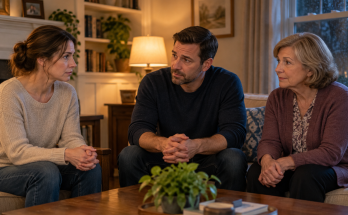
My parents.
Eric.
Olivia.
Aunt Diane.
Uncle Martin.
And me.
Six recipients, all connected by the same woman.
I tried to picture my grandmother sitting somewhere with a pen in her hand, writing those checks one after another.
The image wouldn't settle in my mind.
She had never seemed like someone who would make a gesture on that scale.
I was accustomed to thinking of her as my grandmother, not as a person with financial resources I knew nothing about.
That distinction suddenly seemed foolish.
A person could be familiar without being fully understood.
I should have known that.
I taught literature for a living.
I spent much of my time reminding students that the people in stories were rarely as simple as they first appeared.
Apparently, I had never applied the same lesson to my own family.
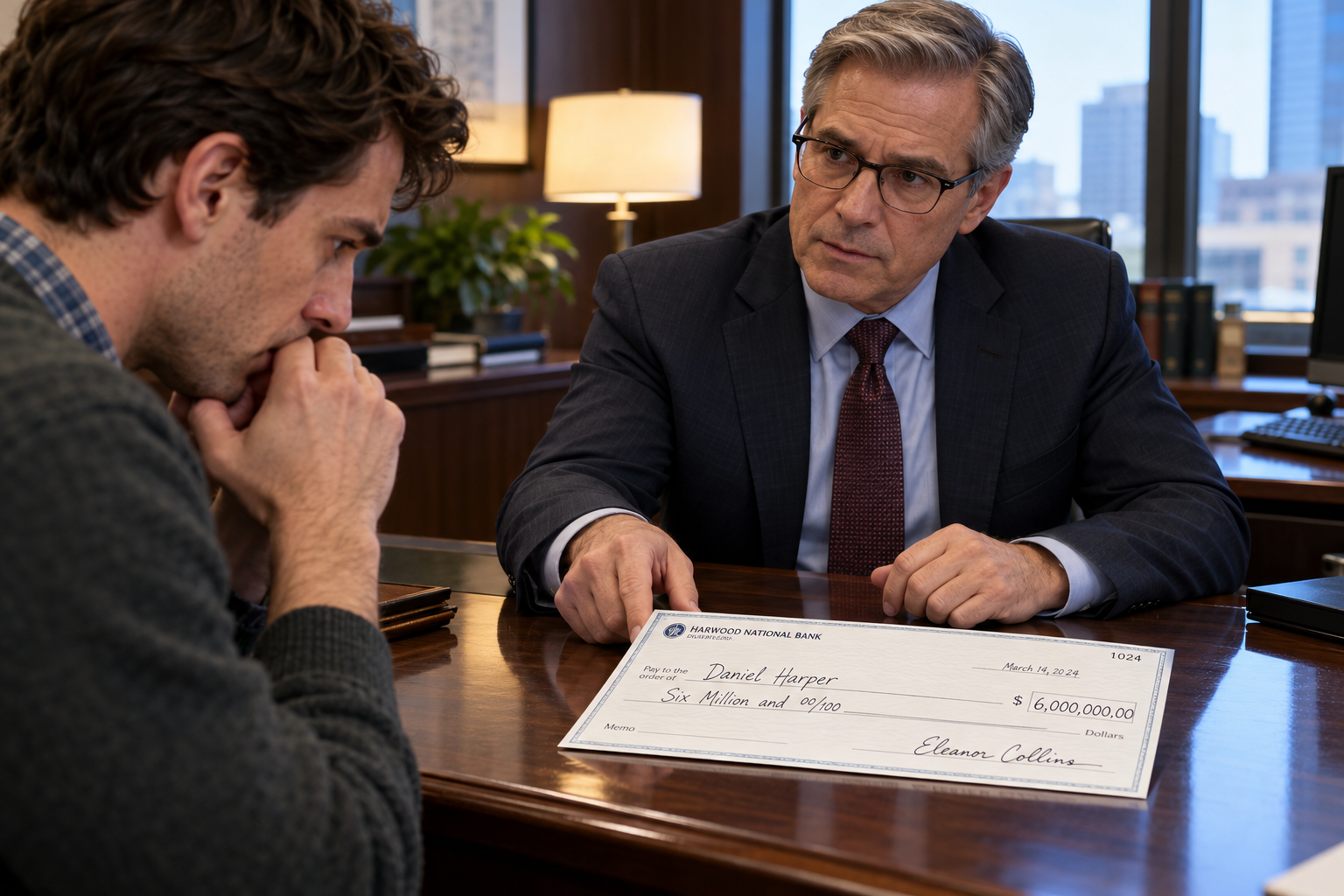
Edward brought my attention back to the desk.
He explained again that the check had passed the initial examination, but further steps remained before the money could be released for use.
I appreciated his caution.
I also found myself wishing he could offer something more definite.
I wanted a simple answer.
Real or fake.
Approved or rejected.
Something I could take home and explain to my family.
Instead, I had a genuine-looking check and a process that would take time.
I had to accept that.
The most unsettling part wasn't the delay.
It was how quickly my thoughts had moved beyond the bank.
I was already imagining what six million dollars might mean.
Then I caught myself.
I didn't have the money in my available balance.
I hadn't received final approval.
And I had no reason to behave as though the entire matter had been settled.
Edward's explanation had been clear enough.
A check could appear valid and still require additional review before the bank completed the transaction.
I needed to remember that distinction.
Looking back, I think I wanted the check to solve every question at once.
I wanted to believe that the signature, the account, and the amount were enough to turn an extraordinary situation into an ordinary fact.
But nothing about the situation was ordinary.
Not the amount.
Not the circumstances.
Not the discovery that my grandmother had apparently decided to give substantial sums of money to several members of the same family.
I wondered whether my parents had already visited their bank.
Had Eric examined his check as carefully as I had examined mine?
Had Olivia counted the zeroes?
Had Aunt Diane or Uncle Martin questioned the decision?
I had no answers.
I didn't even know whether everyone was reacting to the checks in the same way.
The only thing I knew was what I had seen myself.
My grandmother had written a check in my name.
Edward had examined it.
The bank's initial findings supported its legitimacy.
And the next stage required patience.
I looked at the check one last time before turning my attention back to Edward.
I wanted to ask him whether he had ever seen anything like this before.
I decided against it.
His answer wouldn't change the procedures.
It wouldn't explain my grandmother's intentions, either.
For the moment, I had to separate what the bank could establish from what I wanted to understand.
The bank could examine the check.
It could verify the account details and signature.
It could follow its procedures.
But it couldn't tell me why my grandmother had made this decision.
That question belonged to the family.
And I was beginning to realize that I had far more questions than answers.
Click here to continue reading: PART 3: I Had Spent Years Believing I Knew My Family, but One Conversation at the Bank Made That Confidence Feel Unreasonable
I Thought My Grandmother’s Six-Million-Dollar Check Had to Be a Mistake Until the Bank Manager Looked Me in the Eye
Part 2 of 20