I used to think there were certain things you simply knew about your family.
You knew who worked hard.
You knew who struggled.
You knew who had money and who didn't.
At least, that was what I believed.
Grandma's check made me question how much confidence I had placed in those assumptions.
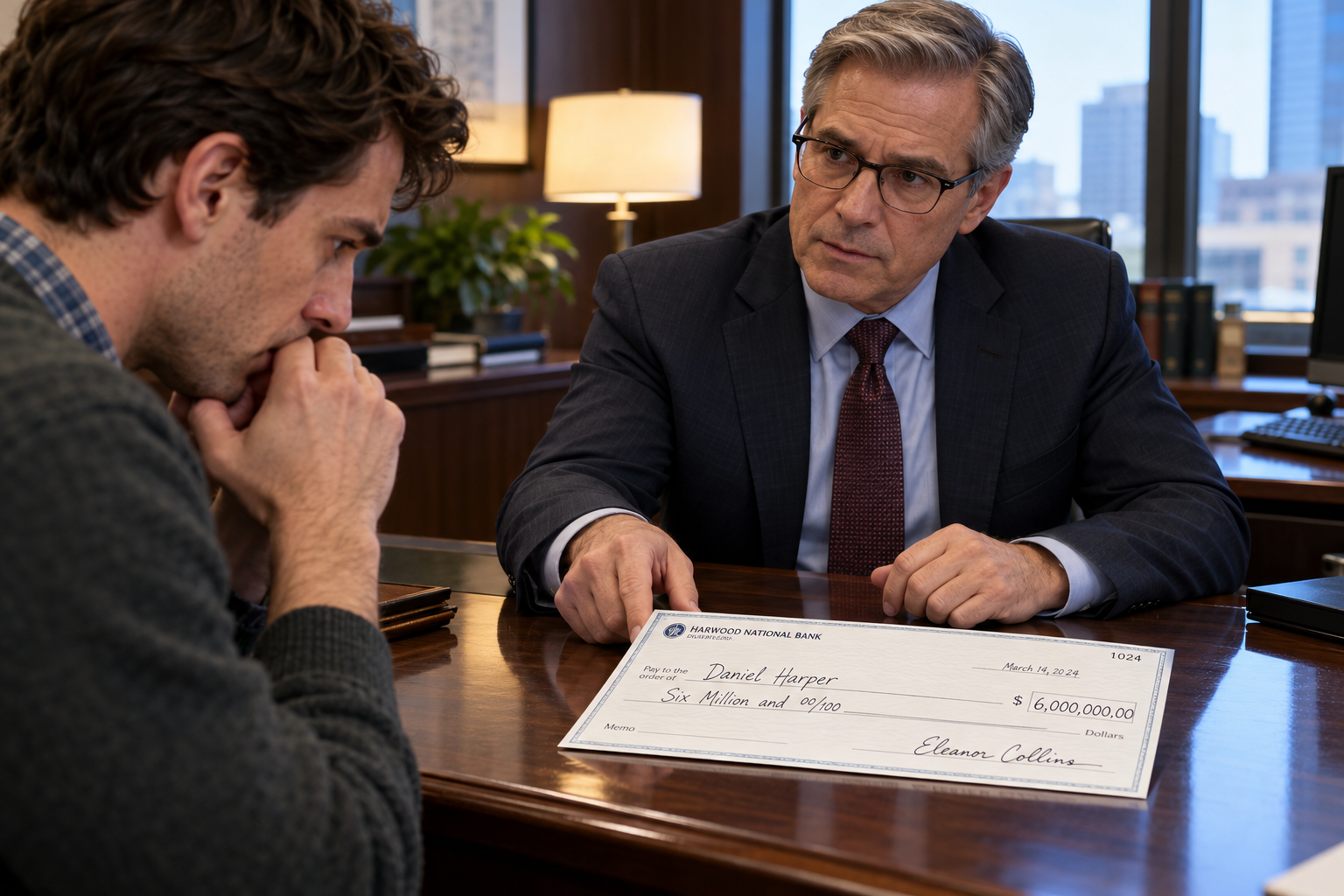
I had never thought of her as someone who could write a check for six million dollars.
The amount seemed to belong to another kind of life.
A life I had seen in newspapers and films, but never expected to touch my own.
Yet her handwriting was unmistakable.
I couldn't explain that away.
I also couldn't pretend that recognizing her signature meant I understood her financial circumstances.
Those were two separate things.
For years, I had accepted what I knew about Grandma without asking many questions.
She was part of the family.
I was her grandson.
We had our familiar relationship, and I had never felt a need to examine it too closely.
Now I wondered whether I had mistaken familiarity for knowledge.
It was an uncomfortable thought.
I didn't like admitting that there might be important things about someone I loved that I had never considered.
But the check was forcing me to face that possibility.
I kept returning to the amount.
Six million dollars.
The number had become a kind of test.
Whenever I tried to think about Grandma as I had known her, the check interrupted me.
Whenever I imagined what the money might mean, I remembered that the bank had not finished its review.
I was caught between what I recognized and what I couldn't explain.
The practical part of my mind kept telling me to wait.
The rest of me wanted to understand everything immediately.
I knew which side was being reasonable.
I wasn't always good at listening to it.
I began thinking about the other people who had received checks.
My parents had theirs.
Eric had his.
Olivia had hers.
Aunt Diane and Uncle Martin had also been included.
I wondered whether they had known more about Grandma's circumstances than I did.
Then I stopped myself.
There was no reason to assume they had.
I had no evidence that Grandma had explained her decision to anyone.
I couldn't even say whether the others had asked the same questions I had.
I was trying to understand an event that involved several people without knowing what any of them thought.
That was a poor foundation for a conclusion.
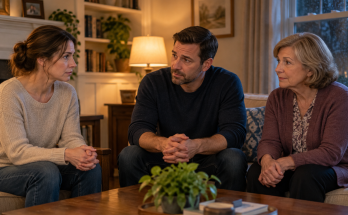
Still, I couldn't help imagining the family sitting together and discussing the checks.
I wondered what the first person had said when the amount became clear.
I wondered whether anyone had laughed because the whole thing seemed impossible.
I wondered whether anyone had immediately become serious.
Those were only pictures in my head.
I had no reason to treat them as memories.
The distinction mattered.
I taught students that a convincing interpretation wasn't necessarily a correct one.
I should have remembered that lesson before allowing my imagination to fill in the spaces around my grandmother's decision.
The more I thought about it, the more I realized that the money itself wasn't the only thing unsettling me.
It was the sudden awareness that I had been making assumptions about someone whose life I had never fully understood.
I had treated her circumstances as familiar because she was familiar to me.
That was my mistake.
I didn't know what had led her to write the checks.
I didn't know what she expected from the people receiving them.
I didn't know whether she had anticipated the confusion they would cause.
All I knew was that she had made a decision, and I was now living with its consequences.
I couldn't change that by guessing.
So I tried to stop.
I let the questions remain questions.
I reminded myself that the bank's review was still a separate matter, with its own requirements and timetable.
There was no point pretending those procedures had been completed.
There was no point acting as though I understood Grandma's reasons.
And there was certainly no point turning an unexpected check into a complete explanation of a person.
I had wanted the bank to tell me whether I could trust the paper.
It had given me a reason to believe the check was genuine.
What I wanted now was something no bank could provide.
I wanted to understand my grandmother.
For the first time, I realized that I might have to begin by admitting how little I knew.
Click here to continue reading: PART 10: The Six Names Kept Returning to My Mind, and I Began to Understand Why Knowing Who Received a Check Wasn’t the Same as Knowing Why
I Thought My Grandmother’s Six-Million-Dollar Check Had to Be a Mistake Until the Bank Manager Looked Me in the Eye
Part 9 of 20