I had gone into the bank expecting a simple decision.
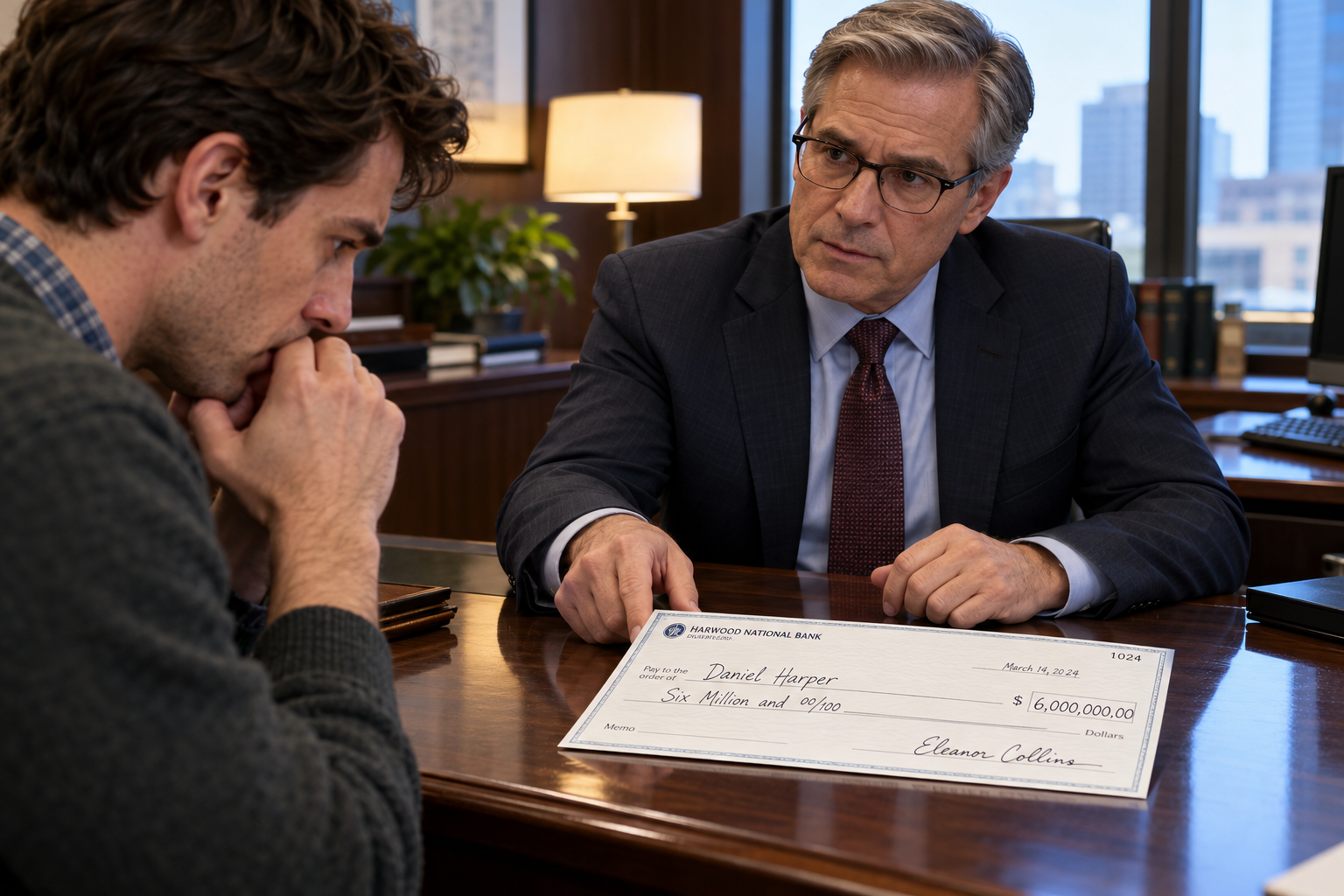
I wanted Edward to look at the check and tell me whether I could trust it.
Instead, he had explained that the initial findings were encouraging, while the transaction still required further review.
At first, I had found that frustrating.
I wanted the question settled.
Now I understood that his caution was part of the answer.
The check was too large to treat casually.
The bank needed to complete its procedures before making the funds available.
There was no reason to expect anything different.
I had to stop treating a careful process as an obstacle.
That was the practical lesson.
The personal lesson was harder.
I had wanted the bank's assessment to give me confidence in the whole situation.
But the bank could only examine the transaction.
It couldn't explain my grandmother's decision.
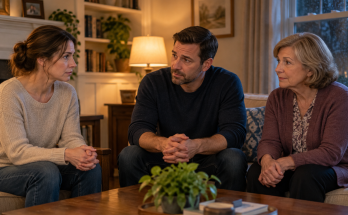
It couldn't tell me what she expected from my parents, Eric, Olivia, Aunt Diane, or Uncle Martin.
It couldn't tell me whether the checks carried a message beyond the money itself.
Those questions were outside its role.
I had to find a way to live with them without pretending I already knew the answers.
I began by accepting that I might have to wait.
The bank needed time.
I needed to give it that time.
I didn't have to spend every hour imagining what might happen next.
I didn't have to turn each unanswered question into a reason to worry.
And I didn't have to make a decision about Grandma's intentions before I understood them.
For someone who liked clear explanations, that was a difficult adjustment.
I wanted to take the information I had and build a complete picture.
But the pieces weren't all there.
Trying to force them together only made me more confused.
I had to let the missing pieces remain missing.
That didn't mean giving up on understanding.
It meant recognizing that understanding required more than speculation.
I could ask questions when the opportunity came.
I could listen to what my family had to say.
I could wait for the bank to finish its work.
And I could keep an open mind about the reasons behind the checks.
Those were reasonable steps.
They were also the only steps I could take without pretending to know more than I did.
I thought again about how I had first reacted to the amount.
I had counted the zeroes.
I had stared at Grandma's signature.
I had wanted someone to tell me that the whole thing was a mistake.
The bank's initial findings had made that explanation less likely.
Now I had to face the possibility that Grandma had genuinely decided to give me six million dollars.
The thought was still difficult to absorb.
I wasn't going to pretend otherwise.
But I could acknowledge the possibility without treating the transaction as finished.
I could recognize the check's apparent legitimacy while respecting the bank's need to complete its review.
And I could accept that the money's significance might extend beyond the number written on the paper.
I didn't yet know how.
I wasn't going to invent an answer just to make the uncertainty easier to bear.
For the first time, I stopped expecting one institution, one document, or one conversation to explain everything.
The bank could tell me what it had verified.
My grandmother was the person whose decision I was trying to understand.
Those were different matters.
I needed to keep them separate.
The check remained important.
So did the person who had written it.
And so did the family members who had received checks of their own.
I couldn't reduce the entire situation to a financial transaction, even though that was where it had begun for me.
There were questions about trust, knowledge, and the assumptions I had made about people I loved.
Those questions would take more than a bank's approval to resolve.
I knew that now.
I still wanted answers.
I still wanted the process completed.
But I was no longer expecting the next development to explain everything at once.
I would deal with each fact when I had it.
Until then, I would stop pretending that uncertainty was something I could eliminate by thinking harder.
That was the only honest way forward.
Click here to continue reading: PART 17: The Difference Between a Valid Check and an Answer
I Thought My Grandmother’s Six-Million-Dollar Check Had to Be a Mistake Until the Bank Manager Looked Me in the Eye
Part 16 of 20