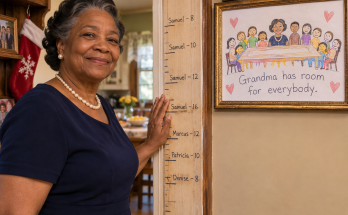
My name is Margaret Harris, although everyone who has known me for any length of time calls me Maggie. I was seventy-one when I finally admitted that my children had become strangers.
For most of my adult life, that sentence would have sounded cruel. Jennifer, Michael, and Lisa had been the center of my world since the day each of them arrived. Their school pictures still filled a hallway upstairs. Their old handwriting remained on birthday cards tucked into drawers. Even after they grew up and moved into homes of their own, I kept finding little reminders of the children they had once been.
Their father, Richard, used to tease me about it.
“You keep everything,” he would say, holding up a cracked plastic trophy or a construction-paper drawing.
“They might want it someday.”
“They're forty.”
“They still might.”
He would laugh and put the thing back exactly where he found it.
Richard died at fifty-nine, suddenly and without giving any of us enough time to understand that our family was about to change. His death came from the same heart condition he had always insisted was under control. One afternoon he was discussing dinner plans with me. That night, I was sitting beside him in an emergency room while doctors tried to bring him back.
They couldn't.
At his funeral, all three of my children stayed close to me. Jennifer held my hand. Lisa kept touching my shoulder whenever someone approached. Michael, who had always been the protective one, told me more than once that I would never have to worry about being alone.
“We're here, Mom,” he said.
I believed him.
For a while, they meant it.
Then life became busy.
Jennifer's work became demanding. Michael's business grew. Lisa had children of her own and seemed permanently exhausted. I understood. I had been a mother long enough to know that adulthood came with responsibilities that could swallow entire weeks without warning.
So I called.
At first, every few days.
Then once a week.
Then whenever I had something I wanted to share.
Sometimes they answered.
More often, they didn't.
“Can I call you later, Mom?”
“I'm in the middle of something.”
“Maybe this weekend.”
“Sorry. I completely forgot.”
I learned to say, “That's okay,” before they even finished apologizing.
I told myself that this was what mothers were supposed to do. Give people room. Don't become demanding. Don't make your children feel guilty for having lives of their own.
Then one morning, everything changed.
I woke with a crushing pressure across my chest.
For a few seconds, I lay still, staring at the ceiling, trying to decide whether it was indigestion. Then I remembered Richard collapsing at the kitchen table years earlier, and I reached for my phone.
I called 911.
The hospital kept me overnight.
I called Jennifer first.
She didn't answer.
Two hours later, my phone buzzed.
“OMG, Mom. So glad you're okay. Crazy day at work.”
That was it.
Michael replied much later.
“Glad you're fine. Get some rest.”
Lisa didn't respond until the following morning.
None of them came.
I remember sitting in the hospital bed after sunrise, listening to a cart squeak down the hallway. A nurse had left a paper cup of coffee on my tray, and it had already gone cold.
I looked at my phone again.
No missed calls.
No messages asking whether I needed someone to drive me home.
I discharged myself that afternoon and took an Uber.
The driver helped me with my bag.
I thanked him.
He probably thought I was being polite.
I was trying not to cry.
Something inside me had shifted during that ride home. Not broken exactly. It was more like a curtain had been pulled aside.
Once I was back in my kitchen, I began noticing things I had previously explained away.
Jennifer had asked about Richard's life insurance.
Michael had asked whether I had finally updated my will.
Lisa had suggested more than once that I consider moving into a smaller senior community.
The suggestions always arrived wrapped in concern.
“You'd have less to maintain.”
“You shouldn't be worrying about repairs at your age.”
“You could sell the house and put the money somewhere safer.”
My house was worth close to nine hundred thousand dollars.
My investments and savings were around six hundred thousand more.
Richard had also left me a substantial life-insurance policy.
Until then, I had considered those things simply part of what allowed me to live comfortably.
Suddenly, I heard numbers behind every conversation.
I hated myself for thinking it.
These were my children.
Surely I wasn't beginning to suspect my own children of calculating what my death might be worth.
I decided to ask them directly.
Not about money.
About me.
I called all three together and asked the question as plainly as I could.
“If something serious happens to me, can I count on you?”
Jennifer sighed.
“Mom, please don't make this into another emotional conversation.”
“I just want an honest answer.”
Michael sounded irritated.
“We have our own lives.”
Lisa spoke more quietly.
“We do love you.”
“That isn't what I asked.”
Nobody answered for a moment.
I reminded them about the hospital.
“You didn't even call me.”
Lisa said, “We texted.”
“I was scared.”
Michael's voice sharpened.
“Mom, you can't keep calling us every time you're lonely or frightened. We have our own lives. You're healthy. You have money. Figure it out yourself.”
The words stayed with me after the call ended.
I sat alone at the kitchen table.
The clock above the sink ticked.
A refrigerator motor came on and then stopped.
I cried for a while.
Then I wiped my face.
And something unexpected happened.
The tears stopped.
Not gradually.
They simply stopped.
The next morning, I called Thomas Brennan.
Thomas had handled Richard's estate. He was older than my children, younger than Richard had been, and had a habit of listening all the way through a sentence before responding.
“I need to make some changes,” I told him.
“What kind of changes?”
“All of them.”
He came to the house that afternoon.
We sat across from each other at the dining-room table where Richard and I had once hosted Thanksgiving dinners for twenty people.
I brought out my will.
Thomas read it carefully.
“You're certain?”
“Yes.”
“Your children are currently the primary beneficiaries.”
“I know.”
“And you want to change that?”
“I want to change everything they have assumed is waiting for them.”
He studied my face.
“Has something happened?”
I thought about the hospital.
The unanswered calls.
The questions about insurance.
The suggestions about selling my home.
“Yes,” I said. “Something happened.”
“What?”
“I finally listened to what they were telling me.”
Thomas didn't ask me to explain.
Over the next three weeks, we reviewed my estate from top to bottom.
We changed beneficiaries.
We reviewed investment accounts.
We examined the ownership structure of the house.
We updated passwords and access permissions.
Thomas also recommended that I change every entry code connected to the property.
I agreed.
Then I installed cameras.
A security system followed.
Finally, I hired a security officer for the property.
It felt excessive.
For the first few nights, I wondered whether I had gone too far.
Then I remembered Michael's words.
You have money. Figure it out yourself.
So I did.
I stopped calling.
I stopped inviting them.
I stopped sending messages that began with, “Just checking in.”
For three months, my phone became strangely quiet.
At first, I hated it.
Then I started sleeping better.
I read books again.
I walked in the mornings.
I began having coffee with a neighbor I had known for years but barely spoken to.
I learned that silence could feel different when you stopped begging someone to fill it.
Then, two weeks before Christmas, Jennifer called.
Her voice was suddenly cheerful.
“We're all coming to your house for Christmas.”
I sat down.
“All of you?”
“Me, Michael, Lisa. The kids. Everyone.”
I looked toward the Christmas tree I had decorated alone.
“Why now?”
The cheer disappeared from her voice.
“Mom, we're worried about you.”
“I've been fine.”
“We think it's time we talked about your future.”
“My future?”
“About whether this house is still manageable.”
There it was.
I stared at the ornaments Richard and I had collected over twenty years.
“I don't want you coming here.”
Jennifer laughed nervously.
“Mom, don't be difficult.”
“I mean it.”
“We'll be there on the twenty-third.”
“No.”
There was a pause.
Then she said, “We'll talk when we get there.”
I hung up.
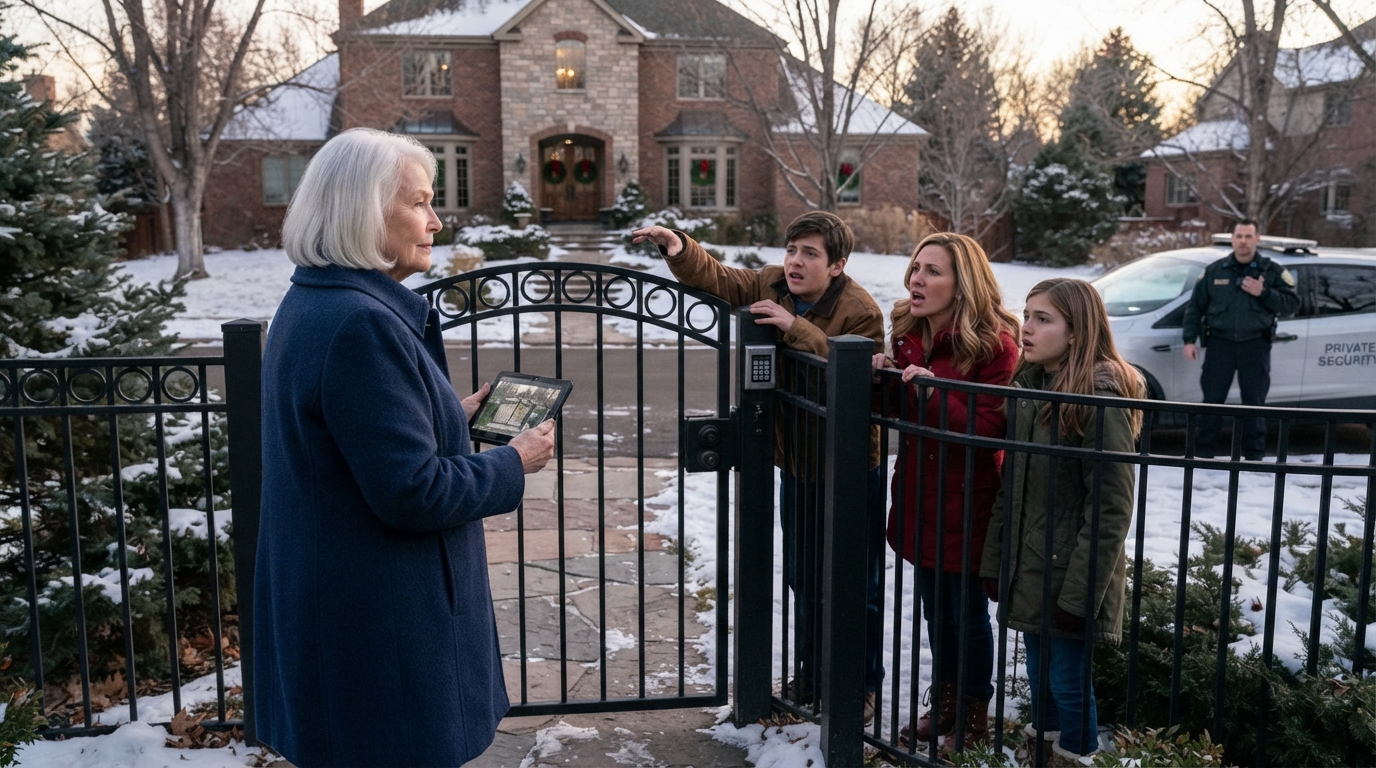
Two days later, my security system alerted me.
Three vehicles had stopped outside my gate.
I opened the camera feed.
Jennifer's SUV.
Michael's truck.
Lisa's sedan.
My children were standing outside the house they had suddenly remembered just before Christmas.
Michael walked straight to the keypad.
He entered the old code.
The screen flashed red.
He tried again.
Denied.
He stared at the keypad.
Then Jennifer stepped toward the intercom.
“Mom?”
I pressed the button.
“Yes?”
“Open the gate.”
“No.”
Michael looked up toward the camera.
His expression changed.
Jennifer stepped closer.
“We're your children.”
I looked at the three faces on the monitor.
For years, those faces had been the reason I opened every door.
This time, I kept my hand away from the gate controls.
And when Michael grabbed the top rail and began pulling himself upward, I knew this wasn't going to be a family Christmas visit.
It was something else.
Click here to continue reading: PART 2: They Arrived Expecting the Old Mother Who Would Always Give In, but the Locked Gate Was Only the First Boundary They Had Failed to Notice
The Night I Realized My Children Had Stopped Seeing Me as Their Mother and Started Seeing Me as Someone They Would Eventually Inherit From
Part 1 of 20