
I kept telling myself that I didn't know enough to judge anyone.
It was the fairest thing I could do.
It was also the hardest.
Every time I thought about the bank application, I remembered my mother's voice suggesting that I might have signed it while I was recovering.
She had made it sound possible.
That was what bothered me.
She knew how badly I had been hurt.
She knew how difficult it had been for me to manage ordinary tasks after the accident.
She knew I had been trying to care for my newborn daughter while learning to live without my husband.
Yet she had used those memories to explain a document I didn't recognize.
I couldn't decide what to make of that.
Maybe she had been frightened by the discovery.
Maybe she had been trying to prevent me from becoming upset.
Maybe she had genuinely believed I could have forgotten signing something.
I tried to give her room for those possibilities.
But none of them answered the question.
Who had opened the account?
I kept returning to it.
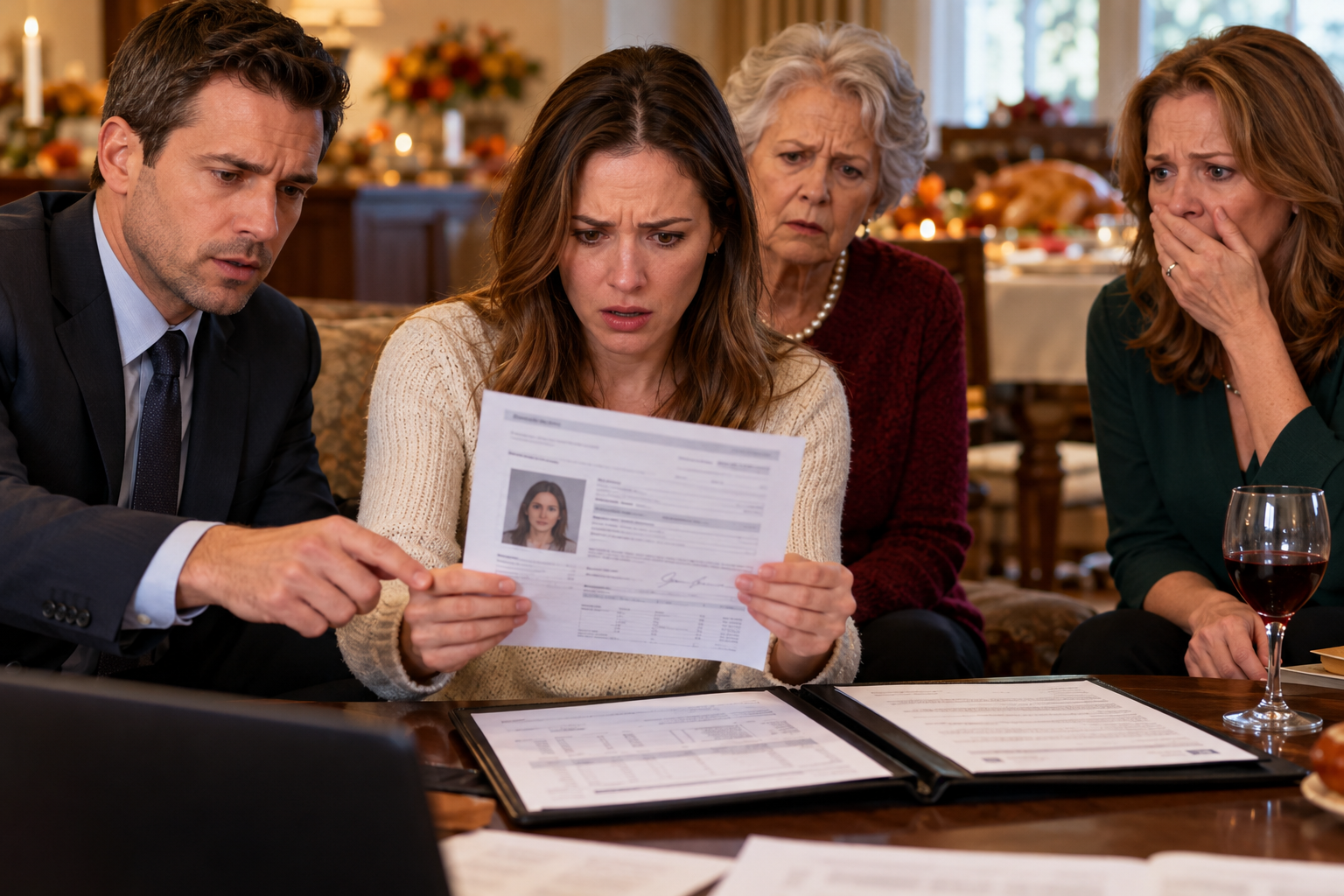
The account was at Westbridge Community Bank.
The opening date was March 11.
The first transfer followed on March 14.
My identification had been included with the application.
And the signature wasn't mine.
Those details remained the same no matter how often I tried to find a gentler explanation.
I didn't want to turn my mother into an enemy.
I wanted to ask her a question and receive an honest answer.
That seemed like a small thing to want.
After everything we had already endured, I wanted to believe we could sit together and work through a difficult problem without having to protect ourselves from one another.
But I couldn't make that happen by pretending the documents were harmless.
I needed to know what had happened.
Grandma understood that.
She never told me to stop worrying.
She never suggested that the amount was too large to discuss or that I should be grateful for whatever help I had received.
She treated the missing money as a real problem.
That gave me permission to do the same.
I began to think differently about the Thanksgiving conversation.
At first, I had felt embarrassed when Grandma mentioned the money in front of everyone.
I had wished she had waited until we were alone.
I had wanted to avoid having my private circumstances become the subject of a family discussion.
Now I understood why the question mattered.
Grandma had believed the money was meant to reach me.
When she discovered that it hadn't, she asked why.
If she had remained silent to protect everyone's feelings, I might still have believed the arrangements were in order.
I might never have learned about the account.
The thought left me grateful for her willingness to ask something uncomfortable.
I was trying to learn from her example.
There was no reason to be cruel.
There was no reason to accuse anyone without evidence.
But there was also no reason to avoid a question simply because the answer might hurt.
I had spent enough time allowing other people to reassure me.
Now I needed them to explain.
The distinction was becoming clearer.
One evening, I found myself remembering how my husband handled important papers.
He would sit at the table with a folder beside him and check each page before putting it away.
Sometimes I teased him about being too careful.
He would tell me that being prepared was a way of looking after the people you loved.
I understood that differently now.
He had tried to provide for us.
He had made arrangements with the expectation that they would serve a purpose after he was gone.
I could not ask him what he had intended beyond what I already knew.
I could not hear his explanation of the account because he had never been there to explain it.
All I could do was examine what remained.
The bank application was part of that.
The transfer dates were part of it.
My grandmother's understanding of the money was part of it, too.
Together, they showed that something needed explaining.
They did not yet tell me who was responsible.
I had to accept that.
Sometimes I wanted to move faster than the facts allowed.
I wanted a name.
I wanted a reason.
I wanted to know whether the person responsible had understood what the money meant to me and my daughter.
But wanting an answer did not make one available.
I reminded myself that guessing would not bring the money back.
It would only create another problem.
So I kept my attention on what could be established.
I had never knowingly opened the account.
I did not recognize the signature.
I had not received the funds.
I would not allow those statements to be buried beneath explanations about my recovery.
That was the limit I set for myself.
I could be patient with the investigation.
I could be fair to my family.
I could even admit that I might not understand every part of the financial arrangements.
But I would not pretend to remember something I had never done.
And I would not agree that my injuries made my own account of events meaningless.
When I thought about my daughter, the reason for continuing became simple.
Her father had wanted us to have some security.
I wanted to preserve that intention.
I didn't know how much of the money could be accounted for or what the records would eventually establish.
I only knew that leaving the questions unanswered would not protect her.
It would protect the silence.
I had already spent too much time confusing the two.
Click here to continue reading: PART 10: The Dates on the Application Became Impossible to Ignore Once I Stopped Treating Them as Ordinary Details on a Page
The Thanksgiving Question That Turned a Family Gathering Into Something None of Us Could Pretend Was Ordinary Anymore
Part 9 of 20

One Comment on “PART 9 – I Wanted to Believe My Mother Had Been Trying to Help Me, but Her Explanation Left One Question She Couldn’t Answer”