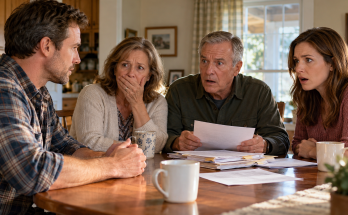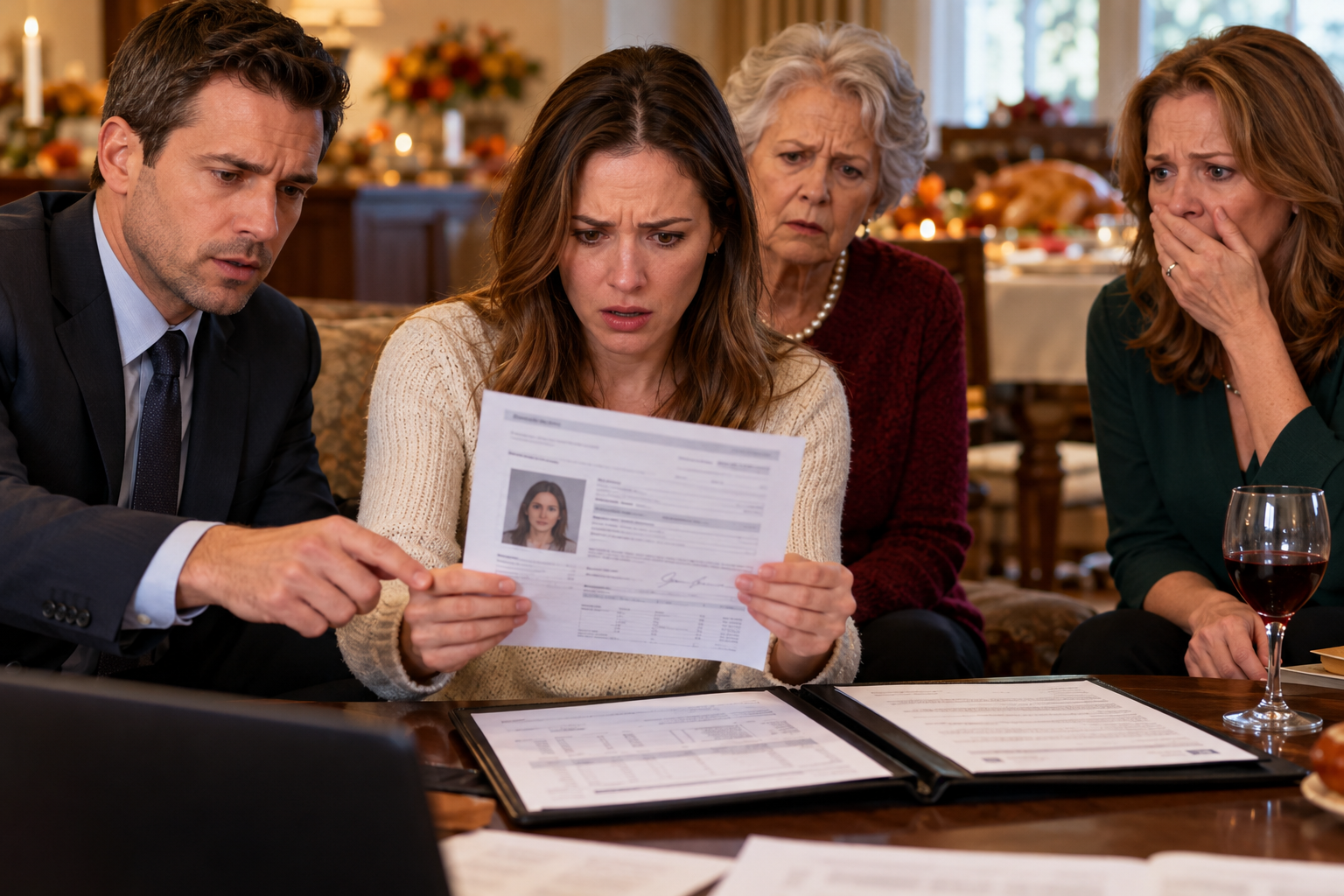
I didn't want my daughter to grow up surrounded by family arguments.
That thought followed me whenever I considered how far the questions might lead.
I wanted her to have people who loved her.
I wanted her to know her grandmother and the rest of the family without feeling that she had to choose sides.
I wanted the people who had supported me after my husband's death to remain part of our lives.
Those wishes were genuine.
But I had begun to understand that I could not protect every relationship by refusing to ask difficult questions.
The money was missing whether I discussed it or not.
The account existed whether my family liked talking about it or not.
And the signature remained disputed no matter how gently my mother explained it.
Silence could not change any of those things.
It could only leave me without answers.
I thought about that whenever I felt tempted to drop the matter.
I could imagine the relief of telling Grandma that I wanted to forget about the money.
I could imagine agreeing that my recovery had been difficult and that perhaps I had signed something without remembering.
I could imagine everyone returning to ordinary conversations.
The family could gather again.
Nobody would need to mention Westbridge Community Bank.
Nobody would have to look at the application.
For a little while, everything might feel normal.
But I knew what that peace would cost me.
I would be agreeing to an explanation I did not believe.
I would be allowing an unfamiliar signature to stand as proof of my consent.
And I would be leaving the money my husband intended for us unaccounted for.
I couldn't do that.
Not honestly.
I was not trying to punish anyone.
I was trying to understand what had happened.
That difference mattered, even if other people did not always see it.
My grandmother seemed to understand.
She did not treat my questions as an attack on the family.
She treated them as a necessary response to the information we had discovered.
I was grateful she had not asked me to choose between loyalty and the truth.
I had been doing that to myself without anyone asking.
I had assumed that questioning my mother's explanation meant questioning everything she had ever done for me.
It didn't.
A person could have helped me during a difficult period and still be mistaken about something important.
A person could love me and still offer an explanation that didn't fit the facts.
And a person could be part of my family without being exempt from reasonable questions.
I was learning to accept those possibilities.
I also had to accept that I might never recover the easy trust I had once felt.
That thought frightened me.
Trust had been one of the things I relied on while recovering.
I had needed help.
I had accepted it.
I had allowed other people to handle things because I believed they wanted the best for me.
I didn't regret accepting help.
I regretted the possibility that my dependence might have left me exposed to something I did not understand.
There was no point blaming myself for needing care.
I had been injured.
My husband had died.
My daughter had needed her mother.
I had done the best I could with the strength and information I had at the time.
I needed to give myself the same fairness I was trying to give everyone else.
That meant accepting that I could not have prevented every problem.
It also meant recognizing that I could respond to a problem once I knew about it.
I could ask questions.
I could examine the documents.
I could refuse to agree with a claim that didn't match my experience.
Those were things I could do now.
I thought about the application again.
The photograph was mine.
The address was mine.
The date of birth was mine.
The signature was the part I could not accept.
I wondered whether the person who prepared the form had expected those details to be enough.
Perhaps whoever opened the account assumed that a page filled with correct information would never be questioned.
I had no evidence of what that person thought.
I reminded myself not to turn speculation into fact.
But the document had shown me something important.
My identity had been used in a way I did not recognize.
That alone deserved attention.
I did not have to know the motive before asking how it happened.
I did not have to know who benefited before asking where the money went.
And I did not have to accuse my mother before refusing to accept her explanation.
I could take those questions one at a time.
That was what I intended to do.
When I looked at my daughter, I thought about the kind of example I wanted to set for her.
I wanted her to learn kindness.
I wanted her to understand forgiveness.
But I also wanted her to know that being kind did not require pretending something was fine when it wasn't.
I wanted her to understand that a person could be respectful and still ask for an answer.
I was learning that lesson late.
Perhaps that made it more important to remember.
My husband had wanted us to have a future with some security.
I could not guarantee what that future would look like.
I could not make the money appear simply by worrying about it.
But I could refuse to let the matter disappear into silence.
I could keep asking for the truth.
And I could do that without deciding in advance what the truth would be.
For the first time, those two goals no longer seemed to conflict.
I could love my family.
I could protect my daughter.
And I could insist that the records be explained.
I didn't know whether those things would lead to reconciliation or a painful discovery.
I only knew that avoiding the questions would not make the answers any less necessary.
So I stopped thinking of the investigation as a choice between family and money.
It was about understanding what had happened to something my husband had intended for us.
It was about my name appearing on a document I had not knowingly signed.
And it was about making sure that my own account of my life was not dismissed simply because I had once been too injured to manage everything alone.
That was reason enough to continue.
Click here to continue reading: PART 12: The Missing Funds Had Become a Question About Trust, and I Could No Longer Pretend That Knowing the Amount Was Enough
The Thanksgiving Question That Turned a Family Gathering Into Something None of Us Could Pretend Was Ordinary Anymore
Part 11 of 20