I had started to think about the money differently.
At first, I had thought of it as something missing from my life.
One hundred and eighty thousand dollars that should have helped me rebuild after my husband's death.
Now I understood that the money represented more than a number.
It represented a decision he had made for our future.
He had wanted to leave something behind for me and our daughter.
He had tried to make sure we would have support when he could no longer provide it himself.
That intention had mattered to me before I ever learned about the bank account.
It mattered even more now.
I didn't want the missing funds to become the only thing I associated with his final arrangements.
I wanted to remember the reason he had made them.
He had been thinking about us.
He had wanted us to be safe.
He had wanted me to have options while raising our daughter.
Those were things I could still honor.
But honoring his intentions meant taking the missing money seriously.
I could not tell myself that everything was fine when the account records said otherwise.
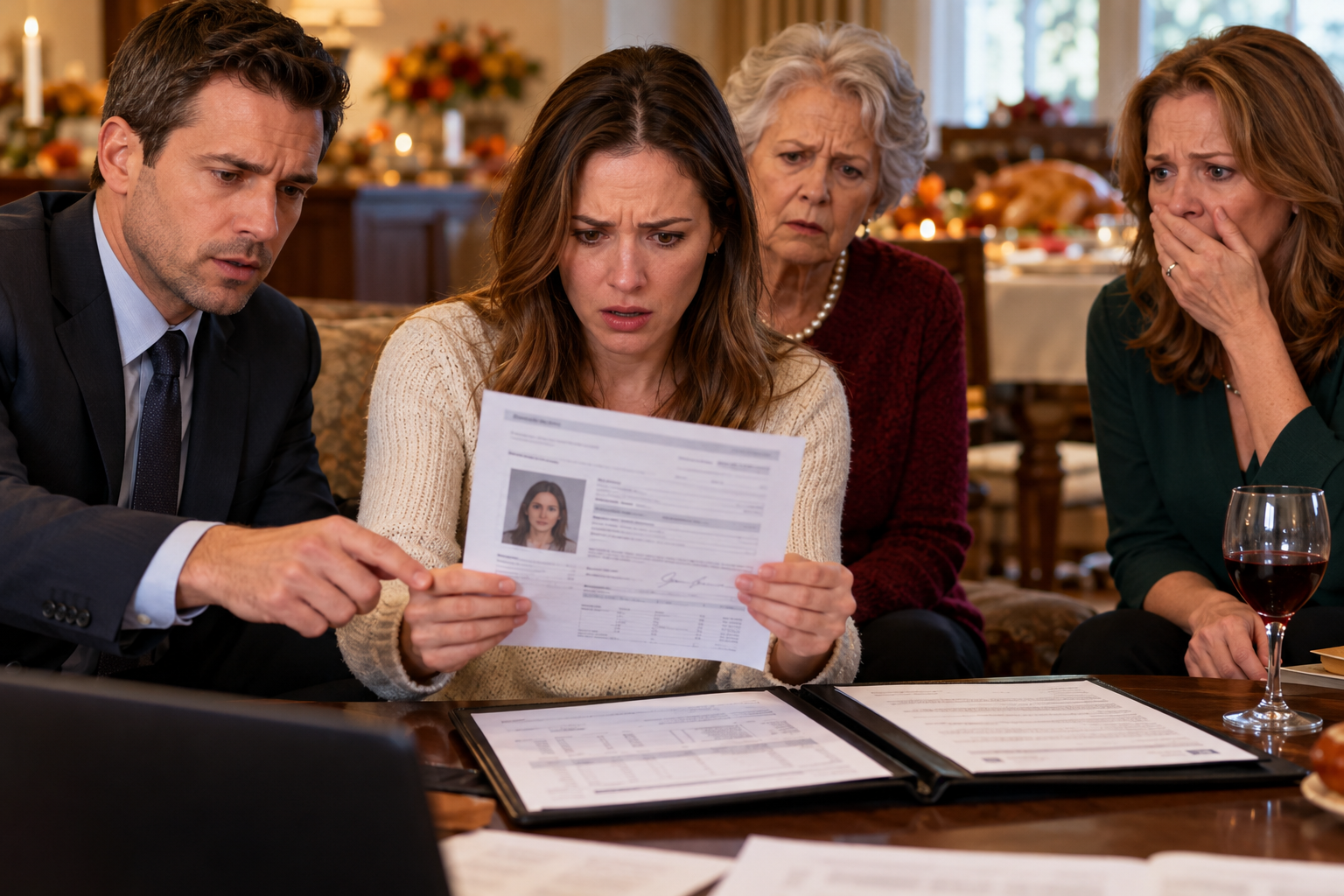
I could not agree that the signature was mine simply because somebody suggested I might have forgotten.
And I could not treat the transfer as an ordinary delay when I had no evidence that the money had ever reached me.
I had to keep asking questions.
That decision had become clearer over time.
I no longer expected a single conversation to resolve everything.
I no longer believed that repeating my concerns would automatically produce an answer.
I understood that the facts would have to be examined carefully.
The account opening date mattered.
The transfer date mattered.
The application mattered.
The disputed signature mattered.
I wanted each of those details understood in its proper place.
I did not want assumptions to replace evidence.
I also did not want the absence of a complete explanation to become an excuse for abandoning the investigation.
There was a difference between not knowing the answer and deciding the answer did not matter.
I was not willing to make the second choice.
I thought about my mother's reaction whenever I considered what might happen next.
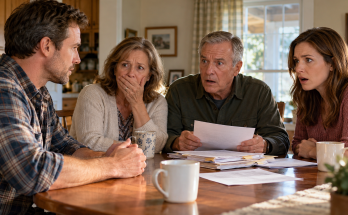
She had suggested that I might have signed the authorization while recovering.
I still did not know why she had chosen that explanation.
I could not say whether she had been frightened, mistaken, or aware of something I did not know.
I would not pretend to understand her thoughts without evidence.
But I had become more careful about accepting her words simply because they came from her.
That was painful to admit.
I had wanted our relationship to remain untouched by the discovery.
I had wanted to believe that family could absorb a difficult question without changing the way people looked at one another.
Maybe that was possible.
But it would require honesty.
It would require the willingness to examine the account instead of explaining it away.
And it would require me to be allowed to say that the signature was not mine without being told that my recovery made my memory unreliable.
I could not control how anyone else responded.
I could control whether I continued to speak honestly.
Grandma had helped me see that.
Her original question had opened the door to a problem nobody at Thanksgiving had expected.
She had not known what we would find.
She had simply asked why the money had never reached me.
I was grateful she had done so.
Without that question, I might have continued believing that my husband's arrangements were being handled properly.
I might never have seen the application.
I might never have recognized the discrepancy.
The discovery had taken away a kind of peace I had been relying on.
But it had also given me a reason to stop assuming that everything was settled.
I needed to know what had happened.
I needed the money accounted for.
And I needed the records to be understood without allowing family loyalty or fear to determine the conclusion.
I was not trying to make anybody look bad.
I was trying to understand a situation that affected my daughter's future and my own.
That was enough reason to continue.
There were days when I felt strong about that decision.
There were other days when I wanted to forget the entire problem and return to the life I had been trying to rebuild.
On those days, I remembered how much I had already survived.
I had lived through an accident.
I had lost my husband.
I had learned to care for a newborn while recovering from injuries.
I had faced more change than I ever expected.
I could not pretend that another difficult question would be easy.
But I knew I could face it one step at a time.
I did not need to solve every part of the problem that day.
I needed to keep the facts clear.
I needed to remain honest about what I remembered.
And I needed to continue asking for answers.
The money had not reached me.
That remained true.
The account had been opened in my name.
That remained true, too.
The signature was not one I recognized as my own.
And the question of who had opened the account was still unanswered.
I could not change those facts by wishing for a simpler story.
I could only decide what to do with them.
I chose not to look away.
My husband had tried to leave us something that would help us move forward.
I wanted to protect that intention, even though I could not yet say what the final outcome would be.
I wanted my daughter to have the future he had hoped for.
And I wanted to know why the arrangement meant to help us had become a source of so much uncertainty.
I still hoped the truth would bring clarity.
I still hoped my family could face it honestly.
But I no longer needed to convince myself that the answer would be painless.
I only needed it to be real.
Click here to continue reading: PART 17: I Had Finally Stopped Doubting My Own Memory, but I Still Had to Face the People Who Might Never Want the Questions Answered
The Thanksgiving Question That Turned a Family Gathering Into Something None of Us Could Pretend Was Ordinary Anymore
Part 16 of 20