I used to think that knowing the truth would make a problem easier to bear.
I wasn't so sure anymore.
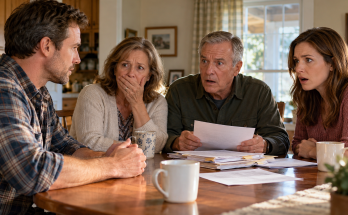
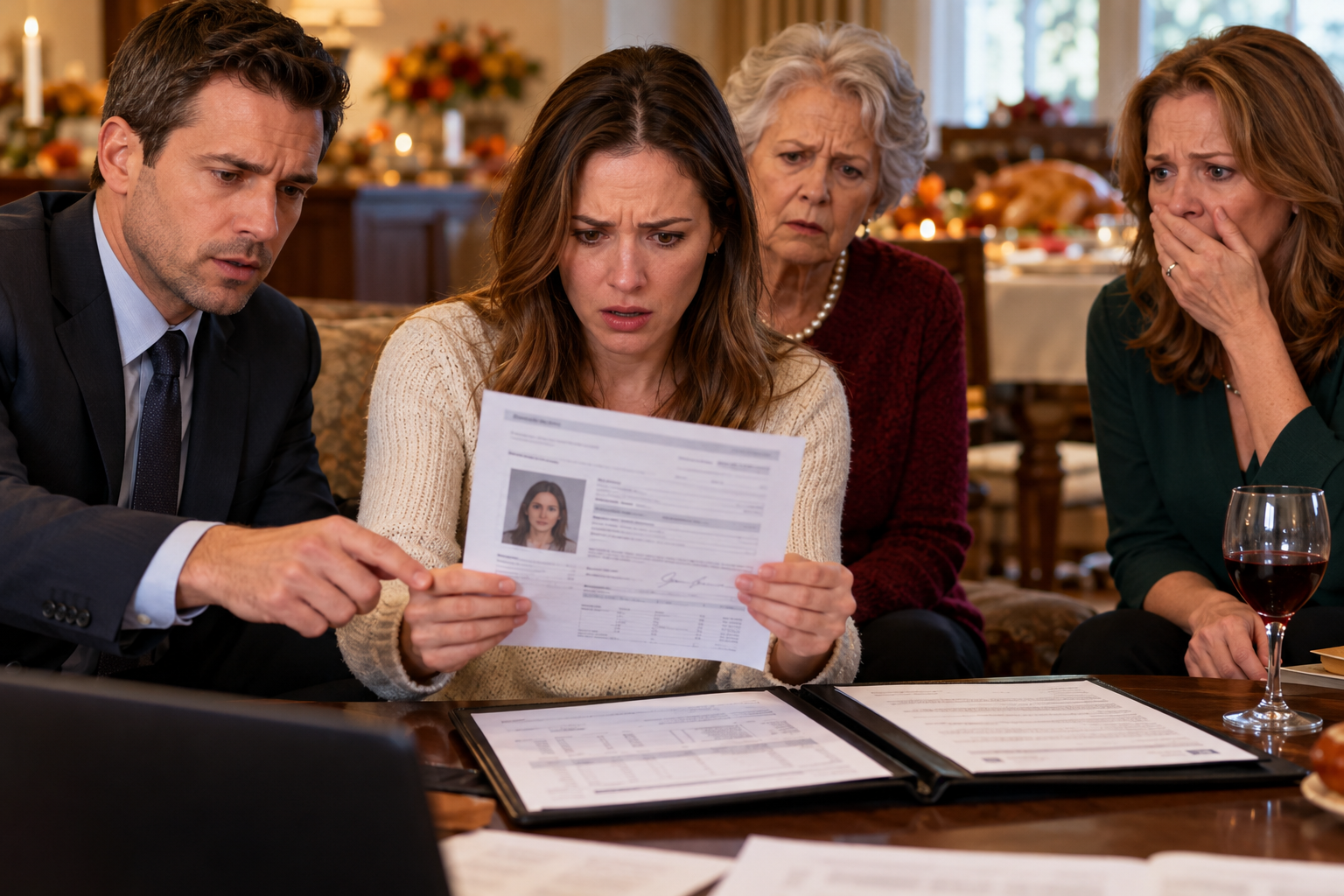
The account at Westbridge Community Bank had left me with questions I couldn't answer, and every attempt to imagine an explanation seemed to lead me back to the same uncomfortable place.
My name was on the application.
The signature wasn't mine.
The money had never reached me.
I could repeat those facts without difficulty.
What I couldn't do was explain how they had become part of my life.
I wanted someone to tell me that a mistake had been made.
I wanted to hear that the account had been opened for a reason nobody had thought to explain to me.
I wanted my mother's suggestion about my medication to turn out to be nothing more than a worried person's attempt to make sense of something frightening.
I wanted all of that.
But I had begun to understand that wanting an explanation was different from having one.
I couldn't decide what had happened simply because one possibility hurt less than another.
That was a difficult lesson to accept.
My mother had been there during some of the worst months of my life.
I remembered the help she had offered when I was struggling to recover.
I remembered needing people around me because there were things I could no longer manage on my own.
Those memories mattered.
They were part of my life, and I wasn't willing to erase them because of one troubling conversation.
But they couldn't answer the questions raised by the bank application.
I had to let both things be true.
I could remember the ways my mother had helped me.
I could also question the explanation she had given me.
Neither fact canceled out the other.
For a while, I had treated those possibilities as if they could not exist together.
If I questioned her, I felt disloyal.
If I defended her, I felt as though I were ignoring the evidence.
I kept moving between those feelings, hoping one would eventually become easier to live with.
It didn't.
What helped was returning to what I knew.
I had never knowingly opened the account.
I had never knowingly signed the authorization.
I had not received the money my husband had intended for me.
Those statements did not require me to decide what kind of person my mother was.
They only required me to be honest about my own experience.
I began to understand why Grandma had been so careful during our discussions.
She had not rushed to name a culprit.
She had not told me to trust one person or distrust another.
She wanted the facts examined.
At first, I had mistaken that restraint for uncertainty about whether the problem mattered.
Now I saw that it was a way of taking the problem seriously.
If we wanted to understand what had happened, we couldn't allow fear or family loyalty to fill the gaps in the records.
We needed to know what the documents actually established.
And we needed to admit what they did not.
The application showed that the account had been opened in my name.
It did not tell me who had prepared it.
The transfer date showed that money had moved shortly afterward.
It did not tell me who had benefited.
The signature gave me a reason to dispute the authorization.
It did not identify the person who had written it.
I had to resist the urge to make those details tell a complete story before they could.
That restraint was harder than I expected.
I was grieving.
I was frightened about our future.
I was angry that something my husband had intended for us had become a source of uncertainty.
Sometimes I wanted to direct all those feelings at somebody.
It would have been easier to have a person to blame than a set of unanswered questions.
But I knew that anger alone could not tell me what had happened.
So I tried to be patient.
Not passive.
Patient.
There was a difference.
I could wait for the facts while continuing to insist that they mattered.
I could refuse to accept an explanation without accusing someone of deliberately misleading me.
I could protect my daughter without turning every family conversation into a confrontation.
I was learning that I did not have to choose between silence and anger.
There was another option.
I could be direct.
I could say what I knew.
I could ask what I needed to know.
And I could leave room for an answer that might surprise me.
That was the approach I wanted to take.
I thought about my husband whenever the uncertainty became overwhelming.
He had tried to make plans for the future because he understood that love did not end with good intentions.
It required practical decisions.
He had wanted to leave something useful behind for our daughter and me.
The missing money was part of that intention.
I didn't want my questions to turn his final gift into nothing more than a source of resentment.
I wanted to understand what had happened so that I could honor the reason he had made those arrangements.
He had been thinking about us.
That remained true regardless of what the records eventually showed.
I held on to that.
It gave me something steady to return to when everything else felt uncertain.
I also thought about Grandma's question at Thanksgiving.
She had asked why the money had never reached me.
At the time, I had felt exposed.
Now I understood that the question had given me a chance to discover something I might otherwise have missed.
It had forced me to compare what I believed with what the records showed.
That comparison had been painful.
It had also been necessary.
I could not change the fact that the account existed.
I could not change the dates.
I could not make the signature look familiar.
But I could decide not to turn away from those things.
I would continue to ask for an explanation.
I would remain careful about what I claimed.
And I would stop treating my desire to preserve my family relationships as a reason to doubt myself.
I still wanted peace.
I simply no longer believed peace could be built by agreeing to something I knew was wrong.
Click here to continue reading: PART 14: Every Time I Tried to Return to Normal, the Application Reminded Me That My Name Had Been Used Without My Understanding
The Thanksgiving Question That Turned a Family Gathering Into Something None of Us Could Pretend Was Ordinary Anymore
Part 13 of 20