For a long time, I thought being a good daughter meant giving my mother the benefit of the doubt.
If she offered an explanation, I tried to understand it.
If she said something had happened for a reason, I usually assumed she knew more than I did.
That wasn't because I had never questioned her.
It was because I had spent most of my life believing she wanted what was best for me.
After my accident, that belief became even more important.
I needed help.
I needed patience.
I needed people who would not make me feel ashamed when I couldn't do something by myself.
My mother had been part of that period.
I remembered it, and I did not want to dismiss it.
But the bank application had forced me to recognize something I had not wanted to face.
Trusting somebody did not mean I had to accept every explanation they gave.
It did not mean I had to ignore what I could see.
And it did not mean I had to surrender my own memory because somebody else suggested it might be unreliable.
I had been treating my mother's reassurance as if it could settle the matter.
It couldn't.
She had suggested that I might have signed the authorization while taking medication.
I understood why that possibility had occurred to her.
My recovery had been difficult.
There were things I did not remember perfectly.
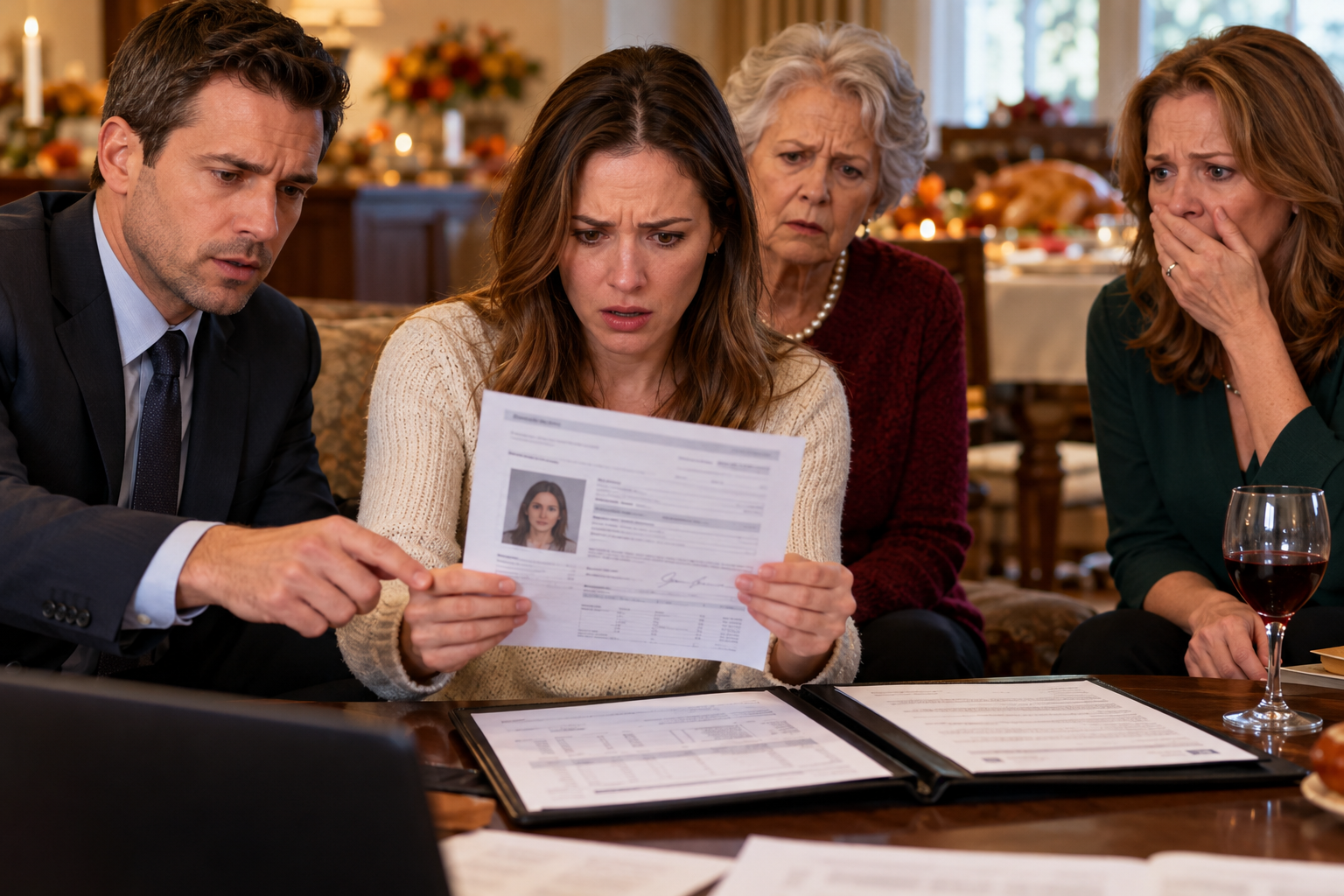
But I did not remember opening an account at Westbridge Community Bank, and I did not recognize the signature on the form.
Those facts mattered.
I could not erase them to make the conversation easier.
I began to understand that trusting myself did not mean assuming I was always right.
It meant taking my own experience seriously enough to examine it honestly.
I could admit that my memory had limits.
I could acknowledge that I did not know who had opened the account.
I could accept that the full explanation might be different from anything I had imagined.
None of that required me to agree that I had signed the form.
I was allowed to say I didn't know.
I was also allowed to say what I did know.
That distinction gave me a little more confidence.
I had spent so much time feeling vulnerable that I had started to mistake uncertainty for weakness.
But uncertainty was simply the condition I was in.
I did not know everything.
Neither did anyone else who had examined the information with me.
That did not mean the questions were unimportant.
It meant we had to keep asking them.
I thought about how much energy I had spent trying to preserve the appearance of normal family relationships.
I wanted conversations to remain comfortable.
I wanted people to feel welcome around my daughter.
I wanted to avoid making anyone feel accused.
Those wishes were understandable.
But they had begun to influence how I thought about the facts.
I was measuring my questions by how upset somebody might become instead of by whether the questions needed answers.
That was not fair to me.
It was not fair to my daughter, either.
The money had been intended to support our future.
If I allowed the issue to disappear because discussing it was uncomfortable, I would not be protecting her.
I would simply be avoiding a difficult conversation.
I didn't want to live that way.
I wanted to be kind.
I wanted to be fair.
I wanted to remain open to explanations I had not considered.
But I also wanted to be able to look at a document bearing my name and say honestly whether I recognized it.
I did not recognize that signature.
I had never knowingly opened the account.
I had not received the money.
Those were the facts I could stand behind.
Everything else would have to be established.
I found myself thinking about Grandma's role in all this.
She had asked the question when everyone was gathered for Thanksgiving.
She had not known that it would lead to the discovery of an account I didn't recognize.
She had simply believed the money should have reached me.
When I told her it hadn't, she took the answer seriously.
I appreciated that more with each passing day.
She had not told me what to think.
She had helped me understand that I did not need to dismiss my concerns just because the situation involved family.
That was a kind of support I had needed.
I had received plenty of advice about resting, recovering, and trying not to worry.
Some of it had been useful.
But I also needed someone who would sit with an uncomfortable question and allow it to remain uncomfortable until we understood it.
Grandma had done that.
I was trying to do the same for myself.
I could not promise that I would never doubt my judgment again.
I knew I would.
There would be moments when I would wonder whether I was being too suspicious or whether I should have accepted my mother's explanation.
There would be moments when I would wish the account had never been discovered.
But I could return to the same principle.
I would not claim more than I knew.
I would not deny what I knew, either.
That was the balance I wanted to maintain.
It was not easy.
It was simply honest.
I thought about my daughter growing up and learning how to trust people.
I wanted her to know that trust was valuable.
I wanted her to be generous with the people she loved.
But I also wanted her to understand that asking a question was not the same as betraying someone.
Sometimes questions were necessary because the people involved mattered too much to accept confusion as the final answer.
I was learning that lesson through a situation I would never have chosen.
The account had not only raised questions about money.
It had made me reconsider what it meant to trust my own judgment.
I could no longer depend on reassurance alone.
I needed evidence.
I needed answers.
And I needed to remember that my voice mattered, even when the person I questioned was someone I loved.
Click here to continue reading: PART 16: The One Thing I Could No Longer Do Was Pretend That My Husband’s Final Gift Had Reached Me When the Records Said Otherwise
The Thanksgiving Question That Turned a Family Gathering Into Something None of Us Could Pretend Was Ordinary Anymore
Part 15 of 20