
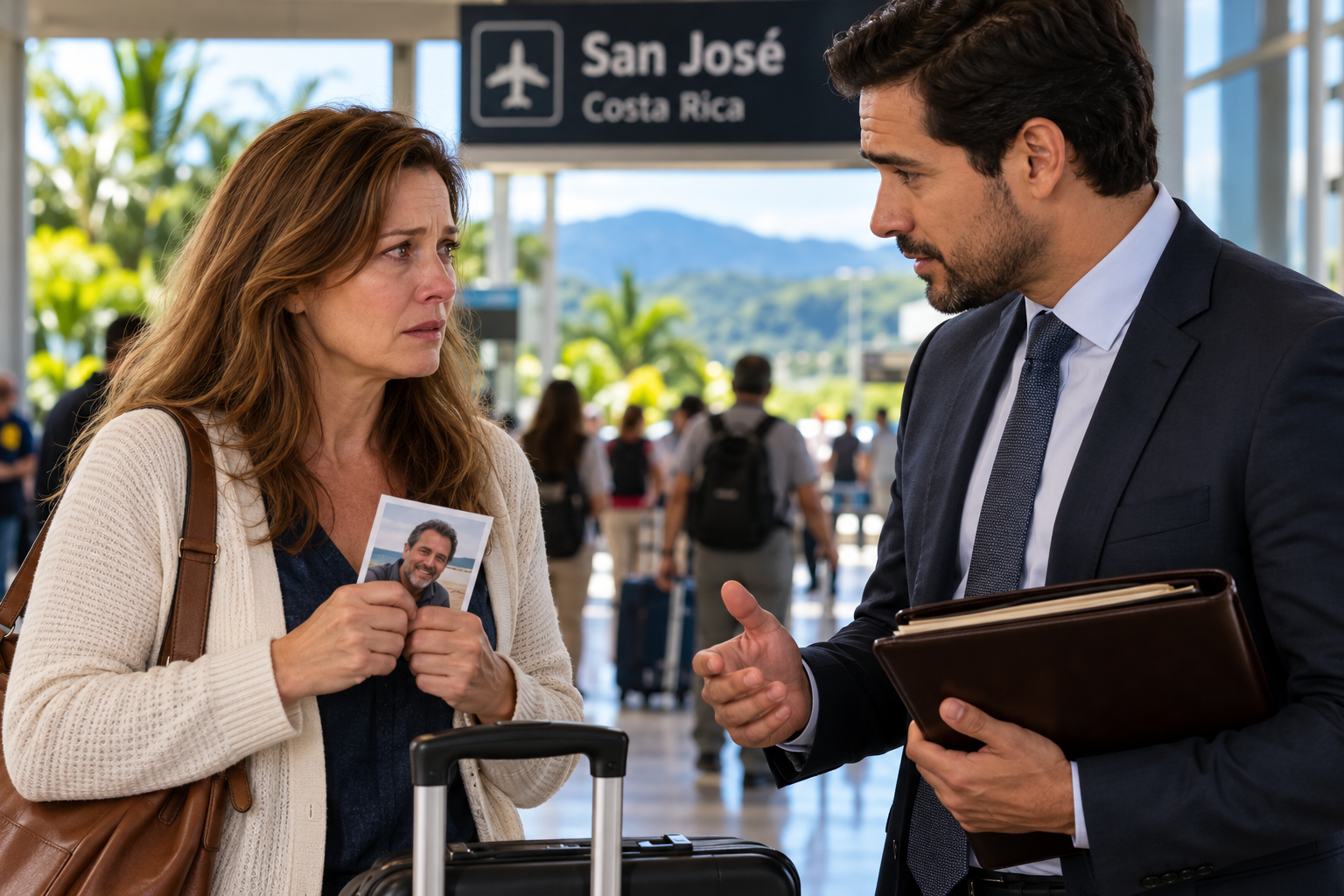
I had spent years believing that I knew my husband well enough to recognize when something important was happening.
I was no longer sure.
That uncertainty followed me through every part of the conversation with Daniel.
I listened to the information he had been asked to share, trying to separate the facts from the questions that remained unanswered.
It was difficult.
I wanted the facts to tell me what my husband had intended.
I wanted the decisions to reveal the feelings behind them.
But a decision could be clear while the reason for making it remained uncertain.
I was learning that the hard way.
Daniel paused to make sure I understood what he had explained.
I told him I understood the words.
I wasn't sure I understood the purpose.
He acknowledged the difference.
I appreciated that he didn't pretend the distinction was unimportant.
I looked at the papers between us.
They were ordinary documents, but they had become part of a conversation I would remember for the rest of my life.
I wondered how many times my husband had looked at similar papers while I was nearby.
Had he known that one day I would be sitting across from a stranger trying to understand his decisions?
Had he imagined me asking these questions?
I couldn't know.
The more I tried to imagine his thoughts, the more I realized how easily imagination could become a substitute for evidence.
I had done that throughout the journey.
I had interpreted silence as suspicion.
I had treated hesitation as a sign that something was being hidden.
I had imagined that Daniel's careful answers meant he knew more than he was telling me.
Some of those assumptions might have been right.
I had no way to know which ones.
I needed to stop confusing the possibility of something with proof that it had happened.
That was a lesson I wished I had learned before my husband died.
Perhaps it would have changed some of our conversations.
Perhaps it wouldn't have.
I couldn't go back and find out.
I asked Daniel whether my husband had ever spoken about the kind of person I was.
The question sounded strange as soon as I said it.
I had been married to the man for years.
Why did I need an attorney to tell me what he thought of me?
But the question wasn't really about my personality.
I wanted to know whether my husband had seen me as someone who could handle difficult information.
I wanted to know whether he had trusted me to make a decision without being told what to think.
Daniel answered within the limits of what he knew.
He did not offer a judgment about my marriage.
I understood why.
He had not lived in our home.
He had not watched us raise our children.
He had not been there during the quiet moments when we understood each other without needing to speak.
He could not tell me what those years meant.
That was something I had to decide for myself.
I lowered my eyes.
For a moment, I felt foolish for asking.
Then I reminded myself that grief made people reach for answers wherever they could find them.
I was trying to understand a loss that had left me with unfinished conversations.
It was natural to want someone to help me complete them.
But Daniel couldn't become my husband simply because my husband was gone.
I needed to stop asking him to fill that space.
I took a slow breath.
"Let me ask you something else."
He nodded.
I asked whether my husband had seemed certain about his arrangements.
Daniel explained that he had been deliberate about what he wanted handled.
I considered that answer.
My husband had always been capable of making decisions with confidence.
That was one of the things I had admired about him.
When our family faced a problem, he often wanted to act before worry had time to take over.
Sometimes he was right.
Sometimes he moved too quickly.
I had learned to challenge him when I thought he was overlooking something.
At least, I had believed I was doing that.
Now I wondered whether there had been times when I let his certainty end a conversation before I had said everything I wanted to say.
I wasn't trying to blame myself for his final arrangements.
I was trying to remember our marriage honestly.
It had not been perfect.
Neither had I.
We had loved each other, but love had never made us experts at understanding one another.
Perhaps I had sometimes assumed that because we had shared so many years, I already knew what he meant.
Perhaps he had done the same.
If so, we had both been wrong.
I looked at Daniel.
"I don't want you to tell me he was a good man just because he's dead."
Daniel remained quiet.
I continued.
"I know the good things he did. I lived with him. I know what he gave our children. But I need to understand the decisions he made, too."
Daniel said he understood.
I believed him.
I wasn't asking him to condemn my husband.
I wasn't asking him to defend him.
I wanted room to hold both the love and the disappointment without being forced to choose one.
For years, I had thought that being loyal to someone meant defending the life you had built together.
Now I understood that loyalty could also mean being honest about what had hurt you.
My husband was gone.
I could not repair our marriage or ask him to explain himself.
But I could refuse to rewrite the past simply to make grief easier.
I could remember the good things without pretending that every decision had been right.
I could admit that he had left me confused without deciding that the confusion erased everything we had shared.
I could love him and still be angry.
That was the truth I had been avoiding.
I looked toward my bag.
The photograph remained inside, untouched.
I wondered whether I would ever understand why I had been so determined to keep it close.
Perhaps the answer would become clearer as the meeting continued.
Perhaps it wouldn't.
I was learning that not every question needed an immediate conclusion.
Daniel returned to the information he had been explaining.
I listened.
When he paused, I asked him to clarify a detail I hadn't understood.
He did.
I thanked him.
The exchange was ordinary.
It was also different from the conversations we had shared earlier.
I was no longer trying to catch him in a contradiction.
He was no longer repeating that I needed to wait.
We were finally discussing what he could tell me, one thing at a time.
I still didn't know what my husband had expected me to discover.
I still didn't know why the trip had been arranged in Costa Rica.
But I had stopped treating every unanswered question as a reason to distrust the person sitting across from me.
That was progress, even if it wasn't the answer I wanted.
I looked at Daniel and asked him to continue.
He did.
And I listened without trying to decide the ending before I had heard the story.
Click here to continue reading: PART 15: I Had Come to Costa Rica Expecting My Husband’s Final Secret to Explain Everything, but I Was Beginning to Understand the Limits of What Anyone Could Tell Me
My Husband Was Gone, Our Children Had Inherited Millions, and Somehow I Had Ended Up Alone in a Country I Barely Knew
Part 14 of 20

One Comment on “PART 14 – The More Carefully I Listened to Daniel, the More I Realized That Understanding My Husband Would Require More Than Finding Someone to Blame”