I thought the hardest part would be hearing what my husband had arranged.
I was beginning to understand that the harder part was deciding what to do with it.
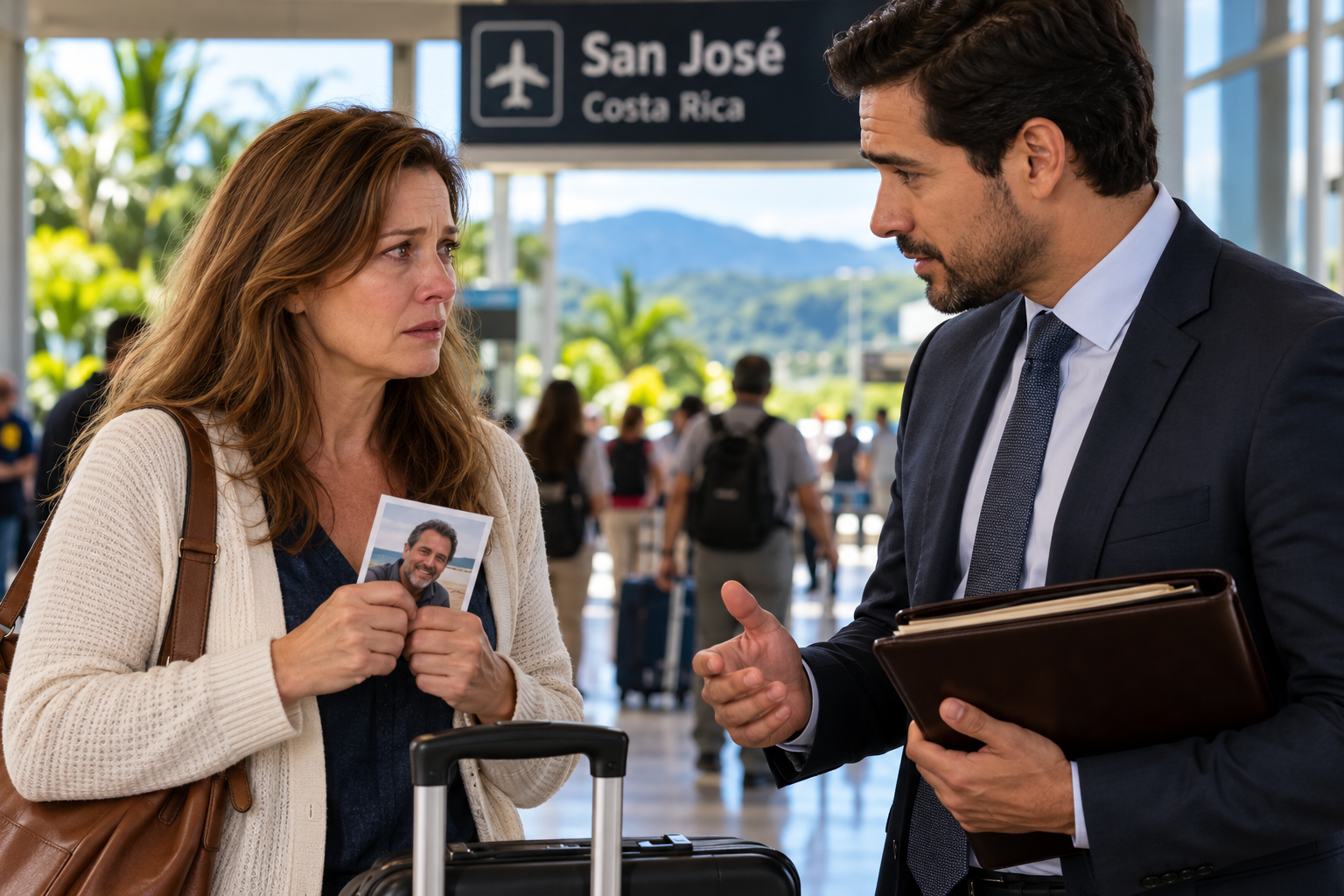
Daniel sat across from me with his papers arranged neatly in front of him. I had grown used to the sight of that leather folder, though I still disliked what it represented.
It reminded me that my husband had prepared for this meeting.
He had made decisions.
He had given instructions.
And he had left me to discover the reasons after he was gone.
I looked at Daniel.
"There's something I need to ask before we continue."
He waited.
"If I decide I don't agree with any of this, what happens?"
I wanted a direct answer.
I wasn't asking whether Daniel thought I should agree. I wasn't asking whether my husband had good intentions.
I wanted to know whether I still had a choice.
Daniel explained that his role was to present the information he had been instructed to share and help me understand the arrangements. He wasn't there to make my decisions for me.
I let out a breath.
I hadn't realized how much I needed to hear that.
For hours, I had behaved as though my husband's final instructions had become rules I was expected to follow without question.
Perhaps that was because I had spent so many years trusting his judgment.
Perhaps it was because I was afraid that refusing anything he had arranged would mean rejecting him altogether.
I didn't know.
But I was beginning to see that those were not the same thing.
I could listen to my husband’s wishes without surrendering my own judgment.
I could respect the life we had shared without pretending that every decision he made was right.
And I could love him without agreeing to something simply because he was no longer here to ask me.
I looked down at the papers.
"Then please tell me what I actually need to know."
Daniel nodded and continued.
I listened more carefully than before.
Whenever he explained something, I tried to understand the practical meaning rather than guess at the emotion behind it.
When I didn't understand, I asked him to explain it again.
He did.
There were moments when I wanted to interrupt with another question about my husband. I wanted to know why he had chosen this way of handling things, why he had not told me more, and whether he had imagined how frightened I would feel.
But I stopped myself.
Those questions mattered.
They simply weren't questions Daniel could necessarily answer.
I needed to distinguish between the information he possessed and the explanation I wished I could receive from the man who had died.
That distinction was becoming the only way I could keep my thoughts straight.
After a while, Daniel paused.
He asked whether I wanted a moment.
I looked toward the window.
I was tired, and my mind felt crowded. Every new detail seemed to bring another memory with it, and every memory brought another question.
But I didn't want to stop.
I had spent too long wondering what awaited me in Costa Rica.
Now I had an opportunity to understand the arrangements, and I didn't want my fear to send me away before I had heard everything Daniel could tell me.
"I'm all right," I said. "Please continue."
He did.
I tried to follow without turning each sentence into a judgment about my marriage.
It wasn't easy.
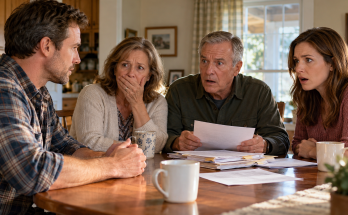
I remembered my husband at home, making plans for our children and worrying about the future. I remembered how often he had insisted that he wanted to make things easier for them than they had been for us.
He had meant that.
I had never doubted it.
The inheritance was one indication of how seriously he had taken that responsibility.
Our children had been left millions.
That fact remained almost impossible to comprehend.
I had imagined what the money might mean for them. It could give them choices, stability, and room to build their own lives without the same financial worries we had faced.
I wanted those things for them.
I had always wanted them.
But the inheritance had also become part of the question I couldn't escape.
Why had my husband made such clear arrangements for our children while leaving me to travel across the world to understand his final intentions?
I still didn't know.
I wasn't going to pretend I did.
I asked Daniel whether the arrangements he was explaining changed anything about what I should expect for myself.
He answered by explaining what he could about the matters before us, without making promises beyond what he knew.
I appreciated that.
I had heard enough careful language to recognize the difference between a fact and a reassurance.
I didn't want reassurance that might turn out to be meaningless.
I wanted something I could rely on.
I thought about the photograph in my bag.
It had been with me from the beginning of the journey, and I had repeatedly touched it whenever I felt overwhelmed.
I had started to see it as a symbol of everything I didn't understand.
Yet the photograph itself had not changed.
It was still the same small object I had brought from home.
The questions around it had changed.
I wondered whether I had been asking it to carry too much meaning.
I had been doing something similar with my husband's final instructions. I had treated them as though they must contain a complete explanation of our marriage, our family, and everything that had happened before his death.
Perhaps they did contain important information.
But they could not give me back the conversations we had never finished.
They could not tell me exactly what he had felt when he made each decision.
And they could not decide what I should feel now.
That part was mine.
I looked at Daniel again.
"Did he tell you what he hoped I would do after I heard everything?"
Daniel explained that he could share the instructions he had been given, but he could not guarantee that my husband's expectations would answer every question I had.
I nodded.
It wasn't the answer I wanted, but I understood it.
My husband had left instructions.
He had not left himself.
There was no way to replace the missing person in the conversation.
I sat quietly for a moment.
Then I asked Daniel to continue with the remaining information.
He did.
I listened, feeling the familiar mixture of anger, grief, and determination.
I still wanted to know why my husband had sent me to Costa Rica.
I still wanted to understand why he had chosen this way to speak to me.
But I no longer believed that I had to decide whether he had been right before I could hear what he had left behind.
I could listen first.
I could think afterward.
And I could make my own decision.
That was what I needed to remember.
When Daniel finished the next part of his explanation, I looked at him and asked whether there was anything else he believed I should understand before we concluded the meeting.
He took a moment.
Then he prepared to continue.
I sat straighter in my chair.
For the first time that day, I was not waiting for someone else to tell me how I ought to feel.
I was waiting for information.
And I was ready to decide what it meant for me.
Click here to continue reading: PART 18: The Questions I Had Carried Across the Ocean Were Still With Me, but I Was Finally Learning Which Ones Could Be Answered and Which Ones I Had to Face Alone
My Husband Was Gone, Our Children Had Inherited Millions, and Somehow I Had Ended Up Alone in a Country I Barely Knew
Part 17 of 20