By the time Daniel continued, I had begun to accept that the meeting would not make every uncertainty disappear.
I didn't like that.
I had come so far because I wanted answers, and part of me still believed that the right explanation would put everything back in order.
But the life I had known was gone.
My husband was dead.
Our children had inherited the money he had left them.
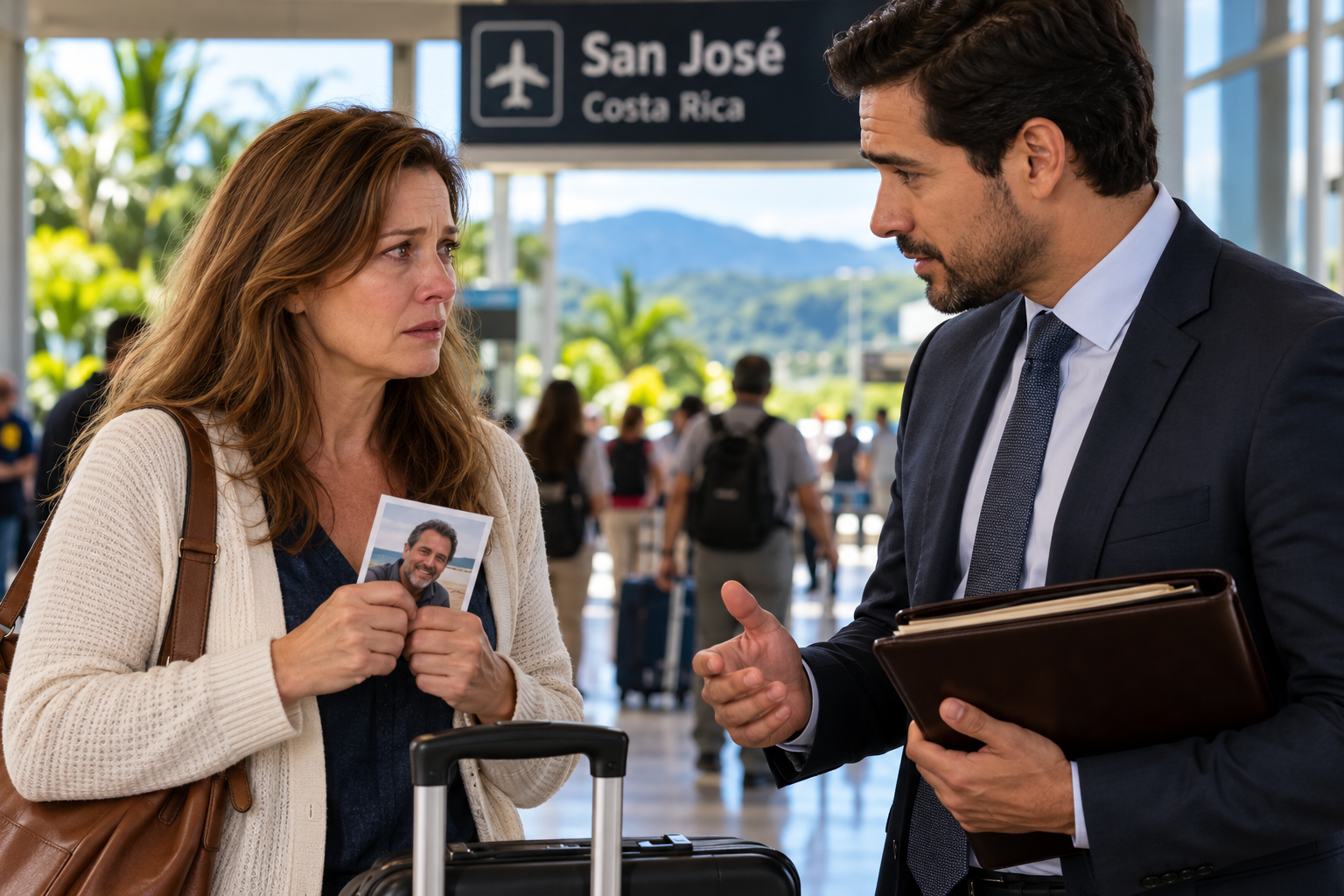
I had been sent to Costa Rica, and I was sitting across from an attorney who was doing his best to explain the arrangements.
No explanation could change those facts.
What it could do was help me understand what came next.
I focused on that.
Daniel continued with the information he had been asked to share. I listened carefully and asked him to clarify the points that remained unclear.
He answered what he could.
When he didn't know something, he said so.
I began to trust that distinction.
Not because I suddenly trusted him completely, but because I could see that he was not pretending to know everything.
That mattered more than I had expected.
I had arrived believing that someone must possess the complete story.
My husband had known the reasons for his decisions.
Daniel had been given instructions.
I had been left with questions.
I had imagined that the truth was sitting somewhere inside that leather folder, waiting to be revealed in a way that would settle everything.
Now I understood that information could be real and still leave room for uncertainty.
I could learn what my husband had arranged without knowing every private thought that had led him to do it.
I could understand the practical purpose of a decision without agreeing with the way it had been made.
I could even recognize that he might have wanted to help me while admitting that the journey had hurt me.
Those things could exist together.
I had spent too much time trying to make them cancel one another out.
I looked at Daniel.
"Do you think he expected me to forgive him?"
The question surprised me as soon as I asked it.
Daniel paused.
He explained that he could not know exactly what my husband had expected emotionally.
I nodded.
Of course he couldn't.
I had asked because I wanted to know whether my husband had understood the cost of leaving me with so many unanswered questions.
I wanted to know whether he had imagined my anger.
I wanted to know whether he had believed that I would eventually understand and forgive him.
But those were questions for the man who had died.
Daniel could not answer them without guessing.
I looked down at my hands.
For years, I had thought forgiveness was something people offered after a problem had been explained.
If someone told me why they had acted a certain way, I could decide whether I understood.
If they apologized, I could decide whether I believed them.
If they showed me that they regretted what had happened, perhaps I could let the hurt go.
My husband had left me without those ordinary steps.
There was no conversation in which he could hear what his choices had done to me.
There was no opportunity for him to respond when I told him I felt excluded.
I would have to decide what forgiveness meant without his help.
I wasn't ready.
I didn't want to pretend I was.
But I also didn't want to spend the rest of my life punishing a dead man for a conversation we could never have.
I needed time to understand what had happened before deciding what I could forgive.
That was all I could promise myself.
I turned back to Daniel.
"Please keep going."
He continued.
I listened without looking at the clock or thinking about how long the meeting had taken.
For the first time since landing, I was no longer counting the minutes until I could leave.
I was trying to understand what I had come to hear.
The photograph remained inside my bag.
I could feel its edge when I moved my hand, but I left it there.
It had become familiar enough that I no longer needed to check it constantly.
I thought about how strange that was.
At the airport, I had held it so tightly that I had bent the paper.
I had treated it as if it might disappear if I stopped paying attention to it.
Now I was beginning to understand that holding something tightly did not make its meaning clearer.
Sometimes it only made your hand hurt.
I had been doing the same thing with my memories of my husband.
I had held on to the idea that I knew him completely because the alternative was frightening.
If I admitted that he had kept something from me, I had to accept that there were parts of his life I might never understand.
That didn't mean our marriage had been false.
It meant that marriage had not made either of us all-knowing.
We had shared years of our lives.
We had raised children.
We had made decisions and mistakes.
We had loved each other in the ways we knew how.
Those things were still true.
I didn't need to erase them to acknowledge that he had left me with questions.
Daniel paused and asked whether I needed anything.
I told him I was fine.
This time, the answer was closer to the truth.
I was still grieving.
I was still angry.
I was still frightened of what the remaining information might mean.
But I no longer felt as though I was being carried through a process I had no right to question.
I could speak.
I could ask.
I could disagree.
I could take time to understand.
Those choices gave me some control over a situation that had begun with almost none.
I asked Daniel whether there was anything he needed me to decide immediately.
He explained what remained to be discussed and did not insist that I make a decision before I understood the information.
I felt grateful.
I had been afraid that the meeting would end with a demand I wasn't prepared to meet.
Instead, I was being given room to think.
That was what I needed.
I considered the life waiting for me at home.
I would have to speak with our children.
I would have to decide how to explain the trip and what I had learned.
I would have to return to a house filled with memories of the man whose decisions I was still trying to understand.
I couldn't avoid those things forever.
But I didn't have to solve them all at once.
I could begin with the facts.
I could tell our children what I knew.
I could be honest about what I still didn't understand.
I could let them have their own feelings about their father's choices without insisting that they agree with mine.
They had lost him, too.
I wanted to remember that when I returned home.
I looked at Daniel.
"I don't know what I'll think when I've heard everything," I said.
He acknowledged that I didn't have to decide immediately.
That simple response eased something inside me.
I had been treating the meeting as though I needed to leave with a final judgment.
Perhaps I only needed to leave with enough information to take the next step.
I could make the larger decisions later.
I could allow myself to feel hurt without deciding that hurt was the only thing I would ever feel.
I could continue loving my husband without pretending that his final arrangements had been easy to accept.
I looked toward the bag beside me.
The photograph was still there.
I no longer needed to touch it.
I knew where it was.
That was enough.
Daniel returned to the remaining details.
I sat quietly and listened.
I still had questions about why my husband had chosen Costa Rica.
I still wanted to know whether he had imagined how I would react.
But I was no longer asking those questions because I needed an immediate answer to keep myself together.
I was asking because they mattered.
And if some of them could not be answered, I would have to learn how to live with that.
Click here to continue reading: PART 19: Before I Could Return Home, I Needed to Decide Whether I Would Remember My Husband for the Life We Shared or the Questions He Left Behind
My Husband Was Gone, Our Children Had Inherited Millions, and Somehow I Had Ended Up Alone in a Country I Barely Knew
Part 18 of 20