A month after the lawyer read my father's letter, I found myself standing in the kitchen before sunrise.
The house was still dark.
I had come downstairs to make coffee before work.
The sugar jar sat on the counter beside the cups.
I reached for it and paused.
For a moment, I remembered the envelope on the dining table.
I remembered the lawyer's careful hands.
I remembered how I had sat there waiting for my father to accuse me.
Instead, he had shown me that he had been watching, listening, and understanding far more than I realized.
I took the sugar jar from the counter and placed it beside the coffee machine.
Then I made two cups.
Sarah came downstairs while I was pouring the coffee.
She looked at the second cup.
"You're making one for me?"
I nodded.
She smiled and sat at the table.
We drank together while the house slowly brightened.
Neither of us needed to fill the silence.
That had become one of the changes I valued most.
I no longer felt that every quiet moment needed to be interrupted by a plan, a complaint, or a reminder of what still needed doing.
Sometimes it was enough to sit with someone.
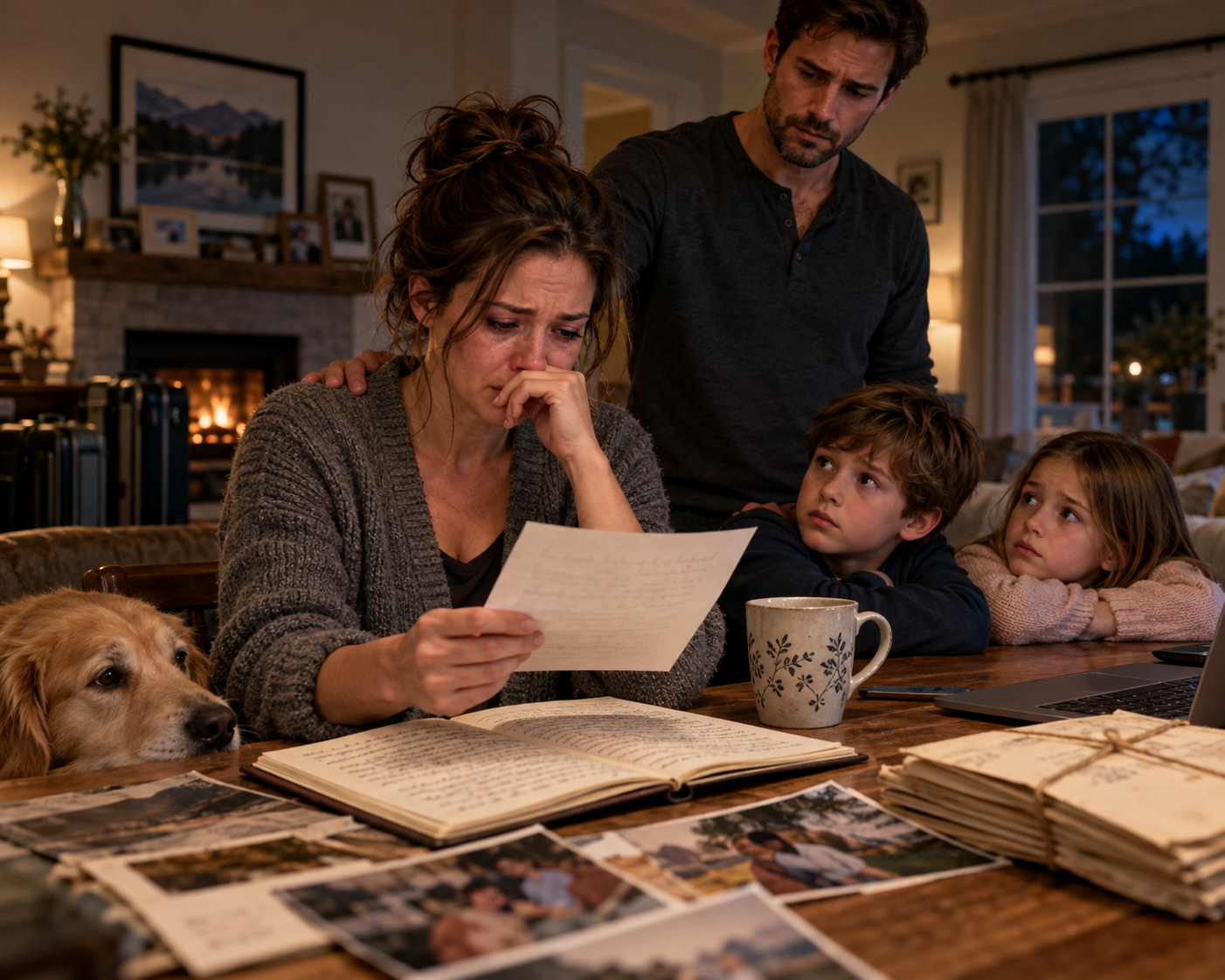
After Sarah left to get ready for the day, I opened the drawer where I kept my father's letter.
I removed the envelope and unfolded the pages.
I had read them several times since that first evening.
The words had not changed.
My understanding of them had.
At first, I had heard the letter as a judgment.
Then I had heard it as an explanation.
Now I heard something closer to a request.
My father had wanted me to understand that he knew what I had done for him.
He had wanted me to recognize that his needs had placed pressure on our household.
But he had also wanted me to see that the pressure had not made him less worthy of love.
That was the part I had resisted.
I had treated dependence as a problem to be solved.
When I couldn't solve it, I became angry.
I had never considered that some problems were not meant to be solved completely.
Some were meant to be carried together.
I folded the letter and placed it back in the envelope.
Then I returned it to the drawer.
I didn't feel relieved.
The regret was still there.
It would probably remain for a long time.
But I no longer believed that feeling guilty was the same as making things right.
I could spend the rest of my life punishing myself for the way I had treated my father.
That would not give him another day.
It would not make Sarah's difficult years easier.
It would not help my sons understand what kind of men they wanted to become.
Regret could teach me something.
It could also become another excuse to focus on myself.
I didn't want that.
I wanted to use what I had learned.
That evening, I came home to find Sarah sitting at the table with a notebook.
She had been writing down the things we needed to do around the house.
There were repairs to make.
Appointments to schedule.
Expenses to plan for.
The list was familiar.
Once, seeing it would have made me feel as though the entire household depended on my ability to complete every task.
Now I pulled out a chair.
"Let's go through it together."
Sarah handed me the notebook.
We reviewed the list.
Some things could be done immediately.
Others could wait.
A few needed more discussion.
We made a plan without arguing about who had done more in the past.
When we finished, Sarah closed the notebook.
"That was easier than I expected."
I smiled.
"So was I."
She laughed.
Then she looked at me seriously.
"I know you're trying, David."
I nodded.
"I am."
"I don't expect you to get everything right."
I looked at her.
"But I do need you to keep listening."
"I will."
I didn't make the promise lightly.
I knew that there would be days when I was tired and impatient.
I knew that old habits did not disappear simply because a person finally understood where they came from.
I would have to keep choosing how I responded.
I would have to keep noticing when my fear began turning into anger.
And when I failed, I would have to admit it without asking everyone else to pretend it hadn't happened.
That was part of the work, too.
A few days later, my oldest son came to me with a problem.
He had made a mistake on a school assignment and was worried about how his teacher would respond.
I listened while he explained.
At one point, he stopped talking.
"I know I should have done it differently."
I nodded.
"Maybe you should have."
He looked down.
I waited before continuing.
"But making a mistake doesn't mean you can't fix it."
He glanced up.
"We can figure out what to do next."
He sat beside me.
We talked through his options.
I didn't lecture him about responsibility.
I didn't tell him that he should have known better.
He already understood that he had made a mistake.
What he needed was help deciding how to handle it.
Afterward, he thanked me.
I watched him return to his room.
Then I thought about my father.
He had helped me through difficult moments when I was young.
He had not always agreed with my choices.
He had not always approved of what I did.
But he had made room for me to learn.
I had forgotten that when he became the person who needed my patience.
Now I was trying to remember it.
The following weekend, the family sat down for dinner.
The boys talked over each other.
Sarah reminded them to pass the vegetables.
I laughed when my younger son told a story that became more exaggerated every time he reached the end.
The old chair remained beside the window.
The photograph of my father with his grandchildren stood on the shelf.
I looked at it while everyone spoke.
For a moment, I felt the familiar ache.
I missed him.
I missed the chance to hear his voice.
I missed the ordinary questions I had once considered interruptions.
I missed knowing that he was somewhere in the house, even when we weren't speaking.
I would never have those things again.
But I had something else.
I had his words.
And I had the people who were still sitting around the table.
I looked at my sons.
I looked at Sarah.
I thought about the way my father had watched us during his final years.
He had seen our struggles.
He had seen our kindness.
He had seen the things we did for one another, even when we didn't understand their value.
I wished I had paid more attention to him.
I wished I had asked more questions.
I wished I had made it easier for him to feel welcome in the home he shared with us.
Those wishes would remain unanswered.
But I could make sure that the people around me did not have to wait until I was gone to know what they meant to me.
After dinner, I helped clear the table.
My younger son carried the plates.
My oldest son wiped the counter.
Sarah packed away the leftovers.
We worked without rushing.
When the kitchen was clean, I stood beside the sink and looked toward the hallway.
The clock was still ticking.
My father had repaired it years earlier.
I had once thought the sound was irritating.
Now I found comfort in it.
The clock kept moving, one second after another.
It didn't stop because I regretted something.
It didn't turn backward because I finally understood.
It simply continued.
I turned off the kitchen light and joined my family in the living room.
Sarah sat on the sofa.
The boys were arguing over what to watch.
I took the chair beside the window.
For a moment, I imagined my father sitting there with us.
Then I let the thought remain what it was: a memory.
I no longer needed to turn it into an argument with myself.
My father had written his letter because he wanted me to understand him.
I believed I finally did.
He had known that caring for him was difficult.
He had known that I was trying to protect my family.
He had also known that my fear was changing the way I treated the people I loved.
He had not denied any of those truths.
He had left them together.
I would have to do the same.
I could acknowledge how hard those years had been without pretending I had behaved well every time.
I could admit that I had made mistakes without deciding that every good thing I had done was meaningless.
And I could remember my father as more than the person whose needs had strained our household.
He had been the man who carried me when I was too small to walk.
The father who taught me to work.
The grandfather who saved the last cookie.
The old man who sat beside the window and listened to the house.
He had been all those things at once.
I had only needed to look.
When the boys finally chose a program, Sarah leaned against me.
I rested my hand over hers.
Nobody said anything about the letter.
Nobody needed to.
For the first time in a long while, I was not waiting for someone to tell me that I had done enough.
I was simply grateful that I still had the chance to do better.
Click here to continue reading: PART 13: I Thought I Had Finally Learned What My Father Wanted Me to Understand, Until My Son Asked a Question I Couldn’t Answer Easily
I Thought My Father Had Taken Too Much From My Family Until One Letter Forced Me to Face What I Had Done
Part 12 of 20