I didn't sleep much that night.
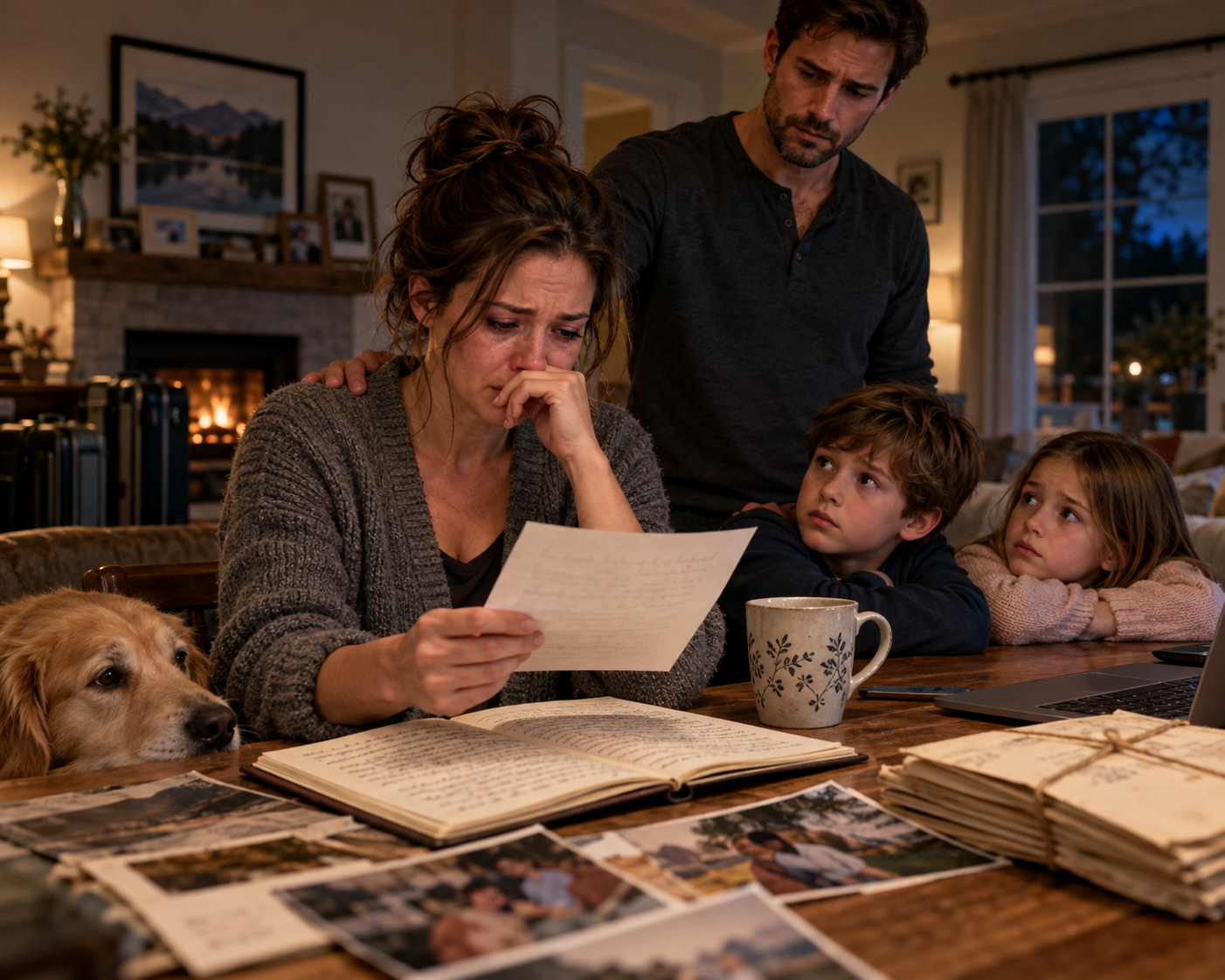
The envelope stayed on the dining table long after the lawyer left.
I could have put it away.
Instead, I sat there looking at it until Sarah finally came downstairs.
She was wearing the old sweater she usually saved for cold mornings.
"You're still here?"
I nodded.
She pulled out the chair beside me.
For a while, neither of us spoke.
The house had gone quiet, but I could still hear the clock in the hallway.
I looked at the envelope.
"I thought he blamed me for everything."
Sarah rested her hands on the table.
"Did he?"
I shook my head.
"No."
The answer came easily.
Understanding it was harder.
I had spent years preparing myself to defend my decisions whenever my father's care became a subject of conversation.
I had explanations ready for everything.
The bills were real.
The medicine was expensive.
The boys needed space.
Sarah needed rest.
I needed to keep working.
None of those things had changed.
What had changed was the way I saw them.
My father had understood the pressure I carried.
He had noticed the things I sacrificed.
Yet he had never demanded that I sacrifice them.
I had made that part of the story myself.
Sarah touched the envelope with one finger.
"He knew you loved him."
I stared at the table.
"Then why did I make him feel like he didn't belong here?"
She took a breath before answering.
"I don't think you meant to."
That wasn't the same as saying I hadn't done it.
I knew the difference.
"I complained about him."
"Yes."
"I made him feel guilty for needing help."
Sarah didn't answer immediately.
Sometimes her silence was the most honest thing she could give me.
Finally, she said, "There were days when he was afraid to ask for anything."
I closed my eyes.
I had seen it happen.
My father would stand near the kitchen doorway and wait until I noticed him.
If I was busy, he would return to his room.
Sometimes I asked what he wanted.
Other times, I told him I would be with him in a minute.
Then I forgot.
He learned to ask Sarah instead.
I had noticed that, too.
I had even felt relieved that she was handling it.
Looking back, that word alone made me ashamed.
Relieved.
As if my father were another task I could pass to someone else.
Sarah folded her arms on the table.
"He didn't want to cause trouble."
"He was my father."
"I know."
I looked at her.
She wasn't trying to hurt me.
She was telling me something I should have understood years earlier.
Being my father didn't make him immune to embarrassment.
It didn't make him immune to loneliness.
And it didn't mean he stopped needing kindness when he became dependent on me.
I rubbed my face with both hands.
"I thought I was doing what I had to do."
"You were trying to take care of everyone."
"That doesn't excuse how I acted."
"No," she said. "It doesn't."
Her answer was quiet.
It was also fair.
I had spent too long expecting people to understand my intentions while refusing to examine the effects of my actions.
I wanted Sarah to recognize how hard I had worked.
I wanted my sons to understand why we couldn't afford everything they wanted.
I wanted my father to appreciate what his care required.
But I had rarely stopped to ask whether any of them felt appreciated by me.
The clock struck midnight.
Sarah glanced toward the hallway.
"Your father used to sit up and listen to that clock."
I looked toward the doorway.
"He said it helped him know what time it was when he couldn't sleep."
She smiled faintly.
"He told me that sometimes he listened because it reminded him of when you were little."
I turned toward her.
"What do you mean?"
"He said you used to come downstairs whenever it struck twelve."
I remembered those nights.
I had been a child who was afraid of the dark.
My father would find me standing near the stairs and carry me back to bed.
Sometimes he stayed until I fell asleep.
Sometimes he sat in the chair beside my bed, his hand resting on the blanket.
I hadn't thought about those nights in years.
"He remembered that?"
Sarah nodded.
"He remembered a lot."
I looked down at my hands.
My father had remembered the things I had done as a child.
He had remembered the way I struggled when I first started working.
He had remembered how I tried to provide for my own family.
And I had remembered mostly the things he needed from me.
The realization sat between us.
Sarah reached for the envelope and moved it away from the edge of the table.
"Don't let his letter become another thing you feel guilty about and then put away."
I looked at her.
"What should I do with it?"
"Read it again when you're ready."
She stood and walked toward the stairs.
At the doorway, she turned back.
"And talk to the boys."
Then she left me alone.
I remained at the table until the first light appeared through the kitchen window.
I didn't open the envelope again.
I didn't need to.
I could still hear every sentence.
I had wanted my father to understand what I had given up.
He had understood.
Now it was my turn to understand what he had endured.
The next morning, I found the boys in their bedroom.
One was sitting on the floor beside his bed.
The other was trying to find a clean shirt in a drawer that had become too full.
They both looked up when I entered.
"Can we talk?"
My oldest son nodded.
His brother stopped searching through the drawer.
I stood near the door, suddenly unsure what to do with my hands.
I had given them instructions their entire lives.
I had explained rules.
I had corrected mistakes.
I had told them what they needed to understand.
But I had never found it so difficult to begin a conversation.
"I want to ask you something."
Neither boy spoke.
"Did Grandpa ever make you feel like you had to give things up because of him?"
My younger son looked at his brother.
That brief glance told me there was an answer they had already discussed.
My oldest son finally spoke.
"Sometimes."
I nodded.
I didn't interrupt.
He looked down at his hands.
"But he didn't ask us to."
That was the part I had missed.
My father hadn't demanded that the boys share their space.
He hadn't complained about the room.
He had thanked them whenever they helped him carry something or made room for him at the table.
I had been the one who reminded them that Grandpa needed extra help.
I had been the one who talked about the inconvenience.
The boys had simply listened.
"I'm sorry," I said.
My younger son looked at me.
"For what?"
"For making you feel like loving someone was supposed to be a burden."
He didn't answer.
Neither did his brother.
I couldn't blame them.
An apology wasn't a magic key that opened every locked door.
I had to give them time to decide what my words meant.
I sat on the edge of the bed.
"I was worried about money. I was tired, and I was scared that I couldn't give you everything you needed."
My oldest son nodded slowly.
"I know, Dad."
"But I handled it badly."
He looked at me.
I held his gaze.
"I shouldn't have made you feel guilty for the things we did for Grandpa."
My younger son moved closer to his brother.
For a moment, I thought he might cry.
Instead, he asked a question that stayed with me long after I left the room.
"Do you think Grandpa knew we loved him?"
I swallowed.
"Yes."
I thought about the letter.
"I know he did."
My son nodded.
Then he returned to his drawer.
The conversation was over.
There was no embrace.
No sudden promise that everything would be different.
But I left the room knowing that I had finally asked my children how they felt instead of assuming I already knew.
It wasn't enough to repair the past.
It was a beginning.
Click here to continue reading: PART 6: My Sons Remembered Their Grandfather Differently Than I Did, and Their Small Memories Showed Me What My Anger Had Hidden
I Thought My Father Had Taken Too Much From My Family Until One Letter Forced Me to Face What I Had Done
Part 5 of 20