Six months after Christmas Eve, the company felt different.
Not smaller.
Cleaner.
The offices were the same.
The projects continued.
Paychecks went out.
Contracts were signed.
But the atmosphere had changed.
There were no family meetings disguised as business meetings.
No relatives wandering into departments they didn't manage.
No unexplained expenses.
No one laughing about my old truck.
Most importantly, Sophie could walk through the building without wondering whether she belonged.
One morning, she stood beside me in the lobby.
A new sign had been installed.
Whitaker Construction & Home Solutions.
Underneath were three words.
Integrity.
Family.
Future.
She read them quietly.
“Did you choose those?”
“Yes.”
“Why?”
“Because I learned what happens when one of them disappears.”
She looked at me.
“Which one?”
“All three.”
She smiled.
That afternoon, I received confirmation that the criminal investigation had concluded.
Martin had been convicted through the plea agreement.
The stolen money was being recovered through court orders.
His consulting companies were gone.
His reputation was gone.
But I felt no triumph.
The strange thing about justice was that it didn't always feel like victory.
Sometimes it just felt like the end of a long noise.
I signed the final company documents and put down my pen.
Ethan entered.
“It's finished.”
I looked up.
“What is?”
“The financial case.”
“All of it?”
“Yes.”
He placed a folder on the desk.
“There's one more thing.”
I opened it.
A letter from the prosecutor.
It confirmed that several employees had been cleared.
I smiled.
“Good.”
Ethan looked at me.
“You're really not celebrating?”
“No.”
“Why?”
“Because too many people were hurt.”
He nodded.
“Fair.”
After he left, I looked at the old photograph of my company.
The first office.
The first employees.
The first project.
I had started it because I wanted financial independence.
Over time, it became something larger.
It gave people jobs.
It built homes.
It funded scholarships.
It became a place where Sophie could see that work was not about impressing people.
It was about building something that remained after you left the room.
My phone rang.
Claire.
I almost ignored it.
Then I answered.
“Hello.”
“Daniel?”
“Yes.”
“Can I ask you something?”
“Go ahead.”
“Did you ever hate me?”
I looked through the window.
“No.”
She was silent.
“I thought you did.”
“I was hurt.”
“I know.”
“I was angry.”
“I know.”
“But I never hated you.”
She breathed out.
“Thank you.”
I didn't say anything.
“I've started counseling.”
“That’s good.”
“I've also started volunteering.”
“Where?”
“A nonprofit.”
“What kind?”
“Helping women who are leaving controlling relationships.”
I closed my eyes.
“That sounds useful.”
“It is.”
She hesitated.
“I finally understand what my father did.”
“What?”
“He taught me that love meant obedience.”
I listened.
“And when I disagreed, I felt guilty.”
She paused.
“I thought keeping him happy was the same as keeping everyone safe.”
“It wasn't.”
“I know.”
There was a long silence.
Then she said, “I don't expect you to come back.”
“I know.”
“I don't expect Sophie to forget.”
“She won't.”
“I just wanted you to know I'm trying.”
“I believe you.”
She cried softly.
“Thank you.”
We ended the call.
I sat alone for several minutes.
Then I deleted the number from my favorites.
Not because I hated her.
Because the past didn't need to occupy the center of my life.
The divorce became final two months later.
Claire received everything legally belonging to her.
Her personal accounts.
Her property.
Her retirement.
Her belongings.
I did not fight her.
I could have made the process ugly.
I didn't.
Sophie deserved better than parents who turned a courtroom into another battlefield.
After the final hearing, Claire stood outside the courthouse.
“Daniel.”
I stopped.
She looked nervous.
“Thank you.”
“For what?”
“For being fair.”
I nodded.
“Take care of yourself.”
She smiled sadly.
“You too.”
Then we went separate ways.
That night, Sophie asked whether it was over.
“Yes.”
“Does it feel strange?”
“Yes.”
“Are you sad?”
I thought about it.
“Yes.”
She nodded.
“Me too.”
We sat on the porch.
Snow began falling.
Sophie pulled her coat tighter.
“Dad?”
“Yeah?”
“Do you remember when you asked me which home I wanted to go to?”
“Yes.”
“I didn't understand what you meant.”
“What do you understand now?”
She looked at the house.
“I think home isn't the building.”
“No.”
“It's who you feel safe with.”
I smiled.
“That's right.”
She leaned against me.
For several minutes, we watched the snow.
Then she asked the question I knew would eventually come.
“Why did you hide the company from everyone?”
I took a breath.
“Because I wanted to know who they were.”
“Did you learn?”
“Yes.”
“Was it worth it?”
I looked at her.
“No.”
She frowned.
“Then why?”
“Because I learned something else.”
“What?”
“That hiding can protect you from people who want your money, but it can also keep people you love from knowing the truth.”
She nodded.
“Like Mom.”
“Yes.”
“Would you do it differently?”
I thought about the first office.
The old truck.
The quiet dinners.
The years of pretending.
“Yes.”
“What would you change?”
“I would tell your mother the truth.”
“Earlier?”
“Much earlier.”
She nodded.
“But then you might have known whether she loved you.”
I looked at her.
“That would have been worth knowing.”
She was quiet.
Then she smiled.
“You still built something good.”
“I tried.”
“You did.”
I put my arm around her.
The next spring, we opened the Whitaker Construction scholarship and apprenticeship center.
Sophie helped choose the first group of students.
She insisted we include students who couldn't afford tools.
So we created a tool-lending program.
She also wanted mentorship.
We added that too.
“You're turning this into your own project,” I told her.
She smiled.
“Maybe.”
“You're sixteen.”
“Almost seventeen.”
“That changes everything.”
She laughed.
Years earlier, I had worried about her seeing herself through other people's eyes.
Now she was learning to define herself.
That mattered more than the company.
More than the money.
More than what Martin ever thought of me.
One afternoon, a reporter asked me about the entire story.
“Do you regret being underestimated?”
I thought about it.
“No.”
“Why not?”
“Because being underestimated taught me what people reveal when they think you have nothing.”
The reporter asked whether I wanted to send a message to the Collins family.
I shook my head.
“No message.”
“None?”
“No.”
“Why?”
“Because my life isn't a response to theirs.”
That was the first time I realized I was truly free.
Not when Martin was charged.
Not when the company records became public.
Not when the divorce was finalized.
Here.
In the simple refusal to keep looking backward.
Three years later, Sophie graduated high school.
I sat in the audience.
When her name was called, she crossed the stage.
She had grown taller.
Stronger.
More confident.
She found me in the crowd.
I stood.
I clapped harder than anyone around me.
Afterward, she ran toward me.
“Dad!”
I hugged her.
“I knew you could do it.”
“You cried.”
“I did not.”
“You absolutely did.”
“Snow was getting in my eyes.”
She laughed.
Then her expression became serious.
“Dad?”
“Yeah?”
“Do you remember that night?”
I knew exactly which night.
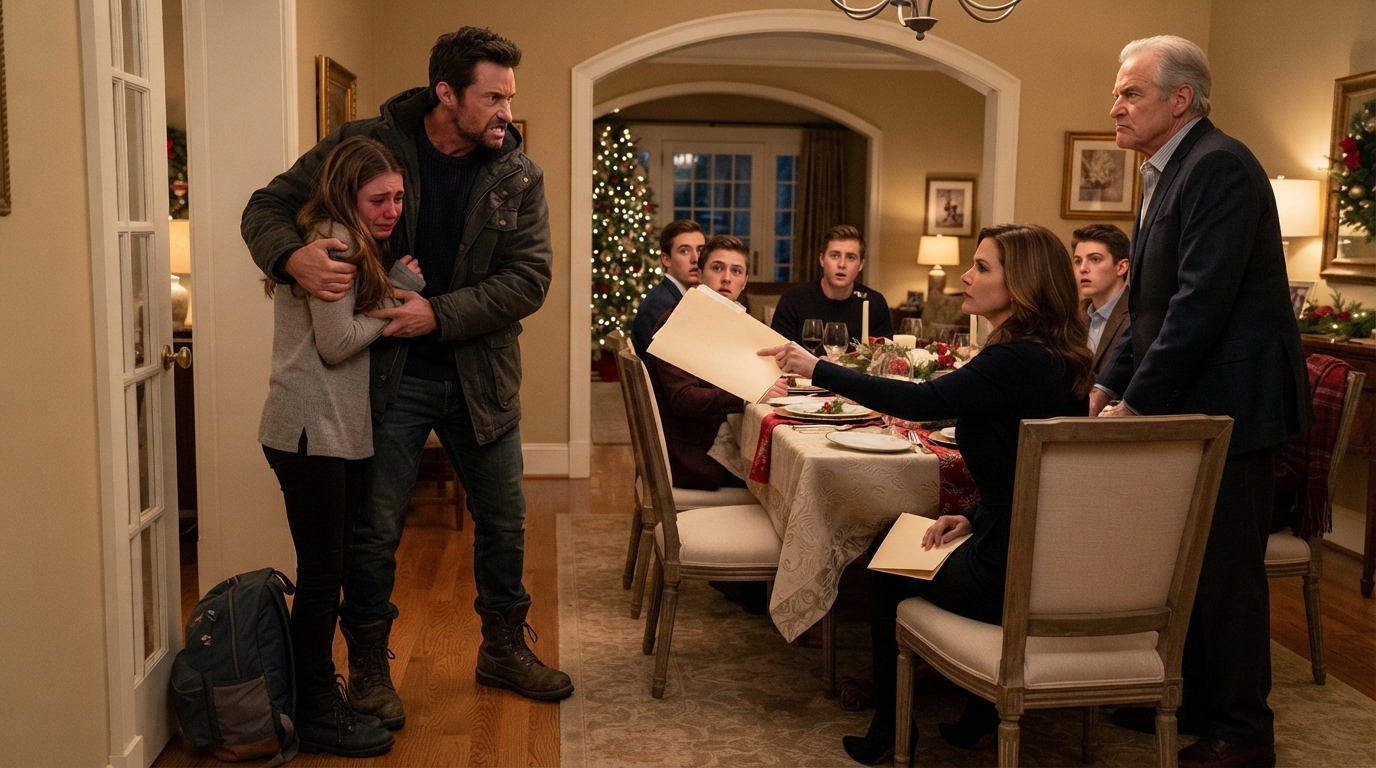
Christmas Eve.
The snow.
The porch.
The divorce papers.
The moment she asked which home we were going to.
“Yes.”
She looked at me.
“I used to think it was the worst night of my life.”
I waited.
“Now I think it was the night we stopped pretending.”
I felt my throat tighten.
She continued.
“You stopped pretending they were your family.”
She smiled.
“And I stopped believing I had to earn their love.”
I hugged her again.
“You never had to.”
“I know.”
She held me tightly.
“Thank you for choosing me.”
I closed my eyes.
“I'll always choose you.”
Click here to continue reading: PART 20: Years After the Christmas Eve That Changed Everything, My Daughter Asked One Last Question About the Man Everyone Once Thought Was Nothing
My Daughter Called Me From the Cold, and Within Minutes I Knew the Family I Had Protected Was No Longer Worth Protecting
Part 19 of 20