I cried during the entire ride back to Susan's house.
That surprised me.
I had expected to feel powerful after confronting my family.
Perhaps even satisfied.
Instead, I felt exhausted.
There was no pleasure in discovering that people I loved had behaved badly.
There was no victory in watching my father learn what my mother and brother had concealed.
And there was certainly no happiness in knowing that James had faced their financial demands without telling me.
When I arrived, Susan opened her front door.
She took one look at my face.
“Come inside.”
I followed her into the kitchen.
She didn't immediately ask what had happened.
She made tea.
Then she sat opposite me.
I told her about the conversation.
I explained Troy's proposal.
I described Dad's reaction when he read the correspondence.
Susan listened quietly.
When I finished, she looked at me.
“You didn't agree to anything?”
“No.”
“Good.”
I stared at my cup.
“Then why do I feel terrible?”
She considered her answer.
“Because they're still your family.”
I nodded.
That was exactly it.
I hadn't stopped loving them simply because I had discovered something painful.
I had simply stopped believing that loving them required accepting everything they did.
The distinction was difficult.
I suspected it would remain difficult for a long time.
That evening, Dad sent me a message.
He apologized again.
He said he wanted to speak privately when I felt ready.
There was no mention of money.
No defense of Troy.
No request for immediate forgiveness.
I appreciated that.
I replied that I needed some time.
He answered with three words.
“I understand, Amelia.”
I placed my telephone on the table.
Mom didn't contact me that evening.
Neither did Troy.
The silence was uncomfortable.
But it wasn't unfamiliar.
I had experienced enough silence since James died to understand that not all of it meant the same thing.
Some silence represented loss.
Some represented anger.
And some provided room to think.
A few days later, I received confirmation that the necessary inspections of the main house had been completed and that I could begin making arrangements to return.
The garage remained inaccessible while the remaining work continued.
There would be cleaning, repairs, and insurance matters to address.
But the house itself had survived.
Susan offered to walk over with me.
I accepted.
The morning was cold.
We stood outside the front door.
For a moment, I couldn't bring myself to turn the key.
The last time I had left through that door, emergency lights had filled the street.
I had been terrified that everything James and I owned would disappear.
Susan waited patiently.
Finally, I opened it.
The familiar rooms appeared before me.
There was an unpleasant smell lingering near the back of the house.
Some furniture had been moved during the assessments.
But the living room remained recognizable.
James's armchair stood beside the window.
His reading glasses were still on the side table.
I walked toward them.
The bent arm was exactly as I remembered.
I picked them up.
Then I sat down.
Susan remained near the doorway.
“Would you like a moment alone?”
“Yes, please.”
She stepped outside.
I looked around the room.
There were photographs on the walls.
A blanket James had disliked but used every winter.
A small mark on the floor where we had dropped a bookshelf while rearranging the furniture.
Seven years of ordinary memories.
I had spent days thinking about the financial arrangements James had established.
Millions of dollars.
Ownership interests.
Charitable commitments.
Legal documents.
But none of those things felt as valuable as the bent reading glasses in my hand.
I placed them gently on the table.
Then I walked toward the bedroom.
James's clothes were still hanging in the wardrobe.
His slippers rested beneath the bed.
I opened a drawer.
There were socks folded in the untidy way he preferred.
I sat on the edge of the mattress.
“I miss you.”
The words came out quietly.
I had said them countless times since his death.
I would probably say them countless times more.
After a while, Susan knocked at the front door.
I let her inside.
Together, we began organizing the essential things I needed.
We checked the kitchen cupboards.
We made a list of items that required cleaning.
We discussed which rooms I could comfortably use while the repairs continued.
She asked whether I wanted to stay at her house a little longer.
I considered it.
Then I nodded.
“Just until things are properly arranged here.”
There was no need to prove that I could live alone immediately.
I had already spent enough time proving things to people who weren't paying attention.
Later that afternoon, Daniel visited the property.
He looked at the damaged garage from a safe distance.
He explained that he would coordinate the estate-related questions with the other professionals while I dealt with the immediate household arrangements.
I showed him James's home office.
The photograph remained on the desk.
So did the computer.
Daniel asked whether I had located any additional records.
I told him I hadn't searched thoroughly.
He suggested we arrange a proper inventory of relevant documents rather than rush through everything while I was emotional.
That made sense.
Before leaving, he mentioned that James's colleagues were organizing a memorial gathering.
They wanted to celebrate his contribution to the engineering project and acknowledge his death.
They hoped I would attend if I felt comfortable.
I looked at the photograph.
“I think I'd like that.”
Daniel nodded.
“I'll let them know.”
He paused near the door.
“Have you had any further financial requests?”
I told him about the meeting with my family.
He listened carefully.
Then he reminded me that I could direct any inappropriate requests away from myself and toward professional channels when necessary.
I didn't have to repeatedly explain my decisions.
I was grateful.
There were practical protections I could establish without turning every family conversation into an argument.
After Daniel left, I received another message from Troy.
It was considerably longer than his previous messages.
He claimed that I had humiliated him in front of our parents.
He accused Daniel of encouraging me to distrust my family.
He said that James's refusal had been unreasonable and that my decision to continue refusing was even worse.
Near the end, he wrote that he hoped I would remember who had been there for me before the money arrived.
I read that sentence several times.
Who had been there.
I pictured the airport floor.
The strangers walking around my husband's scattered clothes.
The rain.
The empty house.
I couldn't believe how differently Troy remembered our relationship.
Perhaps he genuinely believed that being related to me counted as being there.
I put down the telephone.
Then I opened the message again.
I typed a short response.
“I will not be funding your business. Please stop asking.”
I sent it.
There was no additional explanation.
No apology.
No invitation to negotiate.
He responded almost immediately.
“You're making a huge mistake.”
I didn't answer.
I returned to the office and began sorting the papers Daniel had identified as appropriate for me to review.
There were notebooks containing diagrams I couldn't understand.
Receipts.
Project schedules.
Pages of calculations.
Then I found a notebook James had used for household reminders.
It was blue, with worn corners and several loose pages.
Inside were ordinary tasks.
Replace kitchen light.
Get reading glasses repaired.
Book anniversary dinner.
Call Daniel.
I smiled at the entry about his glasses.
Apparently, he had intended to repair them after all.
Near the back of the notebook was another list.
It was headed Things to Do After the Agreement.
I stopped.
The first item concerned completing the arrangements with Daniel.
The second mentioned meeting his colleagues to discuss their charitable commitments.
The third was about our house.
Replace old garage.
I stared at the words.
James had been planning to replace the very building that had burned down.
He had apparently intended to deal with the equipment and the aging structure once the agreement was complete.
I turned the page.
There were more plans.
Take Amelia somewhere quiet.
Finish kitchen.
Stop working every Sunday.
I began laughing through my tears.
James had finally intended to stop working on Sundays.
For years, I had complained that his idea of a relaxing weekend usually included opening his laptop.
He always promised that things would improve once the project reached its next milestone.
Now the milestone had arrived.
And he hadn't lived to enjoy it.
At the bottom of the page was one final entry.
Tell Amelia she doesn't have to worry so much anymore.
I pressed my hand against the notebook.
I didn't know how long I sat there.
There was nobody to witness it.
Nobody to reassure.
Nobody to pretend for.
I simply allowed myself to miss him.
Eventually, I closed the notebook.
I placed it beside the cream-colored envelope.
Both contained James's handwriting.
Both revealed things he had intended to do for me.
One reminded me to protect my independence.
The other reminded me to enjoy whatever life remained.
I wanted to honor both.
The following week, Michael contacted me about the memorial gathering.
He explained that several members of the engineering team would speak.
There would also be representatives from organizations familiar with their emergency communication work.
He emphasized that it wasn't intended to become a public spectacle.
It was an opportunity for people who knew James professionally to remember him.
I agreed to attend.
Michael asked whether I wanted to invite relatives.
I hesitated.
Then I told him I would decide.
That evening, Dad called.
I answered.
His voice sounded uncertain.
“Is this a bad time?”
“No.”
He asked how the house repairs were progressing.
I explained the situation.
He offered to help with cleaning or practical work if I wanted assistance.
There was no mention of the acquisition.
I appreciated that.
Then he said something I hadn't expected.
“I keep thinking about what you wrote in the chat.”
I knew which message he meant.
“My flight lands at five?”
“Yes.”
He became quiet.
“I could've gone. Your mother could've had dinner with the Hendersons without me.”
I listened.
“I just didn't want an argument.”
His honesty hurt.
But I preferred it to an excuse.
“Dad, avoiding an argument with Mom meant leaving me alone.”
“I know.”
I heard him exhale.
“I've been doing that sort of thing for a long time.”
I didn't know how to respond.
He was finally recognizing something I had understood since childhood.
He had often chosen peace inside his marriage at the expense of speaking up when something wasn't right.
I had paid the price for that silence more times than I could remember.
“I'm glad you're thinking about it,” I told him.
“Can I make things better?”
I looked at James's notebook.
“Not all at once.”
“I understand.”
“I'm not asking you to do something dramatic. I just need you to be honest with me.”
“I can try.”
We spoke for a little longer.
Before ending the call, I told him about James's memorial.
I said he could attend if he genuinely wanted to remember James.
He thanked me.
Afterward, I considered inviting Mom.
I considered Troy too.
Ultimately, I sent them both the basic information about the gathering.
I made it clear that it was a memorial, not a discussion about the company agreement or the estate.
Mom responded first.
She said she would attend.
Troy didn't answer.
I didn't chase him.
On the evening before the memorial, I returned to the house.
The living room had been cleaned.
The unpleasant smell was gradually disappearing.
I stood beside James's armchair.
For the first time, I considered moving some of his belongings.
Not throwing them away.
Not erasing him.
Simply allowing the house to become a place where I could continue living.
I picked up his coffee mug and washed it.
Then I dried it carefully and returned it to the cupboard.
It was such a small task.
Yet I cried while doing it.
I hadn't wanted to move that mug because moving it meant accepting that he wouldn't return to finish his coffee.
Now I understood that leaving it untouched wouldn't bring him back either.
I placed his reading glasses inside their case.
I kept the case on his desk.
The blue notebook went into a drawer with important personal documents.
The cream-colored envelope remained in my handbag.
Finally, I opened the damaged suitcase from the airport.
His clothes were still inside.
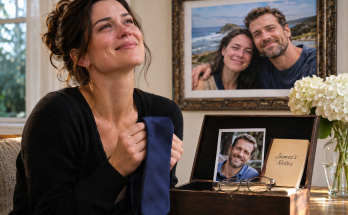
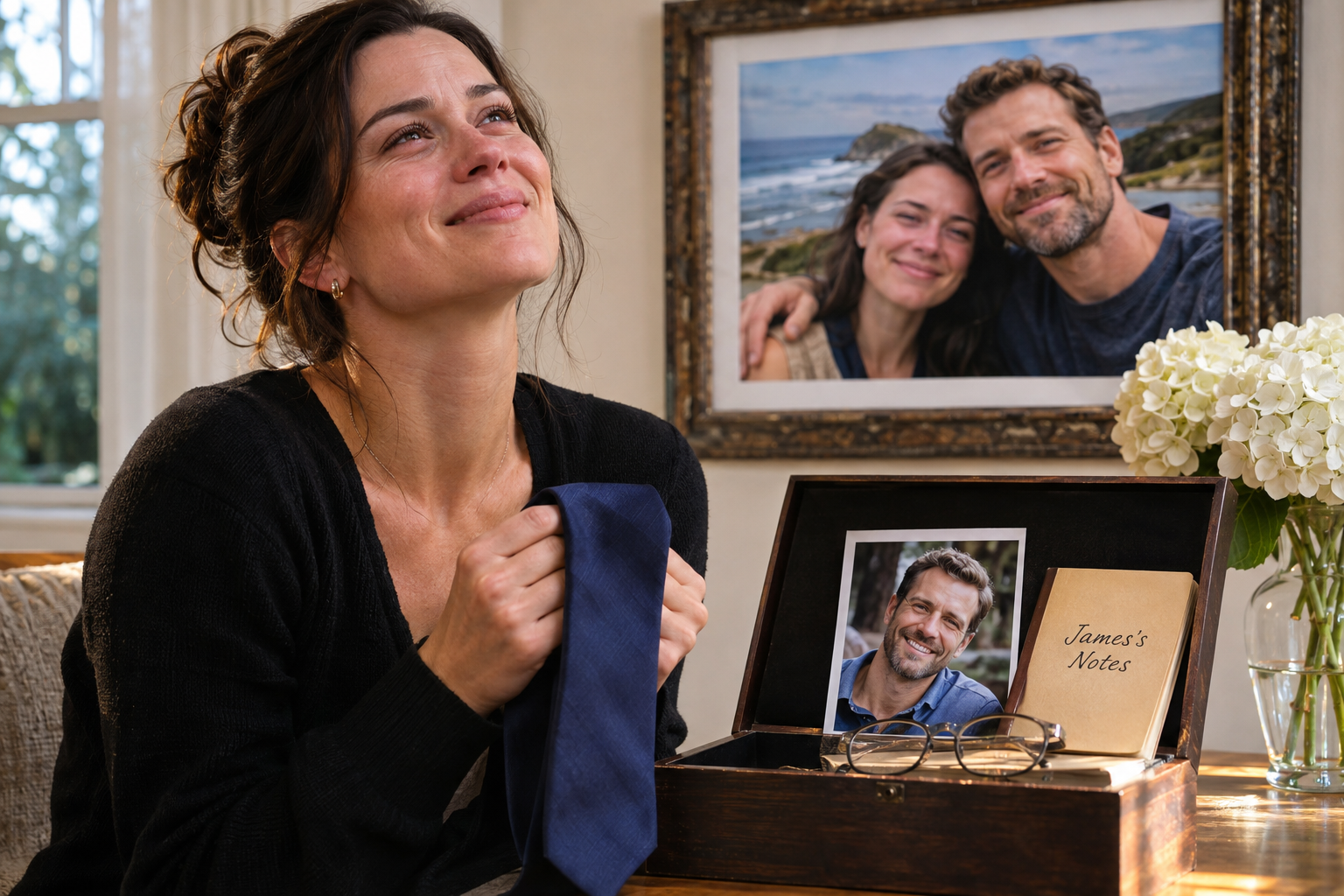
I lifted the navy tie.
I had decided to take it to the memorial.
James wouldn't be there wearing it.
But I could carry something that reminded me of him as a husband rather than an engineer whose death had appeared on television.
I folded the tie carefully.
Then I looked at my telephone.
The family group chat was still muted.
I opened it one last time that evening.
The original exchange remained visible.
My request.
Troy's refusal.
Mom's criticism.
Dad's warning about the rain.
And my response.
“No problem.”
I had written those words because I didn't want to create an inconvenience.
Because I didn't want anyone to feel guilty.
Because I had learned to make my own disappointment sound harmless.
I wasn't going to do that anymore.
I closed the conversation without deleting it.
There was no need to erase what had happened.
There was only a need to stop pretending it hadn't hurt.
Before leaving the house, I stood in the doorway of James's office.
His photograph caught the remaining daylight.
I looked at his smile.
Tomorrow, people would speak about his achievements.
They would discuss his work and the difference it could make.
I was proud of all of that.
But I wanted them to know something else.
James had been a good husband.
A patient man.
Someone who understood that protecting another person's dignity mattered more than protecting his own reputation.
I couldn't change the fact that he had died.
I couldn't give him the future he had written about in his notebook.
But I could protect what he had left me.
Not merely the money.
The freedom to live without constantly apologizing for my own needs.
I switched off the office light.
Then I carried his navy tie outside.
Susan was waiting on her porch.
I walked toward her.
For once, I wasn't embarrassed to accept the company of someone who genuinely wanted to be there.
Click here to continue reading: PART 9: At the Memorial for James, My Family Heard What He Had Done for Other People and Finally Faced the Consequences of Their Own Choices
I Had Just Buried the Man I Loved, and All I Wanted Was to See a Familiar Face Waiting at the Airport
Part 8 of 10