
As October moved along, the harvest kept demanding our attention.
The farm didn't change because I had learned something in town.
There were still long days.
There were still decisions to make.
There were still mornings when I wanted another hour of sleep.
Grandpa continued with the same routine he had followed for years.
I continued helping him.
Sometimes we talked about the bank.
Mostly, we didn't.
The encounter had become part of my memory, but it hadn't become the center of Grandpa's life.
That seemed important.
I had been tempted to treat the day as a turning point for everyone involved.
I imagined Brittany thinking differently about customers.
I imagined Rick reconsidering his approach.
I imagined the woman in the camel coat remembering the old farmer she had laughed at.
Perhaps some of those things happened.
I had no way to know.
The bank continued operating.
The customers came and went.
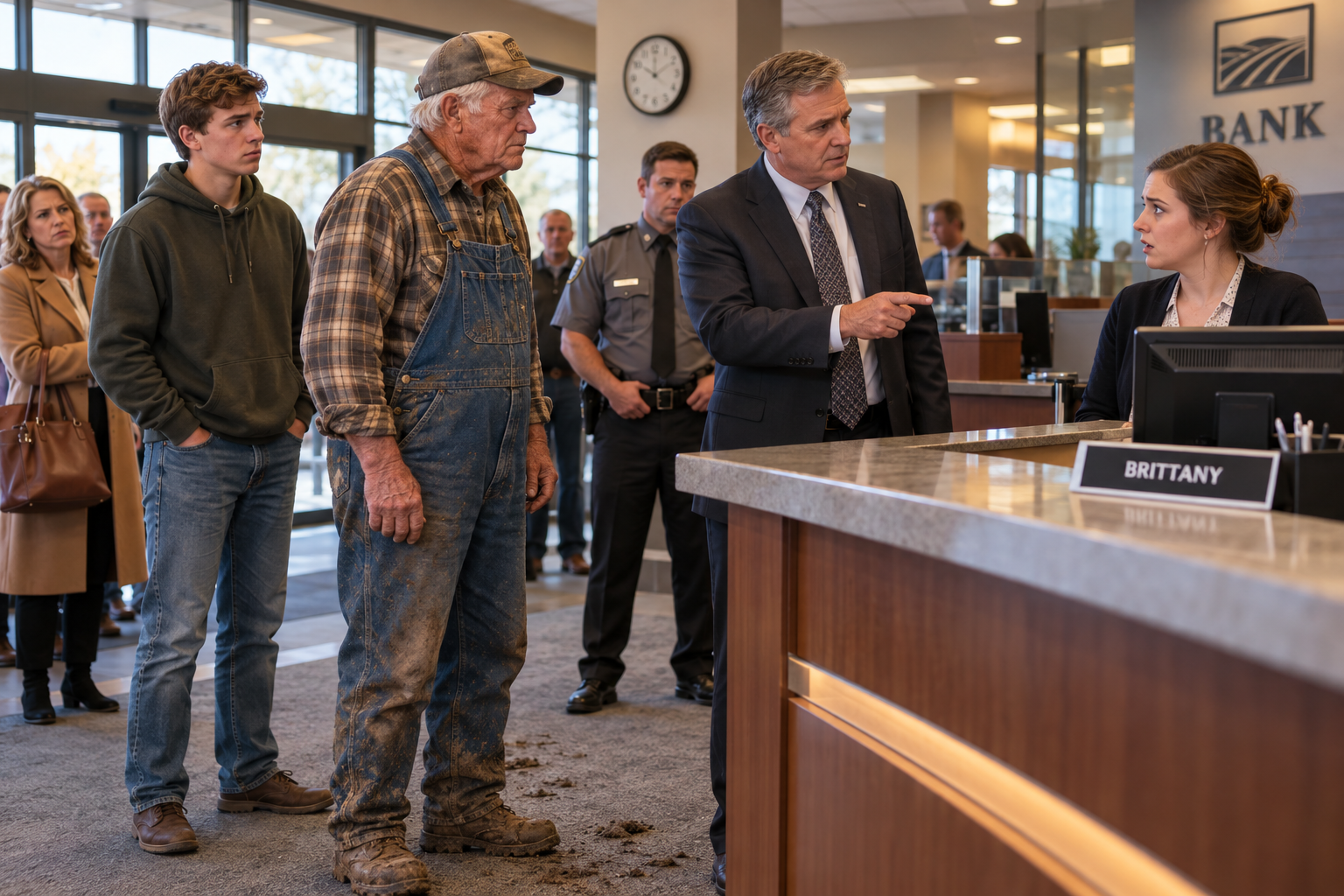
The carpet would eventually be cleaned.
The marks from Grandpa's boots would disappear.
Nothing about the building needed to change for the story to matter.
I began to understand that the same was true of the loan.
The bank didn't need to display Grandpa's name for his contribution to have been real.
The people who worked there didn't need to mention him every day.
The town didn't need to remember his decision each time somebody walked through the doors.
He had signed the agreement.
His land had been part of the risk.
The branch had opened.
That history existed whether anyone talked about it or not.
I had spent too much time thinking that a good deed needed an audience.
Maybe that was because I was young.
Maybe it was because I wanted reassurance that the things I did would eventually mean something.
Grandpa had offered a different example.
He had helped when he believed help was needed.
He had accepted the risk.
Then he had returned to his own responsibilities.
There was no evidence that he had spent the following decades waiting for gratitude.
He hadn't used the loan to make himself important.
He hadn't told me about it to shape my opinion of him.
I had learned about it because a teller had treated him unfairly and a manager had chosen to explain the history.
The circumstances had made the story visible.
They hadn't made the contribution valuable for the first time.
I thought about that whenever I saw the bank from the road.
It looked ordinary.
That was almost comforting.
The building didn't announce what had gone into making it possible.
It simply stood there, serving the town.
I wondered how many other things in Marlow had been built through decisions people no longer remembered.
A person had lent money.
Someone had guaranteed a loan.
A family had donated land.
A worker had stayed late to finish a job.
A neighbor had helped another neighbor through a difficult season.
Years passed.
The people involved moved on.
The results remained.
Grandpa's decision belonged to that kind of history.
It was not less meaningful because he hadn't talked about it.
It was not more meaningful because Tom had explained it in front of a room full of people.
The decision had mattered when Grandpa made it.
That was enough.
I also realized that the manager's reaction had taught me something about recognition.
Tom had known the history.
He had understood what Grandpa's signature meant.
When he saw the teller dismissing him, he had corrected the mistake in the clearest way he could.
He had made the invisible contribution visible.
I was grateful for that.
Without Tom, I might never have learned about the loan.
But I hoped that next time, Tom would not have to explain a person's past before the people around him treated that person properly.
That was the change I wanted most.
Not a plaque.
Not a public apology that everyone could admire.
Not a ceremony celebrating a man who had never asked for one.
Just better treatment the next time somebody walked through those doors.
Someone wearing work boots.
Someone carrying a worn bag.
Someone who looked tired or nervous or out of place.
Someone whose history nobody knew.
That person should not have to be connected to the bank's founding to receive attention.
I thought about Grandpa standing at the counter.
He had not asked to be treated as a benefactor.
He had asked to be treated as a customer.
That was the simplest part of the whole story.
It was also the part most likely to be forgotten if people focused only on the revelation about the loan.
I didn't want to forget it.
I didn't want to turn Grandpa's life into a list of reasons he deserved respect.
He deserved it because he was a person.
The rest of his story made him more familiar to me.
It did not create his worth.
One evening, I stood near the edge of the farm and watched the light fade over the fields.
Grandpa was nearby, finishing up for the day.
His cap was pulled low.
His boots were muddy.
He looked exactly as he had looked when he walked into the bank.
I smiled to myself.
I had learned more about him that October.
But I hadn't discovered a different man.
I had discovered how much of the same man I had failed to see.
And I understood, finally, why he had never needed to tell me about the loan.
He hadn't been keeping a secret that would make him important.
He had been living a life in which the work mattered more than the telling.
The bank could remember his name or forget it.
The town could talk about what he had done or move on to something else.
None of that could change the decision he had made in 1974.
None of it could change the man who had walked into the bank decades later and asked for the manager.
I went back inside.
Grandpa followed a little later.
We had another day of work ahead of us.
And that was where the story belonged now.
Not in a room full of people staring at him.
Not in a speech about his history.
In the ordinary life he had returned to, carrying the same quiet dignity he had brought into the bank.
Click here to continue reading: PART 17: As Harvest Drew Closer to Its End, I Began to Understand That the Man I Thought I Knew Had Never Needed Anyone’s Permission to Matter
The Morning My Grandfather Walked Into the Bank Looking Like Every Other Farmer in Iowa, Nobody Expected the Room to Change
Part 16 of 20


One Comment on “PART 16 – The Bank Never Had to Put Grandpa’s Name on a Wall for His Contribution to Matter, and I Finally Understood Why That Was Enough”