Evelyn Carter called three days later.
Emily almost let the phone ring out.
Then she answered.
“Emily.”
Evelyn's voice sounded different. Not sharp. Not commanding. Tired.
“What do you want?”
There was a long silence.
“I need to talk to you.”
“About Mark?”
“Yes.”
Emily stood beside the dining room window. “You should talk to your attorney.”
“I already have.”
“Then what is this?”
“I don't know,” Evelyn admitted. “Maybe I need to tell you something before the investigators find it themselves.”
That made Emily sit down.
“Come tomorrow.”
Evelyn arrived at ten.
She looked smaller than Emily remembered.
For years, Evelyn had entered rooms as if they belonged to her. That morning she stood on the porch holding her purse with both hands, waiting for Emily to open the door.
Emily stepped aside.
Evelyn walked in.
Neither woman mentioned the grocery store.
They didn't need to.
“I believed him,” Evelyn said.
Emily folded her arms. “I know.”
“No. You don't.”
Evelyn's eyes filled, but she didn't cry.
“I believed Mark because I wanted to believe my son had become the man he said he was.”
Emily said nothing.
“He told me NorthStar was struggling because your father had left everything tied up in restrictions. He said he was trying to modernize the company. He said you were emotional about the trust and didn't understand the business.”
Emily felt her jaw tighten.
“And you believed that?”
“Yes.”
“Why?”
“Because I wanted to.”
The honesty hurt more than an excuse would have.
Evelyn reached into her purse and removed several printed emails.
“Some of these came from Mark. Some were forwarded to me. I didn't understand what they meant at the time.”
Emily read them.
One message discussed Harbor Ridge.
Another mentioned “temporary parking of funds.”
A third referred to “keeping Emily outside the process until completion.”
Emily looked up.
“What did you do?”
Evelyn swallowed.
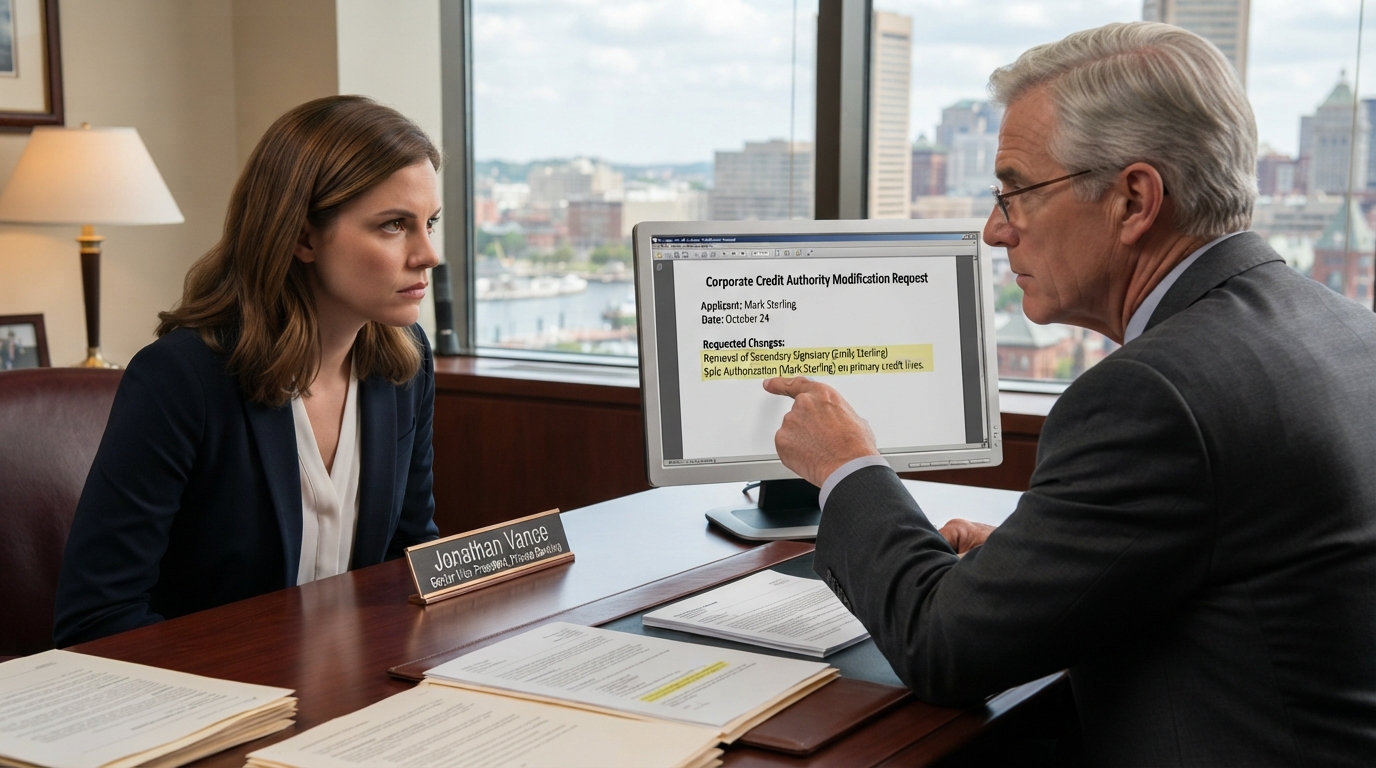
“I signed two documents.”
The room seemed to contract around them.
“What documents?”
“I don't know exactly. Mark said they were related to administrative authorization for EVC.”
Emily stared at her.
“You signed something without reading it?”
“I read parts.”
“Which parts?”
“The parts he showed me.”
“That isn't reading.”
Evelyn lowered her eyes.
“No.”
Emily felt anger rise, but underneath it was something colder.
“You helped him.”
“Yes.”
The answer came without resistance.
Evelyn looked toward the floor.
“I am not asking you to forgive me.”
“Good.”
“I know what I did.”
“No,” Emily said quietly. “I don't think you do.”
Evelyn looked up.
“You laughed when my card was declined.”
Her face changed.
“I remember.”
“You told me to know my place.”
“I know.”
“You were standing there while your son made me feel like I needed permission to buy groceries.”
Evelyn's voice broke.
“I was wrong.”
“You were not just wrong.”
Emily stood.
“You were helping him teach me that I had no control over my own life.”
Evelyn nodded slowly.
“Yes.”
The admission left the room silent.
Finally, Evelyn said, “I thought he was protecting the family.”
Emily shook her head.
“He was protecting himself.”
“I know that now.”
Evelyn left before noon.
Emily watched her walk down the driveway.
There was no reconciliation.
Not yet.
Perhaps there never would be.
But for the first time, Emily understood that Evelyn had not been the mastermind. She had been a willing participant who had chosen belief over evidence.
That distinction mattered legally.
It did not make the betrayal smaller.
That afternoon, the investigators delivered another report.
The report connected several EVC payments to expenses that had nothing to do with NorthStar's ordinary operations. Some had funded personal obligations. Others had been used to maintain the appearance that Harbor Ridge was a legitimate corporate partner.
One payment had covered a private debt.
Another had been used for legal fees.
Emily read the list without speaking.
Daniel sat across from her.
“How much can we recover?”
“Enough to matter,” he said. “Not enough to erase what happened.”
Emily nodded.
That was the truth she had to accept.
Money could be traced.
Assets could be recovered.
Companies could be restructured.
Trust could not be restored by accounting.
The next week, the board approved a new governance structure.
No single executive would again control financial transfers of that scale.
Transactions involving trust-connected assets would require independent review.
Major borrowing would require board approval.
The employee reserve would remain separate.
Blue Cedar would have its own oversight.
Emily's voting rights would remain protected through the family trust.
And Mark would have no operational authority.
When the vote was finished, the chairman looked at Emily.
“You're still willing to serve?”
Emily answered immediately.
“Yes.”
“Even after everything?”
She looked through the glass wall toward the employees outside.
“Especially after everything.”
A month later, Emily filed for divorce.
The paperwork was less dramatic than she had expected.
There were signatures.
Dates.
Property schedules.
Financial disclosures.
Legal language reducing years of marriage to pages of obligations and rights.
The house remained hers because it was protected under the existing ownership structure and the marital agreements surrounding the trust.
Mark's attorneys challenged portions of the arrangement.
They lost.
During the proceedings, Mark requested one private meeting.
Emily initially refused.
Then her attorney told her it might help settle remaining matters.
They met in a conference room with attorneys nearby.
Mark looked exhausted.
His expensive suit hung loosely from his shoulders.
For several seconds neither spoke.
“I didn't think it would go this far,” he said.
Emily looked at him.
“How far did you think it would go?”
“I thought I could fix the company.”
“You moved money.”
“I was trying to keep it alive.”
“You hid debt.”
“I was under pressure.”
“You tried to control my trust.”
Mark looked away.
“I thought if I had control, I could solve everything.”
Emily's voice remained steady.
“You didn't want control so you could save the company.”
Mark didn't answer.
“You wanted control because you were afraid of losing everything.”
His silence was enough.
She stood.
“That fear was never my responsibility.”
Mark looked up.
“Emily—”
She shook her head.
“Don't.”
He stopped.
There was a time when that single word would have terrified her.
Now it simply meant the conversation was over.
The investigation continued.
NorthStar survived.
But survival was no longer the goal.
The board wanted something stronger.
A company that could not be quietly manipulated by one person.
A structure where employees did not have to depend on the honesty of a single executive.
A system where the person holding legal authority could not secretly transfer the power of someone else.
Emily supported every change.
She spent long evenings reviewing reports, asking questions, learning details she had once assumed Mark handled for them.
It was exhausting.
It was also liberating.
One night, Daniel found her still working after nine.
“You should go home.”
Emily smiled faintly.
“I am home.”
He looked at her.
She gestured toward the office.
“I mean this.”
Daniel understood.
She was not talking about the building.
She was talking about the life she had finally stopped handing to someone else.
Click here to continue reading: PART 15: What the Records Remembered
The Card Was Declined Over Groceries, But My Husband’s Calm Confession Made Me Realize Something Much Worse Was Already Happening
Part 14 of 20