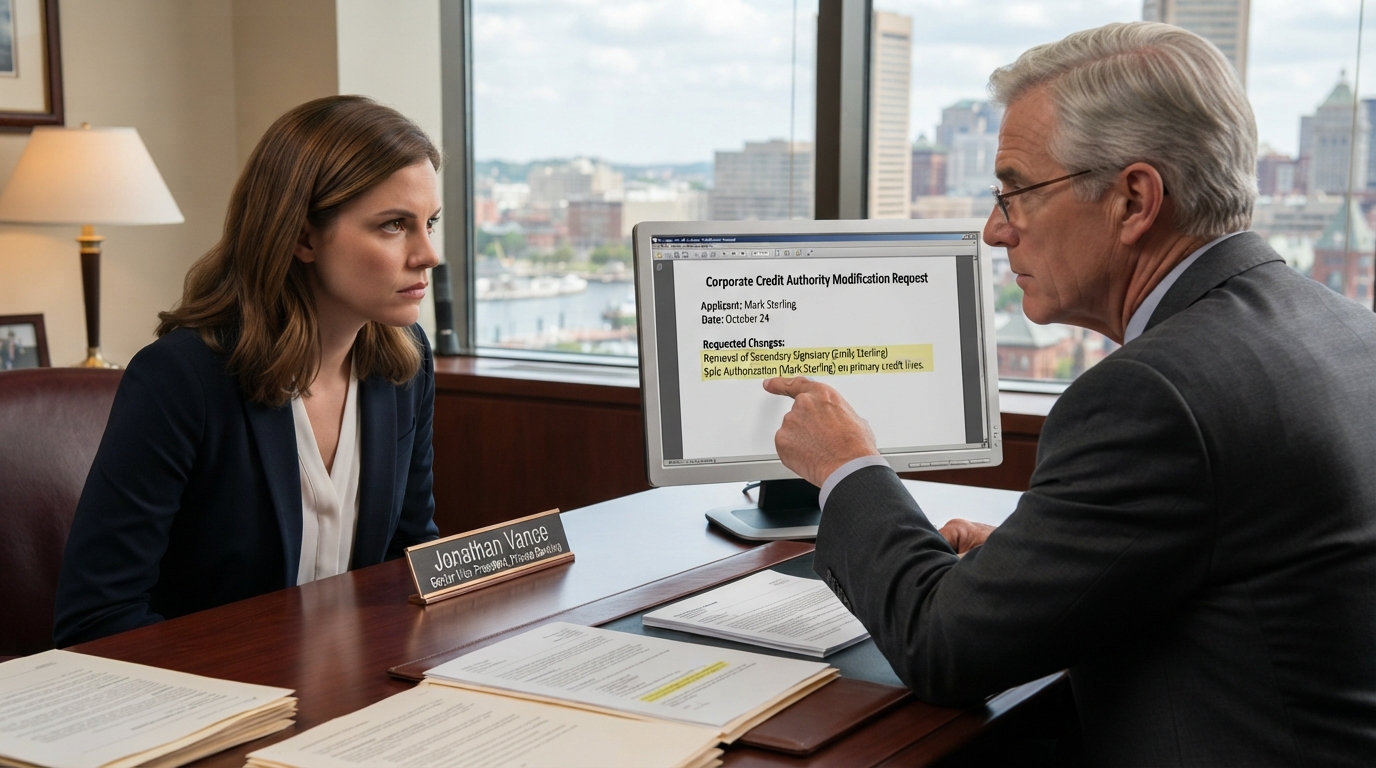
The audit took eleven days.
By the fourth day, I stopped asking whether the numbers could get worse.
They always did.
Not dramatically.
That would have been easier.
Instead, the problems appeared in small, deliberate pieces.
A consulting fee here.
A reimbursement there.
A vendor payment with no supporting invoice.
A loan that had been repaid through another loan.
A company vehicle assigned to a person who had never worked for NorthStar.
Each transaction looked insignificant by itself.
Together, they formed a pattern.
Rebecca and the forensic accountant worked from morning until late at night.
I joined them whenever I could.
I learned more about NorthStar's finances in eleven days than Mark had allowed me to learn in eight years.
One afternoon, the accountant pushed a spreadsheet toward me.
“These payments are the most consistent.”
I looked at the names.
“Consulting firms?”
“Yes.”
“Do any of them provide actual services?”
“Some do.”
“And the rest?”
He pointed to three companies.
“No employees.”
“Then what do they do?”
“Receive money.”
I looked at Rebecca.
“Where does the money go afterward?”
“That's what we're tracing.”
The accountant opened another sheet.
Several payments eventually reached a private investment account.
Mark's.
I stared at the totals.
Over six years, nearly $1.2 million had passed through the consulting companies.
“That's more than we knew.”
“Yes.”
“How much can we recover?”
“Potentially a substantial portion.”
“Potentially?”
“We need to establish whether the transactions were legitimate.”
Rebecca closed the laptop.
“We also need to determine whether anyone else participated.”
I thought of Evelyn.
Then Bell.
Then Daniel.
“Who else?”
“We don't know.”
That answer no longer frightened me.
It simply meant there was more work.
The next discovery came from an old email server.
Mark had sent a message to the company's former controller six years earlier.
The subject line was:
Board access.
The body contained only three sentences.
Emily should not receive the full financial package.
If she asks, tell her it is management information.
Do not include trust-related schedules.
I read it twice.
Then a third time.
I remembered the board meetings I had skipped.
The financial reports Mark had summarized.
The questions I hadn't asked because he told me they were technical.
He had deliberately kept information from me.
Not because I wasn't interested.
Because he knew what I might notice.
Rebecca looked at me.
“You were excluded from the records you had a right to see.”
“Yes.”
“That strengthens the case.”
“It also explains something.”
“What?”
“Why he always seemed calm.”
She waited.
“He knew exactly how much information I had.”
That realization was chilling.
Mark hadn't simply lied.
He controlled the amount of truth I could access.
The next document was worse.
A memo from the former controller.
Mark instructed staff to prepare two financial packages.
One for the board.
One for Emily.
The second omitted certain liabilities.
I felt my face grow hot.
“For years?”
The accountant nodded.
“Apparently.”
“How much debt was omitted?”
“Approximately $1.7 million.”
I sat back.
“So when he told me NorthStar was profitable—”
“The numbers he showed you supported that statement.”
“But they weren't complete.”
“No.”
I looked at Rebecca.
“That's why he didn't want me in the boardroom.”
“Yes.”
Because once I saw the complete numbers, I might have asked why.
And once I asked why, he would have had to explain.
The audit continued.
We found another company.
Silver Pine Advisors.
It had received nearly $200,000 from NorthStar.
The owner was a former colleague of Mark's.
We contacted him.
He denied providing services.
“I was told the company was making an investment.”
“What kind?”
“I wasn't sure.”
“Why did you accept the money?”
“I was promised a percentage.”
“By whom?”
“Mark.”
Rebecca wrote everything down.
“Did you return any money?”
“Yes.”
“How much?”
“Half.”
“Why?”
“I got nervous.”
He gave us the bank records.
The remaining amount had been transferred to EVC.
Another trail.
Another layer.
But the most important discovery came late one evening.
The accountant called me into the conference room.
“I found something.”
“What?”
He pointed to a payment.
$75,000.
The recipient was a private investigator.
I stared at the name.
“Why would Mark hire a private investigator?”
Rebecca checked the date.
Six months before the first Harbor Ridge transfer.
“Find out what he was investigating.”
The investigator was retired.
He agreed to speak with us.
He remembered the assignment.
“Mr. Carter wanted information about his wife.”
My stomach tightened.
“What kind of information?”
“Financial.”
“Why?”
“He wanted to know whether you had any assets outside the trust.”
“Why?”
“He was concerned you might receive additional inheritance.”
I stared at him.
“Did you find anything?”
“Yes.”
“What?”
“An account your father had created.”
My heart started beating faster.
“What account?”
The investigator hesitated.
“An investment account.”
“Where?”
“Outside the trust.”
“Was it mine?”
“Yes.”
I looked at Rebecca.
She immediately asked, “What happened to it?”
The investigator shrugged.
“I gave the information to Mark.”
“When?”
“Six years ago.”
We searched the records.
The account was gone.
Closed.
The balance had been transferred.
To where?
EVC.
I felt sick.
“Was the account legally mine?”
“Yes.”
“Did Mark have authorization?”
“No.”
Rebecca's face hardened.
“That may be another unauthorized transfer.”
The investigator looked uncomfortable.
“I didn't know.”
“You were hired to investigate me.”
“I was hired to investigate assets.”
“Same thing.”
He lowered his eyes.
I didn't blame him as much as I expected.
He had been doing a job.
Mark had been using people to invade my privacy.
The distinction mattered.
We found the transfer.
$146,000.
Six years earlier.
The money had been moved into an EVC account.
Then distributed.
Most of it went to Mark's investment account.
I stared at the transaction.
Six years.
Again.
The pattern was becoming undeniable.
That evening, I drove to my father's house.
I sat in his old study.
The shelves were still filled with books.
The desk still had the small brass lamp he used every evening.
I opened the drawer.
Inside was an old photograph of me at seventeen.
Dad stood behind me, one hand on my shoulder.
I remembered what he had told me then.
“You don't have to know everything today.”
At the time, I thought he meant adulthood.
Now I understood.
He had known there would be things I would need to learn later.
The next morning, the audit team found the final piece.
A document labeled succession.
I opened it.
It was a contingency agreement prepared by my father.
If Mark violates the trust's restrictions, management authority shall be suspended upon verified notice.
The date was six years earlier.
My father's signature.
Mark's signature.
And beneath it:
I understand.
I stared at those words.
“He signed this.”
Rebecca nodded.
“He knew.”
“Then he can't claim ignorance.”
“No.”
“Why did he continue?”
Rebecca looked at the records.
“Because he thought the consequences would never reach him.”
I closed the document.
That was Mark's real mistake.
Not the money.
Not the forged signatures.
Not Harbor Ridge.
He believed rules only mattered if someone had the power to enforce them.
And he had spent years making sure I didn't know I had that power.
The board met again.
This time, I presented the findings.
Every director had the complete financial package.
No omissions.
No separate version.
No filtered schedules.
I watched them read.
One director finally said, “How did this go unnoticed?”
I answered honestly.
“Because the person responsible for reporting it controlled the information.”
Nobody spoke.
The board voted to refer the remaining transactions for legal recovery.
They also voted to permanently separate management authority from ownership rights.
I signed the resolution.
The same day, Rebecca received a message from Mark's attorney.
They wanted another settlement.
I expected it.
What I didn't expect was the number.
They offered to return $1.5 million immediately.
In exchange, I would agree not to pursue additional recovery from certain transactions.
I read the proposal twice.
Then I looked at Rebecca.
“What do you think?”
“It's an attempt to cap the damage.”
“How much are they excluding?”
She pointed to the schedule.
“Almost another million.”
I shook my head.
“No.”
“You're sure?”
“Yes.”
She looked at me carefully.
“This could take months.”
“I know.”
“And you may spend more on legal fees.”
“I know.”
“Then why?”
I looked at the settlement.
Because this wasn't about maximizing money.
It was about refusing to let Mark decide what truth was worth.
“Because if I accept this, he gets to choose which parts of the story become official.”
Rebecca nodded.
“Then we reject it.”
We did.
That night, I received one final message from Mark.
You always wanted to know the truth.
Now you're going to get more than you can handle.
I stared at the words.
Then I saved them.
For years, he had used information as a weapon.
Now every piece of information he gave me became evidence.
I put the phone down.
The next morning, the forensic accountant called.
His voice was unusually quiet.
“We found an account overseas.”
I closed my eyes.
“Whose?”
“Mark's.”
“How much?”
“Approximately $1.9 million.”
My stomach dropped.
“Where did it come from?”
He hesitated.
“That's the part you need to see.”
Click here to continue reading: PART 12: The Overseas Account Held More Than Money; It Contained the Final Documents Mark Thought Would Never Be Found and a Choice I Could Not Avoid
The Card Was Declined Over Groceries, But My Husband’s Calm Confession Made Me Realize Something Much Worse Was Already Happening
Part 11 of 20