The final phase of the investigation began with a discrepancy in an old ledger.
It was small enough that most people would have ignored it.
Emily did not.
A payment listed as an ordinary consulting expense had been made shortly after Mark's first attempt to gain control of the trust.
The recipient was a company no one at NorthStar remembered hiring.
The investigators traced it to a financial consultant who had worked briefly with Mark.
Then they found the invoice.
Then the email.
Then the calendar entry.
One meeting led to another.
The consultant had advised Mark on restructuring his access to NorthStar's financial instruments.
Emily read the meeting notes.
The phrase “beneficiary obstacle” appeared twice.
She put the pages down.
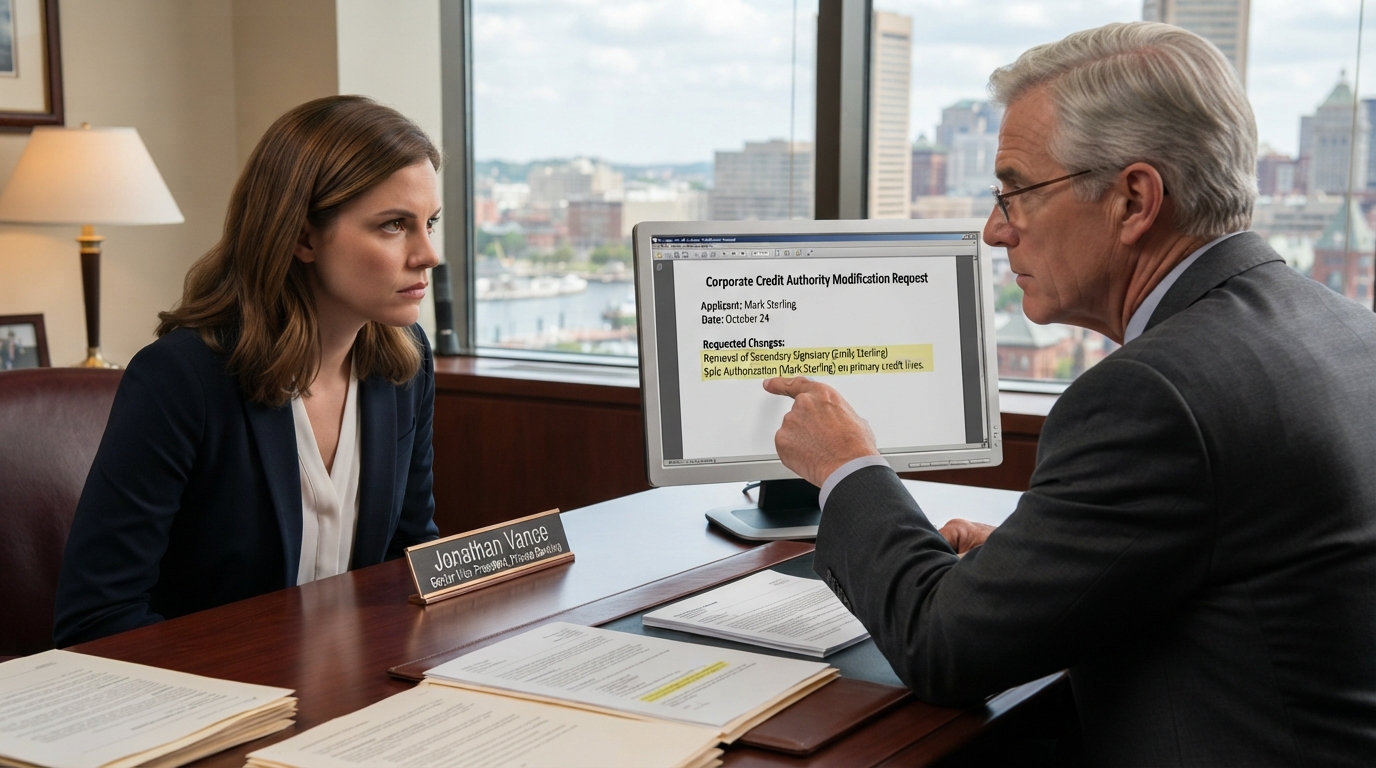
“He called me an obstacle.”
Mr. Vance looked at her.
“He called the trust restrictions obstacles. You were part of what those restrictions protected.”
“But he knew that.”
“Yes.”
That realization was different from discovering a hidden transfer.
Mark had not accidentally crossed a line.
He had identified the line.
Then he had spent years looking for a way around it.
The investigators eventually reconstructed the sequence.
After Emily's father died, Mark began asking increasingly detailed questions about the trust.
He learned the distribution schedule.
He learned the succession provisions.
He learned that marriage did not give him control.
He learned that the trust could not be pledged casually.
He learned that certain company shares carried voting rights tied to Emily's beneficiary status.
And he learned that if Emily ever lost control through unauthorized action, the structure could automatically trigger protections.
Instead of accepting those limits, he began planning around them.
Emily read the timeline alone.
The first entries were almost ordinary.
Questions.
Meetings.
Requests.
Then the language changed.
“Need access.”
“Review succession.”
“Alternative structure.”
“EVC.”
“Harbor Ridge.”
By the final pages, the pattern was unmistakable.
Mark had spent years turning their marriage into an opportunity to obtain something that had never belonged to him.
Emily closed the folder.
For several minutes she sat without moving.
Then she called Daniel.
“I want the employees to know what happened.”
Daniel was silent.
“How much?”
“Not everything.”
“Then what?”
“The truth that affects them.”
The company prepared a formal statement.
It explained that unauthorized financial activity had been identified, that independent investigators had been engaged, that company assets were being protected, and that employee obligations remained a priority.
No sensational language.
No accusations beyond established findings.
No mention of private marital details.
Emily insisted on that.
“This isn't entertainment,” she told the communications team. “People work here. Their families depend on their paychecks.”
The statement went public.
For the first time, employees began coming to Emily directly.
Some had questions.
Others simply wanted reassurance.
A warehouse supervisor named Carla approached her after a meeting.
“My husband works nights,” Carla said. “We have two kids. When I heard about the money, I thought we'd lose our jobs.”
Emily felt the weight of those words.
“You won't be punished for decisions you didn't make.”
Carla nodded.
“Thank you.”
That evening, Emily approved the release of funds from Blue Cedar to protect payroll and essential employee obligations during the restructuring.
The old note from her father came back to her.
Protect the employees first.
She understood it differently now.
Her father had not been predicting Mark.
He had been preparing Emily to lead.
Weeks later, a court hearing addressed Mark's financial conduct.
He arrived with attorneys.
Emily sat across the room.
The judge reviewed the evidence before asking Mark a series of questions.
Did he authorize the Harbor Ridge transfers?
“Yes.”
Did he have written authorization from Emily?
“No.”
Did he attempt to obtain control over trust-connected financial instruments?
“Yes.”
Did he know the trust restrictions prevented him from doing so?
Mark hesitated.
“Yes.”
The room remained quiet.
The judge asked, “Why did you proceed?”
Mark looked toward Emily.
For a moment, she saw the man she had married.
Not the executive.
Not the person from the bank records.
Just Mark.
“I thought I could fix everything before she found out,” he said.
His voice was low.
“I thought I was protecting my family.”
The judge waited.
Mark swallowed.
“But I was protecting myself.”
Emily looked down.
She had imagined hearing an admission would feel satisfying.
It didn't.
It felt final.
There was no dramatic relief.
No sudden erasure of the years she had trusted him.
Only confirmation.
The legal consequences began unfolding over the following months.
Certain assets were frozen.
Restitution proceedings started.
Mark lost his operational authority permanently.
Restrictions were placed around his ability to participate in company management.
Some recovered funds returned to NorthStar.
Others required lengthy legal action.
EVC became subject to its own investigation.
Evelyn's involvement was reviewed separately.
She cooperated.
Emily did not ask for special treatment.
She also did not demand punishment beyond what the evidence supported.
That distinction became important to her.
She had spent months learning that justice was not the same thing as revenge.
One afternoon, Mr. Vance brought Emily a final document.
“This is the activation certificate.”
“For what?”
“Your father's final trust instructions.”
She read it.
The document confirmed that the protective provisions had been fully activated after the unauthorized attempts to interfere with her control.
Emily looked at Vance.
“So that's it?”
“The trust is secure.”
“And no spouse can ever control it?”
“Not through marriage. Not through management. Not without your independent authorization.”
She leaned back.
For years, she had thought security meant never being betrayed.
Now she knew better.
Security meant knowing what to do if betrayal happened.
That evening she drove to the grocery store.
She had not planned it.
She simply found herself in the parking lot.
She walked inside.
The same aisles.
The same carts.
The same fluorescent lights.
She picked up groceries one by one.
Milk.
Bread.
Vegetables.
Coffee.
At checkout, the total came to $118.74.
The cashier ran her card.
Approved.
The word appeared on the screen.
Emily stared at it for a second.
The cashier smiled.
“Everything good?”
Emily smiled back.
“Yes.”
She carried the bags outside.
It was an ordinary purchase.
That was why it mattered.
No permission.
No explanation.
No fear.
Just her card.
Her money.
Her choice.
Click here to continue reading: PART 16: The Name on the Table
The Card Was Declined Over Groceries, But My Husband’s Calm Confession Made Me Realize Something Much Worse Was Already Happening
Part 15 of 20