I don't remember every step I took after leaving the alley.
My memory returned in pieces, and some of those pieces were difficult to put in the right order.
I remember the cold.
I remember the pain in my head.
I remember trying to keep my eyes open because I was afraid that if I closed them, I might not be able to stand again.
And I remember thinking that I couldn't go home.
Home was the last place I wanted to be.
That realization should have been simple.
Instead, it felt like losing something I had spent my whole life trying to hold together.
My family had always mattered to me, even when being around them made me miserable.
I had told myself that difficult people could still love you.
I had told myself that a bad day didn't define a person.
I had told myself that if I stayed patient, things might eventually change.
Those explanations had kept me going for longer than I wanted to admit.
Now I was standing outside with no shoes, trying to understand how the people I had trusted had become the reason I was afraid to return home.
I thought about my mother.
I tried to remember whether she had looked frightened after I fell.
Whether she had called my name.
Whether she had done anything at all to make sure I was still alive.
I couldn't find an answer in my memory.
What I remembered most clearly was the feeling of being unable to make her stop.
I had spoken.
I had pleaded.
I had tried to reach her in the only way I knew how.
Nothing had changed.
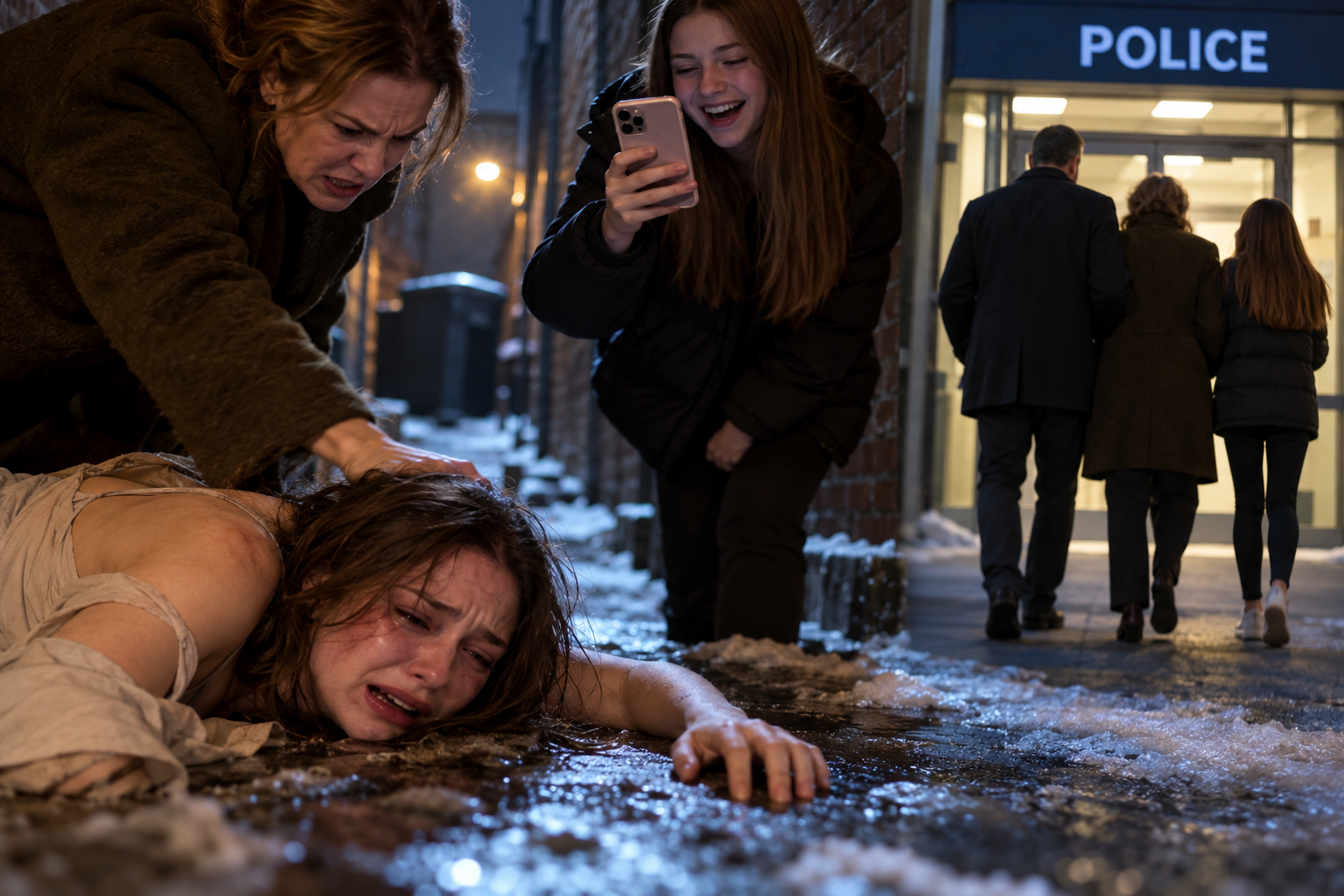
My sister's laughter had stayed with me, too.
It was difficult to understand how someone could stand so close to another person's suffering and treat it as entertainment.
I wanted to believe she had been frightened.
I wanted to believe she hadn't understood how serious things were.
But I remembered her phone.
I remembered her watching.
And I remembered asking her for help.
I couldn't make those details disappear simply because accepting them hurt.
I had to stop myself from returning to the house just to demand an explanation.
I knew what I wanted to hear.
I wanted my mother to tell me she was sorry.
I wanted my sister to admit she had done something terrible.
I wanted one of them to look at me and acknowledge that what had happened was real.
But wanting an apology wasn't the same as being safe.
I had finally begun to understand that.
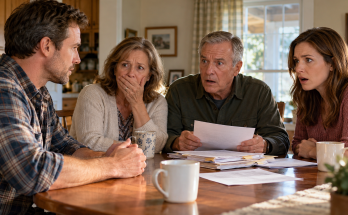
My family had already gone to the police.
They had made their claims before I could explain my side.
I didn't know exactly what they had said, but I knew the result they wanted.
They wanted people to question my judgment.
They wanted any accusation I made to sound like another example of my supposed instability.
If I returned to confront them, I could already imagine how they might describe it.
They could say I was confused.
They could say I was angry.
They could say I had misunderstood everything.
And if I raised my voice, they could use that against me.
I had spent too much time trying to prove I wasn't the person they said I was.
I wasn't going to give them another easy reason to ignore me.
I needed to think carefully.
That was hard when my body was struggling just to keep moving.
I tried to remember what I had done before the confrontation.
Why had I gone to the house?
What had I expected to happen?
The memories came slowly.
I remembered entering the familiar space.
I remembered the tension that had already been there.
I remembered the feeling that something had to be addressed, even though I knew the conversation might go badly.
I hadn't gone there expecting to be left outside in the cold.
Whatever I had expected, I hadn't prepared myself for that.
I had prepared for an argument.
I had prepared for anger.
I had even prepared for my mother to refuse to hear me.
I hadn't prepared for my family to act together afterward and tell the police that I was the problem.
That part was harder to understand.
It suggested that what happened wasn't simply an argument that had gotten out of control.
They had made a decision about what to say after I was no longer able to speak for myself.
And they had made it together.
I didn't know whether they had planned every detail in advance.
I had no way to know what each person had thought or intended.
But I knew what they had done.
They had left me vulnerable.
Then they had gone to the police with a claim that could make people doubt me.
The order mattered.
I kept returning to it.
First, I was hurt.
Then I was abandoned.
Then I was described as insane.
I couldn't make myself believe those events were unrelated.
I stopped beside a building and tried to steady my breathing.
My fingers were stiff, and I could barely feel the ends of them.
I knew I couldn't spend the entire night standing outside and trying to reconstruct what had happened.
I needed someone to help me.
That meant accepting something I had resisted for years.
I couldn't solve this by keeping quiet.
I couldn't protect myself by pretending my family would eventually do the right thing.
And I couldn't wait for them to explain themselves before I took action.
I had to make decisions without their permission.
That thought was frightening.
It was also necessary.
I thought about the evidence I had hidden.
I didn't want to imagine what would have happened if I had left it where my family could find it.
The possibility made my stomach tighten.
I had kept those things out of their reach for a reason.
At the time, I had hoped I would never need them.
I had wanted a way to protect myself without having to use anything against the people I loved.
I had wanted the truth to be enough.
But truth could be denied.
Memories could be questioned.
A person's word could be dismissed before they finished speaking.
I was learning that the hard way.
The evidence mattered because it existed outside my family's opinions about me.
It wasn't something they could erase simply by insisting that I was confused.
They might be able to tell people I was unreliable.
They might be able to make my account sound unbelievable.
But they didn't know everything I had kept.
I held on to that fact as I continued looking for help.
I couldn't allow myself to become careless just because I was frightened.
I couldn't tell my family where the evidence was.
I couldn't rush back to the house and risk losing whatever protection it gave me.
I had to stay away long enough to think clearly.
That was the decision I made.
I would not return to the house that night.
I would not beg my mother to explain herself.
And I would not give my sister another chance to stand over me with a phone while I asked her to care.
The decision didn't make me feel strong.
It made me feel alone.
There was a difference.
Strength sounded like something a person could choose and carry easily.
What I felt was the knowledge that the people I had counted on were no longer safe to depend on.
I wanted to call someone who knew me.
Someone who might remember that I wasn't always angry or frightened.
Someone who could look at me and see more than the version of me my family had presented.
But I didn't have my phone, and I couldn't rely on anyone knowing what had happened.
I would have to begin with whoever was willing to listen.
That was all I had.
As I kept moving, I tried to organize my thoughts into a simple account.
What had happened?
Who had been there?
What did I remember clearly?
What did I not remember?
I couldn't afford to fill the gaps with guesses.
If I wanted someone to believe me, I needed to be honest about what I knew and what I didn't.
I knew my mother had hurt me.
I knew my sister had watched and laughed instead of helping.
I knew I had lost consciousness.
I knew I had later found myself abandoned outside, without proper clothing or shoes.
And I knew my family had gone to the police and portrayed me as mentally unstable.
Those facts were enough to begin.
I didn't need to pretend I remembered every second.
I didn't need to explain every question immediately.
I only needed to tell the truth as carefully as I could.
For the first time that night, my thoughts began to settle.
The cold was still there.
The pain was still there.
My fear hadn't disappeared.
But I had a direction.
I would get help.
I would protect what I had hidden.
And I would find a way to make sure the truth couldn't be buried beneath my family's accusations.
I didn't know how long it would take.
I didn't know who would believe me first.
I only knew that silence had protected them far more than it had protected me.
I wasn't going to keep giving them that advantage.
Click here to continue reading: PART 3: I Had Kept Something Important Out of Their Reach, but I Knew the Truth Would Mean Nothing If Nobody Heard Me
I Woke Up Freezing in an Alley, With No Shoes and No Memory of How My Own Family Had Left Me There
Part 2 of 20