I kept thinking about the decision I had made before returning to the house.
I had hidden the evidence because I didn't want my family to have control over it.
At the time, I hadn't known whether I would ever need it.
I had hoped that keeping it safe would be enough.
Now I understood that I might have to do more than keep it hidden.
Eventually, I would have to decide how to use it.
That decision frightened me because it would make the situation real in a different way.
As long as the evidence remained out of sight, I could tell myself I still had options.
I could focus on getting help.
I could try to understand what had happened.
I could delay thinking about what might happen if my family discovered that I had kept something from them.
But the evidence could not remain a private source of reassurance forever.
If I wanted it to help establish the truth, I would need to bring it forward carefully.
I had to think about that without allowing fear to make the decision for me.
My first instinct was to wait until I felt ready.
I imagined a moment when I would be calm, rested, and certain about what to do.
I imagined being able to explain everything without becoming upset.
I imagined having answers to every question someone might ask.
But I was beginning to understand that I might never feel completely ready.
I had been hurt.
My memory of the night was incomplete.
My family had already made accusations against me.
Waiting until I felt no fear at all could mean waiting indefinitely.
I needed a different standard.
I needed to ask whether the next step was sensible and whether it helped protect me.
I did not need to ask whether I felt comfortable.
Those were not the same questions.
I could be frightened and still make a careful decision.
I could be uncertain and still seek help.
I could acknowledge that the evidence might not answer everything without deciding that it was useless.
I had to allow myself to act without knowing exactly how things would end.
That was difficult because I wanted guarantees.
I wanted to know that if I spoke, someone would believe me.
I wanted to know that if I presented the evidence, my family would not be able to dismiss it.
I wanted to know that I would not be hurt again.
No one could promise me all of those things.
I had to make decisions with the information I had.
The evidence was one part of that information.
My memories were another.
My family's behavior was another.
I could consider all three without pretending any one of them answered every question.
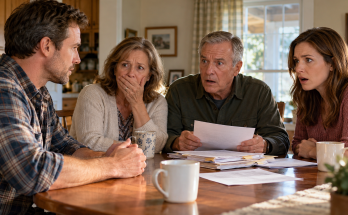
I thought about the possibility that my mother might discover what I had hidden.
The thought made my stomach tighten.
I imagined her asking why I had kept it from her.
I imagined her telling me that I had betrayed the family.
I imagined my sister joining the conversation and claiming that I had planned everything to make them look bad.
Those imagined accusations had once been enough to make me hesitate.
Now I tried to examine them more carefully.
What exactly would I have done wrong by preserving evidence?
Had I hurt someone by keeping it safe?
Had I made a false accusation simply by refusing to surrender it?
No.
I was protecting something that might help clarify what had happened.
I did not need my family's permission to do that.
I also did not need to make assumptions about what the evidence would prove.
That was important.
I had to remain honest about what I knew.
I could not promise that the evidence would settle every question.
I could not claim that it showed something I had not examined or could not verify.
I could not use it to fill the gaps in my memory with guesses.
I needed to preserve it and allow it to be assessed on its own terms.
That was the only approach I could trust.
I had spent too long feeling that I needed to win every argument before I was allowed to protect myself.
I had tried to explain my feelings until I was exhausted.
I had tried to anticipate every criticism.
I had tried to imagine what my mother might say and prepare an answer before she spoke.
It had never made me safe.
Now I needed to stop treating the situation like an argument I could win through perfect preparation.
It was something that required careful action.
I needed help.
I needed to protect the evidence.
And I needed to tell the truth about what I remembered.
I did not need to solve every question before beginning.
I also had to accept that the people who heard my account might not react the way I hoped.
Some might ask difficult questions.
Some might need time to understand the events.
Some might focus on the fact that my family had already approached the police.
I could not control those responses.
But I could answer questions honestly.
I could explain what I knew and what I didn't.
I could refuse to invent details.
And I could continue asking for help if the first person I approached could not provide it.
That last thought mattered.
I had been treating the possibility of not being believed as though it would end every option.
If one person doubted me, I imagined there would be no point in speaking again.
If someone asked a question I couldn't answer, I imagined they would dismiss everything else.
If my family repeated their accusations, I imagined their version would become permanent.
Those fears were understandable.
They were not certainties.
I had to leave room for the possibility that someone would listen carefully.
I had to leave room for the possibility that evidence would matter.
And I had to leave room for the possibility that the truth would take time to establish.
I could not give up before any of those possibilities had a chance.
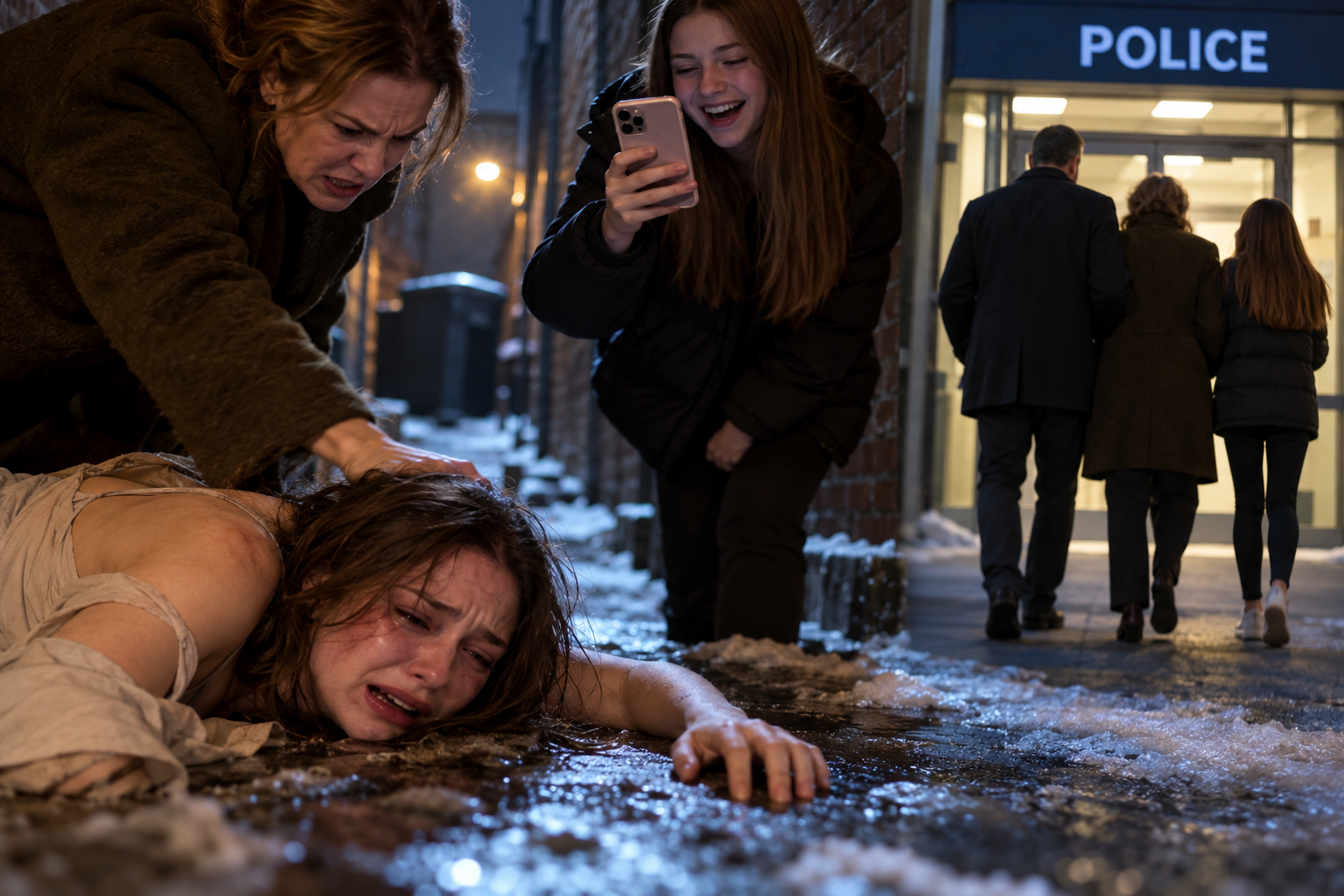
I returned to the same memory again.
My sister standing nearby with her phone.
My voice asking her to help.
Her laughter.
I didn't know what she had thought.
I didn't know what she had done afterward.
But I knew I had been asking for help, and she had not responded as I needed her to.
That memory was painful, but it also reminded me why I could not return to the old way of doing things.
I had waited for care from people who had not shown it when I needed it most.
I had hoped they would explain themselves.
I had hoped they would correct the story they told.
I had hoped they would recognize the harm and take responsibility.
I could continue hoping those things might happen someday.
But I could not make my safety depend on them.
That was the clearest lesson I had learned since waking outside.
I could no longer wait for my family to decide whether I deserved help.
I could no longer allow their accusations to determine whether I trusted my own memories.
And I could no longer treat the evidence I had hidden as something I should feel guilty about protecting.
I had kept it safe for a reason.
Now I needed to respect that decision.
I would not rush into a confrontation.
I would not reveal its location to my family.
I would not exaggerate what it might prove.
I would seek a safe way to have it examined and explain what had happened as honestly as I could.
That was the plan I could live with.
I was still frightened of what might come next.
I still wanted my mother to admit what she had done.
I still wanted my sister to explain why she had laughed.
And I still wished I could return to a life in which I did not have to think about protecting myself from my own family.
But wishing could not change what had happened.
I had to work with the truth I had.
The evidence remained hidden.
My family had not taken it from me.
And I had not given up the right to tell my story.
For now, that was enough to keep me moving.
Click here to continue reading: PART 13: I Had Finally Stopped Waiting for My Family to Tell the Truth, but I Still Had to Find a Way to Make Someone Listen
I Woke Up Freezing in an Alley, With No Shoes and No Memory of How My Own Family Had Left Me There
Part 12 of 20