I used to think memory was something I could depend on.
If something happened, I believed I would remember it clearly enough to explain it later.
That night taught me how frightening it was to lose pieces of your own experience.
I could remember my mother's face.
I could remember the fear that had taken hold of me.
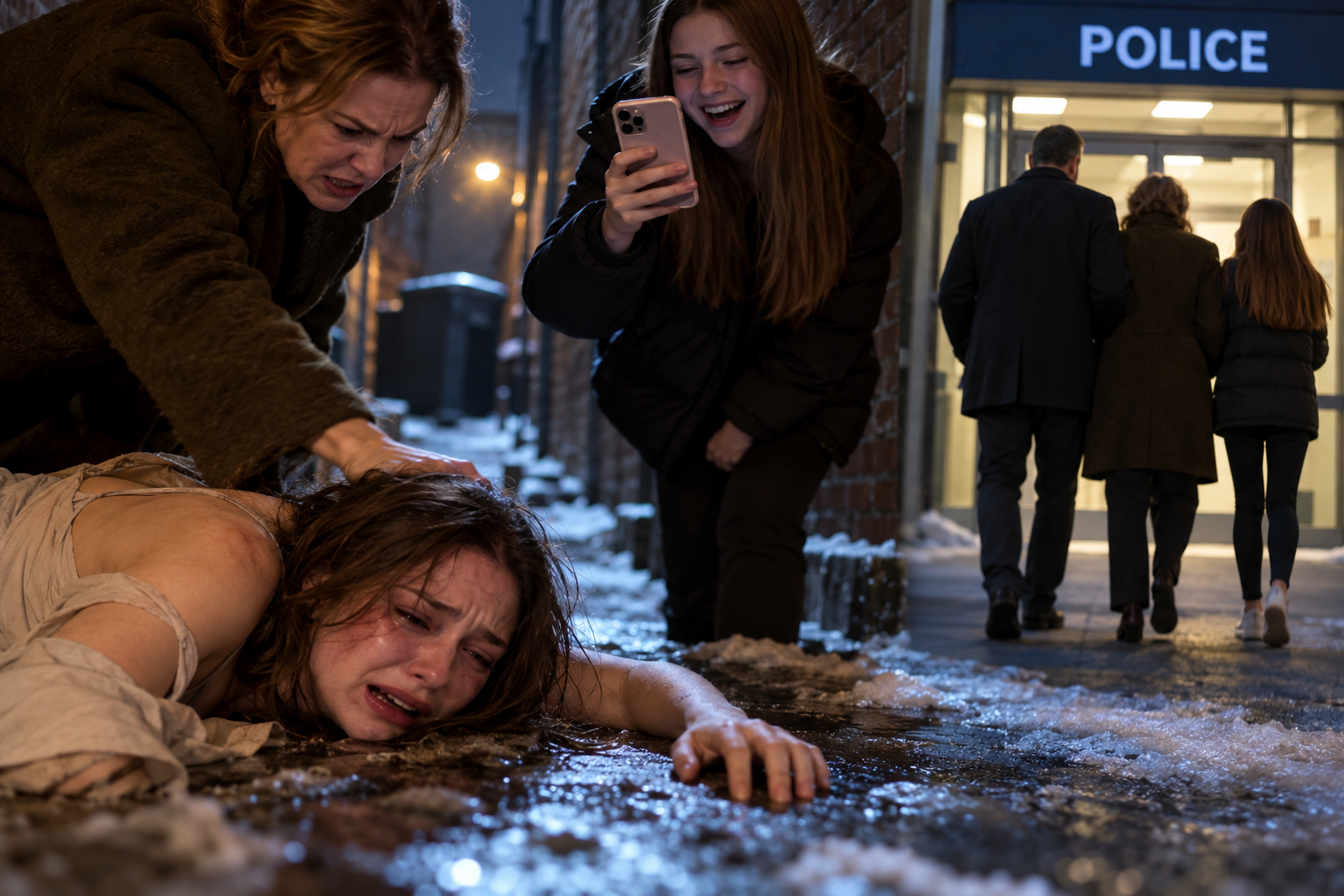
I could remember my sister's phone and the way she had watched me.
But there were gaps.
I couldn't force those gaps to close.
The more I tried, the more anxious I became.
I would replay a moment and wonder whether I had forgotten something important.
Then I would question another detail.
Before long, I would be questioning the things I knew had happened.
I recognized that habit.
It was the same one that had kept me trapped in family arguments for years.
I would start with a clear memory.
Then I would imagine what my mother might say about it.
Then I would begin adjusting my own account to make room for her version.
Eventually, I would become so focused on whether I could prove every detail that I would forget the original reason I had been upset.
I couldn't afford to do that anymore.
I needed to keep my account simple.
I knew what I had experienced.
I knew what I had seen.
I knew what I had asked my sister to do.
I knew that I had later found myself outside, cold and barely dressed.
And I knew my family had gone to the police with accusations about my mental state.
I didn't need to add anything.
I didn't need to make my mother sound worse than she had been.
I didn't need to guess what my sister had intended.
I didn't need to claim I knew every thought that had passed through their minds.
Their actions were enough to explain why I no longer felt safe around them.
That was a difficult lesson because I had always wanted certainty.
I wanted to know exactly why my mother had hurt me.
I wanted to know why my sister had laughed.
I wanted to know whether they had discussed what to tell the police before they left.
Those answers might have helped me understand their decisions.
But I couldn't make my next move depend on receiving them.
They might never tell me the truth.
They might deny things I remembered clearly.
They might offer explanations that shifted the blame back onto me.
I had to accept that understanding someone's motives was not a requirement for recognizing the harm they had caused.
I could know that a situation was dangerous without knowing every reason it had become dangerous.
That distinction helped me think more clearly.
It also made me think about the evidence I had hidden.
I had kept it because I knew that memories alone could become a battlefield.
People could disagree about what had been said.
They could insist that something had happened differently.
They could accuse someone of misunderstanding.
But evidence could give an outside person something concrete to examine.
It could offer a starting point beyond my family's opinions.
I didn't know how much it would establish.
I had to be honest about that.
I couldn't promise myself that it would prove every part of my account or settle every question.
I could only make sure it remained available for someone to examine.
The evidence was important.
So was my own safety.
I had to keep both in mind.
I didn't want to rush into a confrontation simply because I was desperate for answers.
I didn't want to reveal what I had hidden in a moment of anger.
And I didn't want to make my family's next move easier by telling them what I planned to do.
They had already shown me that I couldn't assume they would respond to my distress with concern.
I needed to make decisions based on that reality.
The hardest part was resisting the urge to explain myself to them.
I imagined my mother telling people that I was confused.
I imagined my sister repeating her own version of the night.
I imagined them discussing me as though I were a problem they had been forced to manage.
Every time I pictured it, I wanted to defend myself.
I wanted to tell them they had no right to describe me that way.
I wanted to ask whether they had forgotten what they had done.
But I knew that arguing with them would not necessarily correct the record.
It might only give them another conversation to describe however they wished.
I had to stop treating every accusation as something I needed to answer immediately.
Some things required patience.
Some required outside help.
And some required me to stop giving the people who hurt me access to my decisions.
I had never been good at that last part.
I had confused loyalty with availability.
If my mother wanted to speak, I felt obligated to listen.
If my sister wanted to dismiss something, I tried to explain why it mattered.
If they were angry, I often felt responsible for making the situation better.
I had believed that if I stopped responding, I would be abandoning them.
Now I wondered how many times I had abandoned myself instead.
I didn't like the answer.
But I needed to face it.
I could not keep placing my family's comfort above my own safety.
I could not keep waiting for them to decide whether my pain deserved attention.
And I could not keep believing that silence was harmless simply because it avoided an argument.
Silence had consequences.
It had left me trying to reconstruct a frightening night without anyone beside me.
It had allowed my family to speak first.
And it had made me feel that asking for help was somehow a betrayal.
I was done accepting those rules.
That didn't mean I suddenly knew how to handle everything.
I was still frightened.
I was still exhausted.
And I still wanted someone to tell me that I wasn't alone in what had happened.
But I could begin changing the decisions that had kept me vulnerable.
I could stop trying to persuade my mother to understand.
I could stop expecting my sister to behave like someone who had already chosen not to help.
I could seek assistance from people who weren't part of the family conflict.
And I could protect the evidence until I was ready to bring it forward.
Those were practical decisions.
They didn't require me to stop feeling hurt.
They didn't require me to forgive anyone.
They didn't even require me to decide what kind of relationship I might have with my family in the future.
They only required me to recognize that things could not continue as they had.
I kept thinking about the moment before I lost consciousness.
There was a point when I had still believed that if I could make my mother listen, she might stop.
I had kept trying because I didn't know what else to do.
I had wanted the situation to end without becoming something I would have to explain to anyone.
That hope had been part of my fear.
I had believed that keeping the problem private might make it smaller.
It hadn't.
The problem had followed me out of the house.
It had left me outside in the cold.
And it had continued when my family went to the police.
I couldn't make it smaller by refusing to name it.
I had to face it as it was.
I had been hurt by people I had trusted.
I needed help.
And I needed to protect myself from further harm.
Those statements were simple.
They were also the clearest things I had thought since waking up.
For the first time, I stopped asking whether my family would approve of the way I handled the situation.
I asked whether my next decision would help keep me safe.
That was a better question.
It didn't answer everything.
But it gave me somewhere to begin.
Click here to continue reading: PART 7: The More I Thought About My Sister’s Phone, the More I Realized That the Truth Could Not Depend on Whether My Family Felt Guilty
I Woke Up Freezing in an Alley, With No Shoes and No Memory of How My Own Family Had Left Me There
Part 6 of 20