I had imagined my mother's apology so many times that I could almost hear the words.
In those imagined conversations, she admitted what she had done.
She explained why she had lost control.
She acknowledged that leaving me outside had been wrong.
Sometimes she even admitted that going to the police with accusations about me had made everything worse.
I would listen.
I would cry.
And somehow, after all those words, the world would become understandable again.
I knew that was a fantasy.
I had to admit it.
An apology might help me understand that my mother recognized the harm she had caused.
It might give me something I had wanted for years.
But it could not change the fact that the night had happened.
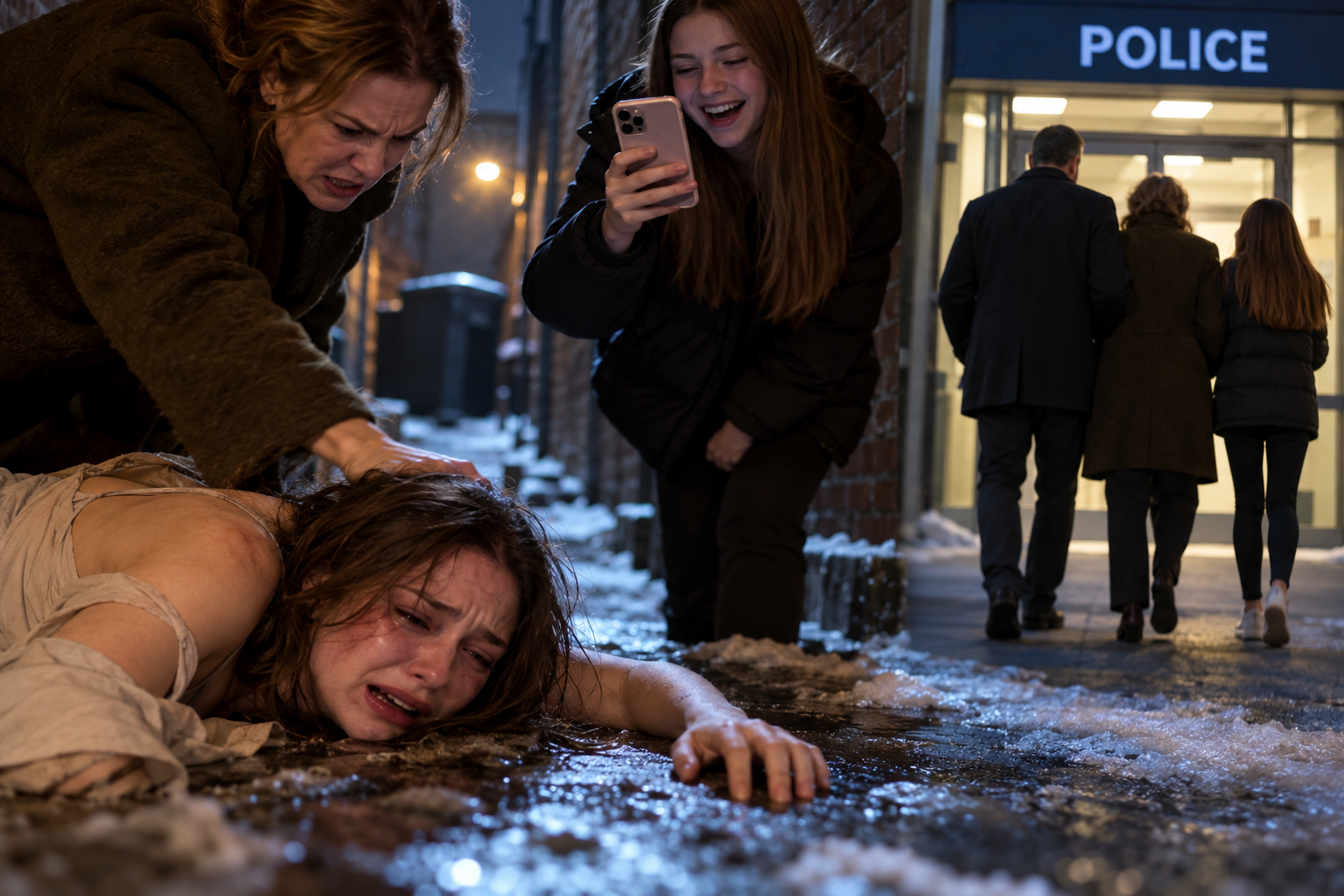
It could not erase the memory of my sister laughing.
It could not undo the decision to leave me outside.
And it could not automatically correct what my family had already told the police.
I had been waiting for an apology to make the next step easier.
Now I understood that I could not afford to wait for one.
My mother might never apologize.
My sister might never admit that she should have helped.
They might continue believing that their version of events was the only one that mattered.
I could not control any of that.
I could control whether I continued to protect myself.
That meant being willing to tell the truth even if nobody in my family agreed with me.
It meant preserving the evidence even if they accused me of betrayal.
And it meant seeking help even if I was frightened of being misunderstood.
I had to stop treating their approval as the condition for moving forward.
That was not an easy thing to accept.
I had spent years wanting to be understood by my family.
I had wanted my mother to recognize my feelings without turning them into an argument.
I had wanted my sister to treat me with kindness instead of making my distress into something amusing.
I had wanted to believe that when things became serious, they would stand beside me.
Those wishes were still part of me.
I couldn't erase them simply because they had been disappointed.
But I could stop letting them decide what I did next.
I could grieve the relationships I had wanted while recognizing the relationships I actually had.
I could wish my family had acted differently without pretending they had.
And I could decide that protecting myself was more important than preserving the appearance that everything was fine.
I kept returning to the evidence.
It was still the one thing my family had not taken from me.
I had hidden it before returning to the house because I wanted it protected.
Now I needed to preserve it until I could arrange for it to be examined safely.
I didn't know what it would prove.
I didn't know how people would respond to it.
I didn't know whether it would answer the questions that had been haunting me.
I had to resist the temptation to make it into a guarantee.
It was evidence.
It was something that could be considered alongside my account.
It was not a promise that every person would believe me or that every uncertainty would disappear.
I needed to approach it with that understanding.
If I exaggerated what it could establish, I would only create another problem.
If I used it to threaten my family, I would risk turning the situation into another argument about my intentions.
And if I allowed fear to keep it hidden forever, I might lose the chance to have it considered at all.
I needed a careful way forward.
I would seek independent help.
I would explain what I remembered.
I would be honest about what I couldn't remember.
And I would ask for guidance on how to preserve and present the evidence appropriately.
That was a plan I could defend without needing to know the outcome.
I thought about the possibility that my family would be angry when they learned I had spoken.
I could imagine my mother's voice.
I could imagine my sister looking at me as though I had done something unforgivable.
For years, that image would have been enough to make me reconsider.
I would have asked myself whether I was being too harsh.
I would have wondered whether I should give them another chance to explain.
I would have tried to find a way to make everyone comfortable.
Now I asked a different question.
Would returning to them make me safer?
I already knew I couldn't assume that it would.
Would remaining silent correct the accusations they had made?
No.
Would surrendering the evidence help establish what had happened?
I had no reason to believe that it would.
The answers were not complicated.
The emotions were.
I still loved parts of my family.
I still wanted things to be different.
I still wished I could go back to a time when I believed that asking my mother for help would bring help.
But I could not use those feelings to erase what I had experienced.
I needed to make room for the truth, even when it hurt.
I also had to accept that speaking up might not give me the ending I wanted.
There might be difficult questions.
There might be delays.
There might be people who doubted me.
My family might continue denying their responsibility.
I could not promise myself that the process would be easy or that everyone would eventually agree.
I could promise to remain honest.
I could promise not to invent details.
I could promise to protect the evidence and seek help rather than confront my family alone.
And I could promise not to let fear make me surrender before I had even tried.
That was enough for the moment.
I no longer needed to imagine an apology before I could take the next step.
I no longer needed my mother to agree that I had been hurt.
I no longer needed my sister to admit that her laughter had mattered.
I needed to tell the truth about what I remembered and allow the evidence to be considered.
I had spent years waiting for my family to make things right.
Now I understood that my next decision could not depend on them doing so.
The truth had to stand on its own.
And I had to be willing to speak it.
Click here to continue reading: PART 20: I Could Not Change What My Family Had Done, but I Could Finally Stop Protecting Their Story at the Cost of My Own Life
I Woke Up Freezing in an Alley, With No Shoes and No Memory of How My Own Family Had Left Me There
Part 19 of 20