The hardest thing about being afraid was how ordinary everything around me still looked.
The world hadn't stopped because my family had hurt me.
People still went about their lives while I struggled to understand what mine had become.
I kept thinking about the house.
Not because I wanted to return, but because I couldn't understand how I had walked into it believing I might finally be heard.
I had known my mother could be cruel.
I had known my sister could turn an uncomfortable moment into a joke.
But I had still believed there were limits.
That belief had cost me more than I wanted to admit.
I was beginning to understand that the danger wasn't only what had happened that night.
It was what my family had done afterward.
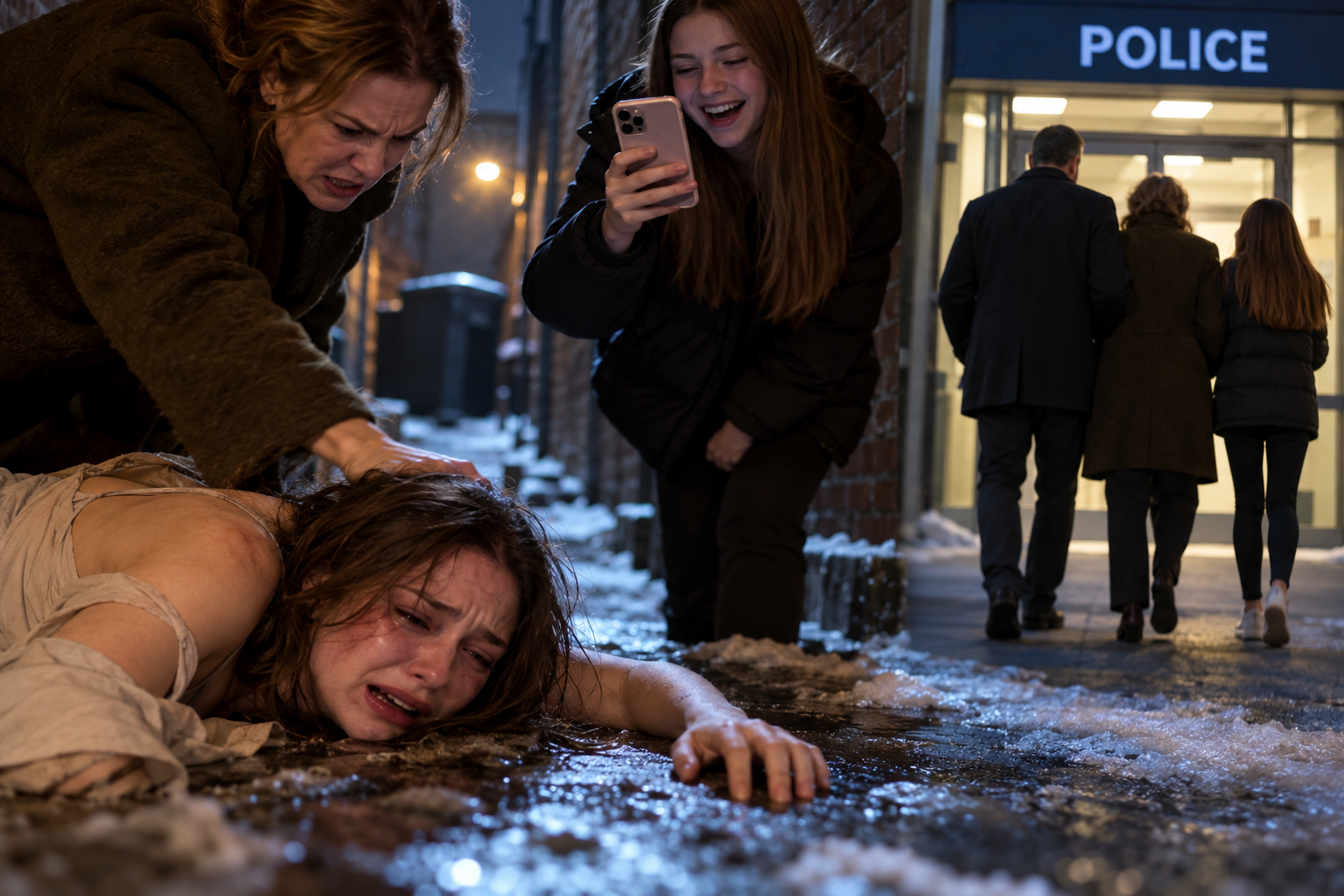
They had left me outside.
Then they had gone to the police together.
And they had chosen a description of me that could make everything I said sound questionable.
I kept returning to that sequence because I couldn't make it feel accidental.
I didn't know whether they had planned it in advance.
I didn't know what each of them had said when they were alone.
But I knew they had acted together when I was in no condition to defend myself.
I needed to stop thinking that one emotional conversation could undo that.
My mother wasn't waiting for me to find the perfect words.
My sister wasn't waiting for me to explain why her laughter had hurt me.
Whatever they believed about themselves, they had already made choices that left me alone and vulnerable.
I couldn't change those choices by asking them to care.
I had to look for help somewhere else.
That meant admitting something I had resisted for years.
People outside my family might need to hear what happened.
They might need to see the evidence.
They might need to ask questions my mother would never willingly answer.
I had always feared that kind of attention.
I had imagined strangers judging our family without understanding it.
I had worried that people would hear only the ugliest parts and decide we were all beyond help.
Now I wondered why I had spent so much time worrying about the family's reputation when my own safety had been at risk.
The answer wasn't flattering.
I had wanted to belong.
I had wanted to believe that the people who raised me would eventually treat me with kindness.
And I had been afraid that telling the truth would mean losing even the small amount of connection I still had.
I was already losing it.
The difference was that I had finally begun to see the loss clearly.
I needed to get somewhere safe before I could make any more decisions.
My body was exhausted, and my thoughts kept slipping back toward the same frightening memories.
Every time I remembered my sister holding her phone, I felt the same disbelief.
I could still picture her watching me.
I could still remember asking her to help.
I couldn't understand how she had managed to laugh.
I wanted to ask her what she had been thinking.
But I knew that question would not keep me safe.
It would only take me back toward the people I was trying to avoid.
So I forced myself to focus on what I could do.
I needed warmth.
I needed someone to assess my condition.
And I needed to explain that I had been hurt before my family began describing me as unstable.
I couldn't promise that anyone would believe me immediately.
I couldn't promise that my evidence would answer every question.
But I could stop hiding the fact that I needed help.
For years, I had treated asking for help as though it were an admission that I had failed.
I had tried to handle family problems quietly.
I had tried to solve disagreements before anyone else noticed them.
I had tried to make myself easier to live with.
Now I understood that none of those efforts had guaranteed my safety.
I had done everything I could think of to keep things from getting worse.
Things had still gotten worse.
I couldn't keep blaming myself for not finding a perfect way to prevent someone else's choices.
That realization didn't erase my fear.
It did give me permission to stop apologizing for needing protection.
I also had to be careful with my memories.
There were moments I could recall clearly and moments that remained blurred.
I couldn't fill in those gaps simply because I wanted a complete explanation.
I would tell the truth about what I remembered.
If I didn't know something, I would say so.
If I couldn't remember a particular moment, I wouldn't pretend otherwise.
My family had already made claims about my mind.
I wasn't going to answer them by making claims I couldn't support.
The facts were painful enough.
My mother had hurt me.
My sister had watched.
I had lost consciousness.
And afterward, I had found myself outside in the freezing cold, without shoes or proper clothing.
Those things had happened whether my family wanted to discuss them or not.
I kept thinking about the evidence I had hidden before going to the house.
At the time, I had hoped keeping it safe would be enough.
I hadn't wanted to use it against anyone.
I had wanted to live without having to prove that my own family could hurt me.
That hope seemed painfully innocent now.
Still, I was grateful I had made the decision to keep it away from them.
They didn't know where it was.
That was one fact I could hold on to.
I didn't know what would happen when the evidence came into the open.
I didn't know whether it would be understood or challenged.
But I knew it couldn't help me if I gave my family the chance to destroy it or take it away.
I had to keep that decision separate from my anger.
I wasn't going to use the evidence as a threat.
I wasn't going to make promises about what it could prove before anyone examined it.
I was simply going to protect it.
Then I would decide what to do with it.
That was the only sensible path I could see.
I thought about the police again.
The idea of speaking to them frightened me because my family had already been there.
I imagined walking into a room where everyone had heard their version first.
I imagined someone looking at me and wondering whether my mother had been right.
I imagined being asked questions I couldn't answer because my memory had gaps.
But I also imagined what would happen if I never spoke.
My family's account would remain the only account they had offered.
Their confidence would be mistaken for certainty.
My silence might be taken as proof that I had nothing to say.
I couldn't allow fear to make that decision for me.
I needed to tell someone what had happened, even if I couldn't control the response.
I had spent too long believing that being understood was the first requirement for protecting myself.
It wasn't.
I could seek help before everyone agreed with me.
I could preserve the evidence before anyone decided what it meant.
I could stay away from my family without waiting for them to admit they had done something wrong.
Those choices were available to me now.
I had to use them.
The thought of never again trusting my mother the way I once had was almost unbearable.
I still remembered the years when I wanted her approval.
I still remembered how quickly I could become hopeful when she spoke kindly.
That was part of what made the night so difficult to accept.
I wasn't only frightened by what she had done.
I was frightened by how much I had wanted her to be different.
I had kept giving her opportunities to show me the person I hoped she could be.
Now I needed to judge her by the choices she had actually made.
I could grieve the mother I wished I had without returning to the person who had hurt me.
I could miss my sister without pretending her behavior hadn't mattered.
And I could tell the truth without turning my pain into something I had to apologize for.
I wasn't ready to feel brave.
I didn't need to be.
I only needed to take the next step.
Click here to continue reading: PART 6: I Began Separating What I Remembered From What I Feared, Because My Family Had Given Me Every Reason to Doubt Their Version
I Woke Up Freezing in an Alley, With No Shoes and No Memory of How My Own Family Had Left Me There
Part 5 of 20