
I had reached a point where thinking about the past was no longer enough.
I could replay the night.
I could imagine different conversations.
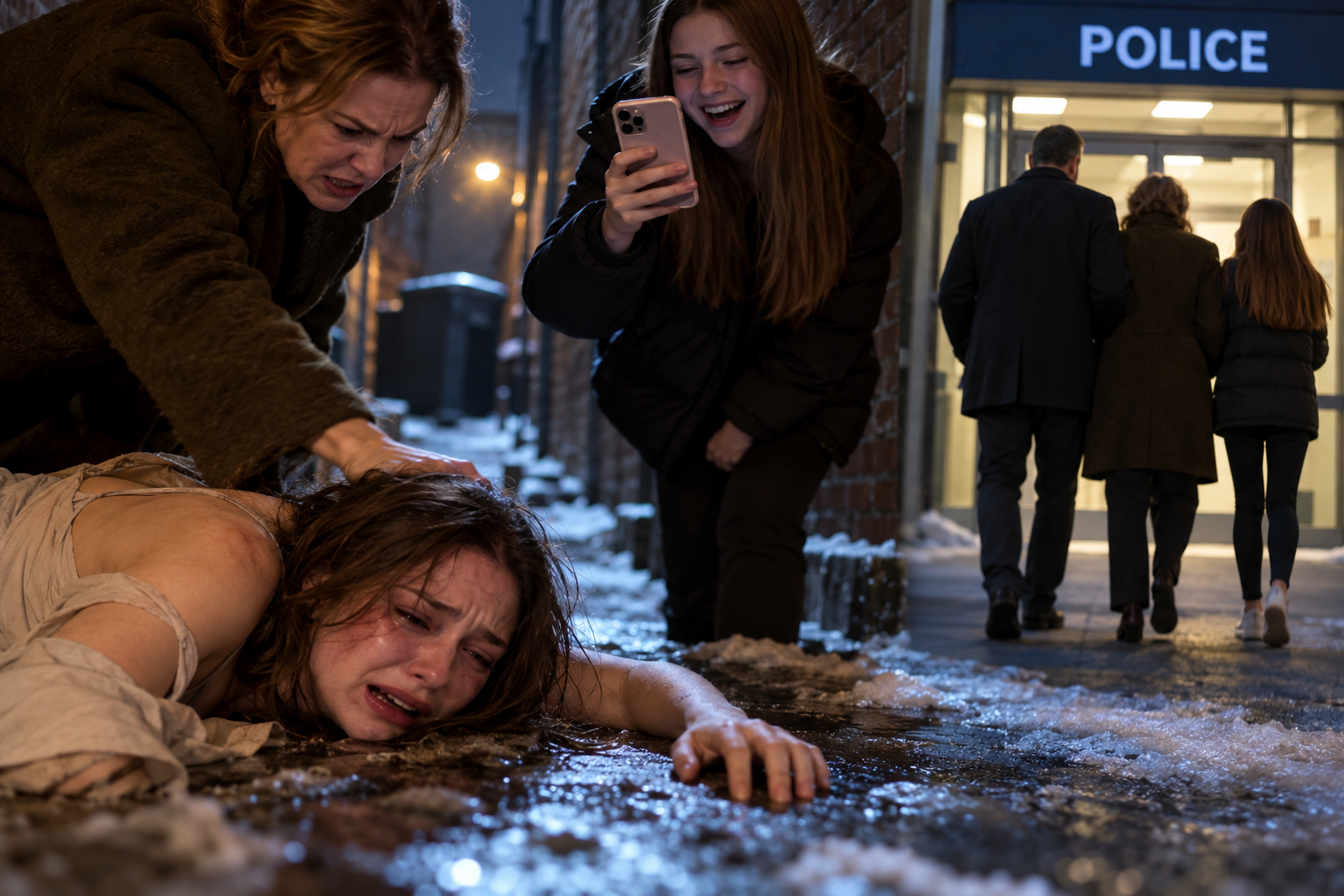
I could wonder why my mother had hurt me and why my sister had laughed.
I could spend hours imagining what my family had told the police.
None of those thoughts would change what had already happened.
I needed to make decisions about what came next.
The first decision was that I would not return to the house just to confront my family.
I wanted answers.
I wanted an explanation.
I wanted to tell my mother that she had crossed a line that could never be erased by pretending nothing had happened.
But going back would put me near the people I feared, and it would not guarantee that anyone would listen.
I had to stop treating confrontation as the only way to reclaim my voice.
I could speak without standing in front of my mother.
I could seek help without asking my sister to cooperate.
And I could protect the evidence without announcing that I had kept it.
Those were ways of acting that did not depend on my family's permission.
The second decision was that I would not give up the evidence simply to make the situation less uncomfortable.
I had hidden it for a reason.
I had recognized that leaving everything within my family's reach was not safe.
I could not abandon that judgment now because I felt guilty about keeping something from them.
I had to remember what had happened when I relied on them to protect me.
My family had not treated my safety as their priority.
I could not assume they would suddenly treat the evidence differently.
That did not mean I knew what they would do.
It meant I had to take reasonable precautions rather than depend on hope.
The third decision was that I would tell someone outside the family what had happened.
I had delayed because I was frightened of being doubted.
I had delayed because my family had already spoken to the police.
I had delayed because I wanted to make sure I could answer every question before I began.
But I couldn't wait until I felt perfectly prepared.
I needed help now.
I would explain what I remembered.
I would acknowledge the gaps in my memory.
I would describe my sister's behavior without pretending to know what she had thought.
And I would explain that my family had already claimed I was mentally unstable.
I would not try to make myself sound unaffected.
I would not invent details.
And I would not apologize for being frightened.
Those were the things I could control.
I knew the conversation might be difficult.
I knew someone might ask why I had not spoken sooner.
I knew someone might wonder why my family had gone to the police first.
I knew the accusation against me might influence how my account was received.
I could not remove those obstacles.
I could refuse to let them stop me from trying.
For years, I had thought that if I couldn't guarantee a good outcome, there was little point in taking a risk.
That belief had made me cautious in ways that sometimes protected me.
It had also made me stay silent when I needed help.
Now I had to recognize the difference.
Carefulness meant thinking about safety and consequences.
Silence meant allowing other people to speak without offering my own account.
I needed the first.
I could no longer rely on the second.
I also needed to stop imagining that my family's reaction would tell me whether I had made the right decision.
My mother might be furious.
My sister might accuse me of betrayal.
They might insist that I had misunderstood everything.
They might tell people that I was trying to cause trouble.
I couldn't prevent them from saying those things.
But their anger would not automatically mean I was wrong to seek help.
Their denial would not automatically mean I had misunderstood the night.
And their agreement with each other would not make their account the only one that mattered.
I had to remember that whenever I imagined their response.
I was not responsible for making the truth comfortable for them.
I was responsible for telling it honestly.
That distinction made me think about the person I had been before the night everything changed.
I had tried to avoid conflict.
I had tried to be patient.
I had tried to protect my family from outside judgment.
I had thought those things were signs of maturity.
Some of them might have been.
But I had also used them to avoid admitting how frightened I had become.
I had tried to make myself smaller whenever a disagreement became difficult.
I had treated my own needs as negotiable.
And I had spent too much time worrying about whether my family thought I was reasonable.
I could not continue that pattern.
I needed to learn that I could be a decent person without agreeing to every demand.
I could be compassionate without allowing someone to hurt me.
I could be fair without pretending that everyone had behaved fairly.
And I could love people without giving them unlimited access to my life.
Those were lessons I wished I had learned earlier.
But I could still learn them now.
I also knew that protecting myself would not immediately make the pain disappear.
I would still remember the cold.
I would still remember waking without my shoes.
I would still hear my sister's laughter in my mind.
I would still wonder what my mother had been thinking.
And I would still feel the loss of the family relationships I had believed I could depend on.
I couldn't force those feelings to disappear.
I could allow them to exist without letting them decide every action.
I could feel grief and still seek help.
I could feel anger and still act carefully.
I could miss my family and still remain away from them.
That was what I needed to understand.
I had spent years thinking that difficult feelings had to be resolved before I could make a decision.
Now I knew I might have to make decisions while the feelings were still there.
I might have to tell the truth while frightened.
I might have to preserve the evidence while uncertain.
I might have to accept that my mother would never give me the apology I wanted.
I could not wait for every part of my life to feel settled before taking care of myself.
I had already waited too long.
I thought about the evidence one more time.
It was still hidden.
My family did not know where it was.
I did not know exactly what would happen when I brought it forward, but I knew I needed to keep it safe until I could make a careful decision.
It represented something important to me.
Not a guarantee that everyone would believe me.
Not a promise that my family would admit what they had done.
A chance.
A chance to have something beyond my family's claims considered.
A chance to tell my account without relying only on my memory of a night when I had lost consciousness.
A chance to stop feeling that the people who hurt me had complete control over what happened next.
I could not waste that chance by acting out of anger.
I would preserve the evidence.
I would seek help.
And I would explain the truth as clearly as I could.
I did not know whether my family would ever understand why I had made those choices.
Perhaps they would never accept my reasons.
Perhaps they would continue to tell their version of events.
Perhaps I would have to live with unanswered questions for a long time.
But I could no longer make my future depend on their willingness to behave differently.
They had already made their choices.
Now I had to make mine.
I would not return simply because I missed them.
I would not surrender what I had protected.
And I would not remain silent because I was afraid of being called a liar.
I had been hurt.
I had been abandoned.
And I had been described in a way that threatened to make my own account disappear.
I could not undo those things.
But I could refuse to let them decide everything that followed.
For the first time since waking outside, I began to think of the next step as something I could choose rather than something I had to endure.
I was still afraid.
I was still grieving.
I was still uncertain about how the truth would be received.
But I was no longer waiting for my family to tell me what I was allowed to do.
I had made my decision.
I would protect myself first.
Then I would tell the truth.
Click here to continue reading: PART 17: I Finally Asked for Help Without My Family’s Permission, Knowing That Whatever Happened Next Could Change Every Relationship I Had Left
I Woke Up Freezing in an Alley, With No Shoes and No Memory of How My Own Family Had Left Me There
Part 16 of 20

One Comment on “PART 16 – I Could Not Undo What Happened in That House, but I Could Refuse to Let My Family Decide What Happened to Me Next”