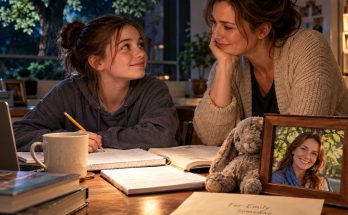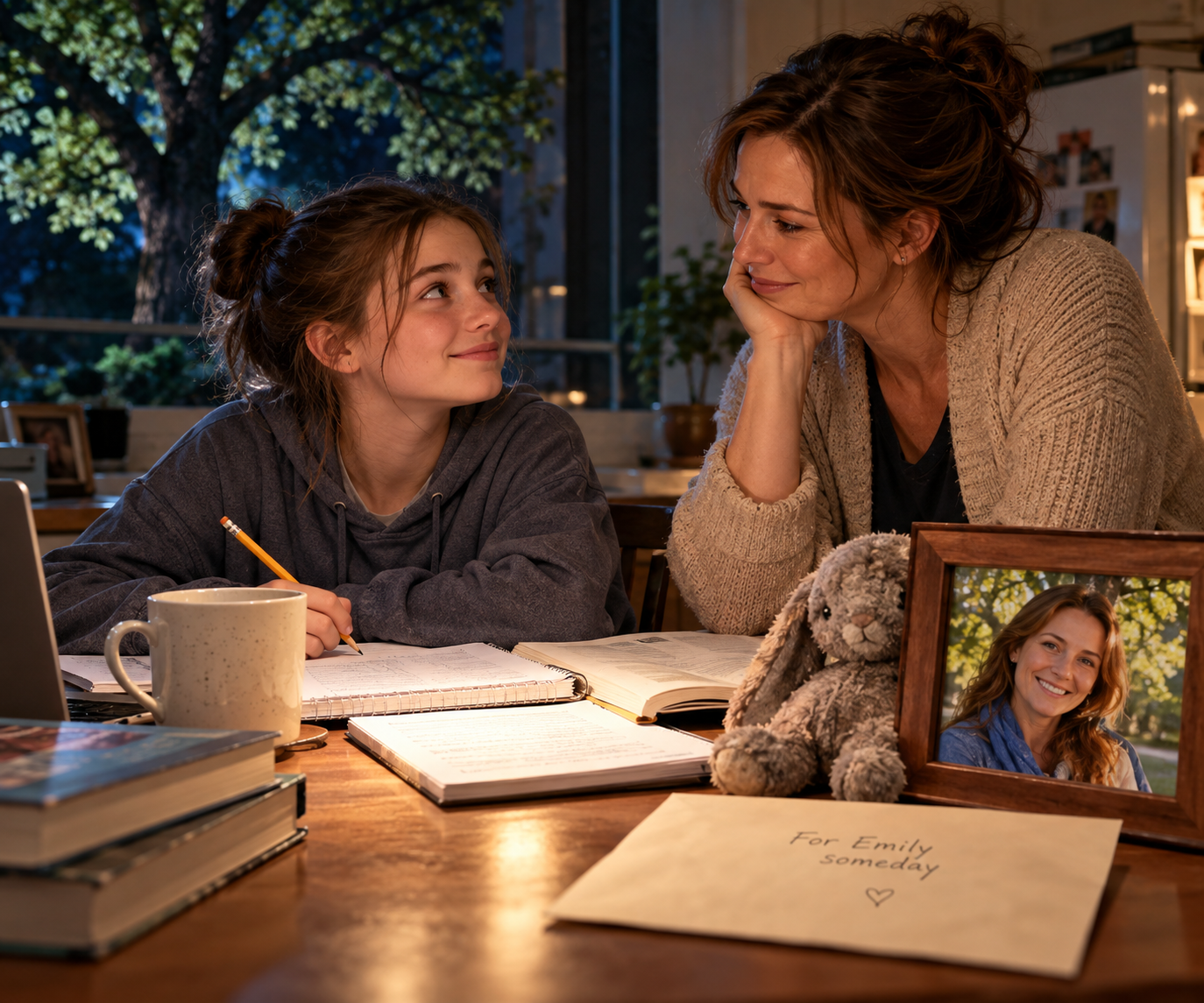
The court did everything possible to make Emily’s testimony less frightening.
Nothing could make it ordinary.
She was eight.
The courtroom was large.
Thomas sat within it.
That alone changed the air.
The judge approved accommodations permitted by law.
Emily entered through a side corridor so she would not pass directly beside the gallery.
Jennifer accompanied her as far as the waiting area.
Naomi remained nearby.
Bunny was allowed in Emily’s bag.
Not visible during testimony unless she needed him during a break.
Emily touched the zipper repeatedly.
Jennifer crouched.
“You remember what your job is?”
Emily nodded.
“Tell the truth.”
“And if you don’t know?”
“I say I don’t know.”
“If you don’t understand?”
“I say I don’t understand.”
Jennifer nodded.
Emily looked toward the closed courtroom door.
“What if he looks at me?”
“You can look somewhere else.”
Emily swallowed.
“I want to look at him once.”
Jennifer’s expression changed.
“You don’t have to.”
“I know.”
That mattered.
No one argued.
At 10:07 a.m., Emily entered the courtroom.
Thomas turned.
Emily saw him.
She stopped for less than a second.
Then kept walking.
Sarah watched carefully.
The child looked smaller than she had during the recorded interviews.
Courtrooms did that.
They made adults seem powerful and children seem impossibly young.
Emily climbed into the witness chair.
The judge greeted her by name.
Asked whether she understood the difference between truth and lies.
Emily answered.
The prosecutor began with safe ground.
School.
Age.
Jennifer’s house.
Bunny.
Emily glanced at her bag.
“He’s in there.”
A few jurors smiled.
Then the prosecutor asked about the 911 call.
“Why did you call?”
Emily’s hands tightened in her lap.
“Because I was scared.”
“Of what?”
Emily looked down.
“Daddy.”
Thomas remained still.
The prosecutor moved slowly.
“Did someone tell you to call?”
“No.”
“Did Aunt Jennifer?”
“No.”
“Did a police officer?”
“No.”
“Did Claire?”
“No. She answered.”
“What did you tell Claire?”
Emily’s face changed.
The prosecutor stopped.
“You can take your time.”
Emily breathed.
“I told her about the snake.”
“What did that word mean to you?”
The judge had previously limited unnecessary explicit detail.
Emily answered within that boundary.
“It was the secret word Daddy made me use for the bad thing.”
“Why did you use a secret word?”
“Because he said I wasn’t supposed to say the real thing.”
“Why not?”
“He said people would think I was bad.”
The prosecutor did not push further.
The abuse charges would have other evidence and the recorded forensic interview.
This testimony had another purpose too.
Thomas’s manipulation of her memory.
“Did your father ever tell you that you remembered things wrong?”
“Yes.”
“When?”
“A lot.”
“About what?”
“Mommy.”
Jennifer lowered her eyes.
The prosecutor asked about the last night Emily saw Laura.
“What do you remember your mom saying?”
“That we were going somewhere.”
“Did she say she was leaving without you?”
“No.”
“Did she tell you she didn’t want you?”
“No.”
“What did she say?”
“She told me to get Bunny.”
The prosecutor paused.
“Then what happened?”
Emily’s eyes moved toward Thomas.
For the one look she had planned.
Thomas met it.
No gesture.
No expression anyone could call dramatic.
Still, Emily’s shoulders tightened.
She turned back to the prosecutor.
“They yelled.”
“What did you do?”
“Went upstairs.”
“Then?”
“I heard a bang.”
“Did you see what caused it?”
“No.”
“Did you hear anything else?”
“Mommy screamed.”
Jennifer covered her mouth.
The prosecutor waited.
“Did you go into the hallway?”
“A little.”
“What did you see?”
“Daddy.”
“Did you see your mom?”
“No.”
“Did you see anything in your dad’s hands?”
Emily shook her head.
“I don’t remember.”
Sarah felt the answer strengthen her credibility.
Emily did not fill gaps.
The prosecutor continued.
“What did your father say?”
“Go back in my room.”
“And you did?”
“Yes.”
“What happened later?”
“He said Mommy left.”
“Did you see anything outside?”
Emily looked at the bag containing Bunny.
The judge asked whether she needed a break.
Emily shook her head.
“No.”
The prosecutor said, “Take your time.”
Emily continued.
“I looked out the window.”
“What did you see?”
“Daddy and Uncle Mike.”
“Who is Uncle Mike?”
“Daddy’s friend.”
“What else?”
“Mommy’s car.”
“Who was with the car?”
“Daddy.”
“Did you see anything near the car?”
“The blue bag.”
“Anything else?”
Emily’s voice dropped.
“Something in a blanket.”
“Could you tell what it was?”
“No.”
“Did anyone tell you later what it was?”
The defense objected.
Sustained.
The prosecutor moved on.
“Did your father see you at the window?”
“Yes.”
“What did he do?”
“Pointed.”
“What did you do?”
“Got down.”
The jury had already heard Michael describe the same moment independently.
Now it existed from the other side of the glass.
The prosecutor asked about the next morning.
“What did your father tell you?”
“That I dreamed it.”
“What things did he say were a dream?”
“The yelling. Uncle Mike. Mommy’s car.”
“Did he tell you what to say if people asked?”
“Yes.”
“What?”
“That Mommy moved away.”
“Anything else?”
“That I was asleep.”
The prosecutor stopped.
Sarah looked at the jury.
Several were writing.
One was watching Thomas.
The phrase had completed its journey.
Old welfare check.
First responders.
Michael.
Therapy disclosure.
Now Emily herself.
I was asleep.
Thomas’s protective sentence.
The prosecutor asked:
“Were you asleep?”
“No.”
No emphasis.
No speech.
Just the child who had been there.
Cross-examination began after a break.
Jennifer was not allowed to speak with Emily about testimony during it.
They sat together in the waiting area.
Emily unzipped the bag.
Bunny came out.
She pressed him against her chest.
“How am I doing?”
Jennifer wanted to say perfect.
Naomi had warned against performance language.
Jennifer answered differently.
“You’re answering the questions.”
Emily nodded.
“Daddy looked old.”
Jennifer did not respond to that.
“He looked at me.”
“You looked where you wanted.”
Emily touched Bunny’s bent ear.
“I thought I’d be more scared.”
“Are you scared?”
“Yes.”
Jennifer almost smiled.
“Both can be true.”
Emily understood.
Then the bailiff returned.
The defense attorney approached Emily gently.
That was deliberate.
A harsh cross-examination of an eight-year-old could damage the defense more than help it.
“Emily, you’ve talked to a lot of adults about these things, right?”
“Yes.”
“Police?”
“Yes.”
“Doctors?”
“Yes.”
“Aunt Jennifer?”
Emily thought.
“Sometimes.”
“Therapists?”
“Yes.”
“You’ve heard adults talk about your dad?”
“Yes.”
“About your mom?”
“Yes.”
“So there are things you know now that you didn’t know when you were five.”
“Yes.”
Good question.
Fair question.
The attorney continued.
“When you were five, you did not know your mother was dead.”
“No.”
“You thought she left.”
“Daddy said she did.”
“But you believed that sometimes.”
“Yes.”
“You also said before that you didn’t know what the wrapped thing outside was.”
“Yes.”
“You still don’t know what it was from seeing it.”
Emily shook her head.
“No.”
“You never saw your father hit your mother.”
“No.”
“You never saw him carry your mother outside.”
“No.”
“You never saw him bury her.”
“No.”
All true.
The defense needed the jury to remember the limits of Emily’s testimony.
Then the attorney turned toward memory.
“You said at first that you heard something break.”
“Yes.”
“Later you called it a bang.”
“Yes.”
“So your words changed.”
Emily frowned.
“I didn’t know what it was.”
“Could it have been something different from what you remember now?”
Emily thought.
“I remember the sound.”
“But not what made it.”
“No.”
Good answer.
The attorney tried another route.
“Your aunt believes your father killed your mother.”
Emily looked toward the judge.
The judge intervened.
“She is not responsible for another person’s beliefs. Counsel, rephrase.”
The defense attorney nodded.
“Have adults told you they think your father killed your mother?”
Emily swallowed.
“Yes.”
“When?”
“After they found Mommy.”
“So when you came back for your second interview, you knew that.”
The prosecutor objected.
Emily had not been told before the supplemental forensic interview.
The parties approached the bench.
Records were reviewed.
The judge instructed the jury that evidence showed Emily had not been informed of Laura’s identification or homicide theory before the supplemental interview in which she described Michael, the car, and Thomas pointing at the window.
The defense attorney stepped back.
That path had closed.
He changed subjects.
“You love your aunt Jennifer.”
“Yes.”
“You want to live with her.”
“Yes.”
“You don’t want to live with your father.”
“No.”
“Could wanting to stay with Jennifer affect what you say?”
Emily stared at him.
“I don’t understand.”
The attorney rephrased.
“If saying bad things about your father helped you stay with Jennifer, would that give you a reason to say them?”
Emily’s face tightened.
“I called before I lived with Aunt Jen.”
Sarah saw one juror look up sharply.
The defense attorney paused.
Emily continued, unprompted but responsive.
“I didn’t know I was going there.”
The attorney nodded.
“That’s true.”
A smart retreat.
He moved to Thomas’s old warning that police might think Emily was lying.
“Your dad told you police get mad at children who lie.”
“Yes.”
“Have you ever lied?”
“Yes.”
“About small things?”
“Yes.”
“So children can lie.”
“Yes.”
“Could children lie about big things?”
Emily looked confused.
“I guess.”
The attorney nodded.
“No more questions.”
The prosecutor stood for redirect.
One question.
“Emily, when you called 911, what did you think would happen?”
Emily looked down.
“I thought maybe they’d make it stop.”
The prosecutor waited.
“Did you know police would investigate your mother?”
“No.”
“Did you know you’d live with Jennifer?”
“No.”
“Did you know your father would be arrested?”
Emily’s eyes filled.
“No.”
“What did you know?”
Emily held the edge of the witness chair.
“That I didn’t want the door to close again.”
Silence.
The prosecutor sat.
The judge thanked Emily.
She climbed down.
Before leaving, she looked once toward Thomas.
No one could know exactly what she felt.
Fear.
Anger.
Loss.
Perhaps all of it.
Thomas looked back.
Emily turned away first.
But not because he told her to.
In the waiting area, Jennifer stood when the door opened.
Emily came out carrying her bag.
Jennifer did not ask what happened inside.
She opened her arms only after Emily moved toward her.
Emily hugged her.
Then whispered:
“I said it.”
Jennifer closed her eyes.
“You did.”
“Was I good?”
Jennifer remembered Naomi’s advice.
“You were truthful.”
Emily nodded against her shoulder.
“That’s what I meant.”
Across the courthouse, Sarah remained at the prosecution table while the jury was excused for lunch.
Daniel approached.
“She did better than most adults.”
Sarah looked at him.
“She shouldn’t have had to.”
“No.”
They gathered their notes.
The trial was not over.
The defense still had its case.
Experts would challenge intent.
Thomas’s lawyers would argue accident, panic, contamination, unreliable memory, and incomplete context.
Thomas himself had not yet decided whether to testify.
Nothing was guaranteed.
But one thing had changed permanently.
Emily had sat in the same room as the father who spent years teaching her that speaking would destroy everything.
She spoke anyway.
And when she left the courtroom, the door closed behind her only because she chose to keep walking.
Click here to continue reading: PART 25: The Defense Called the Death an Accident, but Its Own Expert Could Not Explain Why Laura’s Blood Followed a Hidden Route Through the House
A Child Whispered About a Snake, but the Silence Behind Her Words Made the Dispatcher Hear Something Else
Part 24 of 35